1930 - 1998

بطاقة معلومات

  • Top 3 works:
    • Cura No. 8
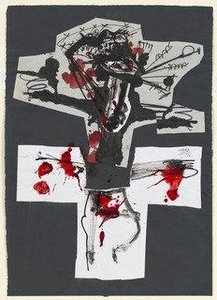
    • Crucifixion
    • Untitled
  • Works on this site: 15
  • Color intensity:
    • monochromatic
    • balanced
  • Top-ranked work: Cura No. 8
  • Also known as:
    • アントニオ・サウラ
    • Антонио Саура
    • 安東尼奧·索拉
  • Copyright status: Under copyright
  • Museums on this site:
    • متحف إسرائيل
    • متحف غوغنهايم بلباو
    • UPF Art Track

Antonio Saura: A Shadowed Vision of the Human Condition

Antonio Saura (1930-1998) remains a profoundly enigmatic and compelling figure in post-war Spanish art, a painter whose work wrestled with themes of mortality, spirituality, and the fragmented self. Born in Huesca, Spain, his early life was marked by illness – specifically tuberculosis contracted at the age of thirteen – confining him to bed for five years. This period of enforced stillness proved unexpectedly fertile, sparking an intense engagement with drawing and painting, initially exploring dreamlike surrealist landscapes rendered in a strikingly flat, smooth style and utilizing a rich palette of colors. His artistic lineage, he claimed, drew inspiration from the German painter Hans Arp and the French artist Yves Tanguy, figures who shared his interest in abstract forms and evocative imagery.

Early Years and Parisian Influences

Saura’s relocation to Paris in 1952 proved pivotal, exposing him to a vibrant artistic milieu and initiating a period of significant stylistic evolution. He quickly distanced himself from the Surrealist group, finding greater resonance with the work of Simon Hantaï, whose gestural abstraction offered a more immediate and dynamic approach. This shift manifested in his technique – he embraced scraping and layering, creating an intensely textured surface that hinted at underlying emotional currents. His first solo exhibition at the Rodolphe Stadler Gallery in Paris in 1954 established him within the European art scene, attracting attention from influential figures like Otto van de Loo in Munich and Pierre Matisse in New York City, who subsequently represented his work and secured its inclusion in major museum collections. These early years were characterized by a deliberate limitation of his palette to blacks, grays, and browns – a conscious decision to forge an independent artistic voice, distinct from the prevailing movements of the time, echoing the solemnity and introspection of Velázquez and Goya.

The Weight of Women and Crucifixions

Beginning in the mid-1950s, Saura’s work began to shift dramatically, introducing a new focus on the female figure – nudes, self-portraits, and representations of shrouds and crucifixions. These images, executed both on canvas and paper, became increasingly complex and emotionally charged. While initially abstract in style, these figures gradually emerged from the darkness, imbued with a haunting presence that suggested vulnerability, suffering, and a profound sense of isolation. The crucifixions, particularly, are not simply depictions of religious iconography but rather explorations of pain, sacrifice, and the human condition’s inherent contradictions. These works represent a significant departure from his earlier, more purely abstract style, demonstrating a growing interest in figurative representation and psychological depth.

The El Paso Group and Beyond

In 1957, Saura founded the *El Paso Group* in Madrid, bringing together a collective of artists including Manolo Millares, Luis Feito, and Rafael Canogar. This group, which he directed until its dissolution in 1960, provided a crucial platform for experimentation and dialogue within the Spanish art world, challenging established norms and pushing the boundaries of artistic expression. During this period, he encountered Michel Tapié, a prominent figure in the Parisian avant-garde, further expanding his network and influencing his artistic trajectory. Beyond the group’s activities, Saura continued to exhibit internationally, solidifying his reputation as a significant contemporary artist.

A Legacy of Printmaking and Personal Exploration

Throughout the 1960s and beyond, Saura explored diverse media, including printmaking and sculpture. He famously destroyed hundreds of paintings he deemed unsatisfactory, demonstrating a relentless pursuit of artistic perfection and a willingness to abandon works that did not fully align with his evolving vision. He also undertook a significant project illustrating books by renowned authors such as Cervantes, Orwell, Kafka, and Quevedo, showcasing his ability to translate complex narratives into visual form. In 1968, he briefly abandoned oil painting altogether, dedicating himself to other mediums before returning to canvas in the late 1970s. Antonio Saura’s legacy lies not only in his distinctive artistic style but also in his profound engagement with universal themes of mortality, spirituality, and the complexities of human experience – a shadowed vision that continues to resonate with viewers today.

اختبار ذاتي

لكل سؤال إجابة صحيحة واحدة فقط.

سؤال 1:
Antonio Saura was born in which Spanish city?
سؤال 2:
During his early years, Saura's work often featured:
سؤال 3:
Which artistic influences did Antonio Saura cite?
سؤال 4:
In the mid-1950s, Saura's work began to include depictions of:
سؤال 5:
What was a defining characteristic of Saura's later work regarding color?

الأسئلة والأجوبة

أين يمكنني العثور على إحصائيات حول أعمال Antonio Saura؟

يمكنكم الاطلاع على إحصائيات أعمال Antonio Saura عبر صفحة إحصائيات الزيارات الخاصة بالفنان.

هل يمكنني استكشاف نمط استخدام الألوان لدى Antonio Saura في جميع أعماله؟

تستعرض صفحة بصمة الألوان الفنية الخاصة بـ Antonio Saura المخطط اللوني لمجموعة أعمال الفنان.

كيف يمكنني العثور على جميع أعمال Antonio Saura حسب الوسيط الفني؟

يمكن تصفح أعمال Antonio Saura حسب الوسيط الفني عبر صفحة حسب الوسيط الفني.

إلى أي حقبة تاريخية ينتمي Antonio Saura؟

أبدع Antonio Saura خلال حقبة Modern، وهي الفترة التي تضع نشاط الفنان في سياقه التاريخي.

أين يمكنني تصفح أعمال Antonio Saura الفنية مصنفة حسب الحركة الفنية؟

يمكن تصفح أعمال Antonio Saura حسب الحركة الفنية عبر صفحة جميع المدارس الفنية.

أين يمكنني مشاهدة أعمال Antonio Saura الفنية مرتبة حسب الأجواء؟

تتيح لك صفحة ركن الأجواء الخاصة بـ Antonio Saura تصفح أعمال الفنان مرتبةً حسب الحالة المزاجية.

في أي مدينة ودولة وُلد Antonio Saura؟

وُلد Antonio Saura في Huesca، في Spain.

أين يمكنني استعراض جميع أعمال Antonio Saura الفنية؟

يمكن تصفح جميع أعمال Antonio Saura على هذا الموقع عبر صفحة كافة الأعمال الفنية الخاصة بالفنان.

هل يمكنني استكشاف أعمال Antonio Saura عبر الكلمات المفتاحية؟

تجمع صفحة حسب الكلمات المفتاحية الخاصة بـ Antonio Saura أعمال الفنان وفقاً للكلمات المفتاحية.