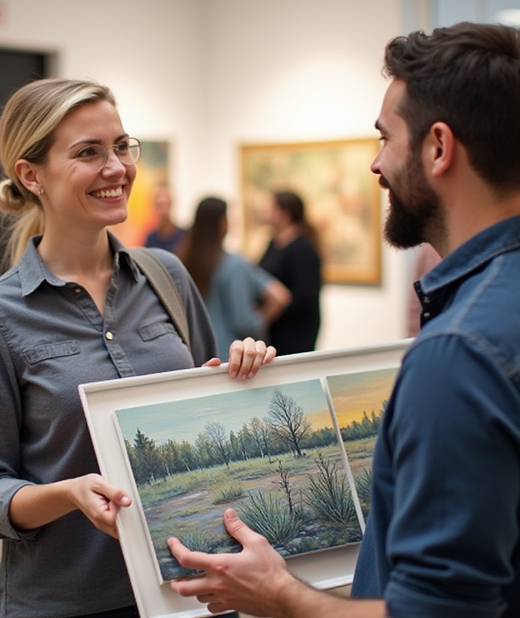
Sopha Orene Bacon Bennett: A Painter of Quiet Landscapes and Intimate Portraits
Sopha Orene Bacon Bennett (1864-1950) remains a quietly significant figure in the late 19th and early 20th century art world, often overshadowed by her more famous contemporaries but possessing a distinctive voice within the broader currents of Impressionism and Post-Impressionism. Born in Auburn, New York, to a family deeply rooted in the American West—her father was a prominent lawyer and her mother a descendant of colonial settlers—Bennett’s early life instilled in her a profound appreciation for the natural world and a keen observational eye. This connection to the land would become a defining characteristic of her artistic practice, informing both her landscapes and her portraits.
Early influences on Bennett's work are complex and somewhat obscured by historical records. While she studied briefly at the Pennsylvania Academy of the Fine Arts in Philadelphia, it’s clear that her artistic development was largely self-directed. She spent considerable time traveling throughout Europe, particularly France and Italy, immersing herself in the vibrant art scene of Paris during the late 1890s and early 1900s. This period proved crucial, exposing her to the revolutionary ideas of Impressionism and Post-Impressionism championed by artists like Monet, Renoir, and especially, a growing fascination with the work of Vincent van Gogh. The expressive brushwork and emotional intensity evident in Bennett’s later paintings—particularly her landscapes—strongly suggest the influence of Van Gogh's exploration of color and light.
A Palette of Serenity: Style and Technique
Bennett’s artistic style is immediately recognizable for its quiet elegance and understated beauty. She eschewed the overtly dramatic or flamboyant approaches favored by some of her contemporaries, instead opting for a more restrained palette and a focus on capturing subtle nuances of light and atmosphere. Her landscapes are characterized by a remarkable sense of tranquility—fields bathed in golden sunlight, misty forests, and serene ponds—often populated by solitary figures engaged in quiet contemplation. She employed loose, broken brushstrokes, layering colors to create a shimmering effect that captured the ephemeral quality of natural light.
Her portraits, equally compelling, are notable for their psychological depth. Bennett possessed an extraordinary ability to convey the inner lives of her subjects—their moods, emotions, and vulnerabilities—through subtle shifts in expression and gesture. She frequently depicted women, often portraying them in intimate settings, suggesting a deep understanding of female psychology. The use of muted tones and soft lighting contributes to the sense of intimacy and introspection that pervades these portraits.
Notable Works and Exhibitions
Several paintings by Sopha Orene Bacon Bennett have achieved recognition within the art world. “Landscape with Woman Leaning on Rail Fence” (circa 1908) is a particularly striking example, showcasing her mastery of capturing atmospheric perspective and conveying a sense of peaceful solitude. “Path by the Pond,” painted around the same period, demonstrates her ability to render the shimmering reflections of light on water with remarkable precision. “Lady of Auburn Tresses” (circa 1910) is a poignant portrait that reveals Bennett’s talent for capturing the essence of her subjects through subtle details and expressive brushwork.
Bennett's work was exhibited sporadically throughout her career, primarily in New York City and Bilbao. She gained a modest but loyal following among discerning collectors who appreciated her unique artistic vision. Her paintings are now held in several private collections and are occasionally featured in exhibitions dedicated to American Impressionism and early 20th-century art.
Legacy and Historical Significance
Despite the relative obscurity of her career, Sopha Orene Bacon Bennett’s contribution to American art deserves renewed attention. She represents a significant voice within the broader movement of American Impressionism—a painter who prioritized observation, emotion, and a deep connection to the natural world. Her work stands as a testament to the power of quiet beauty and introspective portraiture. Her influence can be seen in the works of later artists who sought to capture the essence of the American landscape and the complexities of human experience.
Further research into Bennett’s life and artistic practice is ongoing, with scholars continuing to uncover new insights into her creative process and historical context. Her paintings offer a valuable window into the art world of the late 19th and early 20th centuries—a period of profound change and innovation in American art.