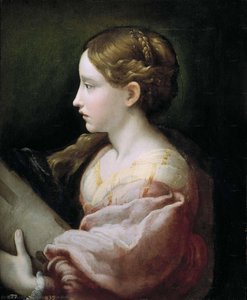
Ask for the most famous Mannerism paintings and you will hear of Giuseppe Arcimboldo's Vertumnus (Vertumno) (1590, Skoklosters Slott), El Greco's Burial of the Count of Orgaz (1586, Santo Tomé), Jacopo Tintoretto's The Origin of the Milky Way (1570, National Gallery), Paolo Veronese's The Marriage at Cana (1563, The Louvre) and Jacopo Tintoretto's The Last Supper (1594, San Giorgio Maggiore). This ranking lists the 100 best-known Mannerism paintings, painted between 1517 and 1625 by 36 artists, with the museum where each one hangs today.
No. 1 · Giuseppe ArcimboldoVertumnus (Vertumno)1590 · Skoklosters Slott, Balsta
100works listed
36artists cited · Domenico Campagnola – Joachim Wtewael
49holding institutions, 33 cities
10in the Museo del Prado collection
List
The 100 best-known Mannerism paintings
Each entry records the artist, date, technique, dimensions and current collection, followed by a summary from the artwork's notice.
The composition is both structured and organic, with a central figure that dominates the frame. Created in 1590, Vertumnus reflects the artistic trends of the late Renaissance and early Baroque periods.
Notable elementsvegetablesflowersother natural elementscentral figure composed entirely of fruits
A prime example of Spanish Renaissance Mannerism transitioning towards Baroque sensibilities, this artwork showcases El Greco's signature style – elongated figures, dramatic use of color, and expressive brushwork. Commissioned for the church of Santo Tomé in Toledo, Spain, this painting served as both a devotional image and a celebration of local nobility.
Notable elementsportraits of onlookersdramatic lightingassumption of the Virgin Mary
The artwork features a complex and chaotic yet balanced composition, centered around a nude female figure who appears to be in a state of distress or ecstasy. Surrounded by a multitude of figures—both human and mythological—the scene is filled with movement and energy. Created during the High Renaissance and Mannerist periods, this painting reflects Tintoretto's unique approach to storytelling through art.
This large-scale painting, created in 1563, depicts the miraculous event from the Gospel of John where Jesus turns water into wine. Commissioned by the Benedictine monks for the refectory of the San Giorgio Monastery in Venice, "The Marriage at Cana" was intended to serve as a visual narrative for the monks during their meals.
Notable elementsmiraculous conversion of water into wineopulent Venetian settingsvibrant color palettebiblical narrative of the wedding at Cana
This monumental fresco captures not a peaceful meal, but the immediate aftermath of Christ’s announcement of his impending betrayal – a moment suspended between faith and despair. Created during the Counter-Reformation, Tintoretto’s “Last Supper” reflects the period's emphasis on emotional engagement with religious narratives. Judas Iscariot, subtly positioned apart from the group and clutching a bag (representing his payment for betrayal), is identifiable through his shadowed demeanor and isolation.
The composition immerses viewers in a moment of dramatic salvation, where faith and divine power converge to inspire hope and awe. Painted during the height of the Venetian Renaissance, this work reflects the period’s fascination with dramatic storytelling and emotional expression.
Painted in 1563, this colossal oil on canvas transforms the sacred story of Jesus converting water into red wine into a vibrant panorama of 16th-century society. Through his mastery of oil painting, Veronese achieved an unparalleled luminosity and richness of texture, allowing the architectural grandeur—including columns and balustrades—to intertwine seamlessly with human activity.
El Greco, born Doménikos Theotokópoulos in Crete in 1541, wasn’t merely a painter; he was an artist who fundamentally reshaped Western artistic sensibilities. Yet, he refused to remain tethered to these roots, embarking on expeditions to Venice and Rome where he encountered the burgeoning Renaissance spirit, skillfully integrating its humanist ideals into his distinctive oeuvre.
The composition features an assemblage of meticulously rendered objects arranged atop an ornate, gilded platform that resembles a hybrid of a classical pedestal and a mechanical wheel. Flames and smoke erupt from the top, suggesting a moment of chaos and renewal.
Notable elementsfiery symbolismsurreal assemblage of objectsdramatic flamesornate details
1549Oil on canvas255 × 175 cmMuseo Civico, Vicenza
Drawing from the sacred accounts found in Saint Augustine's Confessions, Tintoretto transforms a theological miracle into a visceral human experience. In The Miracle of St. Augustine, light does not simply illuminate; it sculpts. It strikes the billowing drapery of the Saint’s robes and catches the desperate expressions of the onlookers, creating a sense of three-dimensional urgency.
The secluded grove represents a realm of purity and divine sanctuary, violated by Actaeon’s presence. Commissioned as part of Titian's celebrated “poesie” series for King Philip II of Spain, this painting exemplifies the Renaissance fascination with classical mythology. Today, it resides in the National Gallery (London) and the National Galleries of Scotland, alternating between both locations.
Bronzino's painting is a vivid allegorical scene that brings together the figures of Venus, Cupid, and Time in a complex narrative. Agnolo Bronzino, a prominent Florentine painter of the Mannerist period, is renowned for his elegant and refined style. This painting exemplifies the Mannerist movement's departure from the High Renaissance, emphasizing elegance, complexity, and a heightened sense of emotion.
Notable elementsbright, almost fluorescent skin tonesdramatic lighting and dynamic compositioncentral embrace of two figures
Arcimboldo, a master of the Mannerist style, didn’t simply arrange fruits and vegetables; he meticulously constructed a face – a visage brimming with life, wisdom, and an almost unsettling beauty – entirely from these natural elements. The painting’s power lies not just in its subject matter, but in the extraordinary skill with which it was executed.
El Greco's unique style blends elements of Mannerism with Byzantine influences, resulting in elongated figures and expressive gestures. Painted during the Counter-Reformation period, "The Crucifixion" reflects the religious fervor and devotion of the time.
Notable elementsdynamic, elongated linesorganic and geometric shapesvaried texturesdramatic and directional lightingvertically oriented composition
Initially commissioned for a funerary chapel, it remained unfinished at Parmigianino’s death, eventually finding its way into the collection of Grand Prince Ferdinando de’ Medici in Florence. Its subsequent ownership by the Uffizi Gallery in 1698 cemented its place as one of Italy's most treasured masterpieces.
The scene depicts Ariadne's despair after being forsaken by Theseus, beautifully contrasted with Bacchus’s sudden arrival amidst a frenzied procession. While rooted in Renaissance principles, this work displays emerging characteristics of Mannerism. The cheetahs drawing Bacchus’ chariot were exotic status symbols for the Duke of Ferrara, while Ariadne's constellation above her head foreshadows her immortalization.
The gaze of the viewer meets the steady presence of Portrait of a Young Man with a Child, a work that captures a singular moment of human connection. It has resided within this museum since 1871, becoming a fixed part of the local landscape. On a Thursday in November 2015, the work was among several pieces stolen from the Museo di Castelvecchio.
This 1565 oil on canvas depicts the crucifixion of Jesus Christ, yet it avoids the static, staged quality often found in religious compositions of the era. Instead, the work is a whirlwind of motion and light. Christ hangs suspended, his form illuminated by a dramatic light source that seems to collide with the surrounding darkness.
1566Oil on canvas97 × 71 cmSkokloster Castle, Sweden
The painting is housed at Skokloster Castle in Sweden and is thought to be a portrait of Wolfgang Lazius, a historian who served the Holy Roman Emperors. The painting was created during the Renaissance period when Arcimboldo served as a court artist to Emperors Ferdinand I, Maximilian II, and Rudolf II.
Notable elementshuman figure composed entirely of booksbook-like elements
The sculpture portrays Laocoön and his sons battling colossal serpents dispatched by Zeus and Poseidon as punishment for Laocoön's blasphemy. This narrative draws upon Homeric epic poetry and Roman mythology, reflecting anxieties about divine retribution and the fragility of human existence. Created during the Renaissance’s waning years, Laocoön signaled a reaction against humanist optimism.
The technique employed by Girolamo Francesco Maria Mazzola—the brilliant Mannerist known as Parmigianino —is nothing short of virtuosic. Historically, this work marks a pivotal transition in art history, signaling the twilight of the High Renaissance and the emergence of the Mannerist movement. While the masters before him, such as Raphael, sought harmony, balance, and idealized proportions, Parmigianino embraced the beauty of the unexpected.
The painting immediately draws the eye to the angel’s posture – not one of triumphant performance, but rather of quiet contemplation, almost lost in the act of playing. Technically, Rosso employs a characteristic Mannerist approach, moving away from the idealized forms of his Renaissance predecessors. The angel’s playing, therefore, can be interpreted as an act of worship, a humble offering to God.
The central focus of "Summer 1" is a human face and neck, meticulously crafted from an array of fruits, vegetables, flowers, and other organic materials. "Summer 1" is part of Arcimboldo's celebrated series "The Four Seasons," which he created during his tenure as court painter to the Habsburg emperors in Vienna and Prague.
Pieter Bruegel the Elder's The Procession to Calvary, painted in 1564, is not a serene depiction of religious devotion but rather a vibrant and chaotic panorama reflecting the anxieties and complexities of 16th-century life. The stark contrast between the suffering Christ and the bustling activity around him underscores the theme of sacrifice and redemption.
Notable elementsnumerous figuresdramatic lightingdetailed rendering of facesclothingchaotic composition
The Saliera, of rolled gold, was created by Benvenuto Cellini for Francis I of France between 1540 and 1543. From his descendant Charles IX it passed to Archduke Ferdinand II. The saltcellar shows an allegory of the Earth and the interplay of land and sea. As Charles Hope explains in his book Patronage in the Renaissance, Cellini was primarily interested in the composition, and the appropriate subject matter came later.
The Allegory of the Seven Liberal Arts is an oil on panel painting by Maerten De Vos. De Vos, a significant figure in the Southern Netherlands, brings a specific clarity to this assembly of figures. The scale of the piece is substantial, measuring 147 x 200 cm. In this composition, Maerten De Vos organizes the various disciplines of knowledge through a series of allegorical figures. Maarten De Vos employs an approach characteristic of the Renaissance, focusing on a meticulous rendering of every figure and object within the composition.
The fresco depicts the Visitation, a biblical event where the Virgin Mary visits her cousin Elizabeth. This scene is rich with symbolism and narrative, reflecting the religious fervor of the Renaissance period.
Notable elementsarchitectural framework with columns and archescherubic figures in the backgroundsemi-circular arrangement of figures
1523Oil on canvas160 × 117 cmSistine Chapel, Vatican City
The intricate play of light and shadow heightens the emotional intensity, while the complex composition demonstrates Rosso Fiorentino’s skill in creating depth and movement within a confined space. Rosso Fiorentino, influenced by the great masters Michelangelo and Raphael, infuses the scene with symbolic elements—such as the contrasting colors and expressive gestures—that underscore themes of divine intervention, moral duty, and human suffering.
The woman’s unwavering gaze is a hallmark of Tintoretto’s style, conveying confidence and introspection simultaneously. ### Tintoretto's Artistic Style Tintoretto was undeniably one of the most innovative painters of his time, forging a path distinct from his contemporaries. Similarly, “Man with a Golden Lace” showcases Tintoretto's ability to convey psychological complexity through subtle gestures and facial expressions.
The concept of Cockaigne originates in medieval folklore—a fantastical realm brimming with sensual delights where food flowed freely, animals behaved strangely, and labor was utterly unnecessary. Unlike the idealized depictions of paradise prevalent in Italian Renaissance art, Bruegel deliberately subverts these expectations. Pieter Bruegel The Elder Biography Visit the Alte Pinakothek Museum: to see the original painting, and read more about it on Wikipedia
In the realm of art, few paintings capture the essence of devotion and tenderness as eloquently as St Joseph and the Christ Child by the renowned artist El Greco (Doménikos Theotokopoulos). This magnificent oil on canvas piece, measuring 289 x 147 cm, was completed in 1599 and is currently housed at the Toledo Museum of Art in Toledo, United States.
A pale, reclining figure occupies the center of the frame, her skin possessing the cool, polished sheen of marble. This is Venus, the goddess of love, draped in a way that emphasizes the tension between soft flesh and the hard edges of the composition.
1566Oil on panel119 × 157 cmDetroit Institute of Arts
Painted during a period of social upheaval in the Netherlands – marked by religious conflict and political unrest – Wedding Dance offers a glimpse into the lives of ordinary people. This painting remains an invaluable window into the past, offering insights into the culture, customs, and social dynamics of 16th-century Flanders.
The painting is a prime example of El Greco’s signature style, which seamlessly blends Byzantine artistic traditions with elements of the Western Renaissance. "The Coronation of the Virgin" emerged during a period of intense religious fervor known as the Counter-Reformation, when the Catholic Church sought to reaffirm its doctrines in response to the Protestant Reformation.
1520Oil on panel (transferred to canvas)92 × 72 cmJ. Paul Getty Museum, Los Angeles
The subject, a young man dressed in traditional attire and holding a halberd, exudes a sense of authority and dignity. Created around 1520, this piece exemplifies the refined realism characteristic of High Renaissance and Mannerist art. The subject’s attire and weapon suggest themes of resilience, readiness, and cultural identity —values highly esteemed in the turbulent social landscape of the early 16th century.
Notable elementsexpressive eyesuse of lightshadowsymbolic accessoriesvivid colors
The tondo format – a circular painting – immediately draws the viewer in, creating an intimate space within which to contemplate this idealized world. Technically, “The Paradise” exemplifies the hallmarks of the Northern Renaissance style.
Unlike the idealized beauty championed by Raphael and Michelangelo, Mannerism prioritized expressive emotion and intellectual contemplation over anatomical accuracy. Farnese’s patronage reflects the broader trend of papal commissions supporting ambitious artistic projects aimed at glorifying God and reaffirming Catholic dogma.
Behind her, an elderly woman in a white veil waits, her expression etched with anxiety. The scene is set against a dark, indeterminate background, which forces the viewer's attention onto the three central figures: the pale, luminous face of Judith, the watchful eyes of the maid, and the grey, lifeless visage of Holofernes. Possibly the mother of Maria di Giovanni Mazzafirri.
Arcimboldo was renowned for his imaginative and unconventional compositions, and this piece exemplifies his unique style. Departing from the High Renaissance emphasis on idealized form, Mannerism embraced complexity, exaggeration, and a playful distortion of reality. Arcimboldo served as court painter to three generations of Habsburg emperors – Ferdinand I, Maximilian II, and Rudolf II.
Notable elementsfloral compositiondark backgroundhuman face constructed entirely from flowers
Created in 1517 when Campagnola was still in his teens, this engraving showcases the artist's technical prowess and innovative approach to printmaking. Domenico Campagnola was born in Venice around 1500 and trained under his father, the renowned engraver and painter Giulio Campagnola. "Massacre of the Innocents" is one of his fourteen known engravings, produced during a brief but prolific period in 1517-18.
Tintoretto, often called il Furioso for his passionate and rapid execution, utilizes a dynamic arrangement of figures that seem to ascend through layers of light and shadow. Technically, Paradise represents the pinnacle of Venetian late Renaissance innovation.
El Greco was a revolutionary artist who defied conventional stylistic norms. Created during the height of the Spanish Renaissance, El Greco's work reflects the religious fervor and Counter-Reformation spirit of the era. Having trained in both Venice and Rome, he synthesized Byzantine traditions with Renaissance innovations, forging a uniquely personal artistic language.
The Assembly of Gods around Jupiter's Throne is a significant fresco by Giulio Romano. Executed in 1532, the work occupies the ceiling of the Sala dei Giganti within the Palazzo del Tè in Mantua, Italy. This monumental decoration reflects the artist's departure from the classical harmony of the High Renaissance toward the expressive tension of Mannerism.
Around him, the sky is not a void but a crowded arena of motion. Fourteen figures collide in a swirling vortex, caught in the precise moment where the order of heaven meets the rebellion of the fallen. This scene captures the descent of Lucifer and his followers, a moment pulled directly from the visions of Revelation 12.
Ulysses and Penelope is an oil on canvas by Francesco Primaticcio. The work focuses on the mythological figures of Ulysses and Penelope from Greek mythology. This specific composition is an oil version of a panel originally intended for the Galerie d'Ulysse in Fontainebleau. Dated about 1560, the painting captures a moment of quiet intimacy between the two protagonists.
The scene unfolds within a richly detailed architectural setting, characteristic of the artist’s Roman period. Beside him are Mary and Martha, their faces etched with a mixture of grief and astonishment – emotions rendered with remarkable sensitivity by Del Piombo’s skilled brushwork. Del Piombo's style in "The Raising of Lazarus" is a fascinating synthesis of Venetian colorism and Roman grandeur.
Rejecting the smooth contours and idealized forms favored by Venetian artists of his time, he embraced elongated figures—a hallmark of his oeuvre—creating an atmosphere of dramatic tension and spiritual intensity. El Greco portrays Jesus undergoing the humiliation preceding His crucifixion: the stripping of His garments by a multitude of figures representing humanity’s failings.
At its center, Christ, depicted as a figure of immense power and sorrow, descends upon a ladder-like structure, reaching out towards Adam and Eve, symbols of innocence lost. To fully appreciate "The Descent into Hell," one must understand its historical context. The commission for “The Descent into Hell” by the Scuola del Sacramento of San Cassiano further illuminates its significance.
The scene is populated by several other individuals, including a baby being held by another person. Three birds are visible within the composition: one near the top left corner, one towards the center-right, and a third located at the bottom right side of the picture.
The artwork depicts Saint Louis IX, King of France – revered for his piety and justice – alongside a young attendant or page. The king is presented in regal attire, complete with crown and scepter, symbols unequivocally denoting his power and authority. However, El Greco doesn’t simply present a static image of royalty. Born in Crete, El Greco (1541-1614) absorbed influences from both Byzantine and Venetian art before ultimately settling in Toledo, Spain. The painting reflects the religious fervor of Counter-Reformation Spain, where depictions of saints were often commissioned to inspire devotion.
One of his most fascinating creations is Reversible Head with Basket of Fruit, which showcases his innovative approach to portraiture. The painting depicts a man with a basket of fruit on his head, creating an intriguing visual paradox. For those interested in exploring more artworks by Giuseppe Arcimboldo or other artists, visit https://AllPaintingsStore.com for a wide range of hand-made oil painting reproductions.
Created in 1594, this work exemplifies the dynamic and emotionally charged style characteristic of the Baroque period. The artist, Jacopo Tintoretto, was renowned for his rapid brushwork and bold compositions, earning him the nickname “Il Furioso.” His mastery of perspective and dramatic lighting techniques revolutionized religious art, making scenes more immediate and emotionally compelling.
This portrait of Eleonora da Toledo is a significant work by the Florentine artist Bronzino. The painting is dated about 1562. He produced Eleonora di Toledo in 1560, a work that captures the subject with the characteristic composure of his mature style. This period also saw the creation of the Portrait of Eleonora di Toledo, Bust, also dated 1560.
The painting is housed in Museu st Edmund's College (Cambridge, Reino Unido), which boasts an impressive collection of famous paintings and oil on canvas reproductions by renowned artists. "Cite Opening of the Fifth Seal (The Vision of Saint John the Divine)" is a significant piece in El Greco's oeuvre, reflecting his ability to interpret religious themes through artistic expression.
The composition is densely populated with figures arranged in a layered, theatrical manner, creating a sense of movement and narrative depth. Classical architectural elements and lush greenery frame the scene, drawing viewers into a moment of divine intervention, human suffering, or spiritual revelation.
Surrounding them, a lively crowd witnesses the miracle, their expressions a mix of awe, reverence, and wonder. This work draws inspiration from the rich tradition of religious art during the Renaissance, a period marked by a renewed focus on naturalism, human emotion, and biblical storytelling.
Notable elementsrealistic human anatomyexpressive gesturesvibrant color paletteuse of lightshadow
“Earth” is not simply a depiction of animals and plants; it’s a meticulously constructed portrait of the planet itself. The central figure, a majestic deer, dominates the composition, surrounded by a vibrant menagerie – birds soaring overhead, rabbits nestled amongst foliage, and fish swimming in implied waters. Arcimboldo's work gained him considerable favor within the Imperial court, solidifying his reputation as a visionary artist who dared to challenge artistic conventions.
Commissioned by Lodovico Capponi in 1526, the work occupies the Capponi Chapel within the Church of Santa Felicita in Florence. The subject matter focuses on the deposition of Christ's body following the crucifixion. This work, which cost €105,000, was made possible through the sponsorship of Kathe and John Dyson.
Surrounding them is a complex assembly of figures, including Saint Anne and various members of the Medici family, depicted as saints. The influence of earlier masters like Raphael and Correggio can be felt in the harmonious composition and the luminous quality of the skin tones, yet the work remains firmly its own, a product of the late sixteenth-century Florentine style.
The scene unfolds within a courtyard where a group of thirteen figures has assembled around a central infant. Mary and Joseph are positioned near the baby, their bodies oriented toward the center of the event. Created in 1625, this work emerged from the artistic traditions of the Netherlands. The painting belongs to the Mannerist and Baroque periods, as well as the Dutch Golden Age.
Set against a subtly textured landscape bathed in diffused light—a deliberate departure from the geometric precision favored by Mannerism —the scene exudes a palpable serenity despite its religious significance. Barocci's work foreshadowed the Baroque aesthetic championed by Peter Paul Rubens, demonstrating a remarkable sensitivity to expressive gesture and dramatic lighting.
To stand before Hendrick Goltzius's "Venus and Adonis" is to step directly into the vibrant, emotionally charged atmosphere of the early Baroque period. The interplay between the deep blues of Venus's drapery, the passionate reds adorning Adonis, and the varied greens of the background creates a chromatic harmony that vibrates with life.
Before 1928, the work was held by Arthur Goetz in New York, New York, USA. Around 1928, it was acquired by Sigrif Aram, with the piece passing through the Galerie Erhard in New York and Berlin, Germany, and the collection of Sucheky in New York, USA. It remained within this lineage until 1982, when it was inherited by Alvan Macauley, Detroit, Michigan, USA.
The scene is charged with emotion, depicting a tense moment of chaos and urgency as figures struggle amidst grand architectural surroundings. The painting’s realism is enhanced through fine details, anatomical accuracy, and textured surfaces, achieved with oil paints on a large canvas measuring 398 by 315 centimeters.
Notable elementsdramatic compositionintense emotionclassical architecturevivid scene
St Luke Painting the Virgin and Child by El Greco (Doménikos Theotokopoulos) Benaki Museum, Athens, Greece Tempera on panel, 41 x 33 cm Commissioned by King Philip II of Spain for the Escorial church Completed by November 16th, 1582 AllPaintingsStore.com offers high-quality handmade oil painting reproductions of famous artworks, including those by El Greco. Around 1567, El Greco moved to Venice, immersing himself
However, “Adoration of the Shepherds” marks a significant departure from Raphael's harmonious idealism, embracing instead the heightened emotionalism and theatricality that would define his own distinctive style. The influence of Mannerism is evident in the elongated figures, the subtly distorted perspective, and the overall sense of dynamism—a deliberate move away from the static clarity of High Renaissance art.
This gesture signifies Justice’s active role in nurturing and validating truth – a crucial element within the context of the Reformation and the challenges to papal authority. The laurel crown bestowed upon Truth echoes the honors and recognition granted to philosophers and virtuous individuals throughout antiquity.
The scene depicts the immediate aftermath of Christ’s removal from the cross. The inclusion of several other figures—including John the Evangelist, Joseph of Arimathea, and even a young soldier in green – adds to the scene’s complexity, suggesting a community united in mourning. This deliberate artificiality contrasts sharply with the more naturalistic depictions favored by earlier Renaissance artists like Leonardo da Vinci and Raphael.
Held in the National Gallery of Denmark, this artwork offers a glimpse into the opulent world of Florentine nobility during a period marked by political intrigue and artistic innovation. The portrait depicts Lorenzo Cybo, a prominent captain of the papal guard and a descendant of influential Medici families. Cybo's posture exudes aristocratic composure, reflecting the social hierarchy of Renaissance Florence.
Housed within the prestigious Gallerie dell'Accademia in Venice, Italy, this large-scale canvas (227 x 294 cm) exemplifies Tintoretto’s distinctive Venetian style and dramatic flair. The composition centers on the lifeless body of Christ, dramatically presented as if being lowered from the cross towards his tomb. Notably, three birds are subtly included within the composition – a symbolic representation of the Holy Spirit, offering a glimmer of hope amidst despair.
Notable elementsthree birds symbolizing the Holy Spiritchiaroscuro
Furthermore, the scene itself— Mary Magdalene discovering the empty tomb—is laden with theological significance. Reproductions of “Dead Christ with Angels” offer a remarkable opportunity to bring this powerful work into any setting. Available in 133 x 104 cm, offering a perfect balance of detail and scale.
“The Vegetable Gardener” exemplifies Arcimboldo’s ability to transform the mundane into the extraordinary, creating a visual feast that is both intellectually stimulating and emotionally engaging. Arcimboldo's innovative approach influenced generations of artists who followed, paving the way for Surrealist and Pop Art movements centuries later.
The use of sfumato, a technique perfected by Leonardo da Vinci, softens the edges of forms and creates a hazy atmosphere that further enhances the painting’s contemplative mood. The scroll he’s reading likely contains excerpts from Aristotle’s Nicomachean Ethics, emphasizing the painting’s central theme: the pursuit of wisdom and virtue.
This is the moment the Holy Spirit descends. Figures reach upward, their limbs elongated and stretched toward the divine source. The Virgin Mary sits at the center, her presence anchored by robes of deep red and blue. Every gesture in this Mannerist composition carries a sense of spiritual urgency.
In this oil on canvas, the biblical moment of resurrection unfolds through intense chiaroscuro. From an unseen source above, light strikes the figures, carving them out of deep, tenebristic shadows. Created during the late 16th century, this work reflects the stylistic shifts of the Venetian school toward the Baroque.
This shift towards Mannerism is powerfully evident in Supper at Emmaus, where figures are rendered with elongated forms and subtly distorted features, conveying not just physical appearance but also inner turmoil and spiritual awareness. The influence of Michelangelo Buonarroti, who tutored Pontormo early in his career, can be seen in the artist’s meticulous attention to anatomical detail, though it's filtered through a distinctly Mannerist lens.
The textured surface reveals multiple layers of paint, built up through careful glazing and scumbling – techniques that allowed Veronese to create a sense of volume, luminosity, and atmospheric depth. The Sala dell’Olimpo is rich in symbolic meaning, reflecting the artistic conventions of its time.
It’s a piece that whispers stories of status, contemplation, and perhaps even a touch of melancholy – all rendered through El Greco's signature blend of Byzantine reverence and burgeoning Renaissance innovation. While the sitter’s identity remains uncertain – speculation has centered around Juan de Silva y de Ribera, 3rd Marquis of Montemayor – these portraits offer a fascinating glimpse into the social hierarchy and fashion of 16th-century Spain.
At the center stands Pietro Mocenigo, the Venetian Doge (ruler), leading the charge against the formidable Ottoman fortifications. “Conquest of Smyrna” firmly establishes Veronese as a leading figure in the Mannerist style. Today, “Conquest of Smyrna” remains one of Veronese's most celebrated works, housed within the Palazzo Ducale in Venice.
A portal dominates the background, hinting at the sacred space where this solemn ritual unfolded, and intricate architectural designs—inspired by Sebastiano Serlio’s treatises on perspective—further enhance the dramatic atmosphere. The act itself represents humility—Jesus accepting servitude from those he leads—a virtue central to Christian theology. Commissioned for San Marcuola in Venice, the painting was subsequently replaced by a copy executed by Carlo Ridolfi.
In the grand theater of the Italian Mannerist period, few images command the eye with such authoritative grace as Agnolo Bronzino’s Portrait of Andrea Doria as Neptune. Instead, Bronzino presents him through a daring classical lens, casting the formidable statesman as Neptune, the Roman god of the sea. As he grips his trident, Doria’s gaze remains steady and unyielding, mirroring the maritime dominance he exerted over the Mediterranean waves.
Arcimboldo, born in Milan in 1527, was a master of illusion and allegory, a skill honed during his service to Emperor Maximilian II. The painting emerged from a commission intended for Elector Augustus of Saxony, reflecting the complex political landscape of 16th-century Europe where art served as both propaganda and a symbol of diplomatic relations.
The painting’s ability to command attention through its dramatic scale and spiritual intensity makes it an extraordinary choice for spaces that value contemplative atmosphere and historical significance.
Measuring an imposing 189 x 307 cm, this work immediately commands attention, drawing the viewer into a chaotic tableau of violence and desperation. The sheer scale of the painting—a hallmark of Tintoretto's later style—amplifies the intensity of the scene, mirroring the tumultuous events it portrays. Some scholars suggest it alludes to the biblical story of Jonah and the Whale, mirroring the plight of Venice amidst the Ottoman threat.
The subject’s severe expression, framed by the voluminous folds of his crimson robe, speaks volumes about the burdens of leadership and devotion. Born Doménikos Theotokópoulos on Crete, El Greco – “the Greek” – forged an artistic path unlike any other. The artist’s signature, “Krḗs,” a proud declaration of his Cretan origins, underscores his commitment to honoring his roots while simultaneously pushing the boundaries of artistic convention.
Sánchez Coello skillfully blended Flemish objectivity with Venetian sensuality – a hallmark of his era. Executed in oil on canvas, Sánchez Coello employed a layering technique—a hallmark of Renaissance painting —to achieve remarkable tonal gradation and luminosity. Moreover, the backdrop featuring an airplane represents a glimpse into the future, subtly hinting at the transformative forces shaping European society during Sánchez Coello's lifetime.
Pantoja, a master painter working within the service of Philip III, was renowned for his ability to capture the gravitas of royalty. The portrait also reflects the influence of earlier Mannerist painters like Alonso Sánchez Coello, under whom Pantoja had apprenticed. The inclusion of Diego de Villamayor’s badge of the order of Alcántara further emphasizes his noble status, solidifying his position within the Spanish hierarchy.
Shadows and light define the contours of the figures, emphasizing the weight of the body being moved toward its final resting place. Executed in oil, the work reflects a transition from the balanced ideals of the High Renaissance toward the expressive tensions of Mannerism. Created around 1527, this work emerged during a period of significant upheaval in Italy.
The work depicts the laboratory of Francesco I de' Medici, who was the son of Cosimo I de' Medici and Eleonora di Toledo. The subject matter focuses on the private workspace of Francesco I de' Medici. This oil on slate work is held within the collection of the Palazzo Vecchio in Florence, Italy. The museum is situated in a building that was established in 1299.
The subject, a man of notable presence, is captured in a moment of poised stillness. This technique allows Moroni to showcase his incredible command over chiaroscuro —the dramatic interplay of shadow and illumination. There is a luminous quality to the skin tones, a hallmark of the Venetian influence Moroni absorbed during his time in Trento, where he worked alongside legends like Titian.
Giambologna’s depiction captures this dramatic tension with meticulous detail, reflecting the anxieties surrounding political instability prevalent at the time. Executed in marble—likely sourced from Carrara—the sculpture exemplifies Mannerist virtuosity through its elongated figures and exaggerated musculature.
The arrangement of the three deities alludes to the Roman proverb “Sine Cerere et Bacchus friget Venus,” or "Without Ceres and Bacchus, Venus would freeze"—a reminder that pleasure, abundance, and love are essential components of a fulfilling life. Von Aachen’s work is deeply intertwined with the broader context of the Renaissance and Mannerism.
In this 1614 scene, two men dominate the foreground, their presence commanding the space with a theatrical intensity. One man leans forward, his hands engaged with a large, heavy manuscript, while his companion gestures toward the text, perhaps emphasizing a point of law or a moment of truth.
Of the 100 paintings, 86 are in oil, 2 in tempera or tempera and oil, and 5 are frescoes painted on the wall. 23 are on wooden panels and 57 on canvas.
Each painting is ranked by how widely it is known: the number of Wikipedia language editions with an article on it (Wikidata sitelinks), its place in our catalogue's manual ranking and the visits its page receives. The same painting catalogued several times counts once, and details, copies and studies are left out.
How much is a reproduction of a famous Mannerism painting?
Display
96 of these 100 paintings are available hand-painted in oil, from $177, and 96 as a canvas print, from $42.
Reproductions
96 of the 100 works are available as reproductions
Hand-painted reproductions of 96 works in this list are available from $177.
Scope: the Mannerism paintings recorded in the WikiOO.org catalogue. Order: how well known each painting is, measured three ways — the number of Wikipedia language editions with an article on it, its editorial rank and the visits to its page. A work recorded several times is counted once; details, copies and studies are excluded.