Buscar

Dora Gordine

1895 - 1991

Resumen biográfico

  • Nationality: Letonia
  • Also known as:
    • La Gordine
    • Gordina
  • Lifespan: 96 years
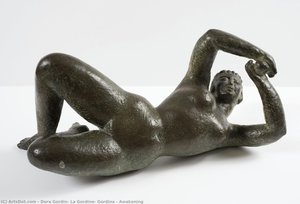
  • Top 3 works: Awakening
  • Museums on APS:
    • Galería y Museo Ben Uri
    • Galería y Museo Ben Uri
    • Galería y Museo Ben Uri
    • Galería y Museo Ben Uri
    • Galería y Museo Ben Uri
  • Top-ranked work: Awakening
  • Ver más…
  • Works on APS: 1
  • Copyright status: Under copyright
  • Died: 1991
  • Art period: Arte moderno
  • Born: 1895, Liepāja, Letonia

Test de arte

Solo hay una respuesta correcta para cada pregunta.

Pregunta 1:
¿Qué movimiento artístico influyó en los primeros años de Dora Gordine?
Pregunta 2:
¿Dónde nació Dora Gordine?
Pregunta 3:
¿Qué tipo de escultura se especializó Dora Gordine?
Pregunta 4:
¿Quién fue el esposo de Dora Gordine?
Pregunta 5:
¿Dónde ahora se encuentra la antigua casa de Dora Gordine?

Dora Gordine (1895–1991): Sculptor of Emotion and Remembrance

Dora Gordine, also known as La Gordine, was an Estonian Jewish modernist figurative and portraitist sculptor who left an indelible mark on the art world. Born in Liepāja, Latvia, on June 8, 1895, she navigated a turbulent era marked by artistic innovation alongside personal tragedy—the loss of her siblings during World War II—to become one of Britain’s most celebrated sculptors of the twentieth century. Her legacy extends beyond her impressive oeuvre; Dorich House, her former home transformed into a museum, stands as a testament to her vision and dedication to preserving artistic heritage.

Early Life and Artistic Influences

Information regarding Gordine's formative years remains somewhat elusive, shrouded in conflicting accounts of her birthdate—estimates ranging from 1895 to 1906—reflecting the challenges inherent in documenting history during periods of upheaval. Raised in a comfortable middle-class family with Russian Jewish parents, she benefited from educational opportunities afforded by her brother Leopold’s pursuit of engineering studies at Edinburgh University and her sister Anna's enrollment in Tallinn’s art school. These early influences profoundly shaped her artistic sensibilities, particularly her engagement with the “Noor Eesti” (‘Young Estonia’) group of artists who championed Art Nouveau—a style characterized by flowing lines, organic motifs, and opulent ornamentation—during Latvia’s brief independence from Russia. This aesthetic sensibility would permeate her subsequent work. The influence of Art Nouveau is palpable in her early sculptures, reflecting a desire to capture the beauty and dynamism of nature alongside refined artistic craftsmanship.

Parisian Years and Artistic Breakthrough

Moving to Paris in 1924 marked a pivotal moment in Gordine's artistic trajectory. Surrounded by the vibrant intellectual and artistic milieu of the city, she instinctively recognized the connection between music and sculpture—a conviction that fueled her creative exploration. Studying under Aristide Masillol, a renowned Catalan sculptor who emphasized anatomical accuracy and expressive gesture, she honed her skills and developed her distinctive sculptural style. Masillol’s teachings instilled in Gordine a meticulous attention to detail and a profound understanding of human anatomy, shaping the technical mastery evident throughout her artistic career. Her marriage to Hon. Richard Hare in 1925 solidified her presence in London's cultural landscape, fostering collaborations that enriched her creative output and establishing Dorich House as a symbol of her enduring commitment to artistic preservation.

Portrait Sculpture and Recognition

Gordine swiftly established herself as a prolific portrait sculptor, attracting commissions from prominent figures across various disciplines—actors like Dorothy Tutin and Edith Evans, ballet dancers such as Beryl Gray, art historians like Sir Kenneth Clark, and writers like Emlyn Williams—demonstrating her ability to capture the essence of her subjects’ personalities. Her sculptures—often imbued with subtle emotional nuances—became celebrated for their expressive power and technical brilliance. Notable exhibitions included those at the Royal Academy in London and the Society of Portrait Sculptors, cementing her reputation as one of the foremost sculptors of her generation. Critics lauded her ability to convey inner life through form and material, recognizing Gordine’s sculptures as enduring representations of human experience.

Legacy and Dorich House Museum

Dora Gordine’s artistic output spanned decades, reflecting a commitment to both formal innovation and humanist values. Her sculptures—ranging from monumental public commissions like “Happy Baby” to intimate portraits—remain powerful embodiments of modernist aesthetics and convey profound emotional resonance. The establishment of Dorich House Museum in Kingston upon Thames ensured that her creative vision would endure beyond her lifetime, offering visitors a glimpse into her artistic practice and fostering appreciation for the enduring power of sculpture as an art form. Her life’s work continues to inspire artists and scholars alike, solidifying Dora Gordine's place as a cornerstone of twentieth-century British art history. She died peacefully at Dorich House on December 29, 1991, leaving behind a legacy of artistic excellence and unwavering dedication to preserving cultural heritage.


WikiOO.org © WikiOO.org - Todos los derechos reservados