


1


Ažurirano Listopad 2026 · rangirano prema našoj ocjeni popularnosti (pretraživanja, posjeti i narudžbe za svako djelo) · 23 djela Albert Servaes u našem katalogu
Sažetak
Death of Teresa of Avila (1920) se smatra najpoznatijim djelom umjetnika Albert Servaes; u posjedu ga je Museum Catharijneconvent, Utrecht. Mary Magdalene (1933) i Mary Magdalene (1933) zauzimaju drugo i treće mjesto. Od 23 djela umjetnika Albert Servaes zabilježenih u katalogu, ovih je 13 najpoznatijih navedeno u nastavku, uz datum nastanka, muzej u kojem se nalaze i napomenu o svakom djelu.


2 muzeja u kojima se nalazi najviše djela s ove stranice.
| Muzej | Grad | Djela autora Albert Servaes | Slike iz ovog popisa |
|---|---|---|---|
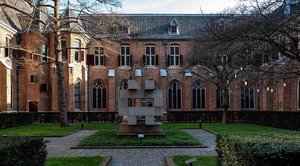 Museum Catharijneconvent |
Utrecht | 8 | Death of Teresa of Avila, Mary Magdalene, Mary Magdalene |
 Kraljevski muzej fine umjetnosti u Antverpenu |
Antverp | 5 | The Leie, Dying, Winter Landscape |
Odaberite desetljeće kako biste prikazali njegovo glavno djelo.
Death of Teresa of Avila (1920), Museum Catharijneconvent, Utrecht. Sljedeći unosi su Mary Magdalene (1933) i Mary Magdalene (1933).
37 godina: Albert Servaes je rođen/a 1883, a djelo Death of Teresa of Avila datira iz 1920.
Death of Teresa of Avila, Mary Magdalene, Mary Magdalene, Mary Magdalene, Mary Mediatrix, The Leie, Landscape with Heathland, Landscape with Stream, Landscape at Setting Sun i Dying. Gornji popis sadrži datum i muzej u kojem se nalazi svako od njih.
Katalog bilježi 23 djela umjetnika Albert Servaes, datiranih između 1904 i 1933.
Prvenstveno u Museum Catharijneconvent (Utrecht) i Kraljevski muzej fine umjetnosti u Antverpenu (Antverp). Gornja tablica muzeja prikazuje cjelokovitu distribuciju.
U razdoblju 1910s: 5 od 13 djela navedenih na ovoj stranici datira iz tog razdoblja, uključujući Landscape with Heathland.
Najraniji datirani rad na ovoj listi je The Leie (1904), a najnoviji je Mary Magdalene (1933).
Death of Teresa of Avila, Mary Magdalene i Mary Magdalene su među 8 djela na ovoj stranici u kolekciji muzeja Museum Catharijneconvent, Utrecht.
Born into a family of retailers in Ghent, Albert Servaes began his life far from the quiet intensity of the studio, working as a traveling salesman to satisfy his family's ambitions. Yet, even amidst the commerce of daily life, the impulse to create remained. He was largely self-taught, finding moments to practice his craft after the long hours of trade were finished. In 1904, he sought a different rhythm of life in the rustic village of Sint-Martens-Latem. This move placed him among a community of artists who practiced a subtle, mystical realism, but Servaes found their delicate symbolism insufficient for the depths he wished to explore.
His heart turned toward the spiritual and the visceral. He sought out the local church community, and his art began to reflect a profound interest in religion and mysticism. While others in the Latem School focused on quiet contemplation, Servaes moved toward a more raw, direct expression. He became a founder of Belgian expressionism, a style that favored the weight of the earth and the gravity of human suffering over the light-filled illusions of Impressionism.
The shadows of the Great War left an indelible mark on his vision. The horrors witnessed during this period infused his religious compositions with a sense of unadorned agony. His Stations of the Cross, created for a church in Luithagen, presented the passion of Christ with such starkness that they stirred significant conflict within the Catholic Church. He did not seek to beautify the divine; instead, he used thick lines and dark charcoal on Japanese paper to capture the physical strain of the crucifixion. The figures were often emaciated, their bodies drawn without elegance, reflecting a reality that was both heavy and somber.
This intensity extended to his treatment of the landscape. In works such as Field of Stubble, he utilized earthy colors and rough brushstrokes to convey the seriousness of nature. His technique often involved blurred perspectives and a deliberate use of darkness, creating a mood that felt both ancient and immediate. Even when working in more decorative mediums, such as the stained-glass windows designed for the World Exhibition in Paris, the themes of creation and judgment remained central to his output.
The later years of his life were marked by profound political and personal upheaval. During the German occupation of Belgium, Servaes took a path that would lead to his eventual isolation. His involvement with Flemish-nationalist groups and his presence in organizations controlled by the occupiers brought him into contact with figures like Joseph Goebbels. These associations, though perhaps driven by his specific political convictions at the time, carried heavy consequences. As the war drew to a close in 1944, he fled Belgium, traveling through Holland, Germany, and Austria to find refuge.
He eventually settled in Switzerland, becoming a naturalized citizen and living in Lucerne. The transition was not easy; he faced accusations from fellow artists regarding his wartime conduct, and a Belgian court sentenced him in absentia. Despite the turbulence of his final decades, his artistic legacy remained rooted in that early, powerful connection to the Flemish soil and the spiritual struggles of the human condition. He left behind a body of work that refused to look away from the grit and the glory of existence.


