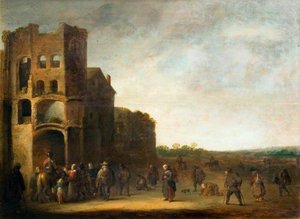
Pieter de Bloot: Un pittore di paesaggi olandese che cattura la tranquillità rurale
Pieter de Bloot (1601 – circa 6 novembre 1658) si staglia come una figura significativa, sebbene spesso trascurata, nel panorama artistico dell'Età dell'Oro olandese. Nato a Rotterdam, egli emerse da una famiglia profondamente immersa nella tradizione artistica: suo padre, Jan van Asely, era egli stesso un rispettato ritrattista, un legame che lo inserì saldamente nella vibrante scena artistica di Delft e ne plasmò le inclinazioni stilistiche. Sebbene sia rimasto in ombra rispetto a contemporanei del calibro di Rembrandt e Vermeer, il contributo di de Bloot alla pittura di genere, in particolare ai paesaggi intrisi di prospettiva atmosferica e alle dettagliate rappresentazioni della vita rurale, merita una rinnovata ammirazione.- Giovinezza e formazione: Gli anni formativi di De Bloot furono dedicati al perfezionamento delle sue abilità sotto la tutela del padre, assorbendo i principi del ritratto classico e padroneggiando tecniche cruciali per trasmettere emozione e realismo. Questa solida base nella pittura tradizionale avrebbe influenzato profondamente le sue successive imprese artistiche.
- Matrimonio e famiglia: La sua vita fu segnata da diversi matrimoni — il primo con Maria van der Linde, seguito da Elisabeth van Nieuwenhuijzen e, infine, con Anna Catharina van Voorbergen — una testimonianza delle convenzioni sociali del suo tempo. Tragicamente, due delle sue mogli soccomperono a una malattia poco dopo le nozze, lasciandogli un doloroso monito sulla fragilità della vita.
Lo stile artistico e le influenze di De Blolet
Lo stile artistico di De Bloot è caratterizzato da un'attenzione meticolosa al dettaglio e da un impegno incrollabile nel catturare l'essenza dei suoi soggetti. A differenza di molti artisti della sua epoca che prediligevano grandi narrazioni o figure idealizzate, De Bloot si concentrò principalmente sui paesaggi — spesso serene vedute di campagna — e su scene di genere che ritraevano la quotidiana vita contadina. Le sue tele risuonano di un palpabile senso di realismo, ottenuto attraverso l'uso magistrale del chiaroscuro — i drammatici contrasti tra luce e ombra — che riflette le tecniche sostenute da Caravaggio e influenzò le sue scelte compositive. La propensione dell'artista per la prospettiva atmosferica, evidente in opere come “Un traghetto in un mare calmo”, dimostra una comprensione dei principi scientifici volti a trasmettere profondità e illusione spaziale.Opere notevoli e traguardi raggiunti
Tra i dipinti celebri di De Bloot figurano "L'ufficio dell'avvocato", che mostra una scena d'interno meticolosamente resa, specchio delle realtà sociali del suo tempo, e “San Martino e il mendicante”, che esemplifica la sensibilità artistica barocca con la sua ritrazione emotiva della devozione religiosa. Le sue commissioni includevano monumentali scheemakers o sopraporte per importanti edifici civili di Delft — in particolare il municipio Prinsenhof — consolidando la sua reputazione di artista rispettato all'interno dell'élite culturale della città. Inoltre, collaborò con Pieter Jansz van Asch a un ritratto mezzotinto, dimostrando un apprezzamento per la stampa accanto alla pittura.Significato storico ed eredità
L'opera di Pieter de Bloot rappresenta una sfaccettatura cruciale del patrimonio artistico olandese: una celebrazione della bellezza pastorale e dell'umile dignità dell'esistenza rurale. Sebbene la sua produzione possa non rivaleggiare con quella di Rembrandt o Vermeer in termini di fama, i suoi dipinti continuano a affascinare gli spettatori con la loro atmosfera evocativa e la loro incrollabile fedeltà all'osservazione. Il suo lavoro funge da preziosa finestra sulle correnti sociali e intellettuali del XVII secolo, ricordandoci che l'eccellenza artistica può fiorire attraverso diversi approcci stilistici — una testimonianza del potere duraturo della pittura di paesaggio e della sua capacità di trasmettere profonde emozioni umane.Domande e risposte
Come posso trovare tutte le opere di Pieter De Bloot suddivise per tecnica?
La pagina Per tecnica raggruppa le opere di Pieter De Bloot per tecnica.
In quale città e in quale paese è nato/a Pieter De Bloot?
Pieter De Bloot è nato a Rotterdam, in Paesi Bassi.
A quale periodo storico appartiene l'opera di Pieter De Bloot?
Pieter De Bloot ha operato nel periodo Età Moderna, collocando storicamente la sua attività.