Famous artists · A reference list of the great painters

List of Famous Artists: The 100 Greatest Painters of All Time

In this ranking, the most famous artist of all time is Leonardo Da Vinci, documented here with Mona Lisa (La Gioconda) and L'Ultima Cena. The following entries are Pablo Picasso, Rembrandt, Michelangelo Buonarroti and Vincent Van Gogh. The list below records the 100 greatest painters in history in rank order, with dates, movement and principal works for each entry.

Method: the WikiOO.org editors compiled this ranking and reviewed every entry by hand in October 2026. Each position reflects three criteria: present-day fame, meaning how widely the painter is known and read about; documented influence on later artists; and representation in the collections of major museums. The 100 entries are limited to painters; as in museum collections generally, Europe and North America predominate.

Entries 1 to 10

Posizione 1 Leonardo Da Vinci

1. Leonardo Da Vinci (1452–1519)

Italian · High Renaissance · birthplace: Anchiano

Known for: Mona Lisa (La Gioconda), L'Ultima Cena, La Dama con l'Ermellino

The archetype of the Renaissance genius: painter, engineer and anatomist whose notebooks run to some 7,000 surviving pages. Fewer than twenty paintings are firmly his, yet the Mona Lisa, stolen from the Louvre in 1911, became the most visited painting on earth, and his Last Supper fixed how the West pictures that scene.

Mona Lisa (La Gioconda), 1519
Mona Lisa (La Gioconda), 1519 · Museo del Louvre
L'Ultima Cena, 1495
L'Ultima Cena, 1495 · Chiesa di Santa Maria delle Grazie
La Dama con l'Ermellino, 1490
La Dama con l'Ermellino, 1490 · Museo di Czartoryski
Consult the 577 works of Leonardo Da Vinci
Posizione 2 Pablo Picasso

2. Pablo Picasso (1881–1973)

Spanish · Cubism · born in Malaga

Principal works: Guernica, Le Giovani Donne di Avignone, Il vecchio chitarrista

Over a career of almost 80 years Picasso co-invented Cubism with Georges Braque, broke the single viewpoint of painting with Les Demoiselles d'Avignon (1907) and turned the bombing of a Basque town into Guernica, the 20th century's best-known protest image. He left an estimated 50,000 works across painting, sculpture, ceramics and print.

Guernica, 1937
Guernica, 1937 · Museo Nazionale Centro d'Arte Reina Sofía
Le Giovani Donne di Avignone, 1907
Le Giovani Donne di Avignone, 1907 · Museum of Modern Art
Il vecchio chitarrista
Il vecchio chitarrista · Art Institute of Chicago
Catalogue entry: Pablo Picasso (2,365 works)
Posizione 3 Rembrandt

3. Rembrandt (1606–1669)

Dutch · Dutch Golden Age · birthplace: Leida

Known for: Notte in Osservanza, La lezione di anatomia del dottor Nicolaes Tulp, Il ritorno del figlio prodigo

The greatest painter of the Dutch Golden Age and of the human face. Rembrandt's light and shadow, used to show thought rather than drama, run from The Night Watch (1642), his huge group portrait of an Amsterdam militia, to about 80 self-portraits that record forty years of his own ageing with unflinching honesty.

Notte in Osservanza, 1642
Notte in Osservanza, 1642 · Rijksmuseum
La lezione di anatomia del dottor Nicolaes Tulp, 1632
La lezione di anatomia del dottor Nicolaes Tulp, 1632 · Mauritshuis
Il ritorno del figlio prodigo, 1662
Il ritorno del figlio prodigo, 1662 · Museo dell'Ermitage
Consult the 1,554 works of Rembrandt
Posizione 4 Michelangelo Buonarroti

4. Michelangelo Buonarroti (1475–1564)

Italian · High Renaissance · born in Caprese Michelangelo

Notable works: La Creazione di Adamo, Giudizio Universale, La Sibilla Libica

A sculptor who called himself one, Michelangelo still painted the most famous ceiling in the world: 500 square metres of the Sistine Chapel, finished in 1512, including The Creation of Adam. Thirty years later he covered its altar wall with The Last Judgment. His muscular, twisting bodies set the course for Mannerism and the Baroque.

La Creazione di Adamo, 1512
La Creazione di Adamo, 1512 · Cappella Sistina
Giudizio Universale, 1537
Giudizio Universale, 1537 · Cappella Sistina
La Sibilla Libica, 1511
La Sibilla Libica, 1511 · Cappella Sistina
Michelangelo Buonarroti in the catalogue: 696 works
Posizione 5 Vincent Van Gogh

5. Vincent Van Gogh (1853–1890)

Dutch · Post-Impressionism · born in Zundert

Principal works: Notte Stellata (New York, MoMA), Girasoli, Terrazza del Caffè sulla Place du Forum, Arles, di Notte

Van Gogh painted for barely ten years and sold almost nothing while he lived, yet his roughly 860 oil paintings, many made in his last two years in Arles, Saint-Rémy and Auvers, are now among the most reproduced images ever. The Starry Night and the Sunflowers made his thick, swirling brushwork and pure colour instantly recognisable.

Notte Stellata (New York, MoMA), 1889
Notte Stellata (New York, MoMA), 1889 · Museum of Modern Art
Girasoli, 1888
Girasoli, 1888 · Bayerische Staatsgemaldesammlungen
Terrazza del Caffè sulla Place du Forum, Arles, di Notte, 1888
Terrazza del Caffè sulla Place du Forum, Arles, di Notte, 1888 · Kröller-Müller Museum
Catalogue entry: Vincent Van Gogh (2,857 works)
Posizione 6 Claude Monet

6. Claude Monet (1840–1926)

French · Impressionism · born in Parigi

Principal works: Impressione, Alba, Ninfee (o Nympheas), La Passeggiata. Donna con un Parasole

The founder of Impressionism: the movement takes its name from his Impression, Sunrise (1872). Monet painted the same haystack, cathedral or pond at different hours to catch changing light, and spent his last thirty years painting the water lilies of his garden at Giverny, a series that points straight to abstract art.

Impressione, Alba, 1872
Impressione, Alba, 1872 · Musée Marmottan Monet
Ninfee (o Nympheas), 1916
Ninfee (o Nympheas), 1916 · Museo Nazionale d'Arte Occidentale
La Passeggiata. Donna con un Parasole, 1875
La Passeggiata. Donna con un Parasole, 1875 · National Gallery of Art
Catalogue entry: Claude Monet (2,448 works)
Posizione 7 Albrecht Dürer

7. Albrecht Dürer (1471–1528)

German · Northern Renaissance · born in Norimberga

Principal works: Coniglio Giovane, Melencolia I, Autoritratto a 22 anni

Germany's great Renaissance master brought Italian ideas north and made the print an art of its own. Dürer's engravings and woodcuts, such as Melencolia I and the Rhinoceros, travelled across Europe; in his 1500 Self-Portrait he painted himself frontally, in a pose that recalls images of Christ. His Young Hare is still a model of observation.

Coniglio Giovane, 1502
Coniglio Giovane, 1502 · Albertina
Melencolia I
Melencolia I · Kupferstichkabinett
Autoritratto a 22 anni, 1493
Autoritratto a 22 anni, 1493 · Museo del Louvre
Catalogue entry: Albrecht Dürer (1,220 works)
Posizione 8 Caravaggio

8. Caravaggio (1571–1610)

Italian · Baroque · born in Milano

Notable works: La Vocazione di San Matteo, Giuditta che decapita Oloferne, Il Banchetto di Emmao

Caravaggio painted saints as street people, lit from one side against black backgrounds. That stark light, called tenebrism, made The Calling of Saint Matthew a sensation in Rome in 1600 and spread across Europe through his followers. His violent life, a death sentence for killing a man in a brawl, and his death at 38 added to a legend that has never faded.

La Vocazione di San Matteo, 1599
La Vocazione di San Matteo, 1599 · San Luigi dei Francesi
Giuditta che decapita Oloferne, 1598
Giuditta che decapita Oloferne, 1598 · Galleria Nazionale d'Arte Antica
Il Banchetto di Emmao
Caravaggio in the catalogue: 247 works
Posizione 9 Raffaello Sanzio

9. Raffaello Sanzio (1483–1520)

Italian · High Renaissance · birthplace: Urbino

Known for: Scuola di Atene, La Madonna Sistina, La Trasfigurazione

Raphael gave the High Renaissance its ideal of harmony and grace. In his twenties he painted The School of Athens in the Vatican, gathering Plato, Aristotle and the thinkers of antiquity in one perfect space, and his gentle Madonnas became the model for religious painting for four centuries. He died at 37, already the most admired painter in Rome.

Scuola di Atene, 1511
Scuola di Atene, 1511 · Palazzo Apostolico
La Madonna Sistina, 1513
La Madonna Sistina, 1513 · Staatliche Kunstsammlungen Dresden
La Trasfigurazione, 1520
La Trasfigurazione, 1520 · Musei Vaticani
Consult the 607 works of Raffaello Sanzio
Posizione 10 Diego Velázquez

10. Diego Velázquez (1599–1660)

Spanish · Baroque · born in Siviglia

Notable works: Las Meninas (Le Damigelle) o la Famiglia Reale, La Venere di Rokeby, La Resa di Breda (Las Lanzas)

Court painter to Philip IV of Spain, Velázquez painted kings, dwarfs and servants with the same loose, exact brushwork. Las Meninas (1656), in which the painter looks out at us while painting the royal couple, is one of the most analysed pictures in history. Manet called him 'the painter of painters'.

Las Meninas (Le Damigelle) o la Famiglia Reale, 1656
Las Meninas (Le Damigelle) o la Famiglia Reale, 1656 · Museo del Prado
La Venere di Rokeby, 1648
La Venere di Rokeby, 1648 · National Gallery, Londra
La Resa di Breda (Las Lanzas), 1634
La Resa di Breda (Las Lanzas), 1634 · Museo del Prado
Diego Velázquez in the catalogue: 468 works

Entries 11 to 20

Posizione 11 Paul Cézanne

11. Paul Cézanne (1839–1906)

French · Post-Impressionism · born in Aix-en-Provence

Principal works: I Giocatori di Carte, Mont Sainte-Victoire Seen from the Bibemus Quarry, I Grandi Bagnanti

Cézanne rebuilt painting from cylinders, spheres and cones. His dozens of views of the Mont Sainte-Victoire, his apples and his Card Players look solid and slightly unstable at once, and that shift opened the way to Cubism. Matisse and Picasso both called him 'the father of us all'.

I Giocatori di Carte, 1893
I Giocatori di Carte, 1893 · Musée d'Orsay
Mont Sainte-Victoire Seen from the Bibemus Quarry, 1897
Mont Sainte-Victoire Seen from the Bibemus Quarry, 1897 · Baltimore Museum of Art
I Grandi Bagnanti, 1900
I Grandi Bagnanti, 1900 · National Gallery, Londra
Catalogue entry: Paul Cézanne (1,227 works)
Posizione 12 Francisco Goya

12. Francisco Goya (1746–1828)

Spanish · Romanticism · born in Fuendetodos

Principal works: Il Terzo di Maggio 1808 - L'Esecuzione dei Difensori di Madrid, Saturno che divora il figlio, La maja desnuda. Madrid, Museo del Prado.

Goya painted the Spanish court, then the horrors of war and his own nightmares. The Third of May 1808 turned an execution of civilians into the first modern war painting, and the Black Paintings he made on the walls of his house, including Saturn Devouring His Son, are among the darkest images in art.

Il Terzo di Maggio 1808 - L'Esecuzione dei Difensori di Madrid
Saturno che divora il figlio, 1823
Saturno che divora il figlio, 1823 · Museo del Prado
La maja desnuda. Madrid, Museo del Prado., 1797
Catalogue entry: Francisco Goya (1,429 works)
Posizione 13 Giotto

13. Giotto (1267–1337)

Italian · Proto-Renaissance · born in Vicchio

Principal works: Lamento (Il Dolore di Cristo), No. 31 Scene dalla Vita di Cristo: 15. L'Arresto di Cristo (Bacio di Giuda), Madonna in Maestà

Giotto broke with flat Byzantine icons and painted people with weight, emotion and space around them. His fresco cycle in the Scrovegni Chapel in Padua, finished around 1305, is often called the starting point of Western painting. He also designed the bell tower of Florence cathedral, which still bears his name.

Lamento (Il Dolore di Cristo), 1306
No. 31 Scene dalla Vita di Cristo: 15. L'Arresto di Cristo (Bacio di Giuda), 1304
No. 31 Scene dalla Vita di Cristo: 15. L'Arresto di Cristo (Bacio di Giuda), 1304 · Cappella degli Scrovegni
Madonna in Maestà, 1310
Catalogue entry: Giotto (485 works)
Posizione 14 Andy Warhol

14. Andy Warhol (1928–1987)

American · Pop Art · born in Pittsburgh

Principal works: Campbell's soup cans, Marilyn Diptych, Triple Elvis

Warhol made consumer goods and celebrities into art: Campbell's Soup Cans (1962), the Marilyn silkscreens, the Brillo boxes. His studio, the Factory, produced images like a production line, and his line that everyone would be famous for fifteen minutes predicted the age of television and social media. He is the face of Pop Art.

Campbell's soup cans, 1962
Campbell's soup cans, 1962 · Museum of Modern Art
Marilyn Diptych, 1962
Triple Elvis, 1963
Triple Elvis, 1963
Catalogue entry: Andy Warhol (428 works)
Posizione 15 Henri Matisse

15. Henri Matisse (1869–1954)

French · Fauvism · born in Le Cateau-Cambrésis

Principal works: La Danza, Armonia nel Rosso, Donna con un Cappello

Matisse led the Fauves, the 'wild beasts' who used colour for feeling rather than description, and remained Picasso's great rival for fifty years. From The Dance and The Red Studio to the paper cut-outs of his last decade, such as The Snail, his work is a lesson in how far pure colour can carry a picture.

La Danza, 1909
La Danza, 1909 · Museo dell'Ermitage
Armonia nel Rosso, 1908
Armonia nel Rosso, 1908 · Museo dell'Ermitage
Donna con un Cappello, 1905
Catalogue entry: Henri Matisse (1,214 works)
Posizione 16 Vasilij Vasil'evič Kandinskij

16. Vasilij Vasil'evič Kandinskij (1866–1944)

Russian · Abstract art · born in Mosca

Notable works: Composizione VIII, Composizione VII, Il cavaliere blu

Kandinsky is usually credited with some of the first purely abstract paintings, around 1910-1913. He co-founded the Blue Rider group in Munich, taught at the Bauhaus and argued, in Concerning the Spiritual in Art, that colour and form act on the soul like music. Composition VII is his densest statement of that idea.

Composizione VIII, 1923
Composizione VIII, 1923 · Solomon R. Guggenheim Museum
Composizione VII, 1913
Il cavaliere blu
Il cavaliere blu
Vasilij Vasil'evič Kandinskij in the catalogue: 728 works
Posizione 17 Peter Paul Rubens

17. Peter Paul Rubens (1577–1640)

Flemish · Baroque · born in Siegen

Notable works: Discesa dalla Croce, Il Sollevamento della Croce, Il Giudizio di Paride

The great painter of the Flemish Baroque ran Europe's busiest workshop in Antwerp and worked as a diplomat between courts. Rubens' energetic compositions, warm flesh and swirling movement fill altarpieces such as The Descent from the Cross and the 24 canvases of the Marie de' Medici cycle in the Louvre. 'Rubenesque' entered the language from his figures.

Discesa dalla Croce, 1618
Discesa dalla Croce, 1618 · Museo dell'Ermitage
Il Sollevamento della Croce, 1620
Il Giudizio di Paride, 1606
Il Giudizio di Paride, 1606 · Museo del Prado
Peter Paul Rubens in the catalogue: 1,641 works
Posizione 18 Edvard Munch

18. Edvard Munch (1863–1944)

Norwegian · Expressionism · birthplace: Ådalsbruk

Known for: Il Grido, Madonna, La bambina malata - versione dipinta - 1926

The Scream (1893) made Munch the painter of modern anxiety: a figure on a bridge under a blood-red sky, painted in several versions, one of which sold for $119.9 million in 2012. His Frieze of Life on love, jealousy and death made him a founder of Expressionism.

Il Grido, 1893
Il Grido, 1893 · Nasjonalgalleriet
Madonna, 1894
Madonna, 1894 · Munch Museum
La bambina malata - versione dipinta - 1926
Consult the 2,121 works of Edvard Munch
Posizione 19 Jan Vermeer

19. Jan Vermeer (1632–1675)

Dutch · Dutch Golden Age · born in Delft

Principal works: La ragazza con l'orecchino di perla, La Cammera, L'Arte della Pittura

Only about 35 paintings are attributed to Vermeer, almost all quiet interiors in Delft lit from a window on the left. Girl with a Pearl Earring, The Milkmaid and The Art of Painting show a control of daylight and colour that no one has matched. Forgotten for two centuries, he was rediscovered in the 1860s.

La ragazza con l'orecchino di perla, 1665
La ragazza con l'orecchino di perla, 1665 · Mauritshuis
La Cammera, 1658
La Cammera, 1658 · Rijksmuseum
L'Arte della Pittura, 1665
L'Arte della Pittura, 1665 · Kunsthistorisches Museum
Catalogue entry: Jan Vermeer (226 works)
Posizione 20 Paul Gauguin

20. Paul Gauguin (1848–1903)

French · Post-Impressionism · born in Parigi

Notable works: Da dove veniamo cosa siamo dove andiamo, La Visione dopo il Sermone (anche nota come Giacobbe che lotta con l'angelo), Cristo Giallo

Gauguin left a Paris stockbroking career for painting, then left Europe for Tahiti and the Marquesas. His flat areas of bold colour and symbolic scenes, such as Where Do We Come From? What Are We? Where Are We Going?, freed colour from realism and deeply influenced Matisse and the Fauves.

Da dove veniamo cosa siamo dove andiamo, 1897
Da dove veniamo cosa siamo dove andiamo, 1897 · Museum of Fine Arts
La Visione dopo il Sermone (anche nota come Giacobbe che lotta con l'angelo), 1888
Cristo Giallo, 1889
Cristo Giallo, 1889 · Buffalo AKG Art Museum
Paul Gauguin in the catalogue: 928 works

Entries 21 to 30

Posizione 21 Édouard Manet

21. Édouard Manet (1832–1883)

French · Realism and Impressionism · born in ex X arrondissement di Parigi

Notable works: Olimpia, Il Pranzo sull'Erba, Un bar alle Folies-Bergère

Manet painted modern Paris and shocked it: the nude picnic of Le Déjeuner sur l'herbe (1863) and the direct gaze of Olympia caused scandals at the Salon. His flat, frank brushwork made him the bridge from Realism to Impressionism, and A Bar at the Folies-Bergère is his last masterpiece.

Olimpia, 1863
Olimpia, 1863 · Musée d'Orsay
Il Pranzo sull'Erba, 1863
Il Pranzo sull'Erba, 1863 · Musée d'Orsay
Un bar alle Folies-Bergère, 1882
Un bar alle Folies-Bergère, 1882 · Courtauld Gallery
Édouard Manet in the catalogue: 587 works
Posizione 22 El Greco

22. El Greco (1541–1614)

Greek-born Spanish · Mannerism · born in Candia

Principal works: La Sepoltura del Conte d'Orgaz, Vista di Toledo, Lo Spogliamento

Born in Crete, trained in Venice, settled in Toledo, El Greco painted stretched figures, flickering light and acid colour that baffled his contemporaries. The Burial of the Count of Orgaz and the View of Toledo were rediscovered by the Expressionists and Picasso, who saw in him a modern before his time.

La Sepoltura del Conte d'Orgaz, 1586
La Sepoltura del Conte d'Orgaz, 1586 · Santo Tomé
Vista di Toledo, 1599
Vista di Toledo, 1599 · Metropolitan Museum of Art
Lo Spogliamento, 1583
Lo Spogliamento, 1583 · Alte Pinakothek
Catalogue entry: El Greco (750 works)
Posizione 23 Frida Kahlo

23. Frida Kahlo (1907–1954)

Mexican · Surrealism and Mexican folk art · born in Coyoacán

Principal works: Frida Kahlo - 'Le Due Fride', Autoritratto con Collana di Spine e Colibrì, La Colonna Spezzata

Frida Kahlo painted about 55 self-portraits, many from her bed after a bus accident at 18 left her in lifelong pain. The Two Fridas and Self-Portrait with Thorn Necklace and Hummingbird mix Mexican folk art, pain and politics. In 1939 the Louvre bought one of her works, a first for a 20th-century Mexican artist.

Frida Kahlo - 'Le Due Fride', 1939
Autoritratto con Collana di Spine e Colibrì
La Colonna Spezzata, 1944
La Colonna Spezzata, 1944 · Museo Dolores Olmedo
Catalogue entry: Frida Kahlo (218 works)
Posizione 24 Jan Van Eyck

24. Jan Van Eyck (1390–1441)

Flemish · Early Netherlandish · born in Maaseik

Notable works: Ritratto di Giovanni Arnolfini e sua Moglie, L'altare di Gand: Adorazione del Bambino Gesù, La Vergine a San Rolin

Jan van Eyck perfected oil painting in Bruges and with it a new realism: reflections, fabric, fur and light rendered with microscopic precision. The Arnolfini Portrait (1434), with its convex mirror, and the Ghent Altarpiece, the most stolen artwork in history, are founding works of Northern Renaissance painting.

Ritratto di Giovanni Arnolfini e sua Moglie, 1434
Ritratto di Giovanni Arnolfini e sua Moglie, 1434 · National Gallery, Londra
L'altare di Gand: Adorazione del Bambino Gesù, 1425
L'altare di Gand: Adorazione del Bambino Gesù, 1425 · Cattedrale di San Bavone
La Vergine a San Rolin, 1435
La Vergine a San Rolin, 1435 · Museo del Louvre
Jan Van Eyck in the catalogue: 228 works
Posizione 25 Tiziano Vecellio

25. Tiziano Vecellio (1490–1576)

Italian · Venetian Renaissance · birthplace: Pieve di Cadore

Known for: La Venere di Urbino, Assunzione della Vergine, Bacco e Arianna

Titian dominated Venetian painting for some sixty years and painted for popes, emperors and kings. He built pictures from colour rather than drawing, from the radiant Assumption of the Virgin in the Frari to the Venus of Urbino, the model for centuries of reclining nudes, and his loose late brushwork anticipates Impressionism.

La Venere di Urbino, 1538
La Venere di Urbino, 1538 · Galleria degli Uffizi
Assunzione della Vergine, 1516
Assunzione della Vergine, 1516 · Basilica di Santa Maria Gloriosa dei Frari
Bacco e Arianna, 1523
Bacco e Arianna, 1523 · National Gallery, Londra
Consult the 953 works of Tiziano Vecellio
Posizione 26 Sandro Botticelli

26. Sandro Botticelli (1445–1510)

Italian · Early Renaissance · born in Firenze

Notable works: La Nascita di Venere, allegoria - Primavera, Adorazione dei Magi

The painter of Medici Florence. Botticelli's Birth of Venus and Primavera, both in the Uffizi, revived the gods of antiquity with flowing lines and delicate grace. Forgotten for three centuries, he was rediscovered by the Pre-Raphaelites, and his Venus is now one of the most reproduced images of the Renaissance.

La Nascita di Venere, 1485
La Nascita di Venere, 1485 · Galleria degli Uffizi
allegoria - Primavera
Adorazione dei Magi
Adorazione dei Magi
Sandro Botticelli in the catalogue: 733 works
Posizione 27 Salvador Dalí

27. Salvador Dalí (1904–1989)

Spanish · Surrealism · birthplace: Figueres

Known for: La Persistenza della Memoria, Cigni che Riflettono gli Elefanti, 1937, Gli Elefanti, 1948

The best-known Surrealist turned dreams into precise, hallucinatory images: the melting watches of The Persistence of Memory (1931) at MoMA are among the most recognised pictures of the 20th century. Dalí's moustache, provocations and showmanship made him one of the first artists to be a media celebrity.

La Persistenza della Memoria, 1980
Cigni che Riflettono gli Elefanti, 1937
Gli Elefanti, 1948
Gli Elefanti, 1948
Consult the 1,791 works of Salvador Dalí
Posizione 28 Gustav Klimt

28. Gustav Klimt (1862–1918)

Austrian · Vienna Secession · born in Baumgarten

Principal works: Il bacio, Ritratto di Adele Bloch-Bauer I, L'Albero della Vita

Klimt led the Vienna Secession and painted its golden age. The Kiss (1908) and the Portrait of Adele Bloch-Bauer I, covered in real gold leaf, combine Byzantine mosaic and Art Nouveau ornament. The Adele portrait, looted by the Nazis and returned to its heirs, sold in 2006 for $135 million.

Posizione 29 Piet Mondrian

29. Piet Mondrian (1872–1944)

Dutch · De Stijl · born in Amersfoort

Principal works: Composizione con Rosso, Blu e Giallo, Broadway Boogie Woogie, Avond (Evening): Il Albero Rosso

Mondrian reduced painting to black lines, white grounds and the three primary colours. His grid compositions of the 1920s, part of the De Stijl movement, influenced architecture, fashion and graphic design as much as painting. Broadway Boogie Woogie, painted in New York, swaps the black lines for jazz-like yellow blocks.

Composizione con Rosso, Blu e Giallo, 1930
Broadway Boogie Woogie, 1943
Broadway Boogie Woogie, 1943 · Museum of Modern Art
Avond (Evening): Il Albero Rosso, 1910
Catalogue entry: Piet Mondrian (692 works)
Posizione 30 Joan Miró

30. Joan Miró (1893–1983)

Spanish (Catalan) · Surrealism · born in Barcellona

Principal works: Harlequin's Carnival, La Fattoria, Il Campo Arato

The Catalan painter invented a language of floating signs, stars, eyes and biomorphic shapes in bright primary colours. Associated with Surrealism, Miró remained independent; The Harlequin's Carnival and the Constellations series of 1940-41 are his best-known works, and he also produced ceramics, murals and the Spanish tourism logo.

Harlequin's Carnival, 1925
Harlequin's Carnival, 1925 · Buffalo AKG Art Museum
La Fattoria, 1922
La Fattoria, 1922
Il Campo Arato, 1924
Il Campo Arato, 1924 · Solomon R. Guggenheim Museum
Catalogue entry: Joan Miró (428 works)

Entries 31 to 40

Posizione 31 Jean Michel Basquiat

31. Jean Michel Basquiat (1960–1988)

American · Neo-Expressionism · birthplace: Park Slope

Known for: Untitled - Testa di Diavolo, (Collezione Ampia, LA), Hollywood africans, Whitney, Punto di fusione del ghiaccio

Basquiat rose from the SAMO graffiti tag on New York walls to international fame in less than five years, working closely with Andy Warhol. His crowded canvases of crowns, skulls and words confront race, power and history. In 2017 his untitled skull of 1982 sold for $110.5 million, a record for an American artist at the time.

Untitled - Testa di Diavolo, (Collezione Ampia, LA), 1981
Hollywood africans, Whitney, 1983
Punto di fusione del ghiaccio, 1984
Punto di fusione del ghiaccio, 1984 · The Broad
Consult the 135 works of Jean Michel Basquiat
Posizione 32 Eugène Delacroix

32. Eugène Delacroix (1798–1863)

French · Romanticism · born in Saint-Maurice

Notable works: La Libertà guida il popolo, La Morte di Sardanapalo, Le donne di Algeri nel loro appartamento

The leader of French Romanticism painted passion, colour and movement against the cool line of Ingres. Liberty Leading the People (1830), with its bare-breasted Marianne on the barricades, became the symbol of the French Republic. His travels in Morocco in 1832 fed his use of colour, later studied by the Impressionists.

La Libertà guida il popolo, 1831
La Libertà guida il popolo, 1831 · Museo del Louvre
La Morte di Sardanapalo, 1827
La Morte di Sardanapalo, 1827 · Museo del Louvre
Le donne di Algeri nel loro appartamento, 1849
Le donne di Algeri nel loro appartamento, 1849 · Musée Fabre
Eugène Delacroix in the catalogue: 604 works
Posizione 33 Masaccio

33. Masaccio (1401–1428)

Italian · Early Renaissance · birthplace: San Giovanni Valdarno

Known for: Trinità, Il tributo del denaro, L'espulsione dal Giardino dell'Eden

Masaccio died at 26 yet changed painting. His frescoes in the Brancacci Chapel in Florence and the Holy Trinity in Santa Maria Novella (around 1427) are among the first paintings built on mathematical one-point perspective, with figures that stand and cast shadows. Every Florentine artist after him, Michelangelo included, studied them.

Trinità, 1425
Trinità, 1425 · Santa Maria Novella
Il tributo del denaro, 1425
L'espulsione dal Giardino dell'Eden, 1426
Consult the 97 works of Masaccio
Posizione 34 Gustave Courbet

34. Gustave Courbet (1819–1877)

French · Realism · birthplace: Ornans

Known for: Burial at Ornans, I Rottami di Pietra, Lo Studio del Pittore

Courbet declared that he would paint only what he could see, and founded Realism. A Burial at Ornans gave a village funeral the size of a history painting; The Stone Breakers showed manual labour without idealisation. His provocations, from The Origin of the World to his role in the Paris Commune, made him the model of the rebel artist.

Burial at Ornans, 1849
Burial at Ornans, 1849 · Musée d'Orsay
I Rottami di Pietra, 1849
I Rottami di Pietra, 1849 · Staatliche Kunstsammlungen Dresden
Lo Studio del Pittore, 1855
Lo Studio del Pittore, 1855 · Musée d'Orsay
Consult the 788 works of Gustave Courbet
Posizione 35 William Turner

35. William Turner (1775–1851)

British · Romanticism · born in Covent Garden

Notable works: La Battaglia di Temeraire Tirata al Suo Ultimo Molo per Essere Smantellata, Raino, Vapore e Velocità: La Ferrovia Occidentale Grande, La nave degli schiavi

Turner painted light, weather and speed until his canvases dissolved into colour. The Fighting Temeraire and Rain, Steam and Speed are among Britain's favourite paintings, and he left some 30,000 works to the nation. Britain's leading contemporary art award, the Turner Prize, bears his name, and his face appears on the £20 note.

La Battaglia di Temeraire Tirata al Suo Ultimo Molo per Essere Smantellata
Raino, Vapore e Velocità: La Ferrovia Occidentale Grande
Raino, Vapore e Velocità: La Ferrovia Occidentale Grande · National Gallery, Londra
La nave degli schiavi
La nave degli schiavi · Museum of Fine Arts
William Turner in the catalogue: 870 works
Posizione 36 Nicolas Poussin

36. Nicolas Poussin (1594–1665)

French · French Classicism · born in Le Havre

Principal works: Et in Arcadia Ego, La Morta di Germanico, Primavera (Il Paradiso Terrestre)

Poussin, a Frenchman who worked mostly in Rome, became the model of classical order in painting. His carefully composed scenes from the Bible and myth, such as Et in Arcadia ego and The Four Seasons, turned reason and balance into a doctrine for the French Academy, and Cézanne wanted to 'redo Poussin after nature'.

Et in Arcadia Ego, 1637
Et in Arcadia Ego, 1637 · Museo del Louvre
La Morta di Germanico, 1627
La Morta di Germanico, 1627 · Minneapolis Institute of Art
Primavera (Il Paradiso Terrestre), 1664
Catalogue entry: Nicolas Poussin (412 works)
Posizione 37 Artemisia Gentileschi

37. Artemisia Gentileschi (1593–1653)

Italian · Baroque · born in Roma

Principal works: Giuditta che decapita Oloferne, Susanna e gli Anziani, Autoritratto come Allegoria della Pittura

Artemisia Gentileschi was the first woman admitted to Florence's Academy of the Arts of Drawing, in 1616. A follower of Caravaggio, she painted strong women from the Bible with unusual force: her Judith Slaying Holofernes is one of the most violent pictures of the Baroque. Rediscovered in the 1970s, she is now the most famous woman painter of the Old Masters.

Giuditta che decapita Oloferne, 1613
Giuditta che decapita Oloferne, 1613 · Museo di Capodimonte
Susanna e gli Anziani, 1610
Susanna e gli Anziani, 1610 · Schloss Weissenstein
Autoritratto come Allegoria della Pittura, 1639
Autoritratto come Allegoria della Pittura, 1639 · Royal Collection
Catalogue entry: Artemisia Gentileschi (104 works)
Posizione 38 Marc Chagall

38. Marc Chagall (1887–1985)

Russian-French · Modernism · born in Lëzna

Principal works: Io e il villaggio, Il Compleanno, Oltre la città

Born in a Jewish village near Vitebsk, Chagall painted it all his life: floating lovers, fiddlers on roofs, goats and violins. Between Cubism, Surrealism and folk tale, I and the Village and The Birthday are poetry in colour. He also designed the ceiling of the Paris Opéra and stained glass from Jerusalem to Reims.

Io e il villaggio, 1911
Io e il villaggio, 1911 · Museum of Modern Art
Il Compleanno, 1915
Il Compleanno, 1915
Oltre la città, 1918
Catalogue entry: Marc Chagall (936 works)
Posizione 39 Caspar David Friedrich

39. Caspar David Friedrich (1774–1840)

German · Romanticism · born in Greifswald

Principal works: Il Viandante sulla Nebbia, Il mare di ghiaccio, Uomo e Donna che Contemplano la Luna

The great painter of German Romanticism showed lone figures facing immense nature, often seen from behind. Wanderer above the Sea of Fog has become the image of Romanticism itself, and The Sea of Ice and Monk by the Sea pushed landscape toward the sublime and the spiritual.

Il Viandante sulla Nebbia, 1818
Il Viandante sulla Nebbia, 1818 · Hamburger Kunsthalle
Il mare di ghiaccio, 1824
Il mare di ghiaccio, 1824 · Hamburger Kunsthalle
Uomo e Donna che Contemplano la Luna, 1824
Uomo e Donna che Contemplano la Luna, 1824 · Nationalgalerie, Berlino
Catalogue entry: Caspar David Friedrich (297 works)
Posizione 40 Edgar Degas

40. Edgar Degas (1834–1917)

French · Impressionism · born in Parigi

Principal works: La Danza in Classe, Il Bere dell'Assenzio, Ballerine Rosse

Degas exhibited with the Impressionists but called himself a realist. He painted dancers at the Paris Opéra in about 1,500 works, racecourses, laundresses and café life, with odd angles and cut-off figures taken from photography and Japanese prints. His sculpture Little Dancer Aged Fourteen shocked the public in 1881.

La Danza in Classe, 1874
La Danza in Classe, 1874 · Metropolitan Museum of Art
Il Bere dell'Assenzio, 1876
Il Bere dell'Assenzio, 1876 · Musée d'Orsay
Ballerine Rosse, 1885
Ballerine Rosse, 1885 · Hill-Stead Museum
Catalogue entry: Edgar Degas (1,074 works)

Entries 41 to 50

Posizione 41 Marcel Duchamp

41. Marcel Duchamp (1887–1968)

French-American · Dada · born in Blainville-Crevon

Notable works: Fontana, Nudo Scendendo una Cima, n. 2, L.H.O.O.Q., Mona Lisa con la barba

In 1917 Duchamp signed a urinal 'R. Mutt', titled it Fountain and changed what art could be: the 'readymade' made the idea more important than the hand. His Nude Descending a Staircase, No. 2 had already scandalised New York in 1913. Conceptual art and much of today's contemporary art descend from him.

Fontana, 1917
Fontana, 1917 · Tate Modern
Nudo Scendendo una Cima, n. 2, 1912
Nudo Scendendo una Cima, n. 2, 1912 · Philadelphia Museum of Art
L.H.O.O.Q., Mona Lisa con la barba, 1919
Marcel Duchamp in the catalogue: 162 works
Posizione 42 Hieronymus Bosch

42. Hieronymus Bosch (1450–1516)

Netherlandish · Early Netherlandish painting · birthplace: ’s Hertogenbosch

Known for: Il giardino delle delizie terrene, Il Tripolone di San Giovanni, Triptico della Tentazione di San Antonio

Bosch filled his panels with monsters, hybrid creatures and strange punishments that still defy full explanation. The Garden of Earthly Delights in the Prado, a triptych of paradise, pleasure and hell painted around 1500, is one of the most enigmatic paintings ever made. The Surrealists claimed him as an ancestor.

Il giardino delle delizie terrene, 1504
Il giardino delle delizie terrene, 1504 · Museo del Prado
Il Tripolone di San Giovanni, 1504
Il Tripolone di San Giovanni, 1504 · Museo del Prado
Triptico della Tentazione di San Antonio, 1506
Triptico della Tentazione di San Antonio, 1506 · Museo Nazionale di Arte Antica
Consult the 371 works of Hieronymus Bosch
Posizione 43 Piero Della Francesca

43. Piero Della Francesca (1415–1492)

Italian · Early Renaissance · born in Sansepolcro

Principal works: Baptismo di Cristo, La Flagellazione, Madonna e Bambino con Santi (Altare di Montefeltro)

Piero della Francesca was also a mathematician who wrote treatises on perspective and geometry. His serene, light-filled figures and clear spaces, in The Baptism of Christ, The Flagellation and the fresco cycle The Legend of the True Cross at Arezzo, make him the calmest and most geometric painter of the Early Renaissance.

Baptismo di Cristo, 1450
La Flagellazione, 1455
La Flagellazione, 1455 · Galleria Nazionale delle Marche
Madonna e Bambino con Santi (Altare di Montefeltro), 1474
Madonna e Bambino con Santi (Altare di Montefeltro), 1474 · Pinacoteca di Brera
Catalogue entry: Piero Della Francesca (287 works)
Posizione 44 Jacopo Tintoretto

44. Jacopo Tintoretto (1519–1594)

Italian · Venetian Mannerism · born in Venezia

Notable works: L'Ultima Cena, Il Miracolo di San Marco che Libera lo Schiavo, Paradiso

Tintoretto, the 'little dyer', painted Venice with fierce speed, dramatic perspective and flickering light. He covered the Scuola Grande di San Rocco with more than 50 canvases, and his Paradise in the Doge's Palace, about 22 metres wide, is among the largest canvas paintings in the world.

L'Ultima Cena, 1594
L'Ultima Cena, 1594 · San Giorgio Maggiore
Il Miracolo di San Marco che Libera lo Schiavo, 1548
Il Miracolo di San Marco che Libera lo Schiavo, 1548 · Gallerie dell'Accademia di Venezia
Paradiso, 1579
Paradiso, 1579 · Museo del Louvre
Jacopo Tintoretto in the catalogue: 707 works
Posizione 45 Pieter Bruegel Il Vecchio

45. Pieter Bruegel Il Vecchio (1525–1569)

Flemish · Northern Renaissance · born in Breda

Principal works: I Cacciatori nella Neve (Inverno), La Torre di Babele, Matrimonio di contadini

Pieter Bruegel the Elder painted Flemish peasants, proverbs and seasons with humour and a bird's-eye view. The Hunters in the Snow, The Peasant Wedding and The Tower of Babel turned everyday life and landscape into great subjects. The Kunsthistorisches Museum in Vienna holds about a third of his surviving paintings.

I Cacciatori nella Neve (Inverno), 1565
I Cacciatori nella Neve (Inverno), 1565 · Kunsthistorisches Museum
La Torre di Babele, 1563
La Torre di Babele, 1563 · Kunsthistorisches Museum
Matrimonio di contadini, 1568
Matrimonio di contadini, 1568 · Kunsthistorisches Museum
Catalogue entry: Pieter Bruegel Il Vecchio (254 works)
Posizione 46 Pierre-Auguste Renoir

46. Pierre-Auguste Renoir (1841–1919)

French · Impressionism · birthplace: Limoges

Known for: Ballo al Moulin de la Galette, Pranzo sulla barca, Due Sorelle (anche conosciuta come Sul Balcone)

Renoir painted the pleasures of modern Paris: dances, boating parties and sunlit faces. Bal du moulin de la Galette (1876) and Luncheon of the Boating Party are Impressionism at its most joyful. In old age, with hands crippled by arthritis, he kept painting with the brush strapped to his fingers.

Ballo al Moulin de la Galette, 1876
Ballo al Moulin de la Galette, 1876 · Musée d'Orsay
Pranzo sulla barca, 1881
Pranzo sulla barca, 1881 · The Phillips Collection
Due Sorelle (anche conosciuta come Sul Balcone), 1881
Due Sorelle (anche conosciuta come Sul Balcone), 1881 · Art Institute of Chicago
Consult the 2,287 works of Pierre-Auguste Renoir
Posizione 47 Paul Klee

47. Paul Klee (1879–1940)

German-Swiss · Expressionism · birthplace: Münchenbuchsee

Known for: Macchina che cinguetta 1, Senecio, Castello e Sole

Klee taught at the Bauhaus and wrote that 'colour and I are one' after a trip to Tunisia in 1914. His thousands of small works, such as Twittering Machine and Senecio, mix childlike signs, music and colour theory. The Nazis labelled his art 'degenerate'; the Zentrum Paul Klee in Bern holds about 4,000 of his works.

Macchina che cinguetta 1
Macchina che cinguetta 1 · Museum of Modern Art
Senecio, 1922
Senecio, 1922 · Kunstmuseum Basel
Castello e Sole, 1928
Consult the 669 works of Paul Klee
Posizione 48 Jackson Pollock

48. Jackson Pollock (1912–1956)

American · Abstract Expressionism · born in Cody

Principal works: Numero 1A, Uno. Numero 31, 1950, Convergenza

Pollock laid his canvases on the floor and dripped and poured paint from above, a method that made him the face of Abstract Expressionism and moved the centre of the art world from Paris to New York. A 1949 Life magazine article asked whether he was the greatest living painter in the United States. Number 1A, 1948 and Blue Poles are signature drip paintings.

Numero 1A
Numero 1A
Uno. Numero 31, 1950
Convergenza
Convergenza
Catalogue entry: Jackson Pollock (186 works)
Posizione 49 William Blake

49. William Blake (1757–1827)

British · Romanticism · born in Londra

Principal works: L'Antico dei Giorni, Newton, Il Grande Drago Rosso e la Donna Vestita di Sole

Poet, painter and engraver, Blake invented his own printing technique and his own mythology. His visionary images, such as The Ancient of Days, The Great Red Dragon paintings and the illustrations to Dante, were ignored in his lifetime and later revered by the Pre-Raphaelites, the Surrealists and the 1960s counterculture.

L'Antico dei Giorni, 1794
Newton
Newton
Il Grande Drago Rosso e la Donna Vestita di Sole
Il Grande Drago Rosso e la Donna Vestita di Sole · National Gallery of Art
Catalogue entry: William Blake (324 works)
Posizione 50 Beato Angelico

50. Beato Angelico (1395–1455)

Italian · Early Renaissance · birthplace: Vicchio

Known for: L'Annunciazione, Madonna dell'Umiltà, San Domenico Altarpiece

A Dominican friar, Fra Angelico painted with pure colour and gold for prayer. His frescoes in the cells of the San Marco convent in Florence and his Annunciation panels combine medieval devotion with the new Renaissance space. Pope John Paul II beatified him in 1982, and he is the patron of artists.

L'Annunciazione, 1430
L'Annunciazione, 1430 · Museo del Prado
Madonna dell'Umiltà, 1418
Madonna dell'Umiltà, 1418 · Museo dell'Ermitage
San Domenico Altarpiece, 1423
San Domenico Altarpiece, 1423 · Convento di San Domenico
Consult the 541 works of Beato Angelico

Entries 51 to 60

Posizione 51 Jacques-Louis David

51. Jacques-Louis David (1748–1825)

French · Neoclassicism · born in Parigi

Principal works: Il Serment degli Horatii, La Morte di Marat, La morte di Marat

David painted the French Revolution and then Napoleon. The Oath of the Horatii (1784) launched Neoclassicism; The Death of Marat made a murdered revolutionary a martyr; Napoleon Crossing the Alps and The Coronation of Napoleon built an emperor's image. His studio trained a generation, Ingres and Gros among them.

Il Serment degli Horatii, 1784
Il Serment degli Horatii, 1784 · Museo del Louvre
La Morte di Marat
La Morte di Marat
La morte di Marat, 1793
Catalogue entry: Jacques-Louis David (277 works)
Posizione 52 Kazimir Severinovič Malevič

52. Kazimir Severinovič Malevič (1879–1935)

Ukraine · Suprematism · birthplace: Kiev

Known for: Quadrato Nero (1930), Composizione Suprematista: Bianco su Bianco, Composizione Suprematista

Malevich showed a black square on a white ground in 1915 and declared the start of Suprematism, a painting of pure feeling with no objects at all. Black Square and White on White (1918) are among the most radical works of the 20th century and influenced Russian Constructivism, the Bauhaus and later minimalism.

Quadrato Nero (1930), 1930
Quadrato Nero (1930), 1930 · Museo dell'Ermitage
Composizione Suprematista: Bianco su Bianco, 1918
Composizione Suprematista, 1916
Consult the 564 works of Kazimir Severinovič Malevič
Posizione 53 Antoine Watteau

53. Antoine Watteau (1684–1721)

French · Rococo · born in Valenciennes

Notable works: Pilgrima a Citeri, Pierrot Content, Gilles

Watteau invented a new kind of painting, the fête galante: elegant couples in parks, music and melancholy. Pilgrimage to Cythera (1717) was accepted by the French Academy under that new category, and it opened the Rococo age. His Pierrot (also called Gilles) in the Louvre is one of the most haunting figures of the 18th century.

Pilgrima a Citeri, 1717
Pilgrima a Citeri, 1717 · Museo del Louvre
Pierrot Content, 1712
Pierrot Content, 1712 · Museo Thyssen-Bornemisza
Gilles, 1719
Gilles, 1719 · Museo del Louvre
Antoine Watteau in the catalogue: 271 works
Posizione 54 Amedeo Modigliani

54. Amedeo Modigliani (1884–1920)

Italian · School of Paris · born in Livorno

Notable works: Nudo Davanti, Ritratto di Jeanne Hebuterne, Nudo al Collo

Modigliani's long necks, almond eyes without pupils and simplified faces are recognisable at a glance. Working in Montparnasse, he combined Italian Renaissance line, African sculpture and Cézanne. He died at 35 in poverty; his Reclining Nude (1917-18) sold for $170.4 million in 2015.

Nudo Davanti
Nudo Davanti
Ritratto di Jeanne Hebuterne, 1918
Ritratto di Jeanne Hebuterne, 1918 · Metropolitan Museum of Art
Nudo al Collo, 1915
Nudo al Collo, 1915
Amedeo Modigliani in the catalogue: 663 works
Posizione 55 Jean-Auguste-Dominique Ingres

55. Jean-Auguste-Dominique Ingres (1780–1867)

French · Neoclassicism · birthplace: Montauban

Known for: La Grande Odalisca, Il bagno turco, Monsieur Bertin

Ingres defended line and classical drawing against Delacroix's colour in the great French debate of the 19th century. His impossibly long-backed Grande Odalisque, The Turkish Bath and his precise portraits of the bourgeoisie, such as Monsieur Bertin, influenced Degas, Picasso and Matisse. 'Ingres's violin', his amateur hobby, is a French idiom.

La Grande Odalisca, 1814
La Grande Odalisca, 1814 · Museo del Louvre
Il bagno turco, 1863
Il bagno turco, 1863 · Museo del Louvre
Monsieur Bertin, 1832
Monsieur Bertin, 1832 · Museo del Louvre
Consult the 610 works of Jean-Auguste-Dominique Ingres
Posizione 56 Andrea Mantegna

56. Andrea Mantegna (1431–1506)

Italian · Early Renaissance · born in Isola Mantegna

Principal works: Dopo1471 - La Lamentazione sul Cristo Morto, Il Parnasso, I Trionfi di Cesare: Trompetisti e Portabandiera

Mantegna brought archaeology and sculpture into painting in Padua and at the court of the Gonzaga in Mantua. His Lamentation over the Dead Christ, with its startling foreshortening, and the illusionistic Camera degli Sposi ceiling, where figures lean over a painted opening to the sky, showed how far perspective could go.

Dopo1471 - La Lamentazione sul Cristo Morto
Dopo1471 - La Lamentazione sul Cristo Morto · Pinacoteca di Brera
Il Parnasso, 1497
Il Parnasso, 1497 · Museo del Louvre
I Trionfi di Cesare: Trompetisti e Portabandiera
I Trionfi di Cesare: Trompetisti e Portabandiera · Royal Collection
Catalogue entry: Andrea Mantegna (285 works)
Posizione 57 Giorgione

57. Giorgione (1478–1510)

Italian · Venetian School · born in Castelfranco Veneto

Notable works: Tempesta_2, La Venere Addormentata, I Tre Filosofi

Giorgione died young, around 33, and only a handful of works are surely his, yet he changed Venetian painting by making mood and landscape the subject. The Tempest, whose meaning is still debated, and the Sleeping Venus, finished by Titian, opened the way to poetic landscape and to Titian's own art.

Tempesta_2
Tempesta_2
La Venere Addormentata, 1510
La Venere Addormentata, 1510 · Gemäldegalerie Alte Meister
I Tre Filosofi, 1508
I Tre Filosofi, 1508 · Kunsthistorisches Museum
Giorgione in the catalogue: 92 works
Posizione 58 Georges Braque

58. Georges Braque (1882–1963)

French · Cubism · born in Argenteuil

Notable works: Case A L'estaque, Violino e Tavolozza, Uomo con la Chitarra

Braque invented Cubism with Picasso between 1908 and 1914, working so closely that their paintings are hard to tell apart. He introduced letters, imitation wood and, in 1912, the first papier collé. His later still lifes and Birds series made him one of the most respected French painters of the century.

Case A L'estaque
Case A L'estaque
Violino e Tavolozza, 1910
Violino e Tavolozza, 1910 · Solomon R. Guggenheim Museum
Uomo con la Chitarra, 1914
Georges Braque in the catalogue: 700 works
Posizione 59 René Magritte

59. René Magritte (1898–1967)

Belgian · Surrealism · birthplace: Lessines

Known for: La tradimento delle immagini (Questo non è un tubo), Il Figlio dell'Uomo, Tempo trasfissato

Magritte painted ordinary things in impossible situations with a deadpan, almost advertising style. The Treachery of Images, a pipe captioned 'This is not a pipe', and The Son of Man, a man in a bowler hat with an apple for a face, made him the most quoted Surrealist in pop culture and advertising.

La tradimento delle immagini (Questo non è un tubo), 1948
La tradimento delle immagini (Questo non è un tubo), 1948 · Los Angeles County Museum of Art
Il Figlio dell'Uomo, 1964
Tempo trasfissato, 1938
Tempo trasfissato, 1938 · Art Institute of Chicago
Consult the 599 works of René Magritte
Posizione 60 Paolo Uccello

60. Paolo Uccello (1397–1475)

Italian · Early Renaissance · born in Pratovecchio

Notable works: La battaglia di San Romano, San Giorgio e il Drago, La Caccia nella Foresta

Uccello was obsessed with perspective, according to Vasari, working through the night on it. His three panels of The Battle of San Romano, now split between London, Florence and Paris, line up lances and fallen soldiers in strict geometric order, and his Saint George and the Dragon is a fairy tale in perspective.

La battaglia di San Romano, 1456
La battaglia di San Romano, 1456 · Galleria degli Uffizi
San Giorgio e il Drago
San Giorgio e il Drago · Musée Jacquemart-André
La Caccia nella Foresta, 1460
La Caccia nella Foresta, 1460 · Ashmolean Museum
Paolo Uccello in the catalogue: 134 works

Entries 61 to 70

Posizione 61 Hans Holbein Il Giovane

61. Hans Holbein Il Giovane (1497–1543)

German · Northern Renaissance · birthplace: Augusta

Known for: Ritratto Doppio di Jean de Dinteville e Georges de Selve (anche noto come Gli Ambasciatori), Portrait di Enrico VIII, Hans Holbein il Giovane

Holbein became court painter to Henry VIII and fixed the faces of Tudor England. The Ambassadors (1533), with its distorted skull that appears only from the side, is one of the most famous puzzles in art; his portraits of Henry VIII, Thomas More and Erasmus are the images through which we know them.

Ritratto Doppio di Jean de Dinteville e Georges de Selve (anche noto come Gli Ambasciatori), 1533
Ritratto Doppio di Jean de Dinteville e Georges de Selve (anche noto come Gli Ambasciatori), 1533 · National Gallery, Londra
Portrait di Enrico VIII
Hans Holbein il Giovane, 1523
Hans Holbein il Giovane, 1523 · National Gallery, Londra
Consult the 398 works of Hans Holbein Il Giovane
Posizione 62 David Hockney

62. David Hockney (1937–2026)

British · Pop Art · birthplace: Bradford

Known for: Un tuffo più grande, Ritratto di un artista (Piscina con due figure), Ritratto di un artista con piscina e due figure

The most famous living British painter. Hockney's swimming pools of 1960s California, such as A Bigger Splash, his double portraits, Yorkshire landscapes and later iPad drawings span six decades. In 2018 his Portrait of an Artist (Pool with Two Figures) sold for $90.3 million, then a record for a living artist.

Un tuffo più grande, 1967
Ritratto di un artista (Piscina con due figure)
Ritratto di un artista con piscina e due figure, 1971
Consult the 331 works of David Hockney
Posizione 63 Georges Seurat

63. Georges Seurat (1859–1891)

French · Neo-Impressionism · born in ex V arrondissement di Parigi

Principal works: Una domenica pomeriggio sull'isola di La Grande Jatte, Bagnanti ad Asnières, Il Circo

Seurat applied colour theory with a scientist's method: tiny dots of pure colour that the eye mixes from a distance, called pointillism. A Sunday Afternoon on the Island of La Grande Jatte (1884-86) took him two years and launched Neo-Impressionism. He died at 31, leaving only seven monumental paintings.

Una domenica pomeriggio sull'isola di La Grande Jatte, 1886
Una domenica pomeriggio sull'isola di La Grande Jatte, 1886 · Art Institute of Chicago
Bagnanti ad Asnières, 1884
Il Circo, 1891
Il Circo, 1891 · Musée d'Orsay
Catalogue entry: Georges Seurat (438 works)
Posizione 64 Rogier Van Der Weyden

64. Rogier Van Der Weyden (1400–1464)

Belgian · Early Netherlandish art · birthplace: Tournai

Known for: La Discesa dalla Croce, St Luke Disegna la Vergine, L'Annunciazione

Rogier van der Weyden added intense emotion to the realism of Van Eyck. His Descent from the Cross in the Prado, with life-size figures weeping in a shallow golden box, was copied all over Europe. He was the most influential painter in Northern Europe in the mid-15th century.

La Discesa dalla Croce, 1449
La Discesa dalla Croce, 1449 · Detroit Institute of Arts
St Luke Disegna la Vergine, 1435
St Luke Disegna la Vergine, 1435 · Museum of Fine Arts
L'Annunciazione, 1440
L'Annunciazione, 1440 · Museo del Louvre
Consult the 314 works of Rogier Van Der Weyden
Posizione 65 Théodore Géricault

65. Théodore Géricault (1791–1824)

French · Romanticism · born in Rouen

Notable works: Il Naufrago della Medusa, Una pazza e una ludopatica, Il Cuirassiere Ferito, studio

Géricault died at 32 after a riding accident, but one painting made him immortal: The Raft of the Medusa (1818-19), based on the survivors of a real shipwreck, which he researched by visiting hospitals and morgues. Its scale and raw drama opened French Romanticism. His portraits of the insane are early studies of psychology in art.

Il Naufrago della Medusa, 1818
Il Naufrago della Medusa, 1818 · Museo del Louvre
Una pazza e una ludopatica, 1822
Una pazza e una ludopatica, 1822 · Museo del Louvre
Il Cuirassiere Ferito, studio, 1814
Il Cuirassiere Ferito, studio, 1814 · Brooklyn Museum
Théodore Géricault in the catalogue: 183 works
Posizione 66 Jean-François Millet

66. Jean-François Millet (1814–1875)

French · Realism, Barbizon school · birthplace: Gréville-Hague

Known for: I Seminatori, L'Angelus, Il Semiatore

Millet painted French peasants with dignity and near-religious gravity. The Gleaners (1857) and The Angelus, which became one of the most reproduced images of the 19th century, made him the leading painter of the Barbizon school. Van Gogh copied his works many times.

Posizione 67 Egon Schiele

67. Egon Schiele (1890–1918)

Austrian · Expressionism · born in Tulln an der Donau

Principal works: Morte e la Putrida, L'abbraccio, Giovane coppia abbracciata

Schiele's twisted, angular nudes and raw self-portraits made him, with Kokoschka, the leading Austrian Expressionist. A protégé of Klimt, he produced some 300 paintings and thousands of drawings before dying of Spanish flu at 28, in 1918. Self-Portrait with Physalis and Death and the Maiden are his best-known works.

Morte e la Putrida, 1915
Morte e la Putrida, 1915 · Galleria austriaca del Belvedere
L'abbraccio, 1917
L'abbraccio, 1917
Giovane coppia abbracciata
Catalogue entry: Egon Schiele (649 works)
Posizione 68 Max Ernst

68. Max Ernst (1891–1976)

German · Surrealism · born in Brühl

Principal works: L'Elefante di Celebes, Europa dopo la Pioggia II, La Città Intera

A leading Dadaist and Surrealist, Ernst invented frottage and grattage, techniques that let chance create the image by rubbing or scraping textures. The Elephant Celebes and Europe after the Rain II turned these methods into eerie, dreamlike worlds. He spent the war years in New York, where he influenced the young Abstract Expressionists.

L'Elefante di Celebes, 1921
Europa dopo la Pioggia II, 1942
Europa dopo la Pioggia II, 1942 · Wadsworth Atheneum
La Città Intera, 1936
La Città Intera, 1936 · Kunsthaus Zürich
Catalogue entry: Max Ernst (573 works)
Posizione 69 Francis Bacon

69. Francis Bacon (1909–1992)

Irish-born British · Figurative painting · birthplace: Dublino

Known for: Tre Studi per Figure alla Base di una Croce, Studio dopo il ritratto di Innocenzo X di Velázquez, 1953, Cane

Bacon painted screaming popes, twisted bodies and the meat of the human figure with a violence unique in postwar art. Three Studies for Figures at the Base of a Crucifixion (1944) and the Study after Velázquez's Portrait of Pope Innocent X are icons; his triptych Three Studies of Lucian Freud sold for $142.4 million in 2013.

Tre Studi per Figure alla Base di una Croce, 1944
Studio dopo il ritratto di Innocenzo X di Velázquez, 1953, 1953
Studio dopo il ritratto di Innocenzo X di Velázquez, 1953, 1953 · Des Moines Art Center
Cane, 1952
Cane, 1952 · Museum of Modern Art
Consult the 435 works of Francis Bacon
Posizione 70 Gerhard Richter

70. Gerhard Richter (1932)

German · Contemporary art · birthplace: Dresda

Known for: Betty, Candele, Motorboat

Germany's most celebrated living painter moves between blurred paintings made from photographs, such as Betty and the October 18, 1977 cycle, and large abstractions pulled with a squeegee. Richter's range challenges the idea that a painter needs one style, and his works are among the most expensive by any living artist.

Betty, 1988
Betty, 1988
Candele
Candele
Motorboat, 1965
Motorboat, 1965
Consult the 134 works of Gerhard Richter

Entries 71 to 80

Posizione 71 Duccio Di Buoninsegna

71. Duccio Di Buoninsegna (1255–1319)

Italian · Sienese School, Trecento Gothic · birthplace: Siena

Known for: Maestà (Madonna con Angeli e Santi), Madonna Rucellai, Polittico n. 28 (La Vergine con il Bambino Gesù e Quattro Santi)

The great master of Siena painted the Maestà (1308-11), a double-sided altarpiece carried in procession from his workshop to the cathedral. Duccio softened Byzantine forms with human feeling and narrative, and founded the Sienese school that influenced Simone Martini and the Lorenzetti brothers.

Maestà (Madonna con Angeli e Santi), 1308
Maestà (Madonna con Angeli e Santi), 1308 · Museo dell'Opera del Duomo
Madonna Rucellai, 1285
Madonna Rucellai, 1285 · Galleria degli Uffizi
Polittico n. 28 (La Vergine con il Bambino Gesù e Quattro Santi)
Consult the 311 works of Duccio Di Buoninsegna
Posizione 72 Hilma Af Klint

72. Hilma Af Klint (1862–1944)

Swedish · Abstract art · birthplace: Solna

Known for: I dipinti delle grandi figure, n. 5

Hilma af Klint painted large abstract works from 1906, years before Kandinsky, guided by spiritualist ideas. She asked that her Paintings for the Temple, including The Ten Largest, stay hidden for twenty years after her death. Revealed late, her 2018 Guggenheim show became the most visited exhibition in the museum's history.

I dipinti delle grandi figure, n. 5, 1907
Consult the 29 works of Hilma Af Klint
Posizione 73 Jean-Baptiste-Camille Corot

73. Jean-Baptiste-Camille Corot (1796–1875)

French · Realism (Barbizon school) · born in Parigi

Principal works: Ricordo di Mortefontaine, Donna con una Perla, Cascata di Terni

Corot linked classical landscape to Impressionism. He painted in the open air in Italy and the forest of Fontainebleau, then softened his landscapes into silvery, misty 'souvenirs', such as Souvenir of Mortefontaine. Monet said there was 'only one master here, Corot'. He is also one of the most forged painters in history.

Ricordo di Mortefontaine
Donna con una Perla, 1858
Donna con una Perla, 1858 · Museo del Louvre
Cascata di Terni, 1826
Cascata di Terni, 1826 · Metropolitan Museum of Art
Catalogue entry: Jean-Baptiste-Camille Corot (1,374 works)
Posizione 74 James Abbott Mcneill Whistler

74. James Abbott Mcneill Whistler (1834–1903)

American · Tonalism · born in Lowell

Notable works: Arrangement in Grey and Black. Ritratto della Madre del Pittore, Notturno in Nero e Oro: Il Razzo in Caduta, Sinfonia Bianca N.2

An American in London and Paris, Whistler argued that painting should be harmony of tone, like music, and titled works Symphonies and Nocturnes. Arrangement in Grey and Black No. 1, better known as Whistler's Mother, became an American icon; his libel suit against the critic John Ruskin is a landmark of art history.

Arrangement in Grey and Black. Ritratto della Madre del Pittore, 1871
Arrangement in Grey and Black. Ritratto della Madre del Pittore, 1871 · Musée d'Orsay
Notturno in Nero e Oro: Il Razzo in Caduta, 1875
Sinfonia Bianca N.2, 1864
Sinfonia Bianca N.2, 1864 · Tate Gallery
James Abbott Mcneill Whistler in the catalogue: 567 works
Posizione 75 Frans Hals

75. Frans Hals (1580–1666)

Dutch · Dutch Golden Age · born in Anversa

Principal works: Il Cavaliere Risegnato, Ritratto di una coppia, ragazza zingara

Frans Hals painted portraits with fast, loose, visible brushstrokes that look modern even today. The Laughing Cavalier and his large militia group portraits in Haarlem capture faces in movement and good humour. Manet and Van Gogh admired his speed; Van Gogh counted 27 different blacks in his paintings.

Il Cavaliere Risegnato, 1624
Il Cavaliere Risegnato, 1624 · Wallace Collection
Ritratto di una coppia, 1622
Ritratto di una coppia, 1622 · Rijksmuseum
ragazza zingara
ragazza zingara
Catalogue entry: Frans Hals (428 works)
Posizione 76 Berthe Morisot

76. Berthe Morisot (1841–1895)

French · Impressionism · born in Bourges

Notable works: La Culla, Una giornata d'estate, Un Angolo del Giardino di Rosi

Berthe Morisot was one of the founding members of the Impressionist group and showed in seven of their eight exhibitions. Her rapid, airy brushwork caught women's private lives, children and gardens, as in The Cradle (1872). Manet's sister-in-law and model, she is now recognised as one of the movement's key painters.

La Culla, 1872
La Culla, 1872 · Musée d'Orsay
Una giornata d'estate, 1879
Una giornata d'estate, 1879 · National Gallery, Londra
Un Angolo del Giardino di Rosi, 1885
Berthe Morisot in the catalogue: 361 works
Posizione 77 John Constable

77. John Constable (1776–1837)

British · Romanticism · born in East Bergholt

Principal works: The Hay Wain, Cattedrale di Salisbury, Castello di Hadleigh

Constable painted the English countryside of his childhood, the Stour valley, with fresh light and sky studies made in the open air. The Hay Wain (1821) won a gold medal at the 1824 Paris Salon and impressed Delacroix and the French. His cloud studies are early scientific observations of weather.

The Hay Wain, 1821
The Hay Wain, 1821 · National Gallery, Londra
Cattedrale di Salisbury
Castello di Hadleigh, 1828
Castello di Hadleigh, 1828 · Yale Center for British Art
Catalogue entry: John Constable (497 works)
Posizione 78 Winslow Homer

78. Winslow Homer (1836–1910)

American · American Realism · born in Boston

Notable works: Breezing Up (detto Anche Un Vento Favorevole), Il Golfo Corrente, Snap the Whip

Homer began as an illustrator of the Civil War and became America's great painter of the sea. Breezing Up, The Gulf Stream and his watercolours of the Maine coast, the Adirondacks and the Caribbean show man facing nature with directness and drama. He is often called the greatest American painter of the 19th century.

Breezing Up (detto Anche Un Vento Favorevole)
Il Golfo Corrente, 1906
Il Golfo Corrente, 1906 · Metropolitan Museum of Art
Snap the Whip, 1872
Snap the Whip, 1872 · Butler Institute of American Art
Winslow Homer in the catalogue: 755 works
Posizione 79 Banksy

79. Banksy (1973)

British · Street art · born in Bristol

Notable works: Ragazza con un palloncino, Toxic Mary (double), Panda con Pistole

The anonymous British street artist turned stencilled graffiti into worldwide fame. Girl with Balloon partly shredded itself in its frame at Sotheby's seconds after selling in 2018, renamed Love Is in the Bin, and resold for £18.6 million in 2021. His satirical murals, from Bristol to the West Bank wall, comment on war, power and consumerism.

Ragazza con un palloncino, 2002
Toxic Mary (double), 2003
Panda con Pistole
Panda con Pistole
Banksy in the catalogue: 146 works
Posizione 80 Willem De Kooning

80. Willem De Kooning (1904–1997)

Dutch-American · Abstract Expressionism · birthplace: Rotterdam

Known for: Donna I, Scavo, Il Vetraio

Born in Rotterdam, de Kooning became a leader of Abstract Expressionism in New York. His aggressive brushwork in the Woman series (1950-53) blurred abstraction and figure and shocked critics. Interchange (1955) sold privately in 2015 for a reported $300 million, one of the highest prices ever paid for a painting.

Donna I, 1952
Donna I, 1952
Scavo, 1950
Scavo, 1950 · Art Institute of Chicago
Il Vetraio, 1940
Il Vetraio, 1940
Consult the 117 works of Willem De Kooning

Entries 81 to 90

Posizione 81 Élisabeth Vigée Le Brun

81. Élisabeth Vigée Le Brun (1755–1842)

French · Rococo and Neoclassicism · born in Parigi

Principal works: Autoritratto con sua figlia, Julie, La regina Maria Antonietta in splendido abito di corte, con una rosa in mano, Maria Antonietta e i suoi figli

Vigée Le Brun was the official portraitist of Marie Antoinette, whom she painted around thirty times. Fleeing the Revolution, she worked for the courts of Italy, Austria and Russia and painted some 660 portraits. Her warm self-portraits with her daughter brought a new tenderness to portraiture. She was among the very few women admitted to the French Royal Academy.

Autoritratto con sua figlia, Julie, 1789
La regina Maria Antonietta in splendido abito di corte, con una rosa in mano
Maria Antonietta e i suoi figli, 1787
Catalogue entry: Élisabeth Vigée Le Brun (272 works)
Posizione 82 Cimabue

82. Cimabue (1240–1302)

Italian · Gothic · born in Firenze

Notable works: Crucifisso, La Maestà di Cimabue, Madonna col Bambino in Trono (Maestà)

Cimabue, Giotto's teacher according to tradition, began to free Italian painting from Byzantine stiffness. His large Maestà panels in Florence and the Crucifix of Santa Croce, badly damaged in the 1966 flood and restored, show the first signs of weight and emotion. Dante named him in the Divine Comedy.

Crucifisso, 1287
Crucifisso, 1287 · Museo dell'Opera di Santa Croce
La Maestà di Cimabue, 1285
La Maestà di Cimabue, 1285 · Galleria degli Uffizi
Madonna col Bambino in Trono (Maestà), 1285
Cimabue in the catalogue: 52 works
Posizione 83 Jasper Johns

83. Jasper Johns (1930)

American · Neo-Dada · born in Augusta

Principal works: Bandiera, Bersaglio, Mappa

Johns painted flags, targets, numbers and maps, familiar signs that viewers 'already know', with thick wax-based encaustic. Flag (1954-55) and Target with Four Faces bridged Abstract Expressionism and Pop Art. One of the most expensive living American artists, he received the Presidential Medal of Freedom in 2011.

Posizione 84 Roy Lichtenstein

84. Roy Lichtenstein (1923–1997)

American · Pop Art · birthplace: Manhattan

Known for: Whaam!, Ragazza Affogata, Look Mickey

Lichtenstein enlarged comic-strip panels into monumental paintings, imitating the printed Ben-Day dots by hand. Whaam! and Drowning Girl (1963) made the mass-produced image high art and made him, beside Warhol, the defining artist of American Pop Art.

Whaam!, 1963
Whaam!, 1963
Ragazza Affogata, 1963
Look Mickey, 1961
Look Mickey, 1961
Consult the 382 works of Roy Lichtenstein
Posizione 85 Georgia O'Keeffe

85. Georgia O'Keeffe (1887–1986)

American · American modernism · born in Sun Prairie

Notable works: Jimson Weed Fiore Bianco n. 1, Cranio di Mucca Rosso, Bianco e Blu, Iris Nero

O'Keeffe painted enlarged flowers, New York skyscrapers and the bones and red hills of New Mexico. Her close-up Jimson Weed/White Flower No. 1 sold for $44.4 million in 2014, the highest price for a woman artist at the time. A museum in Santa Fe is dedicated to her, and she is often called the mother of American modernism.

Jimson Weed Fiore Bianco n. 1, 1932
Cranio di Mucca Rosso, Bianco e Blu, 1931
Iris Nero
Iris Nero
Georgia O'Keeffe in the catalogue: 501 works
Posizione 86 Mark Rothko

86. Mark Rothko (1903–1970)

American · Color Field · born in Daugavpils

Principal works: Bianco Centrale, Violetto, Nero, Arancione, Giallo su Bianco e Rosso, Terra ^ Verde

Rothko's large rectangles of glowing colour that seem to float and breathe were meant to produce tragedy, ecstasy and doom in the viewer. His Seagram Murals (Tate) and the dark panels of the Rothko Chapel in Houston are places of contemplation. No. 6 (Violet, Green and Red) reportedly sold for $186 million in 2014.

Bianco Centrale, 1950
Violetto, Nero, Arancione, Giallo su Bianco e Rosso, 1949
Terra ^ Verde, 1955
Terra ^ Verde, 1955
Catalogue entry: Mark Rothko (477 works)
Posizione 87 Simone Martini

87. Simone Martini (1284–1344)

Italian · International Gothic · birthplace: Siena

Known for: L'Annunciazione e Due Santi, Maestà (Madonna con Angeli e Santi), Guidoriccio da Fogliano

A follower of Duccio, Simone Martini brought elegance and gold to Sienese painting and worked for the papal court at Avignon, where he met Petrarch. His Annunciation of 1333 in the Uffizi, with its words in gold coming from the angel's mouth, is one of the most graceful works of the International Gothic.

L'Annunciazione e Due Santi, 1333
L'Annunciazione e Due Santi, 1333 · Galleria degli Uffizi
Maestà (Madonna con Angeli e Santi), 1315
Maestà (Madonna con Angeli e Santi), 1315 · Palazzo Pubblico
Guidoriccio da Fogliano
Consult the 151 works of Simone Martini
Posizione 88 Claude Lorrain

88. Claude Lorrain (1600–1682)

French · Classical landscape · birthplace: Chamagne

Known for: L'Imbarco della Regina di Saba, Paesaggio con Enea a Delos, Veduta di La Crescenza

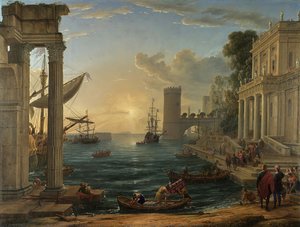
Claude Lorrain created the ideal landscape: golden light, classical ruins and a low sun over the sea. His seaports and pastoral scenes, such as Seaport with the Embarkation of the Queen of Sheba, shaped how Europeans saw nature; English landowners designed their gardens to look like his paintings, and Turner asked to hang beside him in the National Gallery.

L'Imbarco della Regina di Saba, 1648
L'Imbarco della Regina di Saba, 1648 · National Gallery, Londra
Paesaggio con Enea a Delos, 1672
Paesaggio con Enea a Delos, 1672 · National Gallery, Londra
Veduta di La Crescenza, 1648
Veduta di La Crescenza, 1648 · Metropolitan Museum of Art
Consult the 325 works of Claude Lorrain
Posizione 89 William Hogarth

89. William Hogarth (1697–1764)

English · Satire and genre painting · born in Londra

Principal works: Placca uno, da A Rake's Progress, Matrimonio a la Moda - 3, L'Ispezione, Gin Lane

Hogarth invented the 'modern moral subject', painted series that read like novels and sold as prints. A Rake's Progress, Marriage A-la-Mode and Gin Lane satirised London society; to protect his work from pirates he lobbied for the 1735 Engraving Copyright Act, known as Hogarth's Act.

Placca uno, da A Rake's Progress
Matrimonio a la Moda - 3, L'Ispezione
Matrimonio a la Moda - 3, L'Ispezione · National Gallery, Londra
Gin Lane, 1750
Gin Lane, 1750
Catalogue entry: William Hogarth (307 works)
Posizione 90 Edward Hopper

90. Edward Hopper (1882–1967)

American · American realism · born in Upper Nyack

Notable works: Nighthawks, The Art Institute of Chicago, Chica, Gas, Casa dalla Ferrovia

Hopper painted the loneliness of American cities: diners, gas stations, motel rooms and people lost in thought. Nighthawks (1942), with its brightly lit late-night diner seen from an empty street, is one of the most recognised American paintings and endlessly parodied in film and pop culture.

Nighthawks, The Art Institute of Chicago, Chica, 1942
Nighthawks, The Art Institute of Chicago, Chica, 1942 · Art Institute of Chicago
Gas, 1940
Gas, 1940
Casa dalla Ferrovia, 1925
Casa dalla Ferrovia, 1925 · Museum of Modern Art
Edward Hopper in the catalogue: 366 works

Entries 91 to 100

Posizione 91 Georges De La Tour

91. Georges De La Tour (1593–1652)

French · French Baroque · birthplace: Vic-sur-Seille

Known for: Magdalena con la Fiamma Accesa, Lo Sfuggente con l'Asse di Diamanti, La Dottorina del Destino

Georges de La Tour painted figures lit by a single candle with geometric simplicity and silence. The Magdalen with the Smoking Flame and The Cheat with the Ace of Diamonds are his masterpieces. Famous in his lifetime, he was completely forgotten until his rediscovery in 1915.

Magdalena con la Fiamma Accesa, 1640
Magdalena con la Fiamma Accesa, 1640 · Los Angeles County Museum of Art
Lo Sfuggente con l'Asse di Diamanti, 1635
Lo Sfuggente con l'Asse di Diamanti, 1635 · Museo del Louvre
La Dottorina del Destino, 1635
Consult the 98 works of Georges De La Tour
Posizione 92 Alphonse Maria Mucha

92. Alphonse Maria Mucha (1860–1939)

Czech · Art Nouveau · born in Ivančice

Principal works: Job, La Luna, Nudo

Mucha's 1894 poster for Sarah Bernhardt in Gismonda made him famous overnight in Paris and defined the Art Nouveau look: women with flowing hair framed by halos, flowers and ornament. He then spent eighteen years on The Slav Epic, twenty huge canvases on the history of the Slavic peoples.

Posizione 93 Paolo Veronese

93. Paolo Veronese (1528–1588)

Italian · Mannerism, Naturalism, Venetian school · born in Verona

Notable works: Il Matrimonio di Cana, Convito in casa di Levi, La scelta tra virtù e vizio

Veronese painted vast, colourful feasts in Venice with architecture, silks and crowds. The Wedding at Cana in the Louvre, almost 10 metres wide, is the largest painting in the museum's collection. His Feast in the House of Levi earned him a summons before the Inquisition, which he answered by changing the title.

Il Matrimonio di Cana, 1563
Il Matrimonio di Cana, 1563 · Museo del Louvre
Convito in casa di Levi, 1573
Convito in casa di Levi, 1573 · Gallerie dell'Accademia di Venezia
La scelta tra virtù e vizio, 1565
La scelta tra virtù e vizio, 1565 · The Frick Collection
Paolo Veronese in the catalogue: 522 works
Posizione 94 Giuseppe Arcimboldo

94. Giuseppe Arcimboldo (1527–1593)

Italian · Mannerism · born in Milano

Notable works: Vertumnus (Vertumno), Estate 1, Autunno

Arcimboldo, court painter to the Habsburg emperors in Vienna and Prague, composed portraits from fruit, vegetables, flowers, fish and books. Vertumnus, a portrait of Rudolf II made of produce, and the Four Seasons series were long seen as curiosities; the Surrealists made him one of their ancestors.

Vertumnus (Vertumno), 1590
Vertumnus (Vertumno), 1590 · Skoklosters Slott
Estate 1, 1563
Estate 1, 1563 · Kunsthistorisches Museum
Autunno, 1572
Autunno, 1572 · Denver Art Museum
Giuseppe Arcimboldo in the catalogue: 175 works
Posizione 95 Franz Marc

95. Franz Marc (1880–1916)

German · German Expressionism · birthplace: Monaco di Baviera

Known for: I Cavalli Blu Grandi, Il destino degli animali, Forme in Lotta

Franz Marc co-founded the Blue Rider group with Kandinsky and painted animals in symbolic colours: blue for the spiritual, yellow for the feminine, red for matter. The Large Blue Horses, Fate of the Animals and Fighting Forms are key German Expressionist works. He was killed at Verdun in 1916, aged 36.

I Cavalli Blu Grandi, 1911
I Cavalli Blu Grandi, 1911 · Walker Art Center
Il destino degli animali, 1913
Forme in Lotta, 1914
Forme in Lotta, 1914 · Bayerische Staatsgemaldesammlungen
Consult the 493 works of Franz Marc
Posizione 96 Henri De Toulouse-Lautrec

96. Henri De Toulouse-Lautrec (1864–1901)

French · Post-Impressionism · birthplace: Albi

Known for: alla stazione di Montmartre, La Goulue Arrivante al Moulin Rouge con Due Donne, Jane Avril che danza

Toulouse-Lautrec painted the nightlife of Montmartre: the Moulin Rouge, cabarets, dancers and brothels. His posters for the Moulin Rouge and for Aristide Bruant, with flat colours and bold outlines borrowed from Japanese prints, turned the poster into an art form. He made 737 canvases before dying at 36.

alla stazione di Montmartre, 1892
alla stazione di Montmartre, 1892 · Art Institute of Chicago
La Goulue Arrivante al Moulin Rouge con Due Donne, 1892
La Goulue Arrivante al Moulin Rouge con Due Donne, 1892 · Museum of Modern Art
Jane Avril che danza, 1892
Jane Avril che danza, 1892 · Museo del Louvre
Consult the 810 works of Henri De Toulouse-Lautrec
Posizione 97 William-Adolphe Bouguereau

97. William-Adolphe Bouguereau (1825–1905)

French · Academic art · born in La Rochelle

Notable works: La nascita di Venere, Faneuse, La nascita di Venere

The most celebrated academic painter of his time, Bouguereau won every official honour in France. His mythological nudes and peasant children, such as The Birth of Venus (1879) and Nymphs and Satyr, show flawless technique. Dismissed by modernists for a century, he has returned to favour with collectors and museums.

La nascita di Venere
La nascita di Venere · Musée d'Orsay
Faneuse, 1869
Faneuse, 1869 · Carnegie Museum of Art
La nascita di Venere
William-Adolphe Bouguereau in the catalogue: 518 works
Posizione 98 Dante Gabriel Rossetti

98. Dante Gabriel Rossetti (1828–1882)

English · Pre-Raphaelite Brotherhood · born in Londra

Principal works: Beata Beatrix, Proserpine, Ecce Ancilla Domini! (anche conosciuta come L'Annunciazione)

Poet and painter, Rossetti co-founded the Pre-Raphaelite Brotherhood in 1848, which rejected academic art and looked back to early Italian painting. His later portraits of women with heavy hair and dreamy eyes, such as Beata Beatrix and Proserpine, defined the Victorian ideal of beauty and influenced Symbolism.

Beata Beatrix, 1880
Beata Beatrix, 1880 · Scottish National Gallery
Proserpine, 1874
Proserpine, 1874 · Tate Gallery
Ecce Ancilla Domini! (anche conosciuta come L'Annunciazione), 1850
Ecce Ancilla Domini! (anche conosciuta come L'Annunciazione), 1850 · Tate Gallery
Catalogue entry: Dante Gabriel Rossetti (345 works)
Posizione 99 Antoon van Dyck

99. Antoon van Dyck (1599–1641)

Flemish · Baroque · birthplace: Anversa

Known for: Charles I in Tre Posizioni, Autoritratto, L'arresto di Cristo

Rubens' brilliant assistant became the court painter of Charles I of England. Van Dyck's elegant full-length portraits, such as Charles I at the Hunt, set the style of aristocratic portraiture in Britain for 150 years; a pointed beard is still called a 'Van Dyke'.

Charles I in Tre Posizioni, 1636
Charles I in Tre Posizioni, 1636 · Royal Collection
Autoritratto, 1622
Autoritratto, 1622 · Museo dell'Ermitage
L'arresto di Cristo, 1618
L'arresto di Cristo, 1618 · Museo del Prado
Consult the 1,620 works of Antoon van Dyck
Posizione 100 Camille Pissarro

100. Camille Pissarro (1830–1903)

Danish-French · Impressionism · born in Charlotte Amalie

Notable works: La Via del Boulevard Montmartre di Notte, Tetti Rossi, Angolo di un Villaggio, Inverno, Le Colline di Jallais, Pontieux

Pissarro was the only painter to show in all eight Impressionist exhibitions and the group's father figure, mentor to Cézanne and Gauguin. His views of villages, fields and markets and, later, his series of Paris boulevards seen from hotel windows, such as Boulevard Montmartre at Night, made modern life a subject for landscape.

La Via del Boulevard Montmartre di Notte, 1897
La Via del Boulevard Montmartre di Notte, 1897 · National Gallery, Londra
Tetti Rossi, Angolo di un Villaggio, Inverno, 1877
Tetti Rossi, Angolo di un Villaggio, Inverno, 1877 · Musée d'Orsay
Le Colline di Jallais, Pontieux, 1867
Le Colline di Jallais, Pontieux, 1867 · Metropolitan Museum of Art
Camille Pissarro in the catalogue: 1,559 works

The 100 entries in statistics

Distribution of the entries by country of birth, century of birth, movement and museum.

Country of birth

  • Francia25
  • Italia21
  • Stati Uniti d'America9
  • Paesi Bassi7
  • Germania7
  • Regno Unito7
  • Spagna5
  • Belgio5

Century of birth

  • Born in the 13th century4
  • Born in the 14th century3
  • Born in the 15th century13
  • Born in the 16th century13
  • Born in the 17th century5
  • Born in the 18th century11
  • Born in the 19th century38
  • Born in the 20th century13

Principal movement

  • Renaissance14
  • Baroque11
  • Realism & Academic art8
  • Romanticism7
  • Impressionism6
  • Surrealism & Dada6
  • Post-Impressionism5
  • Pop & Street art5
  • Expressionism5

Each painter is counted once, under the principal movement.

Holding museums

  • Museo del Louvre21
  • Musée d'Orsay14
  • National Gallery, Londra13
  • Museum of Modern Art9
  • Art Institute of Chicago8
  • Museo del Prado8

Count of the works documented on this page.

Women artists among the entries (6): Frida Kahlo (23), Artemisia Gentileschi (37), Hilma Af Klint (72), Berthe Morisot (76), Élisabeth Vigée Le Brun (81), Georgia O'Keeffe (85).

Living artists among the entries (3): Gerhard Richter (70), Banksy (79), Jasper Johns (83).

Famous artists by movement

Famous artists by period

Famous artists: reference questions

Select a question to display the answer.

Who is considered the most famous artist of all time?

Leonardo Da Vinci, known for Mona Lisa (La Gioconda) e L'Ultima Cena, is entry number one of this ranking; entries two to five are Pablo Picasso, Rembrandt, Michelangelo Buonarroti and Vincent Van Gogh.

Which five famous artists are essential to know?

Leonardo Da Vinci (Mona Lisa (La Gioconda)), Pablo Picasso (Guernica), Rembrandt (Notte in Osservanza), Michelangelo Buonarroti (La Creazione di Adamo) e Vincent Van Gogh (Notte Stellata (New York, MoMA)): entries one to five of the ranking, each with its principal work.

Which names appear in a list of famous painters?

Entries 1 to 20 of the ranking: Leonardo Da Vinci, Pablo Picasso, Rembrandt, Michelangelo Buonarroti, Vincent Van Gogh, Claude Monet, Albrecht Dürer, Caravaggio, Raffaello Sanzio, Diego Velázquez, Paul Cézanne, Francisco Goya, Giotto, Andy Warhol, Henri Matisse, Vasilij Vasil'evič Kandinskij, Peter Paul Rubens, Edvard Munch, Jan Vermeer e Paul Gauguin. The complete list of 100 entries appears above in rank order.

Which living artist ranks highest?

Gerhard Richter is the highest-ranked living painter among the entries, followed by Banksy e Jasper Johns.

Which women artists figure among the most famous?

Frida Kahlo, Artemisia Gentileschi, Hilma Af Klint, Berthe Morisot, Élisabeth Vigée Le Brun e Georgia O'Keeffe: 6 of the 100 entries are women artists.

Which country of birth is most represented among famous painters?

Francia, with 25 of the 100 entries, followed by Italia with 21.

Which century of birth is most represented?

the 19th century: 38 of the 100 painters listed were born in that century.

Which art movement is most represented in the ranking?

Renaissance: 14 entries, among them Leonardo Da Vinci, Michelangelo Buonarroti e Albrecht Dürer.

What are the principal works of these artists?

Mona Lisa (La Gioconda) (Leonardo Da Vinci), Guernica (Pablo Picasso), Notte in Osservanza (Rembrandt), La Creazione di Adamo (Michelangelo Buonarroti) e Notte Stellata (New York, MoMA) (Vincent Van Gogh). Each entry above documents three principal works and the museum holding each.

Which museum holds the largest number of these works?

Museo del Louvre, with 21 of the works documented on this page.

Are reproductions of these artists' works available?

Yes. Alongside its catalogue entries, WikiOO.org offers hand-painted oil reproductions and fine art prints of works by the painters listed here, made to order in a chosen size.