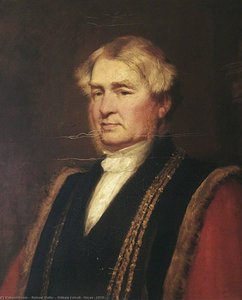
The Botanical Visionary: The Life and Legacy of Richard Waller
In the quiet, verdant landscapes of nineteenth-century Britain, a unique artistic voice emerged that bridged the gap between rigorous scientific inquiry and the delicate beauty of the natural world. Richard Waller (1811–1882), born in Groombridge, Kent, remains an enigmatic yet profoundly influential figure whose work captures the very essence of the ephemeral. While history often remembers the grand masters of oil on canvas, Waller’s true genius lay in his ability to freeze time through meticulous botanical illustration and impressionistic observation. His life was a tapestry woven from the threads of scientific precision and aesthetic wonder, a rare duality that allowed him to document the minute details of flora with the soul of a poet.
The foundations of Waller’s artistic journey were laid in the fertile soil of his upbringing. Raised in a family deeply connected to the agricultural traditions of Sussex, he was the son of John and Margaret Waller. It was through his mother’s passion for horticulture that young Richard first learned to look closely at the world around him. This early exposure to the intricate structures of plants and flowers did more than just spark an interest; it cultivated a lifelong obsession with the microscopic wonders of nature. His formal education may have been modest, but his intellectual curiosity was boundless, eventually leading him toward the prestigious halls of the Royal Society.
A Convergence of Science and Artistry
Waller’s career reached a significant milestone in 1839 when he was accepted into the Royal Society, a distinction that would define much of his professional existence. Serving as the secretary of the society from 1840 to 1867, he occupied a central position within the scientific community of his era. This role provided him with unparalleled access to the latest advancements in microscopy and biological research. Rather than viewing science and art as opposing forces, Waller embraced them as two sides of the same coin. He utilized advanced microscopic techniques to observe plant specimens, translating these scientific findings into exquisitely detailed drawings that were as much works of art as they indeed were vital biological records.
His technical mastery was most evident in his use of watercolor, a medium perfectly suited for capturing the translucency of petals and the subtle shifts in botanical color. His works, such as the delicate Knap-weed & Bluebottle, demonstrate a profound command over fine line work and soft washes. Through his brush, the scientific study of species like Conopa became an immersive visual experience. This period of his life represents a pivotal moment in art history where the burgeoning field of Impressionism began to find its footing within the disciplined framework of botanical documentation, creating a legacy of accuracy paired with atmospheric beauty.
Historical Significance and Enduring Influence
The historical importance of Richard Waller extends far beyond the boundaries of mere illustration. He stood at the crossroads of a changing world, where the industrial revolution was reshaping society, yet the natural world remained a subject of intense scrutiny and reverence. His ability to document the flora of the British Isles with such fidelity provided an invaluable resource for both botanists and art historians alike. While his name may not carry the same immediate recognition as the titans of landscape painting, his contribution to the visual language of science is undeniable.
Today, we look back at Waller’s oeuvre as a testament to the power of observation. His works serve as a window into the nineteenth-century mindset—a time when the discovery of a new specimen could be as thrilling as any grand historical event. The enduring charm of his paintings lies in their ability to evoke a sense of peace and wonder, reminding us of the intricate complexities that exist beneath our very feet. Through his dedication to the small and the subtle, Richard Waller ensured that the fleeting beauty of the natural world would remain etched in the annals of art forever.
질의응답
키워드별로 분류된 Richard Waller의 작품은 어디에서 볼 수 있나요?
특정 주제의 Richard Waller 작품을 찾으려면 키워드별로 작품이 분류된 작가의 키워드별로 페이지를 이용해 보세요.
Richard Waller은(는) 어느 시대에 활동했나요?
Richard Waller은(는) 19th Century 시대에 활동했습니다. 이 시기는 역사적 맥락에서 작가의 활동 위치를 보여줍니다.
Richard Waller의 작품을 사조별로 둘러볼 수 있나요?
Richard Waller 작가가 활동했던 예술 사조는 작품을 사조별로 분류하여 보여주는 작가의 모든 사조 페이지에서 확인하실 수 있습니다.