


1

삼위일체
마사초의 삼위일체는 여러 예술적 혁신을 도입한 획기적인 작품입니다. 이 작품은 선원근법을 활용하여 깊이감과 공간감을 창조해낸 최초의 기념비적인 르네상스 회화 중 하나입니다. 특히 키아로스쿠로와 스푸마토 기법의 정교한 사용은 인물에 입체감과 질감을 부여하여, 마치 살아있는 듯한 사실적인 존재감을 구현해냈습니다.

10월 2026 업데이트 · 인기 점수 기준 순위 (각 작품의 검색, 방문 및 주문 수) · 97점의 마사초 작품 (당사 카탈로그 기준)
개요
삼위일체 (1428) is recorded as the most famous painting of 마사초. 세금 납부 (1425) and The Expulsion from the Garden of Eden (1426) occupy the second and third entries. Of the 97 works by 마사초 recorded in the catalogue, the 97 best known are listed below, each entry with its date, the holding museum and a note on the work.
마사초의 삼위일체는 여러 예술적 혁신을 도입한 획기적인 작품입니다. 이 작품은 선원근법을 활용하여 깊이감과 공간감을 창조해낸 최초의 기념비적인 르네상스 회화 중 하나입니다. 특히 키아로스쿠로와 스푸마토 기법의 정교한 사용은 인물에 입체감과 질감을 부여하여, 마치 살아있는 듯한 사실적인 존재감을 구현해냈습니다.

이 장면은 피렌체의 산타 마리아 델 카르미네 대성당 내 브랑카치 예배당에서 펼쳐집니다. 이곳에서 마사초가 그린 프레스코화인 세금 납부는 예배당 벽면 위로 성서적 서사를 생생하게 불러일으킵니다. 펠리체 브랑카치의 의뢰로 제작된 이 작품은 성 베드로의 생애를 다룬 거대한 연작의 중요한 부분을 형성합니다. 인물들이 심오한 의미를 지닌 순간을 통과해 나아감에 따라, 예배당의 공기는 이 신성한 역사의 무게를 머금고 있는 듯합니다.

The heavy silence of the Brancacci Chapel in the church of Santa Maria del Carmine in Florence, Italy, holds the weight of a profound tragedy. Here, the walls breathe with the story of The Expulsion from the Garden of Eden, a fresco painted by Masaccio around 1425. The air seems to thicken around the figures as they face their sudden, irreversible departure from paradise. This scene marks the beginning of…

마사졸리(1401-1428)는 초기 이탈리아 르네상스의 가장 중요한 인물 중 한 명으로, 그의 작품은 그림사에 있어서 지대한 영향을 미쳤습니다. 특히 ‘부채물’이라는 프레스코는 단순한 성경 이야기를 넘어선 예술적 혁신을 보여주는 대표적인 작품입니다. 1426년에 플로렌스 브란카치 예배당의 벽에 그려진 이 작품은 고딕 시대의 형식화된 표현 방식을 깨고, 자연주의와 인문주의적 가치를 담아낸 초기 르네상스의 정수를 보여줍니다.

To stand before this Predella panel from the Pisa Altar is to encounter a moment frozen in time, yet vibrating with raw, undeniable human drama. Dating to 1426, this work captures Masaccio at the zenith of his revolutionary power. It is not merely a depiction of the Crucifixion; it is a profound meditation on sacrifice, community, and the weight of divine narrative rendered with startling immediacy. The composition draws the…

In the quiet, profound stillness of Masaccio’s The Madonna of Humility, we encounter one of the most moving snapshots of the Early Italian Renaissance. Created around 1424, this masterpiece transcends mere religious iconography to offer a window into a moment of raw, maternal intimacy. The scene is set not upon a celestial throne, but on the earth itself, where the Virgin Mary sits upon a blue patterned cushion. This choice…

The image presents a detail from a fresco painting created in 1425 by Masaccio. Within this specific view, a figure is depicted that appears to be Mary Magdalene, identified by the traditional iconography of her long hair and a head covering. She possesses a contemplative expression, directing her gaze slightly downwards toward an object held in her right hand, which may be interpreted as a symbol of faith or devotion.

In the quiet, hallowed halls of art history, few works capture the dawn of a new era as poignantly as Masaccio’s Two Panels from the Pisa Altarpiece. Completed in 1426, these panels are far more than mere fragments of a lost polyptych; they are windows into a transformative moment when the rigid conventions of the Gothic period began to dissolve, giving way to the profound humanism of the Early Italian…

To step before Masaccio’s Holy Trinity is to witness the exact moment when the flattened, symbolic world of the Middle Ages dissolved into the profound, breathing reality of the Renaissance. Painted between 1425 and 1427 within the hallowed walls of Santa Maria Novella in Florence, this fresco does not merely depict a religious scene; it carves a hole in the very wall of the chapel, inviting the viewer to step…

Masaccio’s “Trinity (detail),” housed within the magnificent Santa Maria Novella in Florence, isn't merely a fresco; it’s a pivotal moment in art history – a visual manifesto declaring the arrival of the High Renaissance. Painted between 1425 and 1427, this intimate section captures the essence of Masaccio’s revolutionary approach to depicting reality, a departure from the stylized elegance of the preceding Gothic era and a profound influence on generations of…
 View of the Cappella Brancacci (before restoration)1426 · 산타 마리아 델 카르미네
12
 Trinity (scheme of the perspective)1425 · 산타 마리아 노벨라
13
 Raising of the Son of Theophilus and St Peter Enthroned (detail)1426
14
 St Peter Healing the Sick with his Shadow (detail)1426
15
 Frescoes in the Cappella Brancacci (right view)1426 · 산타 마리아 델 카르미네
16
 Madonna Casini1426
17
 Adam and Eve banished from Paradise1427
18
 The Distribution of Alms and the Death of Ananias (detail)1426
19
 Frescoes in the Cappella Brancacci (left view)1426 · 산타 마리아 델 카르미네
20
 Baptism of the Neophytes1427
21
 Christ in the Garden of Gethsemane (detail)1424 · Lindenau-Museum
22
 Crucifixion1426 · 카포디몬테 국립 박물관
23
 Tribute Money (detail)1426
24
 The Agony in the Garden1426
25
 St Peter Healing the Sick with his Shadow (detail)1426
26
 St. Juvenal Triptych1422
27
 Maria and Child1426
28
 Tribute Money (detail)1426
29
 The Expulsion from the Garden of Eden (detail)1426
30
 Birth tray1428
31
 The Baptism of the Neophytes1426
32
 Raising of the Son of Theophilus and St Peter Enthroned1426
33
 The Distribution of Alms and the Death of Ananias (detail)1426
34
 Adoration of the Knigs1428
35
 Tribute Money (detail)1426
36
 Tribute Money1426
37
 The Expulsion from the Garden of Eden1426
38
 Tribute Money (detail)1426
39
 Raising of the Son of Theophilus and St Peter Enthroned (detail) (9)1426
40
 San Giovenale Triptych. Right panel.1422
41
 Crucifixion1426
42
 Raising of the Son of Theophilus and St Peter Enthroned (detail)1426
43
 Raising of the Son of Theophilus and St Peter Enthroned (detail)1426
44
 The Raising of the Son of Theophilus and St Peter Enthroned (detail)1426
45
 Raising of the Son of Theophilus and St Peter Enthroned (detail)1426
46
 Christ in the Garden of Gethsemane (detail)1424 · Lindenau-Museum
47
 San Giovenale Triptych. Central panel1423
48
 Distribution of Alms and Death of Ananias1425
49
 Profile Portrait of a Young Man
50
 Profile Portrait of a Young Man1425 · 국립 미술관
51
 Rendering of the Tribute Money
52
 Distribution of the Goods of the Community and the Death of Ananias (detail)
53
 St. Giovenale Triptych
54
 The Expulsion from Paradise
55
 The Adoration of the Magi
56
 St. Peter Baptizing the Neophytes
57
 Birth Salver
58
 Medallion
59
 Madonna and Child
60
 Madonna Enthroned
61
 St Jerome and St John the Baptist
62
 Christ in the Garden of Gethsemane1424 · Lindenau-Museum
63
 San Giovenale Triptych. Left panel1422
64
 Portrait of a Young Woman1425
65
 Distribution of the Goods of the Community and the Death of Ananias
66
 The Holy Trinity with the Virgin, St. John and Two Donors
67
 The Cricifixion of St. Peter. The Beheading of St. John the Baptist
68
 La Consagración
69
 Crucifixion
70
 St Jerome and St John the Baptist 1
71
 The Madonna and Child with Saint Anne
72
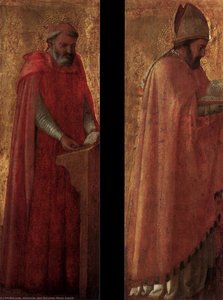 Two panels from the Pisa Altarpiece
73
 Portrait of a young man이사벨라 스튜어트 가드너 미술관
74
 View of the Cappella Brancacci (after restoration)
75
 Putto and a Small Dog (back side of the Berlin Tondo)
76
 The Madonna and Child with st.Anna.1424
77
 Plate of Nativity (Berlin Tondo)1427 · 슈타틸리체 무제엔
78
 Madonna with Child and Angels1426 · 국립 미술관
79
 The Distribution of Alms and the Death of Ananias1426 · 산타 마리아 델 카르미네
80
 St Peter Healing the Sick with his Shadow1426 · 산타 마리아 델 카르미네
81
 San Giovenale Triptych1422
82
 Raising of the Son of Teophilus and St.Peter Enthroned1427 · 산타 마리아 델 카르미네
83
 St Paul1426 · Museo Nazionale di San Matteo
84
 Carnesecchi Triptych1423
85
 Adoration of the Magi1426 · 슈타틸리체 무제엔
86
 Martyrdom of San Giovanni Battista1426 · Gemäldegalerie
87
 Predella panel from the Pisa Altar1426 · 슈타틸리체 무제엔
88
 A Bearded Carmelite Saint1426 · Gemäldegalerie
89
 Madonna Casini1426
90
 Madonna of Humility1420 · 국립 미술관
91
 Repentance of Saint Peter1425 · 산타 마리아 델 카르미네
92
 San AgustínGemäldegalerie
93
 St. Andrew1426 · J. 폴 게티 미술관
94
 CarmelitaGemäldegalerie
95
 St. JeromeGemäldegalerie
96
 St.Girolamo end Giovanni Battista1428 · 국립 미술관
97
 Crucifixion of St Peter1426 · 슈타틸리체 무제엔
The four subjects most frequently represented among these works, each with its best-known example.
이 페이지에 있는 작품을 가장 많이 소장하고 있는 8개의 미술관
| 소장 미술관 | 도시 | 마사초의 작품 | 이 목록의 작품들 |
|---|---|---|---|
 산타 마리아 델 카르미네 |
피렌체 | 7 | View of the Cappella Brancacci (before restoration), Frescoes in the Cappella Brancacci (right view), Frescoes in the Cappella Brancacci (left view) |
 슈타틸리체 무제엔 |
베를린 | 6 | Predella panel from the Pisa Altar, Two panels from the Pisa Altarpiece, Plate of Nativity (Berlin Tondo) |
 Gemäldegalerie |
베를린 | 5 | Martyrdom of San Giovanni Battista, A Bearded Carmelite Saint, San Agustín |
 산타 마리아 노벨라 |
피렌체 | 4 | Trinity (detail), Trinity, Trinity (detail) |
 Lindenau-Museum |
알텐가우 | 3 | Christ in the Garden of Gethsemane (detail), Christ in the Garden of Gethsemane (detail), Christ in the Garden of Gethsemane |
 국립 미술관 |
워싱턴 | 2 | Profile Portrait of a Young Man, Madonna of Humility |
 국립 미술관 |
런던 | 2 | Madonna with Child and Angels, St.Girolamo end Giovanni Battista |
 카포디몬테 국립 박물관 |
나폴리 | 1 | Crucifixion |
From 1420 to 1428, 9 years, the dated works of 마사초 are indexed below year by year with their principal paintings.
Select a year to display its principal paintings.


In the quiet, profound stillness of Masaccio’s The Madonna of Humility, we encounter one of the most moving snapshots of the Early Italian Renaissance. Created around 1424, this masterpiece transcends mere religious iconography to offer a window into a moment of raw, maternal intimacy. The scene is set not upon a celestial throne, but on the earth itself, where the Virgin Mary sits upon a blue patterned cushion. This choice…
Other works from 1424
이 장면은 피렌체의 산타 마리아 델 카르미네 대성당 내 브랑카치 예배당에서 펼쳐집니다. 이곳에서 마사초가 그린 프레스코화인 세금 납부는 예배당 벽면 위로 성서적 서사를 생생하게 불러일으킵니다. 펠리체 브랑카치의 의뢰로 제작된 이 작품은 성 베드로의 생애를 다룬 거대한 연작의 중요한 부분을 형성합니다. 인물들이 심오한 의미를 지닌 순간을 통과해 나아감에 따라, 예배당의 공기는 이 신성한 역사의 무게를 머금고 있는 듯합니다.
Other works from 1425
The heavy silence of the Brancacci Chapel in the church of Santa Maria del Carmine in Florence, Italy, holds the weight of a profound tragedy. Here, the walls breathe with the story of The Expulsion from the Garden of Eden, a fresco painted by Masaccio around 1425. The air seems to thicken around the figures as they face their sudden, irreversible departure from paradise. This scene marks the beginning of…
Other works from 1426

마사초의 삼위일체는 여러 예술적 혁신을 도입한 획기적인 작품입니다. 이 작품은 선원근법을 활용하여 깊이감과 공간감을 창조해낸 최초의 기념비적인 르네상스 회화 중 하나입니다. 특히 키아로스쿠로와 스푸마토 기법의 정교한 사용은 인물에 입체감과 질감을 부여하여, 마치 살아있는 듯한 사실적인 존재감을 구현해냈습니다.
Other works from 1428
삼위일체 (1428). The following entries are 세금 납부 (1425) and The Expulsion from the Garden of Eden (1426).
27 years: 마사초 was born in 1401 and 삼위일체 is dated 1428.
삼위일체, 세금 납부, The Expulsion from the Garden of Eden, 삼장전경 (상), Predella panel from the Pisa Altar, The Madonna of Humility, Trinity (detail), Two panels from the Pisa Altarpiece, Trinity 및 Trinity (detail). The list above records the date and holding museum of each.
The catalogue records 97 works by 마사초, dated between 1420 and 1428.
Principally in 산타 마리아 델 카르미네 (피렌체), 슈타틸리체 무제엔 (베를린) 및 Gemäldegalerie (베를린). The museum table above gives the full distribution.
In 1426: 41 of the 97 works listed on this page are dated to that period, including The Expulsion from the Garden of Eden.
The earliest dated work listed here is Madonna of Humility (1420); the latest is 삼위일체 (1428).
Saints (30), Religious (25) 및 Renaissance (14), out of the 97 works listed on this page.
Acrylic On Canvas, in 9 of the 97 works listed on this page.
초기 르네상스, as documented by the works on this page.
View of the Cappella Brancacci (before restoration), Frescoes in the Cappella Brancacci (right view) 및 Frescoes in the Cappella Brancacci (left view) are among the 7 works on this page in the collection of the 산타 마리아 델 카르미네, 피렌체.
Yes. Each work listed on this page can be ordered from its own entry as a hand-painted oil reproduction or a fine art print, in a size of your choice.
토마소 디 세르 조반니 디 시모네, 우리에게는 '서투른 토마소'라는 뜻의 마사초로 더 잘 알려진 이 예술가는 이탈리아 초기 르네상스의 중추적인 인물이었습니다. 1401년 12월 21일 이탈리아 산 조반니 발다르노에서 태어나 1428년 너무나도 젊은 나이에 비극적으로 생을 마감한 그의 짧은 예술 여정은 혁신적인 사실주의, 원근법, 그리고 빛과 어둠의 강렬한 대비를 활용한 키아로스쿠로 기법을 통해 회화의 역사를 뒤바꿔 놓았습니다. 비록 삶은 짧았으나, 마사초가 후대 예술가들에게 남긴 영향은 매우 깊었으며, 자연주의의 새로운 기준을 세우며 서양 미술의 흐름을 결정지었습니다.
비극적으로 짧았던 생애에도 불구하고, 서양 미술의 흐름에 미친 마사초의 영향은 헤아릴 수 없을 만큼 거대합니다. 원근법, 키아로스쿠로, 그리고 자연주의를 향한 그의 혁신은 예술가들이 세상을 묘사하는 방식을 근본적으로 바꾸어 놓았습니다. 그는 중세의 예술적 관습과 새롭게 떠오르는 르네상스의 이상 사이를 효과적으로 연결하는 가교 역할을 수행했습니다.
마사초의 유산은 역사상 가장 중요하고 영향력 있는 예술가 중 한 명으로서 오늘날까지 살아 숨 쉬고 있습니다. 그는 중세에서 르네상스로 넘어가는 전환기의 핵심적인 인물로서, 회화를 통해 우리가 세상을 인식하고 표현하는 방식을 영원히 바꾸어 놓았습니다. 그의 짧지만 찬란했던 예술 여정은 혁신의 힘과 예술적 천재성이 남기는 영속적인 울림을 증명하는 소중한 증거입니다.


