Поиск

Эрнест Лоусон

1873 - 1939

Краткая справка

  • Died: 1939
  • Mediums: масло на холсте
  • Emotional tone:
    • безмятежный
    • спокойствие
  • Corpus themes:
    • impressionist landscape
    • plein air technique
    • american impressionism influence
    • part of the eight
    • alfred sisley influence
  • Movements: impressionism
  • Color intensity:
    • насыщенный
    • сбалансированный
  • Lifespan: 66 years
  • Copyright status: Public domain
  • Room fit: гостиная
  • Topics explored:
    • winter
    • rivers
    • landscape
    • usa
    • impressionism
  • Also known as: Ernest Lawson
  • Развернуть подробности
  • Creative periods: mature period
  • Best occasions: атмосфера
  • Born: 1873, Галифакс, Канада
  • Museums on APS:
    • Columbia Museum of Art
    • Columbia Museum of Art
    • Columbia Museum of Art
    • Columbia Museum of Art
    • Detroit Historical Museum
  • Top 3 works:
    • River Scene in Winter
    • The Garden Umbrella
    • View of a Garden in a Paris Suburb
  • Typical colors:
    • природные землистые
    • нейтральные цвета
  • Nationality: Канада
  • Vibe: безмятежный
  • Works on APS: 161
  • Top-ranked work: River Scene in Winter
  • Art period: — Модернизм

Тест по искусству

В каждом вопросе только один правильный ответ.

Вопрос 1:
Кто родился в Халифаксе, Канада?
Вопрос 2:
Где Э. Лавсон изучал живопись в Академии Жюлиана?
Вопрос 3:
В какой группе Э. Лавсон был активен?
Вопрос 4:
Какой стиль живописи характеризует Э. Лавсона?
Вопрос 5:
Какое место работы Э. Лавсона было самым известным?

Ernest Lawson: A Luminary of American Impressionism

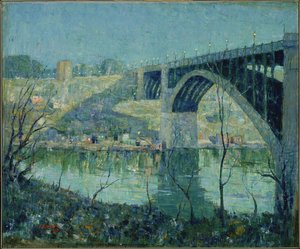
Ernest Lawson (1873–1939) stands as a pivotal figure in the trajectory of American Impressionism, embodying a singular vision that blended French artistic sensibilities with an unflinching portrayal of everyday life. His legacy resides not merely in his stunning landscapes but also in his courageous challenge to established artistic conventions—a stance that cemented his place among the vanguard of modern art. ### Early Life and Artistic Formation Born March 22, 1873, in Halifax, Nova Scotia, Canada, Ernest Lawson’s formative years were marked by a profound engagement with the natural world. His father, Richard Lawson, was a physician—a profession that instilled in young Ernest a meticulous attention to detail and observation—qualities he would later translate into his artistic practice. Moving to Kansas City, Missouri, in 1888, Lawson’s family embraced a burgeoning American frontier spirit. Recognizing his innate talent for drawing and painting, Lawson enrolled at the Kansas City Art Institute from 1888–1889, laying the groundwork for his future artistic explorations. Crucially, he honed his skills under the tutelage of John Henry Twachtman—a mentor who championed plein air painting and instilled in Lawson a deep appreciation for capturing fleeting moments of natural beauty. This influence would prove instrumental in shaping Lawson’s distinctive style. ### Parisian Influences: Embracing Impressionism A pivotal moment arrived in 1891 when Lawson ventured to Paris, where he enrolled at the Art Students League and immersed himself in the vibrant artistic milieu of the city. Under the guidance of Twachtman and Julien Alden Weir—artists who championed Impressionistic techniques—Lawson encountered the seminal works of Claude Monet and Camille Pissarro. These encounters ignited his passion for plein air painting, prompting him to spend summers at Cos Cob, Connecticut, absorbing the lessons of Weir’s artistic philosophy. Lawson's Parisian studies extended beyond mere technical instruction; he cultivated friendships with fellow artists who championed intellectual discourse and challenged conventional aesthetic norms—a spirit that would characterize his entire artistic career. ### The Eight: A Rebellion Against Academic Tradition Around 1903, Lawson joined “The Eight”—a collective of artists united by their determination to forge a new path for American art. Led by Robert Henri, Everett Shinn, John Sloan, Arthur B. Davies, Maurice Prendergast, George Luks, and William J. Glackens, The Eight rejected the rigid formalism of the National Academy of Design annuals—a stance that demanded courage and conviction. Lawson’s participation in the groundbreaking 1908 exhibition solidified his reputation as a rebel artist—one who prioritized expressive vision over academic adherence. This bold assertion of artistic independence resonated deeply with audiences eager for fresh perspectives on American life and landscape. ### Notable Paintings: Capturing the Essence of Place Lawson's oeuvre is distinguished by its unwavering focus on capturing the essence of American landscapes—often rendered in starkly realistic detail yet imbued with a palpable sense of atmosphere. Among his most celebrated works are “Upper Harlem River—Winter” (circa 1915), which portrays a serene winter scene bathed in soft light; “The Pond and Gapstow Bridge, New York City,” capturing the vibrant energy of Central Park; and “Spring Night, Harlem River,” demonstrating Lawson’s mastery of nocturnal illumination. His distinctive impasto technique—characterized by thick layers of paint applied with palette knives—creates textured surfaces that convey the physicality of the natural world. Lawson's paintings are not merely representations of scenery; they are meditations on place—expressions of profound empathy for the human experience within its contours. ### Legacy and Enduring Influence Ernest Lawson’s artistic legacy extends far beyond his individual masterpieces. He championed a style that blended Impressionism with realism—a synthesis that profoundly impacted subsequent generations of American painters. His unwavering commitment to portraying “real” life—rather than idealized fantasies—challenged prevailing aesthetic conventions and paved the way for greater artistic freedom. Lawson's influence can be discerned in the works of artists who followed him, demonstrating his enduring contribution to the history of American art. He remains a testament to the transformative power of observation—a reminder that true artistry lies in capturing not just what is seen but also what is felt.


WikiOO.org © WikiOO.org — Все права защищены