Pretraži

Josif Bejs

1921 - 1986

Osnovne informacije

  • Museums on APS:
    • Modern Art Oxford
    • Scottish National Gallery
    • Scottish National Gallery
    • Scottish National Gallery
    • Lenbachhaus
  • Gift suitability: other-none
  • Copyright status: Under copyright
  • Corpus themes:
    • fluxus
    • social sculpture
    • humanism
    • material experimentation
  • Color intensity: živopisno
  • Art period: Moderna umetnost
  • Creative periods: mature period
  • Nationality: Nemačka
  • Vibe: mirno
  • Lifespan: 65 years
  • Works on APS: 29
  • Prikaži više…
  • Best occasions: akcentni element
  • Also known as: Joseph Beuys
  • Movements:
    • conceptual art
    • neo-dada
  • Died: 1986
  • Emotional tone: reflektivna
  • Top 3 works:
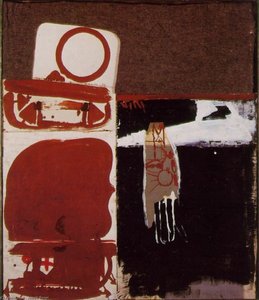
    • Lightning with Stag in Its Glare
    • Bathtub
    • Actresses
  • Born: 1921, Krefeld, Nemačka
  • Top-ranked work: Lightning with Stag in Its Glare
  • Topics explored: social commentary
  • Room fit: dnevna soba
  • Mediums: akril na platnu

Kviz o umetnosti

Svako pitanje ima samo jedan tačan odgovor.

Pitanje 1:
Šta predstavlja Bejsov koncept 'Socijalne skulpture'?
Pitanje 2:
Koji su materijali postali centralni za Bejsov umetnički identitet, delom inspirisani mitom o njegovom ratnom iskustvu?
Pitanje 3:
Koji filozofski pokret je značajno uticao na Bejsov pogled na svet i umetnički pristup?
Pitanje 4:
Na kojoj instituciji je Bejs bio profesor od 1961. do 1972. godine?
Pitanje 5:
Kojoj političkoj partiji je Jozef Bejs bio osnivač i doživotni pristalica?

A Life Sculpted in Society

Joseph Beuys, a name synonymous with the expansion of artistic boundaries, was more than just an artist; he was a visionary who believed creativity held the key to societal transformation. Born in Krefeld, Germany, in 1921, his life unfolded against a backdrop of immense political and social upheaval, profoundly shaping his artistic philosophy. From a childhood marked by relocation and early exposure to both natural sciences and the burgeoning darkness of Nazism—an event crystallized by rescuing Carl Linnaeus’s *Systema Naturae* from a book burning—Beuys developed a sensitivity to the fragility of existence and the power of symbolic action. His formative years were steeped in an intellectual curiosity that spanned music, mythology, and history, laying the groundwork for his later multidisciplinary approach. Though briefly involved with the Hitler Youth as a teenager – a common experience for German youth at the time – Beuys’s trajectory would ultimately lead him to challenge established norms and advocate for radical social change through art.

The Crucible of War and the Birth of an Iconography

World War II proved a pivotal, almost mythic, turning point in Beuys's life. Volunteering for the Luftwaffe in 1941, he experienced a near-fatal plane crash in Crimea in 1944. The story that emerged from this event—his rescue by Tatar tribesmen who wrapped his broken body in felt and fat to preserve warmth and aid healing—became central to his artistic identity. While historical accounts dispute the details of this narrative, Beuys embraced it as a foundational myth, imbuing these materials with profound symbolic weight. Felt, representing protection, insulation, and connection to nature; and fat, symbolizing energy, healing, and transformation—these became recurring motifs in his work, acting as potent metaphors for the human condition and the potential for renewal. Following the war, Beuys formally studied sculpture at the Düsseldorf Academy of Fine Arts, but it was his engagement with anthroposophy, the spiritual philosophy developed by Rudolf Steiner, that truly ignited his artistic vision.

Social Sculpture: Art as a Revolutionary Force

Beuys’s most significant contribution to art history is arguably his concept of “Social Sculpture” (*Soziale Plastik*). This wasn't merely about creating physical objects; it was a holistic vision where creativity played a vital role in shaping society and politics. He believed that every individual possessed creative potential, and that this potential could be unlocked through participation—blurring the lines between artist, artwork, and audience. Social Sculpture wasn’t confined to galleries or museums; it extended into everyday life, encompassing political activism, educational initiatives, and public performances. He envisioned a “Gesamtkunstwerk”—a total work of art—where all aspects of human existence could be creatively engaged to foster positive social change. This philosophy underpinned his numerous actions, installations, and pedagogical endeavors, challenging the traditional role of the artist as a solitary creator and positioning them instead as a catalyst for collective transformation.

Performance, Materials, and Political Engagement

Beuys’s artistic practice was remarkably diverse, encompassing performance art, installations, drawings, sculptures, and political activism. His performances were often ritualistic, involving direct engagement with the public and unconventional materials. Iconic works like his felt suits, which he wore during numerous actions, symbolized warmth, protection, and a primal connection to nature. Fat Installations explored themes of energy, healing, and transformation, while performances such as “I Like to Learn” (1965), where he sat in a gallery window with stones and honey inviting dialogue, emphasized the importance of knowledge sharing and open communication. Sculptures like “Lightning with Stag in Its Glare” represented primal forces and human consciousness. Beyond his artistic creations, Beuys actively participated in political debates, founding the Free International Zone (FIZ) at documenta 7—a space for artistic experimentation and social dialogue—and becoming a vocal supporter of the German Green Party.

A Lasting Legacy

Joseph Beuys died in 1986, leaving behind a legacy that continues to inspire artists, activists, and thinkers today. He radically challenged conventional notions of creativity and authorship, emphasizing participation and social engagement. His work expanded the definition of art beyond aesthetic concerns to encompass political, environmental, and spiritual dimensions. His concept of Social Sculpture remains profoundly relevant, urging us to recognize the creative potential within ourselves and to actively participate in shaping a more just and sustainable future. Beuys wasn’t simply an artist; he was a prophet of possibility, reminding us that art has the power not only to reflect society but also to transform it.


WikiOO.org © WikiOO.org - Sva prava zadržana