Portrait of Мазачо

Мазачо: Catalogue of the 97 Most Famous Paintings

Updated октобар 2026 · ranked by our popularity score (searches, visits and orders for each work) · 97 works by Мазачо in our catalogue

Сумарно

Светолочење (1428) is recorded as the most famous painting of Мазачо. Порезница (1425) and The Expulsion from the Garden of Eden (1426) occupy the second and third entries. Of the 97 works by Мазачо recorded in the catalogue, the 97 best known are listed below, each entry with its date, the holding museum and a note on the work.

1401 – 1428, San Giovanni Valdarno Rana renesansa Most works: Santa Maria del Carmine

Entries 1 to 10: the most famous Мазачо paintings

1
Светолочење (1428) by Мазачо

Светолочење

1428 · Freska

The Trinity by Masaccio is a fresco painting that marked the beginning of the Renaissance in Italy. Created in 1425, it is considered one of the most important works of the early Renaissance period. The painting is housed in the Santa Maria Novella church in Florence, Italy. Artistic Innovations The Trinity by Masaccio was a groundbreaking work that introduced several artistic innovations. It is one of the first monumental Renaissance…

2
Порезница (1425) by Мазачо

Порезница

1425 · Freska

Scena se odvija у капели Бранкачи у базиликати Санта Марија дел Кармине у Флоренци. Овде фреска под насловом Порезница, аутора Масаћа, оживљава библијски наратив на зидовима капеле. Ово дело, које је наручио Феличе Бранкачи, чини значајан део ширљег циклуса посвећеног животу Светог Петра. Чини се да ваздух у капели носи тежину ове светог историје, док се ликови крећу кроз тренутак од превелике важности.

3
The Expulsion from the Garden of Eden (1426) by Мазачо

The Expulsion from the Garden of Eden

1426 · Fresco

The heavy silence of the Brancacci Chapel in the church of Santa Maria del Carmine in Florence, Italy, holds the weight of a profound tragedy. Here, the walls breathe with the story of The Expulsion from the Garden of Eden, a fresco painted by Masaccio around 1425. The air seems to thicken around the figures as they face their sudden, irreversible departure from paradise. This scene marks the beginning of…

4
Репродукција: Плаћање да robe (детаљ) by Мазачо

Репродукција: Плаћање да robe (детаљ)

Freska

U srcima Florencije, u Brancacci Chapel, stoji djelo koje je zaista prelomilo tijek umjetnosti – Masaccova “Platnica” (Il Tributo), a točan detalj koji danas predlažemo da razgledate. Izvedena oko 1426. godine, ova freska nije samo prikaz biblijske priče; ona je izraz novog doba, doba u kojem se umjetnost budi od stiliziranih konvencija gotike i usmjerava na duboku, razumljivu stvarnost i ljudski duh. Masaccio, mlad i talentiran, postavio je temelje za…

5
Predella panel from the Pisa Altar (1426) by Мазачо

Predella panel from the Pisa Altar

1426 · Oil On Panel · Staatliche Museen zu Berlin, Berlin

To stand before this Predella panel from the Pisa Altar is to encounter a moment frozen in time, yet vibrating with raw, undeniable human drama. Dating to 1426, this work captures Masaccio at the zenith of his revolutionary power. It is not merely a depiction of the Crucifixion; it is a profound meditation on sacrifice, community, and the weight of divine narrative rendered with startling immediacy. The composition draws the…

6
The Madonna of Humility (1424) by Мазачо

The Madonna of Humility

1424 · Tempera On Panel

In the quiet, profound stillness of Masaccio’s The Madonna of Humility, we encounter one of the most moving snapshots of the Early Italian Renaissance. Created around 1424, this masterpiece transcends mere religious iconography to offer a window into a moment of raw, maternal intimacy. The scene is set not upon a celestial throne, but on the earth itself, where the Virgin Mary sits upon a blue patterned cushion. This choice…

7
Trinity (detail) (1425) by Мазачо

Trinity (detail)

1425 · Fresco · Santa Maria Novella, Firenca

The image presents a detail from a fresco painting created in 1425 by Masaccio. Within this specific view, a figure is depicted that appears to be Mary Magdalene, identified by the traditional iconography of her long hair and a head covering. She possesses a contemplative expression, directing her gaze slightly downwards toward an object held in her right hand, which may be interpreted as a symbol of faith or devotion.

8
Two panels from the Pisa Altarpiece (1426) by Мазачо

Two panels from the Pisa Altarpiece

1426 · Tempera On Panel · Staatliche Museen zu Berlin, Berlin

In the quiet, hallowed halls of art history, few works capture the dawn of a new era as poignantly as Masaccio’s Two Panels from the Pisa Altarpiece. Completed in 1426, these panels are far more than mere fragments of a lost polyptych; they are windows into a transformative moment when the rigid conventions of the Gothic period began to dissolve, giving way to the profound humanism of the Early Italian…

9
Trinity (1425) by Мазачо

Trinity

1425 · Fresco · Santa Maria Novella, Firenca

To step before Masaccio’s Holy Trinity is to witness the exact moment when the flattened, symbolic world of the Middle Ages dissolved into the profound, breathing reality of the Renaissance. Painted between 1425 and 1427 within the hallowed walls of Santa Maria Novella in Florence, this fresco does not merely depict a religious scene; it carves a hole in the very wall of the chapel, inviting the viewer to step…

10
Trinity (detail) (1425) by Мазачо

Trinity (detail)

1425 · Acrylic On Canvas · Santa Maria Novella, Firenca

Masaccio’s “Trinity (detail),” housed within the magnificent Santa Maria Novella in Florence, isn't merely a fresco; it’s a pivotal moment in art history – a visual manifesto declaring the arrival of the High Renaissance. Painted between 1425 and 1427, this intimate section captures the essence of Masaccio’s revolutionary approach to depicting reality, a departure from the stylized elegance of the preceding Gothic era and a profound influence on generations of…

Мазачо, further entries: 11 to 97

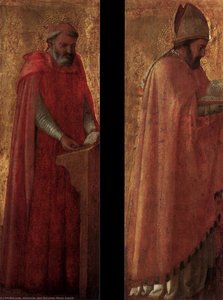
11View of the Cappella Brancacci (before restoration) (1426) by МазачоView of the Cappella Brancacci (before restoration)1426 · Santa Maria del Carmine 12Trinity (scheme of the perspective) (1425) by МазачоTrinity (scheme of the perspective)1425 · Santa Maria Novella 13Raising of the Son of Theophilus and St Peter Enthroned (detail) (1426) by МазачоRaising of the Son of Theophilus and St Peter Enthroned (detail)1426 14St Peter Healing the Sick with his Shadow (detail) (1426) by МазачоSt Peter Healing the Sick with his Shadow (detail)1426 15Frescoes in the Cappella Brancacci (right view) (1426) by МазачоFrescoes in the Cappella Brancacci (right view)1426 · Santa Maria del Carmine 16Madonna Casini (1426) by МазачоMadonna Casini1426 17Adam and Eve banished from Paradise (1427) by МазачоAdam and Eve banished from Paradise1427 18The Distribution of Alms and the Death of Ananias (detail) (1426) by МазачоThe Distribution of Alms and the Death of Ananias (detail)1426 19Frescoes in the Cappella Brancacci (left view) (1426) by МазачоFrescoes in the Cappella Brancacci (left view)1426 · Santa Maria del Carmine 20Baptism of the Neophytes (1427) by МазачоBaptism of the Neophytes1427 21Christ in the Garden of Gethsemane (detail) (1424) by МазачоChrist in the Garden of Gethsemane (detail)1424 · Lindenau-Museum 22Crucifixion (1426) by МазачоCrucifixion1426 · Museo di Capodimonte 23Tribute Money (detail) (1426) by МазачоTribute Money (detail)1426 24The Agony in the Garden (1426) by МазачоThe Agony in the Garden1426 25St Peter Healing the Sick with his Shadow (detail) (1426) by МазачоSt Peter Healing the Sick with his Shadow (detail)1426 26St. Juvenal Triptych (1422) by МазачоSt. Juvenal Triptych1422 27Maria and Child (1426) by МазачоMaria and Child1426 28Tribute Money (detail) (1426) by МазачоTribute Money (detail)1426 29The Expulsion from the Garden of Eden (detail) (1426) by МазачоThe Expulsion from the Garden of Eden (detail)1426 30Birth tray (1428) by МазачоBirth tray1428 31The Baptism of the Neophytes (1426) by МазачоThe Baptism of the Neophytes1426 32Raising of the Son of Theophilus and St Peter Enthroned (1426) by МазачоRaising of the Son of Theophilus and St Peter Enthroned1426 33The Distribution of Alms and the Death of Ananias (detail) (1426) by МазачоThe Distribution of Alms and the Death of Ananias (detail)1426 34Adoration of the Knigs (1428) by МазачоAdoration of the Knigs1428 35Tribute Money (detail) (1426) by МазачоTribute Money (detail)1426 36Tribute Money (1426) by МазачоTribute Money1426 37The Expulsion from the Garden of Eden (1426) by МазачоThe Expulsion from the Garden of Eden1426 38Tribute Money (detail) (1426) by МазачоTribute Money (detail)1426 39Raising of the Son of Theophilus and St Peter Enthroned (detail) (9) (1426) by МазачоRaising of the Son of Theophilus and St Peter Enthroned (detail) (9)1426 40San Giovenale Triptych. Right panel. (1422) by МазачоSan Giovenale Triptych. Right panel.1422 41Crucifixion (1426) by МазачоCrucifixion1426 42Raising of the Son of Theophilus and St Peter Enthroned (detail) (1426) by МазачоRaising of the Son of Theophilus and St Peter Enthroned (detail)1426 43Raising of the Son of Theophilus and St Peter Enthroned (detail) (1426) by МазачоRaising of the Son of Theophilus and St Peter Enthroned (detail)1426 44The Raising of the Son of Theophilus and St Peter Enthroned (detail) (1426) by МазачоThe Raising of the Son of Theophilus and St Peter Enthroned (detail)1426 45Raising of the Son of Theophilus and St Peter Enthroned (detail) (1426) by МазачоRaising of the Son of Theophilus and St Peter Enthroned (detail)1426 46Christ in the Garden of Gethsemane (detail) (1424) by МазачоChrist in the Garden of Gethsemane (detail)1424 · Lindenau-Museum 47San Giovenale Triptych. Central panel (1423) by МазачоSan Giovenale Triptych. Central panel1423 48Distribution of Alms and Death of Ananias (1425) by МазачоDistribution of Alms and Death of Ananias1425 49Profile Portrait of a Young Man by МазачоProfile Portrait of a Young Man 50Profile Portrait of a Young Man (1425) by МазачоProfile Portrait of a Young Man1425 · National Gallery of Art 51Rendering of the Tribute Money by МазачоRendering of the Tribute Money 52Distribution of the Goods of the Community and the Death of Ananias (detail) by МазачоDistribution of the Goods of the Community and the Death of Ananias (detail) 53St. Giovenale Triptych by МазачоSt. Giovenale Triptych 54The Expulsion from Paradise by МазачоThe Expulsion from Paradise 55The Adoration of the Magi by МазачоThe Adoration of the Magi 56St. Peter Baptizing the Neophytes by МазачоSt. Peter Baptizing the Neophytes 57Birth Salver by МазачоBirth Salver 58Medallion by МазачоMedallion 59Madonna and Child by МазачоMadonna and Child 60Madonna Enthroned by МазачоMadonna Enthroned 61St Jerome and St John the Baptist by МазачоSt Jerome and St John the Baptist 62Christ in the Garden of Gethsemane (1424) by МазачоChrist in the Garden of Gethsemane1424 · Lindenau-Museum 63San Giovenale Triptych. Left panel (1422) by МазачоSan Giovenale Triptych. Left panel1422 64Portrait of a Young Woman (1425) by МазачоPortrait of a Young Woman1425 65Distribution of the Goods of the Community and the Death of Ananias by МазачоDistribution of the Goods of the Community and the Death of Ananias 66The Holy Trinity with the Virgin, St. John and Two Donors by МазачоThe Holy Trinity with the Virgin, St. John and Two Donors 67The Cricifixion of St. Peter. The Beheading of St. John the Baptist by МазачоThe Cricifixion of St. Peter. The Beheading of St. John the Baptist 68La Consagración by МазачоLa Consagración 69Crucifixion by МазачоCrucifixion 70St Jerome and St John the Baptist 1 by МазачоSt Jerome and St John the Baptist 1 71The Madonna and Child with Saint Anne by МазачоThe Madonna and Child with Saint Anne 72Two panels from the Pisa Altarpiece by МазачоTwo panels from the Pisa Altarpiece 73Portrait of a young man by МазачоPortrait of a young manIsabella Stewart Gardner Museum 74View of the Cappella Brancacci (after restoration) by МазачоView of the Cappella Brancacci (after restoration) 75Putto and a Small Dog (back side of the Berlin Tondo) by МазачоPutto and a Small Dog (back side of the Berlin Tondo) 76The Madonna and Child with st.Anna. (1424) by МазачоThe Madonna and Child with st.Anna.1424 77Plate of Nativity (Berlin Tondo) (1427) by МазачоPlate of Nativity (Berlin Tondo)1427 · Staatliche Museen zu Berlin 78Madonna with Child and Angels (1426) by МазачоMadonna with Child and Angels1426 · National Gallery 79The Distribution of Alms and the Death of Ananias (1426) by МазачоThe Distribution of Alms and the Death of Ananias1426 · Santa Maria del Carmine 80St Peter Healing the Sick with his Shadow (1426) by МазачоSt Peter Healing the Sick with his Shadow1426 · Santa Maria del Carmine 81San Giovenale Triptych (1422) by МазачоSan Giovenale Triptych1422 82Raising of the Son of Teophilus and St.Peter Enthroned (1427) by МазачоRaising of the Son of Teophilus and St.Peter Enthroned1427 · Santa Maria del Carmine 83St Paul (1426) by МазачоSt Paul1426 · Museo Nazionale di San Matteo 84Carnesecchi Triptych (1423) by МазачоCarnesecchi Triptych1423 85Adoration of the Magi (1426) by МазачоAdoration of the Magi1426 · Staatliche Museen zu Berlin 86Martyrdom of San Giovanni Battista (1426) by МазачоMartyrdom of San Giovanni Battista1426 · Gemäldegalerie 87Predella panel from the Pisa Altar (1426) by МазачоPredella panel from the Pisa Altar1426 · Staatliche Museen zu Berlin 88A Bearded Carmelite Saint (1426) by МазачоA Bearded Carmelite Saint1426 · Gemäldegalerie 89Madonna Casini (1426) by МазачоMadonna Casini1426 90Madonna of Humility (1420) by МазачоMadonna of Humility1420 · National Gallery of Art 91Repentance of Saint Peter (1425) by МазачоRepentance of Saint Peter1425 · Santa Maria del Carmine 92San Agustín by МазачоSan AgustínGemäldegalerie 93St. Andrew (1426) by МазачоSt. Andrew1426 · J. Paul Getty Museum 94Carmelita by МазачоCarmelitaGemäldegalerie 95St. Jerome by МазачоSt. JeromeGemäldegalerie 96St.Girolamo end Giovanni Battista (1428) by МазачоSt.Girolamo end Giovanni Battista1428 · National Gallery 97Crucifixion of St Peter (1426) by МазачоCrucifixion of St Peter1426 · Staatliche Museen zu Berlin

Мазачо: works by period

Principal subjects in the work of Мазачо

The four subjects most frequently represented among these works, each with its best-known example.

Мазачо: holding museums

The 8 museums that hold the most of the paintings on this page.

Museum City Works by Мазачо Paintings from this list
Santa Maria del Carmine, FirencaSanta Maria del Carmine Firenca 7 View of the Cappella Brancacci (before restoration), Frescoes in the Cappella Brancacci (right view), Frescoes in the Cappella Brancacci (left view)
Staatliche Museen zu Berlin, BerlinStaatliche Museen zu Berlin Berlin 6 Predella panel from the Pisa Altar, Two panels from the Pisa Altarpiece, Plate of Nativity (Berlin Tondo)
Gemäldegalerie, BerlinGemäldegalerie Berlin 5 Martyrdom of San Giovanni Battista, A Bearded Carmelite Saint, San Agustín
Santa Maria Novella, FirencaSanta Maria Novella Firenca 4 Trinity (detail), Trinity, Trinity (detail)
Lindenau-Museum, AltengauLindenau-Museum Altengau 3 Christ in the Garden of Gethsemane (detail), Christ in the Garden of Gethsemane (detail), Christ in the Garden of Gethsemane
National Gallery of Art, WashingtonNational Gallery of Art Washington 2 Profile Portrait of a Young Man, Madonna of Humility
National Gallery, LondonNational Gallery London 2 Madonna with Child and Angels, St.Girolamo end Giovanni Battista
Museo di Capodimonte, NapuljMuseo di Capodimonte Napulj 1 Crucifixion

Year index: the principal Мазачо paintings

From 1420 to 1428, 9 years, the dated works of Мазачо are indexed below year by year with their principal paintings.

Works per year

Select a year to display its principal paintings.

Questions frequently consulted on Мазачо's paintings

What is the best-known work of Мазачо?Display the answer

Светолочење (1428). The following entries are Порезница (1425) and The Expulsion from the Garden of Eden (1426).

How old was Мазачо in the year of Светолочење?Display the answer

27 years: Мазачо was born in 1401 and Светолочење is dated 1428.

What are the ten best-known works by Мазачо?Display the answer

Светолочење, Порезница, The Expulsion from the Garden of Eden, Репродукција: Плаћање да robe (детаљ), Predella panel from the Pisa Altar, The Madonna of Humility, Trinity (detail), Two panels from the Pisa Altarpiece, Trinity and Trinity (detail). The list above records the date and holding museum of each.

How many works by Мазачо does the catalogue record?Display the answer

The catalogue records 97 works by Мазачо, dated between 1420 and 1428.

Where are the principal works of Мазачо held?Display the answer

Principally in Santa Maria del Carmine (Firenca), Staatliche Museen zu Berlin (Berlin) and Gemäldegalerie (Berlin). The museum table above gives the full distribution.

During which period did Мазачо produce the best-known works?Display the answer

In 1426: 41 of the 97 works listed on this page are dated to that period, including The Expulsion from the Garden of Eden.

What are the earliest and latest best-known works by Мазачо?Display the answer

The earliest dated work listed here is Madonna of Humility (1420); the latest is Светолочење (1428).

What subjects did Мазачо treat most often?Display the answer

Saints (30), Religious (25) and Renaissance (14), out of the 97 works listed on this page.

What medium did Мазачо employ most often?Display the answer

Acrylic On Canvas, in 9 of the 97 works listed on this page.

To which art movement is Мазачо attributed?Display the answer

Rana renesansa, as documented by the works on this page.

Which paintings by Мазачо does the Santa Maria del Carmine hold?Display the answer

View of the Cappella Brancacci (before restoration), Frescoes in the Cappella Brancacci (right view) and Frescoes in the Cappella Brancacci (left view) are among the 7 works on this page in the collection of the Santa Maria del Carmine, Firenca.

Can reproductions of Мазачо's works be ordered?Display the answer

Yes. Each work listed on this page can be ordered from its own entry as a hand-painted oil reproduction or a fine art print, in a size of your choice.

Biography of Мазачо

Масачо: Зора ренесансног реализма

Томазо ди Сер Ђовани ди Симоне, познатији као Масачо (што значи "неспретни Тома"), био је кључна фигура ране италијанске ренесансе. Рођен 21. децембра 1401. године у Сан Ђовани Валдарну, Италија, и трагично преминуо у веку 1428. године, његова кратка каријера је револуционисала сликарство захваљујући пробојном реализму, перспективи и киароскуру (употреби снажних контраста између светле и тамне боје). Упркос кратком животу, Масачов утицај на касније генерације уметника био је дубок, успоставивши нови стандард натурализма и обликујући ток западне уметности.

Рани живот и образовање

Масачо је рођен 21. децембра 1401. године у Сан Ђовани Валдарну, Италија, као син Ђованија ди Симонеа Касаија, нотара, и Јакопе ди Мартиноца. Породично име, Касаи, потиче од заната његовог деде по оцу, који је био израђивач намештаја. Након очеве смрти када је имао пет година, Масачо је остао сироче и одрастао са братом Ђованијем (Ло Скеђа), који је такође постао сликар. Детаљи његовог уметничког образовања су углавном непознати, што је необично за ренесансне уметнике. Верује се да је започео учење око дванаесте године, али није идентификован дефинитиван учитељ. Овај недостатак документованог школовања додаје мистерију његовом брзом развоју и иновативним техникама.

Уметнички развој и главна дела

Масачо је у свом раду демонстрирао изузетан таленат за реалистично представљање света, али није одмах стекао признање. Почетно су га инспирисали Ђото ди Бондоне, претходник познат по свом натурализму, и архитектонске иновације Филипа Брунелескија, посебно Брунелескијево откривање линеарне перспективе. Масачо је брзо надмашио Ђота у разумевању анатомије и перспективе. Убрзо се прикључио цеховском удружењу сликара (Arte de’ Medici e Speziali) у Фиренци 7. јануара 1422. године, што је означило његов излазак као самосталног мајстора.

Масачо је био пионир неколико пробојних техника: линеарна перспектива, коју је применио коришћењем тачака нестајања и математичке прецизности за стварање убедљиве илузије дубине на дводимензионалној површини; киароскуро, где је мајсторски користио светлост и сенку да обликује форме, стварајући осећај волумена и реализма који није виђен раније у сликарству; и натурализам, где је фигуре приказивао са анатомијском прецизношћу и емоционалном изражајношћу, одступајући од стилизованих представљања ранијих периода.

Међу његовим значајним делима су Триптих Сан Ђовенале (око 1422.), рани рад који показује његов развијајући се вештина у перспективи и натуралистичком представљању; Мадона са дететом и Света Ана (око 1423-1425.), заједничка работа са Масолином, која демонстрира Масачов реализам поред традиционалнијег стила Масолина. Али његова најславнија и утицајна дела су фреске у капели Бранкачи (око 1425-1428.), које се налазе у цркви Санта Марија дел Кармине у Фиренци. Ове фреске, укључујући "Податак пореза", "Истеривање из раја" и "Свети Петар крштава новокрштене", сматрају се ремек-делима ране ренесансе.

Историјски значај и наслеђе

Масачов утицај на ток западне уметности је непроцењив, упркос његовој трагично краткој каријери. Његове иновације у перспективи, киароскуру и натурализму су темељно промениле начин на који су уметници приказивали свет. Ефикасно је премостио јаз између средњовековних уметничких конвенција и нових ренесансних идеала.

Масачов рад је дубоко утицао на генерације сликара, укључујући Донатела, Леонарда да Винчија, Микеланђела и Рафаела. Изучавали су његове фреске са великом пажњом, усвајајући и прилагођавајући његове технике својим стиловима. Нагласак на реализму и људским емоцијама поставио је основу за уметничка достигнућа Високе ренесансе. Биографија Ђорђа Вазарија препознала је Масачов геније, хвалећи га као "најбољег сликара своје генерације" и истичући његову способност да имитира природу са неупоредивом вештином. Његова смрт у младости од 26 година била је жалована савременицима, попут Филипа Брунелескија, који су оплакивали губитак тако изузетног талента.

Масачово наслеђе траје као један од најважнијих и утицајних уметника у историји. Стоји као кључна фигура у прелазу са средњовековне на ренесансну уметност, заувек мењајући начин на који доживљавамо и представљамо свет кроз сликарство. Његова кратка али сјајна каријера служи као сведочанство моћи иновација и трајног утицаја уметничког генија.

All 97 works by Мазачо →