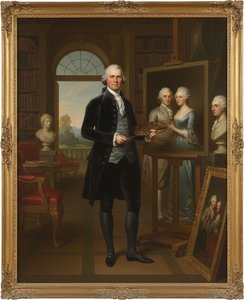
Nathaniel Hone II: Bridging Romantic Vision and Artistic Authenticity
Nathaniel Hone II stands as a singular figure in the tapestry of Victorian art—a painter whose prolific output defied easy categorization and whose reputation endured considerable controversy throughout his lifetime. Born around 1837 in Edinburgh, Hone was shaped by a family steeped in Scottish intellectual tradition; his father, William Hone Sr., was a noted journalist famous for his sharp satirical commentary. This heritage of critical thinking likely informed the artist's later ability to navigate the complex and often turbulent art markets of London and beyond. While his early years were rooted in Scotland, his artistic soul found its true expression through the landscapes of Cornwall and Wales, where he imbued the natural world with an atmospheric Romantic sensibility that remained anchored by a meticulous technical precision.
The foundations of Hone’s mastery were laid during his formal training under the influential landscape painter John Atkinson Grimshaw. From Grimshaw, Hone inherited a profound understanding of tonal gradation and the delicate art of atmospheric perspective. He learned to treat light not merely as an illumination of objects, but as a palpable substance that could define the very mood of a scene. This influence is clearly visible in his ability to capture the heavy, moisture-laden air of coastal regions, where the boundary between sea and sky becomes a blurred, ethereal frontier. His technique involved a painstaking layering of oil paints, a process that allowed him to achieve remarkable tonal accuracy and a sense of realism that felt both deeply observed and poetically heightened.
The Sublime Majesty of the Cornish Coast
Hone’s fame solidified through his breathtaking series of Cornish landscapes, a collection totaling over 150 paintings that serve as a testament to his devotion to the sublime. These works capture the dramatic coastal vistas, rugged moorlands, and serene estuaries of the region, reflecting the Romantic preoccupation with nature's awe-inspiring grandeur. In these canvases, the viewer is not merely looking at a landscape but is invited to experience the spiritual transformation that comes from witnessing the power of the natural world. Whether depicting the crashing waves against granite cliffs or the quiet stillness of a hidden cove, Hone’s work possesses an unparalleled sense of presence.
Beyond the rugged coasts, his repertoire extended into more tranquil, pastoral realms. His ability to transition from the monumental to the intimate allowed him to master various facets of the landscape genre:
- Coastal Grandeur: Capturing the dramatic interplay of light and shadow across the Cornish shoreline.
- Atmospheric Studies: Utilizing tonal layering to recreate the misty, evocative moods of Wales and rural England.
- Pastoral Serenity: Depicting the quiet beauty of livestock and lush fields, as seen in works like Cows under Trees.
A Legacy of Complexity and Controversy
Despite his technical brilliance, Hone’s career was not without its shadows. His artistic journey was marked by periods of intense experimentation and even accusations of forgery that cast a long shadow over his professional reputation. He was an enigmatic figure, often viewed as a manipulator of the art market, which added a layer of intrigue to his persona. Yet, it is impossible to separate the man from the immense skill he brought to the canvas. His work remains a vital link between the sweeping emotionalism of the Romantic era and the more grounded, observational realism that would define much of late 19th-century British art.
Today, Nathaniel Hone II is remembered not just for the controversy that trailed him, but for his profound ability to translate the ephemeral qualities of light and atmosphere into enduring oil masterpieces. His paintings, such as the monumental The Pont du Gard, continue to captivate collectors and historians alike, serving as windows into a vanished era of Victorian aesthetic exploration. He remains a pivotal figure whose work continues to bridge the gap between the wild, untamed vision of Romanticism and the disciplined, technical excellence of the classical tradition.
Soru ve Cevaplar
Nathaniel Hone the Younger adlı sanatçının eserlerinin renk profilini nerede görebilirim?
Nathaniel Hone the Younger eserlerinin renk profiline Nathaniel Hone the Younger için hazırlanan Palet Genomu sayfasından ulaşabilirsiniz.
Nathaniel Hone the Younger sanatçısının sanatı zaman içinde nasıl bir gelişim gösterdi?
Nathaniel Hone the Younger'in kariyeri, sanatçının Sanat Yolculuğu sayfasında dönemlere ayrılmış bir zaman çizelgesi olarak sunulmaktadır: eserlerin kariyer dönemlerine göre gruplandırıldığı yatay bir kronoloji.
Nathaniel Hone the Younger eserlerine ait 3D sanal tur mevcut mu?
Sanal bir ziyaret mümkün: Nathaniel Hone the Younger sanatçısının 3B Galeri sayfası, eserleri üç boyutlu bir galeride sunuyor.