Portrait of Masaccio

Masaccio: Catalogue of the 97 Most Famous Paintings

Updated Ekim 2026 · ranked by our popularity score (searches, visits and orders for each work) · 97 works by Masaccio in our catalogue

Özet

Teslis (1428) is recorded as the most famous painting of Masaccio. Vergi Parası (1425) and The Expulsion from the Garden of Eden (1426) occupy the second and third entries. Of the 97 works by Masaccio recorded in the catalogue, the 97 best known are listed below, each entry with its date, the holding museum and a note on the work.

1401 – 1428, San Giovanni Valdarno Erken rönesans Most works: Santa Maria del Carmine

Entries 1 to 10: the most famous Masaccio paintings

1
Teslis (1428) by Masaccio

Teslis

1428 · Fresk

Teslis, Masaccio'nun birçok sanatsal yeniliği bünyesinde barındıran çığır açıcı bir çalışmasıdır. Derinlik ve mekan algısı yaratan lineer perspektif kullanımını benimseyen ilk anıtsal Rönesans tablolarından biri olması, eseri döneminin çok ötesine taşır. Sanatçının chiaroscuro ve sfumato tekniklerini ustalıkla kullanması, figürlere hacim ve doku kazandırarak onları gerçekliğin sınırlarını zorlayan bir doğallığa ulaştırır.

2
Vergi Parası (1425) by Masaccio

Vergi Parası

1425 · Fresk

Sahne, Floransa'daki Santa Maria del Carmine bazilikasının Brancacci Şapeli'nde hayat bulur. Burada, Masaccio tarafından yapılan ve Vergi Parası başlığını taşıyan fresco, şapelin duvarları üzerinde bir kutsal anlatıyı canlandırır. Felice Brancacci tarafından sipariş edilen bu eser, Aziz Petrus'un yaşamına adanmış daha geniş bir döngünün önemli bir parçasını oluşturur. Figürler derin bir anlam taşıyan bir anın içinden geçerken, şapeldeki hava bu kutsal tarihin ağırlığını içinde barındırıyor gibidir.

3
The Expulsion from the Garden of Eden (1426) by Masaccio

The Expulsion from the Garden of Eden

1426 · Fresco

The heavy silence of the Brancacci Chapel in the church of Santa Maria del Carmine in Florence, Italy, holds the weight of a profound tragedy. Here, the walls breathe with the story of The Expulsion from the Garden of Eden, a fresco painted by Masaccio around 1425. The air seems to thicken around the figures as they face their sudden, irreversible departure from paradise. This scene marks the beginning of…

4
Trapatiçi Detayı (Detay) by Masaccio

Trapatiçi Detayı (Detay)

Fresk

Bu büyüleyici detay, Masaccio’nun Floransa'daki Brancacci Şapeli'nin en kilit eserlerinden biri olan çığır açıcı freski “Vergi Parası”ndan (The Tribute Money) gelmektedir. 1426 civarında tamamlanan bu eser, Batı sanatında Gotik dönemin stilize geleneklerinden uzaklaşarak natüralizm ve hümanist ifadeye dayalı yeni bir çağa geçişi temsil eden bir dönüm noktasıdır.

5
Predella panel from the Pisa Altar (1426) by Masaccio

Predella panel from the Pisa Altar

1426 · Oil On Panel · Staatliche Museen zu Berlin, Berlin

To stand before this Predella panel from the Pisa Altar is to encounter a moment frozen in time, yet vibrating with raw, undeniable human drama. Dating to 1426, this work captures Masaccio at the zenith of his revolutionary power. It is not merely a depiction of the Crucifixion; it is a profound meditation on sacrifice, community, and the weight of divine narrative rendered with startling immediacy. The composition draws the…

6
The Madonna of Humility (1424) by Masaccio

The Madonna of Humility

1424 · Tempera On Panel

In the quiet, profound stillness of Masaccio’s The Madonna of Humility, we encounter one of the most moving snapshots of the Early Italian Renaissance. Created around 1424, this masterpiece transcends mere religious iconography to offer a window into a moment of raw, maternal intimacy. The scene is set not upon a celestial throne, but on the earth itself, where the Virgin Mary sits upon a blue patterned cushion. This choice…

7
Trinity (detail) (1425) by Masaccio

Trinity (detail)

1425 · Fresco · Santa Maria Novella, Floransa

The image presents a detail from a fresco painting created in 1425 by Masaccio. Within this specific view, a figure is depicted that appears to be Mary Magdalene, identified by the traditional iconography of her long hair and a head covering. She possesses a contemplative expression, directing her gaze slightly downwards toward an object held in her right hand, which may be interpreted as a symbol of faith or devotion.

8
Two panels from the Pisa Altarpiece (1426) by Masaccio

Two panels from the Pisa Altarpiece

1426 · Tempera On Panel · Staatliche Museen zu Berlin, Berlin

In the quiet, hallowed halls of art history, few works capture the dawn of a new era as poignantly as Masaccio’s Two Panels from the Pisa Altarpiece. Completed in 1426, these panels are far more than mere fragments of a lost polyptych; they are windows into a transformative moment when the rigid conventions of the Gothic period began to dissolve, giving way to the profound humanism of the Early Italian…

9
Trinity (1425) by Masaccio

Trinity

1425 · Fresco · Santa Maria Novella, Floransa

To step before Masaccio’s Holy Trinity is to witness the exact moment when the flattened, symbolic world of the Middle Ages dissolved into the profound, breathing reality of the Renaissance. Painted between 1425 and 1427 within the hallowed walls of Santa Maria Novella in Florence, this fresco does not merely depict a religious scene; it carves a hole in the very wall of the chapel, inviting the viewer to step…

10
Trinity (detail) (1425) by Masaccio

Trinity (detail)

1425 · Acrylic On Canvas · Santa Maria Novella, Floransa

Masaccio’s “Trinity (detail),” housed within the magnificent Santa Maria Novella in Florence, isn't merely a fresco; it’s a pivotal moment in art history – a visual manifesto declaring the arrival of the High Renaissance. Painted between 1425 and 1427, this intimate section captures the essence of Masaccio’s revolutionary approach to depicting reality, a departure from the stylized elegance of the preceding Gothic era and a profound influence on generations of…

Masaccio, further entries: 11 to 97

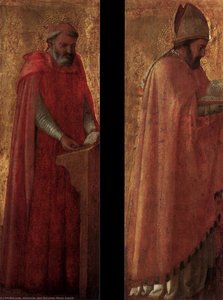
11View of the Cappella Brancacci (before restoration) (1426) by MasaccioView of the Cappella Brancacci (before restoration)1426 · Santa Maria del Carmine 12Trinity (scheme of the perspective) (1425) by MasaccioTrinity (scheme of the perspective)1425 · Santa Maria Novella 13Raising of the Son of Theophilus and St Peter Enthroned (detail) (1426) by MasaccioRaising of the Son of Theophilus and St Peter Enthroned (detail)1426 14St Peter Healing the Sick with his Shadow (detail) (1426) by MasaccioSt Peter Healing the Sick with his Shadow (detail)1426 15Frescoes in the Cappella Brancacci (right view) (1426) by MasaccioFrescoes in the Cappella Brancacci (right view)1426 · Santa Maria del Carmine 16Madonna Casini (1426) by MasaccioMadonna Casini1426 17Adam and Eve banished from Paradise (1427) by MasaccioAdam and Eve banished from Paradise1427 18The Distribution of Alms and the Death of Ananias (detail) (1426) by MasaccioThe Distribution of Alms and the Death of Ananias (detail)1426 19Frescoes in the Cappella Brancacci (left view) (1426) by MasaccioFrescoes in the Cappella Brancacci (left view)1426 · Santa Maria del Carmine 20Baptism of the Neophytes (1427) by MasaccioBaptism of the Neophytes1427 21Christ in the Garden of Gethsemane (detail) (1424) by MasaccioChrist in the Garden of Gethsemane (detail)1424 · Lindenau-Museum 22Crucifixion (1426) by MasaccioCrucifixion1426 · Museo di Capodimonte 23Tribute Money (detail) (1426) by MasaccioTribute Money (detail)1426 24The Agony in the Garden (1426) by MasaccioThe Agony in the Garden1426 25St Peter Healing the Sick with his Shadow (detail) (1426) by MasaccioSt Peter Healing the Sick with his Shadow (detail)1426 26St. Juvenal Triptych (1422) by MasaccioSt. Juvenal Triptych1422 27Maria and Child (1426) by MasaccioMaria and Child1426 28Tribute Money (detail) (1426) by MasaccioTribute Money (detail)1426 29The Expulsion from the Garden of Eden (detail) (1426) by MasaccioThe Expulsion from the Garden of Eden (detail)1426 30Birth tray (1428) by MasaccioBirth tray1428 31The Baptism of the Neophytes (1426) by MasaccioThe Baptism of the Neophytes1426 32Raising of the Son of Theophilus and St Peter Enthroned (1426) by MasaccioRaising of the Son of Theophilus and St Peter Enthroned1426 33The Distribution of Alms and the Death of Ananias (detail) (1426) by MasaccioThe Distribution of Alms and the Death of Ananias (detail)1426 34Adoration of the Knigs (1428) by MasaccioAdoration of the Knigs1428 35Tribute Money (detail) (1426) by MasaccioTribute Money (detail)1426 36Tribute Money (1426) by MasaccioTribute Money1426 37The Expulsion from the Garden of Eden (1426) by MasaccioThe Expulsion from the Garden of Eden1426 38Tribute Money (detail) (1426) by MasaccioTribute Money (detail)1426 39Raising of the Son of Theophilus and St Peter Enthroned (detail) (9) (1426) by MasaccioRaising of the Son of Theophilus and St Peter Enthroned (detail) (9)1426 40San Giovenale Triptych. Right panel. (1422) by MasaccioSan Giovenale Triptych. Right panel.1422 41Crucifixion (1426) by MasaccioCrucifixion1426 42Raising of the Son of Theophilus and St Peter Enthroned (detail) (1426) by MasaccioRaising of the Son of Theophilus and St Peter Enthroned (detail)1426 43Raising of the Son of Theophilus and St Peter Enthroned (detail) (1426) by MasaccioRaising of the Son of Theophilus and St Peter Enthroned (detail)1426 44The Raising of the Son of Theophilus and St Peter Enthroned (detail) (1426) by MasaccioThe Raising of the Son of Theophilus and St Peter Enthroned (detail)1426 45Raising of the Son of Theophilus and St Peter Enthroned (detail) (1426) by MasaccioRaising of the Son of Theophilus and St Peter Enthroned (detail)1426 46Christ in the Garden of Gethsemane (detail) (1424) by MasaccioChrist in the Garden of Gethsemane (detail)1424 · Lindenau-Museum 47San Giovenale Triptych. Central panel (1423) by MasaccioSan Giovenale Triptych. Central panel1423 48Distribution of Alms and Death of Ananias (1425) by MasaccioDistribution of Alms and Death of Ananias1425 49Profile Portrait of a Young Man by MasaccioProfile Portrait of a Young Man 50Profile Portrait of a Young Man (1425) by MasaccioProfile Portrait of a Young Man1425 · National Gallery of Art 51Rendering of the Tribute Money by MasaccioRendering of the Tribute Money 52Distribution of the Goods of the Community and the Death of Ananias (detail) by MasaccioDistribution of the Goods of the Community and the Death of Ananias (detail) 53St. Giovenale Triptych by MasaccioSt. Giovenale Triptych 54The Expulsion from Paradise by MasaccioThe Expulsion from Paradise 55The Adoration of the Magi by MasaccioThe Adoration of the Magi 56St. Peter Baptizing the Neophytes by MasaccioSt. Peter Baptizing the Neophytes 57Birth Salver by MasaccioBirth Salver 58Medallion by MasaccioMedallion 59Madonna and Child by MasaccioMadonna and Child 60Madonna Enthroned by MasaccioMadonna Enthroned 61St Jerome and St John the Baptist by MasaccioSt Jerome and St John the Baptist 62Christ in the Garden of Gethsemane (1424) by MasaccioChrist in the Garden of Gethsemane1424 · Lindenau-Museum 63San Giovenale Triptych. Left panel (1422) by MasaccioSan Giovenale Triptych. Left panel1422 64Portrait of a Young Woman (1425) by MasaccioPortrait of a Young Woman1425 65Distribution of the Goods of the Community and the Death of Ananias by MasaccioDistribution of the Goods of the Community and the Death of Ananias 66The Holy Trinity with the Virgin, St. John and Two Donors by MasaccioThe Holy Trinity with the Virgin, St. John and Two Donors 67The Cricifixion of St. Peter. The Beheading of St. John the Baptist by MasaccioThe Cricifixion of St. Peter. The Beheading of St. John the Baptist 68La Consagración by MasaccioLa Consagración 69Crucifixion by MasaccioCrucifixion 70St Jerome and St John the Baptist 1 by MasaccioSt Jerome and St John the Baptist 1 71The Madonna and Child with Saint Anne by MasaccioThe Madonna and Child with Saint Anne 72Two panels from the Pisa Altarpiece by MasaccioTwo panels from the Pisa Altarpiece 73Portrait of a young man by MasaccioPortrait of a young manIsabella Stewart Gardner Müzesi 74View of the Cappella Brancacci (after restoration) by MasaccioView of the Cappella Brancacci (after restoration) 75Putto and a Small Dog (back side of the Berlin Tondo) by MasaccioPutto and a Small Dog (back side of the Berlin Tondo) 76The Madonna and Child with st.Anna. (1424) by MasaccioThe Madonna and Child with st.Anna.1424 77Plate of Nativity (Berlin Tondo) (1427) by MasaccioPlate of Nativity (Berlin Tondo)1427 · Staatliche Museen zu Berlin 78Madonna with Child and Angels (1426) by MasaccioMadonna with Child and Angels1426 · National Gallery 79The Distribution of Alms and the Death of Ananias (1426) by MasaccioThe Distribution of Alms and the Death of Ananias1426 · Santa Maria del Carmine 80St Peter Healing the Sick with his Shadow (1426) by MasaccioSt Peter Healing the Sick with his Shadow1426 · Santa Maria del Carmine 81San Giovenale Triptych (1422) by MasaccioSan Giovenale Triptych1422 82Raising of the Son of Teophilus and St.Peter Enthroned (1427) by MasaccioRaising of the Son of Teophilus and St.Peter Enthroned1427 · Santa Maria del Carmine 83St Paul (1426) by MasaccioSt Paul1426 · Museo Nazionale di San Matteo 84Carnesecchi Triptych (1423) by MasaccioCarnesecchi Triptych1423 85Adoration of the Magi (1426) by MasaccioAdoration of the Magi1426 · Staatliche Museen zu Berlin 86Martyrdom of San Giovanni Battista (1426) by MasaccioMartyrdom of San Giovanni Battista1426 · Gemäldegalerie 87Predella panel from the Pisa Altar (1426) by MasaccioPredella panel from the Pisa Altar1426 · Staatliche Museen zu Berlin 88A Bearded Carmelite Saint (1426) by MasaccioA Bearded Carmelite Saint1426 · Gemäldegalerie 89Madonna Casini (1426) by MasaccioMadonna Casini1426 90Madonna of Humility (1420) by MasaccioMadonna of Humility1420 · National Gallery of Art 91Repentance of Saint Peter (1425) by MasaccioRepentance of Saint Peter1425 · Santa Maria del Carmine 92San Agustín by MasaccioSan AgustínGemäldegalerie 93St. Andrew (1426) by MasaccioSt. Andrew1426 · J. Paul Getty Müzesi 94Carmelita by MasaccioCarmelitaGemäldegalerie 95St. Jerome by MasaccioSt. JeromeGemäldegalerie 96St.Girolamo end Giovanni Battista (1428) by MasaccioSt.Girolamo end Giovanni Battista1428 · National Gallery 97Crucifixion of St Peter (1426) by MasaccioCrucifixion of St Peter1426 · Staatliche Museen zu Berlin

Masaccio: works by period

Principal subjects in the work of Masaccio

The four subjects most frequently represented among these works, each with its best-known example.

Masaccio: holding museums

The 8 museums that hold the most of the paintings on this page.

Museum City Works by Masaccio Paintings from this list
Santa Maria del Carmine, FloransaSanta Maria del Carmine Floransa 7 View of the Cappella Brancacci (before restoration), Frescoes in the Cappella Brancacci (right view), Frescoes in the Cappella Brancacci (left view)
Staatliche Museen zu Berlin, BerlinStaatliche Museen zu Berlin Berlin 6 Predella panel from the Pisa Altar, Two panels from the Pisa Altarpiece, Plate of Nativity (Berlin Tondo)
Gemäldegalerie, BerlinGemäldegalerie Berlin 5 Martyrdom of San Giovanni Battista, A Bearded Carmelite Saint, San Agustín
Santa Maria Novella, FloransaSanta Maria Novella Floransa 4 Trinity (detail), Trinity, Trinity (detail)
Lindenau-Museum, AltengauLindenau-Museum Altengau 3 Christ in the Garden of Gethsemane (detail), Christ in the Garden of Gethsemane (detail), Christ in the Garden of Gethsemane
National Gallery of Art, WashingtonNational Gallery of Art Washington 2 Profile Portrait of a Young Man, Madonna of Humility
National Gallery, LondraNational Gallery Londra 2 Madonna with Child and Angels, St.Girolamo end Giovanni Battista
Museo di Capodimonte, NapoliMuseo di Capodimonte Napoli 1 Crucifixion

Year index: the principal Masaccio paintings

From 1420 to 1428, 9 years, the dated works of Masaccio are indexed below year by year with their principal paintings.

Works per year

Select a year to display its principal paintings.

Questions frequently consulted on Masaccio's paintings

What is the best-known work of Masaccio?Display the answer

Teslis (1428). The following entries are Vergi Parası (1425) and The Expulsion from the Garden of Eden (1426).

How old was Masaccio in the year of Teslis?Display the answer

27 years: Masaccio was born in 1401 and Teslis is dated 1428.

What are the ten best-known works by Masaccio?Display the answer

Teslis, Vergi Parası, The Expulsion from the Garden of Eden, Trapatiçi Detayı (Detay), Predella panel from the Pisa Altar, The Madonna of Humility, Trinity (detail), Two panels from the Pisa Altarpiece, Trinity and Trinity (detail). The list above records the date and holding museum of each.

How many works by Masaccio does the catalogue record?Display the answer

The catalogue records 97 works by Masaccio, dated between 1420 and 1428.

Where are the principal works of Masaccio held?Display the answer

Principally in Santa Maria del Carmine (Floransa), Staatliche Museen zu Berlin (Berlin) and Gemäldegalerie (Berlin). The museum table above gives the full distribution.

During which period did Masaccio produce the best-known works?Display the answer

In 1426: 41 of the 97 works listed on this page are dated to that period, including The Expulsion from the Garden of Eden.

What are the earliest and latest best-known works by Masaccio?Display the answer

The earliest dated work listed here is Madonna of Humility (1420); the latest is Teslis (1428).

What subjects did Masaccio treat most often?Display the answer

Saints (30), Religious (25) and Renaissance (14), out of the 97 works listed on this page.

What medium did Masaccio employ most often?Display the answer

Acrylic On Canvas, in 9 of the 97 works listed on this page.

To which art movement is Masaccio attributed?Display the answer

Erken rönesans, as documented by the works on this page.

Which paintings by Masaccio does the Santa Maria del Carmine hold?Display the answer

View of the Cappella Brancacci (before restoration), Frescoes in the Cappella Brancacci (right view) and Frescoes in the Cappella Brancacci (left view) are among the 7 works on this page in the collection of the Santa Maria del Carmine, Floransa.

Can reproductions of Masaccio's works be ordered?Display the answer

Yes. Each work listed on this page can be ordered from its own entry as a hand-painted oil reproduction or a fine art print, in a size of your choice.

Biography of Masaccio

Masaccio (1401-1428): Rönesans Gerçekçiliğinin Şafağı

Tommaso di Ser Giovanni di Simone, namıdiğer Masaccio (yani "Sakar Tom"), Erken İtalyan Rönesansı'nın en kilit figürlerinden biriydi. 21 Aralık 1401'de İtalya'nın San Giovanni Valdarno kentinde dünyaya gelen ve 1428 yılında trajik bir şekilde genç yaşta hayata veda eden bu dahi sanatçı, kısa süren kariyerine çığır açan gerçekçilik, perspektif ve chiaroscuro (ışık ve gölgenin güçlü kontrastı) tekniklerini sığdırarak resim sanatında devrim yarattı. Kısa ömrüne rağmen Masaccio'nun sonraki nesil sanatçılar üzerindeki etkisi derin bir iz bıraktı; doğalcılık konusunda yeni bir standart belirleyerek Batı sanatının akışını sonsuza dek değiştirdi.

İlk Yıllar ve Sanat Eğitimi

  • Kökenleri: Bir noter olan Giovanni di Simone Cassai ile Jacopa di Martinozzo'nun oğlu olarak dünyaya geldi. Soyadı olan Cassai, baba tarafındaki dedesinin mobilya ustası mesleğinden gelmekteydi.
  • Çocukluk Dönemi: Babasının ölümüyle beş yaşında yetim kalan sanatçının, kendisi de bir ressam olan kardeşi Giovanni (Lo Scheggia) ile birlikte zorlu bir çocukluk geçirdiği bilinmektedir.
  • Çıraklık: Rönesans sanatçılarında nadir görülen bir durum olarak, Masaccio'nun sanatsal eğitiminin detayları büyük ölçüde gizemini korumaktadır. Muhtemelen 12 yaş civarında bir çıraklık döneminden geçtiğine inanılsa da, kesin olarak hangi ustadan ders aldığı belirlenememiştir. Bu belgelenmemiş eğitim süreci, onun hızlı gelişimi ve yenilikçi teknikleri etrafındaki gizemi daha da artırmaktadır.
  • Lonca Üyeliği: 7 Ocak 1422 tarihinde Floransa'daki ressamlar loncasına (Arte de’ Medici e Speziali) katılması, onun bağımsız bir usta sanatçı olarak yükselişinin resmi bir göstergesiydi.

Sanatsal Gelişim ve Başyapıtlar

  • Erken Dönem Etkileri: Başlangıçta doğalcılığıyla tanınan selefi Giotto di Bondone'den etkilenmiş olsa da, Masaccio kısa sürede perspektif ve anatomi anlayışıyla onun ötesine geçmeyi başardı. Ayrıca Filippo Brunelleschi'nin mimari yeniliklerinden, özellikle de doğrusal perspektifin yeniden keşfinden derin ilhamlar aldı.
  • Temel Yenilikler: Masaccio, sanat tarihinde çığır açan birkaç tekniğin öncüsü oldu:
    • Doğrusal Perspektif: İki boyutlu bir yüzeyde ikna edici bir derinlik illüzyonu yaratmak için kaçış noktalarını ve matematiksel hassasiyeti ustalıkla kullandı.
    • Chiaroscuro: Formları modellemek için ışık ve gölgeyi öyle bir ustalıkla yönetti ki, resimde daha önce görülmemiş bir hacim ve gerçeklik duygusu yarattı.
    • Doğalcılık: Figürleri anatomik doğruluk ve duygusal dışavurumla betimleyerek, önceki dönemlerin stilize edilmiş temsillerinden uzaklaştı.
  • Önemli Eserler:
    • San Giovenale Triptych (yaklaşık 1422): Perspektif ve doğal temsil konusundaki gelişen yeteneğini sergileyen erken dönem bir çalışmasıdır.
    • Azize Anne, Madonna ve Çocuk (yaklaşık 1423-1425): Masolino ile yaptığı bu iş birliği, Masolino'nun daha geleneksel tarzının yanında Masaccio'nun yükselen gerçekçiliğini gözler önüne serer.
    • Brancacci Şapeli Freskleri (yaklaşık 1425-1428): Floransa'daki Santa Maria del Carmine Kilisesi'nde bulunan bu eserler, sanatçının en ünlü ve etkileyici yapıtlarıdır. "Vergi Parası", "Cennetten Kovuluş" ve "Aziz Petrus'un Neofitleri Vaftiz Etmesi" gibi freskler, Erken Rönesans sanatının eşsiz şaheserleri olarak kabul edilir.
    • üs

Tarihsel Önem ve Miras

Masaccio'nun trajik derecede kısa süren kariyerine rağmen, Batı sanatının seyri üzerindeki etkisi ölçülemez boyuttadır. Perspektif, chiaroscuro ve doğalcılık alanındaki yenilikleri, sanatçıların dünyayı betimleme biçimlerini kökten değiştirdi. Orta Çağ'ın sanatsal gelenekleri ile Rönesans'ın yükselen idealleri arasında etkili bir köprü kurmayı başardı.

  • Sonraki Sanatçılar Üzerindeki Etkisi: Masaccio'nun çalışmaları; Donatello, Leonardo da Vinci, Michelangelo ve Raphael gibi nesiller boyu sürecek olan ressamlar üzerinde derin izler bıraktı. Bu ustalar, onun fresklerini dikkatle inceleyerek kendi stillerine uyarladılar ve tekniklerini benimsediler.
  • Yüksek Rönesans'ın Temeli: Gerçekçilik ve insan duygularına verdiği önem, Yüksek Rönesans'ın sanatsal başarılarının temelini attı.
  • Vasari'nin Anlatımı: Biyografi yazarı Giorgio Vasari, Masaccio'nun dehasını tanımış; onu "kendi neslinin en iyi ressamı" olarak övmüş ve doğayı eşsiz bir yetenekle taklit etme becerisini vurgulamıştır.
  • Trajik Bir Kayıp: 26 yaşındaki ölümü, Filippo Brunelleschi gibi çağdaşları tarafından büyük bir üzüntüyle karşılanmış; bu böylesine olağanüstü bir yeteneğin kaybı derin bir yasla anılmıştır.

Sonuç

Masaccio'nun mirası, tarihin en önemli ve etkileyici sanatçılarından biri olarak varlığını sürdürmektedir. Orta Çağ'dan Rönesans sanatına geçişte kilit bir figür olarak durmakta; dünyayı resim yoluyla algılama ve temsil etme biçimimizi sonsuza dek değiştirmektedir. Onun kısa ama parlak kariyeri, yeniliğin gücüne ve sanatsal dehanın kalıcı etkisine verilmiş en görkemli kanıtlardan biridir.

All 97 works by Masaccio →