Пошук

Ернест Лоусон

1873 - 1939

Короткі факти

  • Died: 1939
  • Mediums: олія на полотні
  • Emotional tone:
    • безтурботний
    • спокійний
  • Corpus themes:
    • impressionist landscape
    • plein air technique
    • american impressionism influence
    • part of the eight
    • alfred sisley influence
  • Movements: impressionism
  • Color intensity:
    • насичений
    • збалансований
  • Lifespan: 66 years
  • Copyright status: Public domain
  • Room fit: вітальня
  • Topics explored:
    • winter
    • rivers
    • landscape
    • usa
    • impressionism
  • Also known as: Ernest Lawson
  • Розгорнути…
  • Creative periods: mature period
  • Best occasions: настрій
  • Born: 1873, Галіфакс, Канада
  • Museums on APS:
    • Columbia Museum of Art
    • Columbia Museum of Art
    • Columbia Museum of Art
    • Columbia Museum of Art
    • Detroit Historical Museum
  • Top 3 works: River Scene in Winter
  • Typical colors:
    • природний
    • нейтральні кольори
  • Nationality: Канада
  • Vibe: безтурботний
  • Works on APS: 161
  • Top-ranked work: River Scene in Winter
  • Art period: Модерн і сучасне мистецтво

Вікторина з мистецтва

Для кожного питання є лише одна правильна відповідь.

Запитання 1:
Який художник є автором пейзажу «Верхнее Харлемское Заливье — Зима»?
Запитання 2:
У якому році Лоусон вступив до Академії Джульян у Парижі?
Запитання 3:
Який стиль характеризує творчість Лоусона?
Запитання 4:
До якого художнього руху відноситься група «Восьми»?
Запитання 5:
Який художній метод Лоусон використовував для створення своїх картин?

Ernest Lawson: A Luminary of American Impressionism

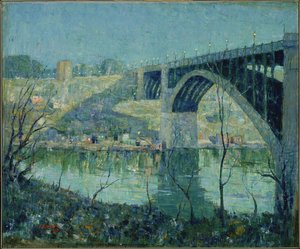
Ernest Lawson (1873–1939) stands as a pivotal figure in the trajectory of American Impressionism, embodying a singular vision that blended French artistic sensibilities with an unflinching portrayal of everyday life. Born in Halifax, Nova Scotia, Canada, on March 22nd, 1873, Lawson’s journey into art began amidst familial relocation to Kansas City, Missouri, where he absorbed the formative influences of his father's medical practice and instilled within him a profound appreciation for observation and detail. ### Early Influences & Artistic Training Lawson’s formal artistic education commenced at the Kansas City Art Institute from 1888–1889, followed by studies at the Art Students League in New York City under John Twachtman—a connection that proved instrumental in introducing him to Impressionism. This encounter with Twachtman wasn't merely pedagogical; it fostered a deep understanding of plein air painting and the pursuit of capturing fleeting moments of beauty within the natural world. Further enriching his artistic perspective were lessons at Cos Cob, Connecticut, with Julien Alden Weir, cementing his commitment to realism alongside Impressionistic techniques. Notably, Lawson’s formative years coincided with an immersion in Parisian art culture, where he studied at Académie Julian alongside Jean-Joseph Benjamin-Constant and Jean-Paul Laurens—artists who championed a bold departure from academic conventions toward expressive artistic endeavors. ### The Embrace of Impressionism & Artistic Style Lawson's artistic style evolved into a distinctive blend of Impressionism and realism – a harmonious fusion that distinguished him from many of his contemporaries. He meticulously studied the works of Claude Monet and Alfred Sisley, absorbing their mastery of color and light—elements he would subsequently integrate into his own paintings. Lawson’s technique involved applying paint thickly onto canvas using palette knives, creating textured surfaces that mirrored the rugged beauty of American landscapes. This approach allowed him to convey not only visual accuracy but also emotional resonance, capturing the essence of place with remarkable sensitivity. His celebrated canvases depict snowscapes, mountain ranges, and urban vistas—each imbued with a palpable sense of atmosphere and immediacy. ### Membership in “The Eight” & Artistic Legacy Lawson’s artistic convictions aligned powerfully with those of “The Eight”—a group of progressive artists who challenged the restrictive dogma of the National Academy of Design. This association fueled his participation in the landmark 1908 exhibition, which galvanized critical discourse regarding stylistic diversity within American art. Lawson's unwavering dedication to portraying authentic human experience—particularly the lives of ordinary people—earned him recognition as a champion of social realism and solidified his place among America’s foremost Impressionist painters. His enduring legacy resides in his ability to transform commonplace scenes into canvases brimming with luminous color and evocative emotion, ensuring that Ernest Lawson’s artistic vision continues to inspire generations of artists. ### Notable Works & Recognition Lawson's oeuvre includes masterpieces such as “Upper Harlem River—Winter,” which captures the serene stillness of a snow-covered landscape; "The Pond and Gapstow Bridge, New York City," showcasing Central Park bathed in moonlight; and “Spring Night, Harlem River”—a nocturne that exemplifies Lawson’s masterful manipulation of light and atmosphere. His paintings garnered acclaim from fellow artists—William Merritt Chase lauded Lawson's unparalleled skill as a landscape painter—and his work remains treasured within prominent museums across the United States.


WikiOO.org © WikiOO.org — Усі права захищено