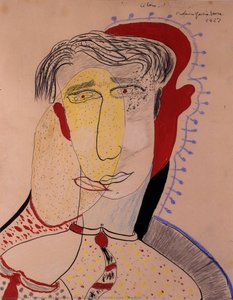
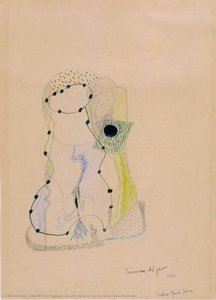
Museums on APS: Museo Casa de los Tiros de Granada
Works on APS: 2
More…
Copyright status: Public domain
Died: 1936
Also known as: federico garcia lorca
Born: 1898, Fuente Vaqueros, Spain
Top 3 works:
The Kiss
Vase Theorem
Federico García Lorca: Life and Legacy
Early Life and Influences
Federico del Sagrado Corazón de Jesús García Lorca was born on June 5, 1898, in Fuente Vaqueros, Spain.
His father, Federico García Rodríguez, was a landowner, and his mother, Vicenta Lorca Romero, was a teacher.
Early exposure to the Andalusian countryside profoundly shaped his artistic sensibility.
He began piano lessons at age 11, developing a deep appreciation for music that would later influence his poetry. Key musical influences included Claude Debussy, Frédéric Chopin, and Ludwig van Beethoven.
His friendship with composer Manuel de Falla further cemented the importance of Spanish folklore in his work.
Artistic Development and Key Works
Lorca initially studied law but soon dedicated himself to literature and art.
He moved to Madrid in 1919, immersing himself in a vibrant artistic community at the Residencia de Estudiantes, befriending Luis Buñuel and Salvador Dalí.
His first published book was Impresiones y paisajes (Impressions and Landscapes) in 1918.
He rose to prominence with Romancero gitano (Gypsy Ballads) in 1928, a collection of poems depicting the lives and struggles of the Romani people in Andalusia.
A sojourn in New York City from 1929-1930 resulted in Poeta en Nueva York (Poet in New York), published posthumously in 1942, reflecting his alienation and disillusionment with modern urban life.
Dramatic Achievements
Lorca became a leading figure in Spanish theatre, writing plays that blended traditional folklore with avant-garde techniques.
His most celebrated plays include:
Blood Wedding (1932): A tragic tale of passion, honor, and fate.
Yerma (1934): Explores the themes of infertility and societal expectations for women.
The House of Bernarda Alba (1936): A powerful depiction of repression and female confinement.
He founded *La Barraca*, a travelling theatre company dedicated to bringing classical Spanish plays to rural audiences.
Influences and Artistic Style
Lorca was deeply influenced by Spanish folklore, flamenco music, and the traditions of Andalusia.
He incorporated elements of Surrealism, Futurism, and other European avant-garde movements into his work.
His style is characterized by vivid imagery, symbolism, emotional intensity, and a lyrical quality.
Recurring themes in his work include love, death, passion, social injustice, and the plight of marginalized communities.
Historical Significance and Legacy
Federico García Lorca was assassinated by Nationalist forces at the beginning of the Spanish Civil War in 1936. His remains have never been found.
His death transformed him into a symbol of artistic freedom and resistance against oppression.
He is considered one of the most important Spanish poets and playwrights of the 20th century.
Lorca’s work continues to be widely read, performed, and studied around the world, inspiring generations of artists and writers.
By the WikiOO.org Editorial Team
Art Quiz
There is only one correct answer for each question.
Question 1:
Federico García Lorca is most closely associated with which literary movement?
Question 2:
Lorca's early fame stemmed primarily from his work in what genre?
Question 3:
What significant event marked the tragic end of Federico García Lorca's life?
Question 4:
Which of these themes is *most* prominent in Lorca's work?
Question 5:
Lorca spent time in which major city that influenced his later work 'Poeta en Nueva York'?
Explore the dramatic world of Spanish Baroque art! Discover masters like Zurbarán & the powerful influence of religious zeal on painting techniques – a guide for collectors and enthusiasts.
Explore the life & art of Rafael de Penagos, a leading Spanish Art Deco illustrator. Discover his iconic 'Penagos Woman', commercial work, and lasting legacy. Learn about this pivotal figure in 20th-century Spanish art history.
Explore the captivating world of José Gutiérrez Solana, a pivotal Spanish Expressionist painter. Discover his haunting depictions of early 20th-century Spain, influenced by Goya & El Greco. Learn about his key works and lasting legacy.