
 Преглед в реален мащаб

 Изпрати
 Сподели
 Детайли
 Ръководство


 Изтегляне
 Подобни артикули
 Рентгенова снимка
 Слайдшоу
 Въпроси и отговори
 Статистика
Horizon

- 130.0 x 162.0cm


 Прочети повече
Изкуството, представено на тази страница, е защитено от законите за авторско право, което означава, че не можем законно да създаваме или продаваме идентични репродукции. Тази защита се прилага съгласно международни споразумения като Бернска конвенция и от националното законодателство, включително разпоредбите на Закон за авторското право на САЩ – Раздел 17.
Този метод е напълно съвместим с законите за авторско право, тъй като не включва копиране или дублиране на защитеното произведение. Вместо това става въпрос за творческа реинтерпретация – нова картина, която е вдъхновена от оригинала, но не е идентична с него.
Жикле / Художествен принт
Giclée печат или принт върху платно с музейно качество, бързо производство и гъвкави опции за завършен вид. ( Купете ръчно рисувана картина Превключване към дигитално изображение)
































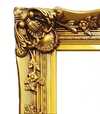
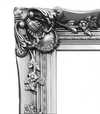
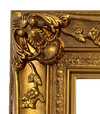
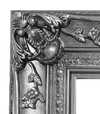
Изберете от нашите предварително зададени размери, които съответстват на оригиналните пропорции на произведението.

Въведете необходимата ширина и височина, за да паснат на вашата рамка или стена. Принтовете могат само да се изрязват, но никога не могат да бъдат по-големи от оригиналната картина, така че при размер с различен формат част от изображението ще бъде загубена. Преди да започнем печат, ще ви изпратим дигитален мок업 за одобрение. Изображението, показано на тази страница, не показва реалното изрязване — само мок업ът го показва.
Доставка по целия свят () в рамките на 2 седмици вместо стандартните 4/5 седмици. (18 Ноември)

Безплатна експресна доставка по целия свят

Висококачествено ленено платно

Пълно застраховане на доставката

Гаранция за възстановяване на митнически такси

Гаранция за пълно съответствие на цветовете

Политика за връщане в рамките на 100 дни (само при дефекти)

100% Гаранция за връщане на сумата

Оферта за отстъпка при поръчка на повече бройки
 Опцията със стъкло е налична само за размери под 110 см

Horizon
Жикле / Художествен принт
Размер на репродукцията
-


Обща цена
€ 55
Подобни произведения


Биография на художника
Early Life, Family and Training
Antonio Corpora was born in Tunis on 15 August 1909 to Sicilian parents. This Mediterranean background provided the initial context for a career that would eventually move toward the center of European abstraction. His formal education began at the Tunis Institute of Fine Arts, where he developed the technical foundation necessary for his later departures from traditional form. During this formative period, he studied under the mentorship of Armand Vergeaud, a relationship that anchored his early development before his move toward the continental avant-garde.
The trajectory of his career shifted decisively in 1930 when Corpora moved to Paris. By 1931, he had settled in the city, entering a landscape that was rapidly redefining modernism. It was in this environment that he met Alberto Giacometti and Sergio Signori. These encounters placed him directly within the intellectual and social circles that would dictate the direction of mid-century art. His presence in Paris was not merely a change of scenery; it was a deliberate immersion into the core of the era's most significant aesthetic shifts.
Artistic Movements and Style
Corpora’s evolution is marked by a decisive break from structure. During the 1930s, his practice relied on abstract and geometric compositions, heavily shaped by the logic of Cubism and the color palettes of Fauvism. This period of controlled form eventually gave way to a more fluid approach. By 1946, he was actively pushing against these established boundaries, promoting a "Neo-Cubist" exhibition in Rome. His subsequent involvement with the Fronte Nuovo delle Arti signaled a shift toward a post-cubist sensibility that rejected rigid construction in favor of something more visceral.
The transition toward abstraction became more radical as his career progressed. He moved away from geometric certainty, embracing the spontaneous gestures of Tachisme and the energy of Abstract Expressionism. By the 1960s, his output aligned with the Informel movement, characterized by a rejection of traditional shape. This was not a mere change in preference but a fundamental shift in how he handled the physical surface of the work.
In his later years, the tactile nature of his painting became his primary concern. From about 1975, Corpora utilized a specific dripping technique to build texture. He worked on canvases roughened with sand and plaster of Paris, creating a rugged, physical landscape for his colors. This method allowed for a depth that relied on the material properties of the medium rather than the illusion of perspective.
Exhibitions and Professional Recognition
Corpora’s presence in the international circuit was cemented through repeated participation in the Venice Biennale. He exhibited there four times, securing a solo show at the event in 1960. His standing within the Italian art scene was further validated in 1952 when he was presented as part of the "Group of Eight" at the Venice Biennale. This period marked a significant moment of institutional recognition for his evolving approach to abstraction.
His career concluded with high-level state and academic honors. In 2003, the president of Italy presented him with an award, acknowledging his long-term contribution to the arts. He also achieved membership in the San Luca Academy. These distinctions reflect a professional trajectory that moved from the experimental fringes of post-cubist movements into the established core of Italian artistic institutions.

Antonio Corpora
1909 - 2004 , Tunisia
Бърза информация
- Artistic Movement Or Style:
- Tachisme
- Abstract Art
- Fronte Nuovo delle Arti
- Cubism
- Fauvism
- Abstract Expressionism
- Informel
- Neo-cubista
- Artists Who Influenced This Artist:
- Armand Vergeaud
- Braque
- Matisse
- Full Name: Antonio Corpora
- Nationality: Italian
- Place Of Birth: Tunis, Tunisia
- Date Of Birth: 1909
- Date Of Death: 2004
Свързани статии

Masterpieces of Munich: Top 25 Artworks in the Bavarian State Painting Collections
Explore 25 iconic masterpieces from Munich's Bavarian State Painting Collections. Discover timeless art on WikiOO.org.

Masterpieces of Munich: Top 25 Artworks in the Bavarian State Painting Collections
Explore 25 iconic masterpieces from Munich's Bavarian State Painting Collections. Discover timeless art on WikiOO.org.