

 Se i rummet
 Del som kort
 Del
Del
 Detaljer
 Guide
Guide

 Download
 Lignende værker
 Røntgenundersøgelse
 Diasshow
 Statistikker
Taking the Count


 Vis mere
Giclée / Kunsttryk
Giclée- eller lærredstryk i museumskvalitet med hurtig produktion og fleksible muligheder for finish. ( Køb håndmalet maleri Skift til digitalt billede)




P118B Dkr10

P118H Dkr10

P118W Dkr10

P438Z Dkr10

P508JH Dkr12

P508YH Dkr12

P805H Dkr10

P805Z Dkr10

P919BZ Dkr10

P919G Dkr10

P919XJ Dkr10

P959ZH Dkr10

P968JZ Dkr12

W106C Dkr8

W218G Dkr10

W218JH Dkr8

W218Y Dkr10

W307PJ Dkr10

W316G Dkr10

W316PJ Dkr8

W316Y Dkr10

W398PJ Dkr8

W4111J Dkr10

W500HY Dkr15

W500JH Dkr15

W692G Dkr12

W849H Dkr8

W940BG Dkr15

W953PJ Dkr8




Vælg mellem vores forudindstillede størrelser, der matcher kunstværkets originale proportioner.

Indtast den bredde og højde, du har brug for, så det passer til din ramme eller din væg. Et print kan kun beskæres, aldrig gøres større end selve billedet, så en størrelse med et andet format vil medføre, at dele af motivet går tabt. Vi sender dig en digital mockup til godkendelse, før vi printer noget. Billedet vist på denne side viser ikke den faktiske beskæring — det er kun mockuppen, der gør.
Verdensomspændende levering () på 2 uger i stedet for de sædvanlige 4/5 uger. (27 oktober)

Gratis ekspresforsendelse til hele verden

Lærred af linned i høj kvalitet

Fuld transportforsikring

Garanti for refusion af told og importafgifter

Garanti for præcis farvegengivelse

100 dages returret ved fabrikationsfejl

100% fuld returret

Mængderabat ved flere køb
 Glasmulighed er kun tilgængelig i størrelser under 110 cm

Taking the Count
Giclée / Kunsttryk
Størrelse på reproduktion
-


Samlet pris
Dkr 408
The Raw Pulse of Philadelphia: A Masterclass in Realism
In the dim, electric atmosphere of Philadelphia’s Arena in 1898, a moment of profound human vulnerability is frozen in time. Thomas Eakins, a titan of American Realism, does not merely paint a boxing match; he dissects the very essence of endurance and physical struggle. In Taking the Count, we are thrust into the center of the ring, where the sweat, the tension, and the heavy breathing of the combatants feel almost palpable. This is not the romanticized, heroic athleticism often found in sporting art; instead, Eakins presents a gritty, unvarnished truth. The scene captures a fallen fighter at his most precarious moment, caught in the agonizing interval between a devastating blow and the referee's decisive count. It is a study of the human body under duress, rendered with a scientific precision that reflects Eakins’ lifelong obsession with anatomy.
The composition draws the eye through a complex web of gazes and physical postures. At the heart of the drama, the kneeling figure embodies a desperate struggle for recovery, his muscles taut and his spirit tested. Surrounding him, the referee and the standing opponent create a triangular tension that anchors the viewer within the ring. Beyond the immediate combatants, the presence of the crowd—a shadowy, watchful collective—adds a layer of psychological depth, reminding us that this private agony is being consumed as public spectacle. For the collector or the lover of fine art, this painting offers more than just a depiction of sport; it provides a window into the late 19th-century urban experience, where the boundaries between physical prowess and human frailty are perpetually blurred.
Anatomy of a Masterpiece: Technique and Light
Eakins’s technical mastery is most evident in his ability to marry scientific rigor with emotional resonance. Having spent years studying the intricacies of musculature and bone structure through dissection, he approaches the canvas with the eye of an anatomist. Every sinew and strained limb in Taking the Count is rendered with an uncompromising accuracy that makes the figures appear to possess weight and volume. His use of light does not serve to beautify the scene but to illuminate its harsh realities. The lighting within the arena creates deep, dramatic shadows that sculpt the bodies of the boxers, emphasizing the physical toll of the fight and adding a sense of cinematic gravity to the composition.
The palette, while grounded in the earthy, somber tones characteristic of Eakins’s realism, is used to direct the viewer's emotional journey. The muted colors of the background allow the pale, strained skin of the athletes to emerge from the gloom, focusing our attention on the visceral reality of the struggle. For interior designers seeking a centerpiece for a sophisticated space, this work offers a profound sense of gravitas. A high-quality reproduction of this masterpiece brings with it an air of intellectual depth and historical weight, making it an ideal choice for galleries, studies, or living spaces that value art which challenges the eye and stirs the soul.
A Legacy of Unflinching Honesty
To understand Taking the Count is to understand the rebellious spirit of Thomas Eakins himself. At a time when many of his contemporaries were retreating into the soft, fleeting impressions of light or the idealized myths of history, Eakins stood firm in his commitment to the real. He found beauty not in perfection, but in the truth of the human condition—in the grit of the city, the precision of science, and the raw intensity of life lived on the edge. This painting remains a testament to that courage.
Owning or displaying a reproduction of this work is an invitation to contemplate the themes of resilience and the cyclical nature of struggle. It serves as a powerful reminder that even in moments of defeat, there is a profound dignity in the attempt to rise again. Whether viewed as a historical document of Philadelphia’s sporting culture or as a timeless exploration of human anatomy, Taking the Count continues to captivate, offering an enduring source of inspiration for those who find beauty in the authentic and the unadorned.
Spørgsmål og svar
Hvilken printstørrelse af "Taking the Count" af Thomas Eakins passer til det anbefalede rum?
Den anbefalede kombination til "Taking the Count" af Thomas Eakins: et tryk i størrelsen Large til et Living Room.
Hvilket rum anbefales "Taking the Count" af Thomas Eakins til?
Det anbefalede rum til "Taking the Count" af Thomas Eakins er en Living Room. Forslaget kan naturligvis tilpasses din indretning.
Hvilken type værk er "Taking the Count"?
I kataloget er "Taking the Count" af Thomas Eakins registreret som WallArt. Kategorien hjælper med at finde lignende værker.
Lignende kunstværker


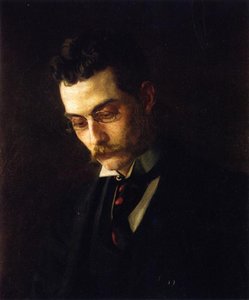


Kunstnerbiografi
Thomas Eakins: En Pioner af Realismen i Det Amerikanske Kunstmiljø
Thomas Cowperthwait Eakins, født i Philadelphia den 25. juli 1844, er en monumental figur i amerikansk kunst – en maler, der dedikerede sit liv til at fange essensen af menneskelig erfaring med en usædvanlig ærlighed og præcision. Han var ikke blot optaget af at *repræsentere* verden; han søgte at dekonstruere den, forstå dens anatomi – både fysisk og psykologisk – og derefter rekonstruere den på lærredet med en integritet, der ofte grænsede op til provokation. Eakins’s vej var ikke præget af øjeblikkelig anerkendelse, men snarere en langsom, gradvis udvikling af dedikation, kontrovers og i sidste ende vedvarende anerkendelse som måske den mest dybtgående realist i det 19. og tidlige 20. århundredes amerikanske kunst. Hans Philadelphia var ikke en by med storslåede landskaber eller romantiske idealer; det var en verden af læger, roere, jægere og almindelige mennesker – og disse var hans emner, gengivet med en næsten videnskabelig præcision.Tidlige Indflydelser og Kunstnerisk Udvikling
Eakins’s barndom fremmede både intellektuel nysgerrighed og kunstnerisk tilbøjelighed. Hans far, Benjamin Eakins, en skrivemester og kalligraf, indgydede ham en kærlighed til disciplin og minutiøst observation. Dette fundament blev yderligere styrket af hans uddannelse på Central High School og Pennsylvania Academy of the Fine Arts, hvor han udmærkede sig i tegning og anatomi – en fascination, der ville gennemskære hele hans oeuvre. Men det var hans tid i Europa, især under Jean-Léon Gérômes vejledning i Paris, der virkelig formede hans kunstneriske tilgang. Gérômes fokus på præcis draftsmanship og historisk nøjagtighed resonerede med Eakins’s egne tendenser, men han bevægede sig hurtigt ud over blot imitation. Et ophold i Spanien forfinede yderligere hans forståelse af lys, skygge og magten i direkte observation. Han var ikke tilfreds med blot at kopiere gamle mestre; han ønskede at *forstå*, hvordan de opnåede deres effekter, og derefter anvende den viden på sin egen unikke vision. Denne periode cementerede hans forpligtelse til at male direkte fra livet – en praksis, der ville definere hans karriere.Studiet af Kroppen og Observationens Magt
Eakins’s interesse for menneskekroppen var dybtgående og drevet af en kombination af kunstnerisk ambition og videnskabelig nysgerrighed. Han tilmeldte sig Jefferson Medical College, hvor han studerede anatomi og blev vant til at observere lig i medicinske undersøgelser. Denne viden om menneskets struktur var ikke blot et akademisk øvelse; det blev en grundlæggende del af hans kunstneriske metode. Han studerede bevægelse med stor omhu, og han eksperimenterede med innovative teknikker for at fange den nøjagtigt på lærredet. Hans malerier er præget af en utrolig følsomhed over for hver enkelt persons indre natur – selv i værker, der portrætterede emner i deres offentlige kapaciteter – deres blik eller gestus med en stille privathed, som kunstneren havde bemærket. Han var ikke blot optaget af at gengive udseende; han forsøgte at fange essensen af den menneskelige oplevelse.Tematiske Fokus og Teknik
Eakins’s værker er karakteriseret ved en urokkelig forpligtelse til realisme – et nægtelse af at idealisere eller romantisere hans emner. Hans portrætter, der tæller flere hundrede, er ikke flatterende repræsentationer designet til at behage modellen; de er gennemslagende studier af karakter, der afslører både styrke og sårbarhed. Han malede individer i deres professionelle miljø – kirurger i *The Gross Clinic*, roere, der kæmper mod strømmen i *Max Schmitt in a Single Scull* – og fangede ikke kun deres fysiske udseende, men også intensiteten af deres fokus og kravene til deres håndværk. Denne dedikation til sandhed udvidedes til hans teknik. Eakins studerede bevægelse minutiøst og brugte innovative metoder til at fange den nøjagtigt på lærredet. Han studerede menneskekroppen omhyggeligt, ofte ved at dissekere lig for at forstå kroppens underliggende struktur. Han eksperimenterede endda med fotografi, og brugte det som et værktøj til at analysere bevægelse og opnå større nøjagtighed i sine malerier. Hans brug af chiaroscuro – den dramatiske kontrast mellem lys og mørke – forstærkede yderligere realismen og den psykologiske dybde i hans værker.Kontrovers og Arv
Trods sin kunstneriske genialitet var Eakins’s karriere præget af kontrovers. Hans insisteren på at male direkte fra livet, ofte inklusive nakne modeller, kolliderede med det konservative sanselag i viktoriansk Philadelphia. Hans undervisningsmetoder på Pennsylvania Academy var ligeledes ukonventionelle; han understregede vigtigheden af at studere den menneskelige form fra livet og opfordrede sine elever til at udfordre traditionelle kunstneriske konventioner. Dette førte til spændinger med sine kolleger og resulterede i hans tvungne fratrædelse i 1886. Personlige skandaler skadede yderligere hans ry under hans levetid, hvilket efterlod ham stort set isoleret fra kunstmiljøet. Alligevel fortsatte Eakins ufortrødent med at male og undervise privat, indtil hans helbred begyndte at svigte. Efter sin død i 1916 blev hans arbejde gradvist anerkendt, og han fejres nu som en afgørende figur i amerikansk kunsthistorie. Hans usædvanlige ærlighed, hans dedikation til anatomisk nøjagtighed og hans dybe forståelse for den menneskelige sjæl fortsætter med at inspirere kunstnere og fange publikums opmærksomhed i dag. Han efterlod ikke kun malerier, men også en arv af kunstnerisk integritet og en vedholdende søgen efter sandhed – et vidnesbyrd om magten i observation og den varige skønhed i den menneskelige form.
Thomas Eakins
1844 - 1916 , USA
Kort om kunstneren
- Artistic Movement Or Style: Realist
- Artists Or Movements Influenced By This Artist: ['Amer. Realisme']
- Artists Who Influenced This Artist: ['Gérôme']
- Date Of Birth: 25. juli 1844
- Date Of Death: 25. juni 1916
- Full Name: Thomas Eakins
- Nationality: Amerikansk
- Notable Artworks:
- Max Schmitt
- Gross Klinik
- Svømning
- Place Of Birth: Philadelphia, USA
Relaterede artikler

The Unvarnished Truth: A Cultural Journey Through the Soul of American Realism
Explore the profound beauty of American Realism. From the Ashcan School's urban grit to intimate portraits, discover how artists captured the authentic soul of a nation through unvarnished truth and masterful observation.

Thomas Eakins: Realism, Anatomy & the American Spirit – A Comprehensive Exploration of Life and Legacy
Explore the life & legacy of Thomas Eakins, a pivotal American Realist painter. Discover his groundbreaking techniques, anatomical precision, and iconic works like 'The Gross Clinic.' A comprehensive guide for art enthusiasts.

Thomas Pollock Anshutz: Capturing American Life with Realism & Reform
Explore the life & work of Thomas Pollock Anshutz, a key figure in American Realism. Discover his powerful paintings, influence on art education, and commitment to portraying everyday life with honesty and social awareness.

American Realism: Social Commentary & Artistic Representation in Early 20th-Century Painting
Explore the powerful social commentary & artistic representation of American Realism. Discover key artists like Bellows & Sloan, and understand the movement's lasting impact on 20th-century art history.

Amerikansk Realisme: 10 Mesterværker der Definerede En Kunstbevægelse – Find Din Inspiration Hos WikiOO
Oplev de 10 mest ikoniske værker inden for amerikansk realisme! Fra Edward Hopper til Andrew Wyeth – lær historierne bag mesterværkerne og find inspiration til dit hjem. Køb museumskvalitets reproduktioner på WikiOO.org.


