

- 16.0 x 24.0cm


 Preview

 Send
 Share
 Details
 Guide


 Download
 Similars
 X-Ray
 Diaporama
 Q&A
 Stats
Look closer
Every detail, painted by hand
Three spots of the painting, enlarged. Our artists reproduce each of them by hand, at the size you choose.
i.
The heart of the scene.
ii.
Light and background.
iii.
The brushwork.
The painting
Artist Biography
A leading Surrealist known for The Persistence of Memory. Discover his dreamlike masterpieces today.
 Read More
This Artwork Is Under Copyright Protection
The artwork displayed on this page is protected by copyright law, which means we cannot legally create or sell an identical reproduction. This protection is enforced under international agreements such as the Berne Convention and by national laws, including those outlined by the U.S. Copyright Law - Title 17.
As a respectful and legal alternative, we offer custom, hand-painted artworks inspired by the original. Our skilled and professional artists carefully study the original's style, mood, and artistic essence to create a new, unique piece that evokes the same feeling - while remaining an original creation in its own right.
This method fully complies with copyright regulations because it does not involve copying or duplicating the protected artwork. Instead, it is a creative reinterpretation - a new painting that is influenced by the original but not identical to it.

Salvador Dalí
1904 - 1989, Spain
The painter
Artist Biography
The Life of Salvador Dalí
Salvador Dalí entered the world at 8:45 am on May 11, 1904. He was born on the first floor of Carrer Monturiol, 20, in Figueres, Spain. His full name was Salvador Domingo Felipe Jacinto Dalí i Domènech. This beginning in the Empordà region of Catalonia set the stage for a life spent translating the irrationality of the subconscious into highly detailed imagery. He was a Spanish surrealist artist who moved through various stages of thought, eventually becoming a leading figure in the movement.
His existence was marked by a sense of duality, shaped by the early loss of an older brother who shared his name. This experience of identity and replacement would follow him into his later years. He lived through the Spanish Civil War and later traveled to the United States, where he found commercial success. He eventually returned to Spain, where his interests shifted toward a style he called nuclear mysticism, rooted in his interest in classicism and scientific developments.
The years in Figueres remained a constant connection to his roots. He maintained a deep tie to the town, even returning to live there from 1984 until his death. Salvador Dalí died on January 23, 1989, at the age of 84. He was buried in a crypt located below the stage of the Dalí Theatre-Museum in his birthplace.
Early Life, Family and Training
Born in the Empordà region of Catalonia, Spain, near the French border, his arrival was marked by a heavy shadow. His older brother, also named Salvador, had died of gastroenteritis on August 1, 1903, just nine months before his birth. This loss shaped the atmosphere of his home, as his parents raised him with the belief that he was the reincarnation of the brother who had passed away.
His early training began in the local landscape. In 1916, he attended the Municipal Drawing School at Figueres. This period of study provided the foundation for his technical development before he moved toward more formal instruction. He later received his formal education in fine arts in Madrid, where he refined the precise draftsmanship that would define his later output.
Artistic Movements and Style
His early training was shaped by the textures of Impressionism and the precise draftsmanship of the Renaissance masters. These foundations provided a technical rigor that he would later apply to much more unsettling subjects. As he moved through his formative years, he found himself drawn toward the fractured forms of Cubism and the restless energy of various avant-garde movements. By 1929, he had joined the Surrealist group, a move that signaled a shift toward the irrational. He began to use his meticulous skill to render the logic of dreams, turning the subconscious into something tangible and highly detailed.
From 1930 onward, his work became defined by the paranoiac-critical method. This approach allowed him to organize unrelated elements of reality around an obsessive idea, often resulting in images that contained multiple or double meanings. He moved away from simple automatism, choosing instead to actively engage with the irrational to create a visual language of social critique. His brushwork remained precise, even when the subjects—melting forms or distorted anatomy—defied the natural laws of the physical world.
In his later years, his focus shifted toward what he called nuclear mysticism. This period reflected a deep interest in classicism and mysticism, filtered through the lens of recent scientific developments. He sought to reconcile the spiritual with the atomic, moving back toward a more structured, almost religious sense of composition. His output during this time remained vast, spanning oil paintings, sculptures, and various objets d'art.
- The Persistence of Memory (1931)
- The Metamorphosis of Narcissus (1937)
- The Hallucinogenic Toreador
- The Disintegration of the Persistence of Memory (1952-54)
The Paranoiac-Critical Method
Dalí moved away from the passive nature of automatism, seeking a more active way to engage with the subconscious. He developed the paranoiac-critical method to organize the world through controlled paranoiac thought. This process involved taking unrelated elements of external reality and arranging them around a single, obsessive idea. It was a way to force the mind to see connections where none existed, turning a private delirium into a structured visual language.
The most visible result of this method is the use of double and multiple images. A single shape might shift into another depending on how the eye follows the lines, creating a sense of instability in the subject matter. This technique allowed for a specific kind of visual play, where one form could simultaneously represent two or more different things. The imagery relies on this constant state of transformation, where the boundaries of a recognizable object begin to dissolve into something else entirely.
- The Metamorphosis of Narcissus (1937)
- The Enigma of Desire, My Mother, 1929
- Face of Mae West Which May Be Used as an Apartment, circa 1935
Key Works and Artistic Output
The sheer volume of his output is difficult to measure, spanning over 1,500 paintings produced throughout his career. His hands moved between the precision of oil on canvas and the varied textures of lithographs and book illustrations. He did not limit himself to the flat surface of a frame, extending his vision into the physical world through dozens of sculptures and three-dimensional objects d'art. Even the moving image became a medium for his ideas, seen in an animated short film created for Disney.
His most recognized imagery often involves the distortion of time and form. In August 1931, he completed The Persistence of Memory, a work that has become a central point of reference for his visual language. Beyond these singular paintings, his work often occupied spaces designed for the stage, where he contributed designs for theater sets and costumes. This ability to move between the small scale of a drawing and the large scale of a theatrical production shows a restless approach to different media.
- The Metamorphosis of Narcissus (1937)
- The Hallucinogenic Toreador
- The Discovery of America by Christopher Columbus
- The Ecumenical Council
- Geopoliticus Child Watching the Birth of the New Man
Patrons and Business Management
The logistics of a creative life often require a steady hand to manage the practicalities of survival and success. For Dalí, this role was filled by Gala. She acted as his business manager, taking on the weight of the day-to-day operations so he could focus on his work. Gala was accountable for the management of their money and handled all negotiations with patrons and galleries. Her involvement extended into the very details of his studio, from researching the best paints and varnishes to finding fine old frames for his finished pieces. She even organized the daily details of his life, ensuring he had the space and tools necessary to paint.
Support also came from long-term patrons who saw the value in his specific vision. Reynolds and Eleanor Morse were friends and patrons who maintained a connection with the artist for decades. Their collection of works eventually found a new home when it was moved to its current location in 2011. This movement ensured that the pieces remained together, preserving a specific history of his output.
Later Years and Death
The years between 1936 and 1939 were spent in France, a period coinciding with the Spanish Civil War. By 1940, the focus shifted away from Europe toward the United States, where his presence brought a specific kind of commercial success. This period of international visibility eventually gave way to a return to Spain in 1948. In these later years, his interests moved toward a style often called nuclear mysticism, shaped by a renewed connection to the Catholic faith and the scientific developments of the era.
His final years were spent in his home country, maintaining a deep connection to the local landscape. He lived in Figueres from 1984 until his death. On January 23, 1989, he died of cardiac arrest. He was buried in a crypt located beneath the stage of the Dalí Theatre-Museum in Figueres, a building he had helped transform from the ruins of the old Municipal Theatre.
Where to See the Works Today
To find his traces, one can travel to Figueres, Spain, where the Dalí Theatre-Museum sits. The building occupies the very ground where he held his first public exhibitions as a young man. It is a place where the architecture and the artist's history are physically tied together.
Across the ocean, the Salvador Dalí Museum in Saint Petersburg, United States of America, holds a different part of his output. This museum in Florida contains more of his works than any other museum in the world. It keeps a large collection of his paintings, watercolors, drawings, and sculptures, providing a way to see the breadth of what he produced.
Quick facts about Salvador Dalí
- Full Name: Salvador Domingo Felipe Jacinto Dalí i Domènech
- Nationality: Spanish
- Date Of Birth: 1904
- Date Of Death: 1989
- Place Of Birth: Figueres, Spain
- Notable Artworks:
- Persistence of Memory
- Juliet's Tomb
- Mannequin
- Landscape with Flies
- The Angelus of Gala
- Artistic Movement Or Style: Surrealism
- Artists Who Influenced This Artist:
- Cubism
- Dada
- Pablo Picasso
- Artists Or Movements Influenced By This Artist:
- Pop art
- Contemporary artists


Hand Made Oil Reproduction
Have it painted for you
Hand Made Oil Reproduction
Hand-painted oil on canvas in your size and frame, made to order by our artists. ( Switch to Print Switch to Digital Image)

Your commission

The Invisible Man
Reproduction Medium
Reproduction Size
-

Elite Senior Artist
More detail, finesse, and extra production time
-

Reproduction Frame
-
-
For artworks or reproductions larger than 105 cm (approximately 41 inches) on any side, the frame will be shipped as a kit, disassembled. This method ensures safe delivery and prevents damage during transport.
Professional assembly required - this is not a DIY product.
The kit must be assembled and the canvas stretched by an experienced professional framer, using wood glue (not supplied), a canvas stretching plier and clamps to hold the bars square while the glue dries. Incorrect assembly or uneven canvas tension can permanently damage the artwork and is not covered by our warranty.
 For artworks or reproductions larger than 105 cm (approximately 41 inches) on any side, the frame will be shipped as a kit, disassembled. This method ensures safe delivery and prevents damage during transport.
All solid wood bars are included, precisely cut to size.
Assembled with the screws provided, plus wood glue for the corner joints, which is not supplied and must be sourced by your framer.
Professional tools are required and not included: a canvas stretching plier (tensioner) and clamps to hold the bars square while the glue dries.
Important:
The corner joints require wood glue, the bars must be held with clamps until the glue is fully dry, and tightening the canvas on the assembled frame requires a canvas stretching plier. None of these are included in the kit. Please arrange an experienced professional framer before ordering this size.

Nameplate
-
-

Protective Varnish
Glossy Varnish (enhances colors, protects against light/moisture)
-

Customize My Artwork
Examples of what can be changed: Replace face with customer photo; Add pet (e.g., replace cat with dog); Include hidden message in background; Change background landscape or elements.
-

Urgent
Worldwide Delivery () in 3/4 weeks instead of standard 5 weeks. (22 November). No compromise on quality.
-
Express Shipping
Worldwide Delivery () in 5 weeks. (29 November).
Included
Total Price
$ 265
Glass option is only available in size under 110 CM
i.
Scale
The original measures 16.0 x 24.0cm. Slide to your wall: every size keeps its proportions.
Pick from our preset sizes that match the artwork's original proportions.

Type the width and the height you need, to fit your frame or your wall. This is hand-painted, so for a size with a different shape the artist can paint a bit more around the picture, or cut a bit — you choose. We send you a digital mockup to approve before the painting starts. The picture shown on this page does not show the real result — only the mockup does.
ii.
Frame
The frame is drawn on the painting at its true width.
Framed

White $1

Blurside $1

Extended $1

P118B $10

P118H $10

P118W $10

P438Z $10

P508JH $12

P508YH $12

P805H $10

P805Z $10

P919BZ $10

P919G $10

P919XJ $10

P959ZH $10

P968JZ $12

W106C $8

W218G $10

W218JH $8

W218Y $10

W307PJ $10

W316G $10

W316PJ $8

W316Y $10

W398PJ $8

W4111J $10

W500HY $15

W500JH $15

W692G $12

W849H $8

W940BG $15

W953PJ $8
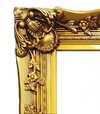
H24-GOLD $30
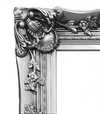
H24-SILVER $30
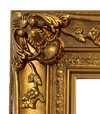
H36-GOLD $45

H36-SILVER $45
iii.
Make it yours
A painting made by hand can be made for one person.
iv.
Finishing
Nameplate, varnish and delivery.
Nameplate
Engraved Bronze Plaque Details
This elegant plaque features the artist's name and the title of the artwork, finely engraved for a timeless presentation.
It is made from bronze with a refined, elegant finish. The text is precisely laser-engraved for a sharp and permanent result. Measuring 9x2 cm, the plaque is compact yet easy to read. It's built to be durable and scratch-resistant, offering a professional, museum-quality look. Mounting is simple thanks to the included adhesive backing.
Transparent Acrylic Plaque Details
The plaque includes essential engraved details such as the artist's name, the title of the artwork, the date it was created, the type of media used-like oil on canvas or watercolor-a brief description of the piece, and a QR code that links to the complete artwork information.
It is crafted from clear acrylic, offering a sleek, modern appearance. The text is UV-engraved in black to ensure strong visual contrast. With a size of 10x15 cm, it ensures optimal readability. It comes equipped with two metal hooks for secure wall mounting. The plaque is designed to be weather-resistant, making it suitable for various environments, and it includes interactive features that work seamlessly with smartphone scanning.
Black Acrylic Plaque Details
This elegant plaque includes engraved information such as the artist's name, the title of the artwork, the date it was created, the type of media used (like oil on canvas or watercolor), a short description of the artwork, and a QR code for quick access to more information.
The plaque itself is made from refined black acrylic with a premium finish. The text is laser-engraved in white for high contrast and readability. Its size is 10x15 cm, designed to be easy to read. It comes with two metal hooks for professional mounting. The design is sleek and fits any interior style. It is also weather-resistant and durable, with built-in digital integration for mobile compatibility.
Protective Varnish
Urgent Production
Worldwide Delivery () in 3/4 weeks instead of standard 5 weeks. (22 November). No compromise on quality.
- Free Worldwide Express Shipping
- High-Quality Linen Canvas
- Full Shipping Insurance
- Customs Tax Refund Guarantee
- True Color Matching Guarantee
- 100-Day Return Policy (Defects Only)
- 100% Money-Back Guarantee
- Bulk Discount Offer


Quick facts and art quiz
Related Articles

Salvador Dalí: Surrealism, Subconscious Exploration & Artistic Innovation
Explore the captivating world of Salvador Dalí! Discover his surrealist masterpieces, profound connection to Freud's theories, and lasting impact on art & culture. A deep dive into a visionary artist.

Decoding Dalí: The Paranoiac-Critical Method and His Secret Symbols
Unveil the mysteries of Salvador Dalí. Explore his revolutionary Paranoiac-Critical Method and decode the profound psychological symbols within his surrealist masterpieces through an expert art-historical lens.

Mastering the Subconscious: The 25 Most Iconic Salvador Dalí Artworks
Step into the dreamscape of Salvador Dalí. Explore 25 iconic surrealist masterpieces, from melting clocks to bizarre visions. Discover the stories behind these timeless works and find museum-quality art reproductions for your decor. Explore the full collection online at WikiOO.org.

10 Surrealist Masterpieces That Changed Art Forever
Step into a dreamscape of iconic Surrealist paintings. From Dali to Magritte, explore the stories behind 10 timeless masterpieces. Find museum-quality art reproductions and curated decor inspiration at WikiOO.org. Discover all masterpieces on WikiOO.org.
Related Artworks


