


The Dawn of Devotion: Understanding the Early Medieval Era
 Early Middle Ages
The Early Middle Ages (or early medieval period), sometimes controversially referred to as the Dark Ages, is typically regarded by historians as lasting from the late 5th to the 10th century. They marked the start of the Middle Ages of European histo...
To step into the world of the Early Middle Ages is to enter a landscape where the boundaries between the earthly and the divine were beautifully, almost invisibly, blurred. Often misunderstood through the lens of the "Dark Ages," this era—stretching from the late 5th to the 10th century—was actually a profound period of cultural synthesis and spiritual awakening. Following the decline of the Western Roman Empire, a new artistic language began to emerge, one that did not merely seek to replicate the classical realism of antiquity but rather to capture the eternal essence of faith. It was a time of transition, where the formal elegance of Late Antiquity met the vigorous, intricate energy of migrating Germanic and Celtic tribes, creating a tapestry of art that was as much about spiritual survival as it and aesthetic innovation.
For the modern history lover, this period offers a sanctuary of meaning. Unlike the fleeting impressions of later movements, Early Medieval art was anchored in permanence. Whether through the enduring mosaics of the East or the delicate carvings of the West, every creation served as a bridge to the sacred. It was an age where art was not a luxury for the few, but a vital liturgical performance, intended to guide the soul toward a higher understanding of the cosmos.
Illuminated Manuscripts: Where Sacred Text Meets Artistic Brilliance
 Illuminated manuscript
An illuminated manuscript is a formally prepared document where the text is decorated with flourishes such as borders and miniature illustrations. Often used in the Roman Catholic Church for prayers and liturgical books such as psalters and courtly l...
There is perhaps no greater treasure from this era than the illuminated manuscript, a form where the written word and visual splendor become one. To hold a fragment of such a work—much like the exquisite Leaf from the Epistle to the Hebrews penned by Joannes Koulix in 1101—is to touch the very breath of medieval devotion. These were not merely books; they were luminous gateways. In these manuscripts, the text does not simply sit upon the page; it dances. Intricate headpieces, vibrant borders, and miniature illustrations serve to highlight the sanctity of the scripture, turning the act of reading into a meditative experience.
The beauty of illumination lies in its ability to dissolve the boundaries between calligraphy and illustration. In works like the Vercelli Book, floral details bloom around letters with an organic vitality, suggesting that the sacred word itself is a living, breathing entity. This meticulous care—where every stroke of the quill was an act of prayer—reminds us that in the medieval mind, beauty was never a distraction from faith, but rather its most radiant expression. When we look at these ancient leaves today, we see the intersection of profound scholarship and unparalleled artistry, preserved through centuries of silent contemplation.
The Scriptorium Legacy: The Art of Meticulous Craftsmanship
 north western italy scriptorium
Origins and the Dawn of Illuminated Script Within the shadowed halls of medieval monasteries, a remarkable tradition blossomed – the art of the scriptorium. More than simply a room for copying manuscripts, it was a crucible where faith, scholarship, ...
Deep within the shadowed, quiet halls of medieval monasteries lay the scriptorium, a crucible where faith, scholarship, and artistry converged. This was far more than a mere writing room; it was a workshop of the soul. In places like the North Western Italy Scriptorium, a constellation of skilled scribes and artists worked with a dedication that bordered on the miraculous. Their task was monumental: to preserve the classical knowledge threatened by the decline of Roman literacy while simultaneously creating new, breathtakingly beautiful works for the Church.
The craft involved a symphony of specialized skills. First, the preparation of parchment required immense patience, followed by the precise ruling of lines to guide the scribe’s hand. Then came the illuminators, who layered gold leaf to create shimmering halos and applied rich pigments to render biblical narratives with astonishing detail. This process was slow, rhythmic, and deeply intentional. The legacy of these monastic workshops is etched not just on aged parchment but in the very foundation of Western art history, proving that true greatness often flourishes in the most quiet and disciplined of environments.
Golden Heavens: The Spiritual Power of Byzantine Iconography and Gold Leaf
 Byzantine and Christian Museum
A Sanctuary of Spiritual Splendor Nestled within the verdant, tranquil embrace of Villa Ilissia, the Byzantine and Christian Museum serves as a profound gateway to a lost world of devotion and artistic mastery. Located in the heart of Athens, this ex...
If the manuscript provided the voice of the medieval era, then gold leaf provided its light. In the Byzantine tradition, the use of gold was far more than a display of imperial wealth; it was a theological necessity. To gaze upon a Byzantine icon is to witness a celestial glow that transcends the physical world. The application of gold leaf and tempera created a sense of divine radiance, intended to transport the viewer from the modern bustle into an atmospheric sanctuary of spiritual splendor.
This tradition reached heights of breathtaking mastery in institutions like the Byzantine and Christian Museum in Athens. Here, icons serve as living conduits of faith, using a language of profound symbolism to convey complex theological truths. The interplay of light and shadow within these works offers an unparalleled glimpse into the Byzantine psyche, where the shimmering surfaces reflect a belief in a kingdom that is both unseen and ever-present. This use of light remains one of the most powerful legacies of the era, teaching us how color and texture can be used to evoke the infinite.
Beyond the Page: Exploring Medieval Metalwork, Mosaics, and Architecture
 Medieval art
The medieval art of the Western world covers a vast scope of time and place, with over 1000 years of art in Europe, and at certain periods in Western Asia and Northern Africa. It includes major art movements and periods, national and regional art, ge...
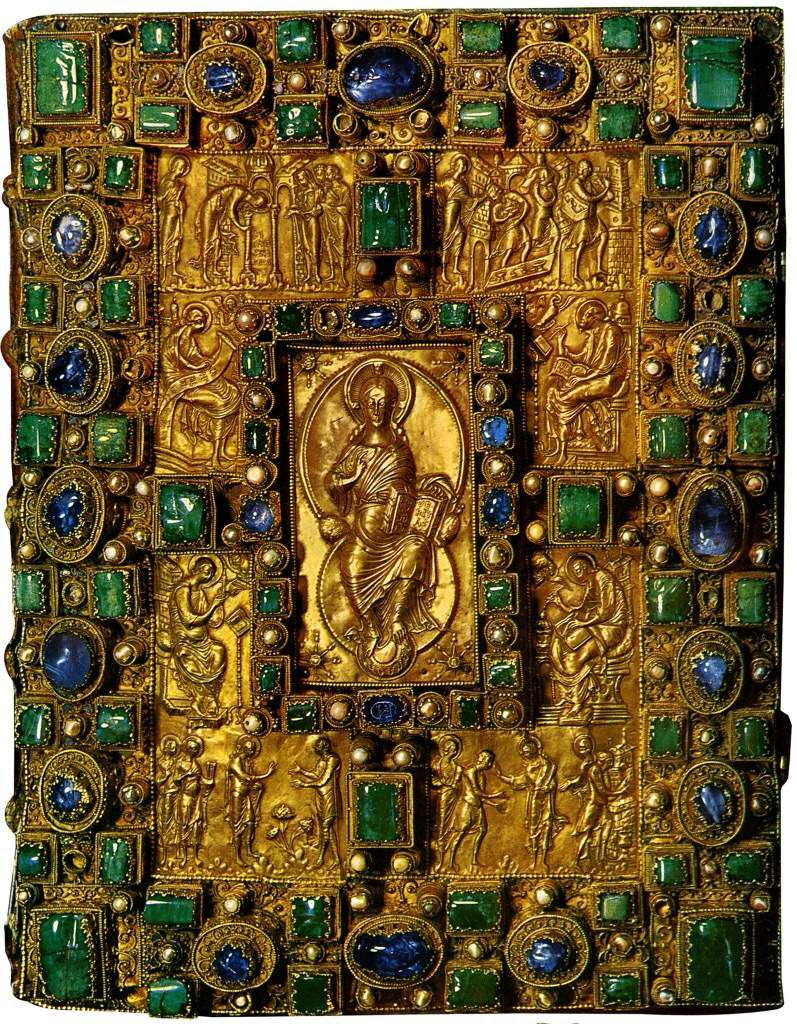
While manuscripts often receive the most romanticized attention, the artistic vitality of the Early Middle Ages extended far beyond the page. The era’s "minor arts"—metalwork, ivory carving, and enameling—were often held in higher esteem than monumental sculpture. Intricate metalwork, adorned with precious stones and fine filigree, demonstrated a level of technical sophistication that rivaled the grandest architecture. Similarly, the mosaic traditions of the Byzantine Empire turned entire walls into shimmering tapestries of light, as seen in the magnificent structures of Ravenna or the Hagia Sophia.
Architecture, too, evolved to reflect this spiritual intensity. From the sturdy, protective forms of Pre-Romanesque structures to the soaring, light-filled ambitions of the Romanesque, buildings were designed to be earthly echoes of the heavenly Jerusalem. These spaces, much like the art they housed, were intended to inspire awe and provide a sense of permanence in an ever-changing world. The fusion of architectural grandeur with intimate sacred art created environments that were not just buildings, but immersive experiences of the divine.
Bringing History Home: Integrating Medieval Aesthetics into Modern Interiors
In our contemporary world, which often moves at a frantic and fleeting pace, there is a profound longing for the stability and depth found in medieval aesthetics. Integrating these timeless elements into a modern home does not require a museum-like austerity; rather, it is about capturing the vibe of devotion and craftsmanship. One might introduce the rich, deep tones of Byzantine gold through accent pieces, or embrace the intricate, organic patterns of Insular art through textiles and wallpapers.
At WikiOO.org, we believe that everyone can find a way to connect with this history. Whether you are drawn to the textured, impasto brushstrokes of a custom reproduction that mimics the weight of an ancient manuscript, or you wish to transform a personal photograph into a "period shift" masterpiece reminiscent of a Renaissance portrait, art is a bridge to the past. By bringing these textures, colors, and stories into your living space, you are not just decorating; you are creating a meaningful dialogue with the centuries, building a home that resonates with the enduring beauty of the human spirit.


