Portrait of Giotto

Giotto: The 100 Most Famous Paintings, Documented

Updated October 2026 · ranked by our popularity score (searches, visits and orders for each work) · 485 works by Giotto in our catalogue

Summary

According to this ranking, Madonna in Maest (Ognissanti Madonna) (1310) is the most famous painting by Giotto. It is followed by Last Judgment (detail 3) (Cappella Scrovegni (Arena Chapel), Padua) (1305) and No. 19 Scenes from the Life of Christ: 3. Presentation of Christ at the Temple (1304). This list draws on the 485 works by Giotto in the catalogue and records the 100 most famous, with date, holding museum and description for each entry.

1267 – 1337, Vicchio Proto-renaissance Most works: Cappella Scrovegni

Giotto: top 10 entries of the list

1
Madonna in Maest (Ognissanti Madonna) (1310) by Giotto

Madonna in Maest (Ognissanti Madonna)

1310 · Acrylic On Canvas

Introduction Giotto di Bondone, also known as Giotto, was an Italian painter and architect who is widely regarded as one of the most important figures in the development of Western art. Born around 1267, he was active during the transformative periods of the Gothic and Proto-Renaissance, and his innovative approach to painting revolutionized the way artists represented the human figure. One of Giotto's most famous works is the Madonna in…

2
Last Judgment (detail 3) (Cappella Scrovegni (Arena Chapel), Padua) (1305) by Giotto

Last Judgment (detail 3) (Cappella Scrovegni (Arena Chapel), Padua)

1305 · Fresco

Immerse yourself in the celestial grandeur of Giotto di Bondone's "Last Judgment (detail 3)," a breathtaking fresco from the renowned Scrovegni Chapel in Padua. This masterpiece, completed around 1305, is a cornerstone of medieval art and a testament to Giotto's revolutionary approach that bridged the gap between Byzantine tradition and the emerging Renaissance.

3
No. 19 Scenes from the Life of Christ: 3. Presentation of Christ at the Temple (1304) by Giotto

No. 19 Scenes from the Life of Christ: 3. Presentation of Christ at the Temple

1304 · Acrylic On Canvas · Cappella Scrovegni, Padua

A Moment of Devotion: Giotto’s Presentation of Christ at the Temple Giotto di Bondone's “No. 19 Scenes from the Life of Christ: 3. Presentation of Christ at the Temple,” created in 1304, is a pivotal work within the fresco cycle adorning the Cappella Scrovegni (Arena Chapel) in Padua, Italy. This masterpiece marks a significant departure from Byzantine artistic conventions and heralds the dawn of the Proto-Renaissance, profoundly influencing generations of…

4
No. 31 Scenes from the Life of Christ: 15. The Arrest of Christ (Kiss of Judas) (1304) by Giotto

No. 31 Scenes from the Life of Christ: 15. The Arrest of Christ (Kiss of Judas)

1304 · Acrylic On Canvas · Cappella Scrovegni, Padua

A Moment of Betrayal: Giotto’s “The Arrest of Christ (Kiss of Judas)” This powerful fresco, created in 1304 by the Italian master Giotto di Bondone, captures a pivotal and emotionally charged scene from the New Testament – the arrest of Jesus Christ in the Garden of Gethsemane. Part of the extensive cycle of “Scenes from the Life of Christ” adorning the walls of the Cappella Scrovegni in Padua, Italy, this…

5
Lamentation (The Mourning of Christ) (1306) by Giotto

Lamentation (The Mourning of Christ)

1306 · Fresco

A Revolution in Religious Art: Giotto’s Lamentation Giotto di Bondone's *Lamentation (The Mourning of Christ)*, created in 1306 as part of the Arena Chapel fresco cycle in Padua, Italy, stands as a pivotal work marking the transition from the Byzantine style to the Renaissance. Measuring 200 x 185 cm, this masterpiece isn’t merely a depiction of grief; it's a groundbreaking exploration of human emotion and naturalism that irrevocably altered the…

6
No. 32 Scenes from the Life of Christ: 16. Christ before Caiaphas (1304) by Giotto

No. 32 Scenes from the Life of Christ: 16. Christ before Caiaphas

1304 · Fresco · Cappella Scrovegni, Padua

A Pivotal Moment of Betrayal: Giotto’s *Christ Before Caiaphas* No. 32 Scenes from the Life of Christ: 16. Christ before Caiaphas, painted around 1304 by Giotto di Bondone, is a cornerstone of Western art, residing within the breathtaking frescoes of the Cappella Scrovegni in Padua, Italy. This powerful scene isn’t merely a depiction of biblical narrative; it's a revolutionary step towards naturalism and emotional depth that would define the coming…

7
The Stefaneschi Triptych (recto) (1330) by Giotto

The Stefaneschi Triptych (recto)

1330 · Tempera On Panel · Vatican Pinacoteca, Vatican City

In the quiet, hallowed halls of the Pinacoteca Vaticana, there exists a masterpiece that captures the very moment the medieval world began to breathe with human life. Giotto di Bondone’s The Stefaneschi Triptych (recto), painted around 1330, is far more than a religious relic; it is a revolutionary manifesto in paint. At a time when the Byzantine tradition favored flat, golden abstractions and distant, ethereal icons, Giotto dared to introduce…

8
Last Judgment (detail 12) (Cappella Scrovegni (Arena Chapel), Padua) (1306) by Giotto

Last Judgment (detail 12) (Cappella Scrovegni (Arena Chapel), Padua)

1306 · Fresco

Giotto’s Last Judgment: A Renaissance Dawn in Padua This detail from Giotto di Bondone's monumental fresco, *The Last Judgment*, adorning the west wall of the Cappella Scrovegni (Arena Chapel) in Padua, Italy, offers a powerful glimpse into a pivotal moment in art history. Created in 1306, this work transcends mere religious depiction; it’s a groundbreaking exploration of human emotion and narrative within a sacred context. A Scene of Divine Justice…

9
Last Judgment (detail 9) (Cappella Scrovegni (Arena Chapel), Padua) (1306) by Giotto

Last Judgment (detail 9) (Cappella Scrovegni (Arena Chapel), Padua)

1306 · Fresco

The Last Judgment (detail 9) is a fresco painting created by the renowned Italian artist Giotto Di Bondone in 1306. This stunning work of art forms part of the decoration within the Cappella Scrovegni, also known as the Arena Chapel, located in Padua, Italy. The chapel is celebrated for its breathtaking frescoes, widely considered among the most significant works of the Early Renaissance.

10
Ognissanti Madonna (Madonna in Maestà) (1310) by Giotto

Ognissanti Madonna (Madonna in Maestà)

1310 · Tempera On Panel · Galleria degli Uffizi, Florence

Behold a pivotal masterpiece of Western art – Giotto di Bondone's Ognissanti Madonna (circa 1310), housed in the prestigious Uffizi Gallery, Florence. This monumental tempera on wood panel isn’t merely a religious icon; it represents a seismic shift in painting, signaling the arrival of Renaissance naturalism and departing from the stylized conventions of Byzantine art.

Giotto: list continued, 11 to 100

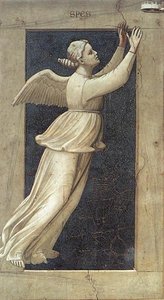
11Stigmatization of St Francis (1300) by GiottoStigmatization of St Francis1300 · The Louvre 12The Ascension (1305) by GiottoThe Ascension1305 13Legend of St Francis: 11. St Francis before the Sultan (Trial by Fire) (1297) by GiottoLegend of St Francis: 11. St Francis before the Sultan (Trial by Fire)1297 14Last Supper (1306) by GiottoLast Supper1306 · Bavarian State Painting Collections 15No. 6 Scenes from the Life of Joachim: 6. Meeting at the Golden Gate, detail (1304) by GiottoNo. 6 Scenes from the Life of Joachim: 6. Meeting at the Golden Gate, detail1304 · Cappella Scrovegni 16Last Judgment (detail 14) (Cappella Scrovegni (Arena Chapel), Padua) (1306) by GiottoLast Judgment (detail 14) (Cappella Scrovegni (Arena Chapel), Padua)1306 17No. 20 Scenes from the Life of Christ: 4. Flight into Egypt (1304) by GiottoNo. 20 Scenes from the Life of Christ: 4. Flight into Egypt1304 · Cappella Scrovegni 18Navicella (mosaic fragment) (1305) by GiottoNavicella (mosaic fragment)1305 · Vatican Grotto 19Navicella (1305) by GiottoNavicella1305 · Fabbrica di San Pietro 20No. 38 Scenes from the Life of Christ: 22. Ascension (1304) by GiottoNo. 38 Scenes from the Life of Christ: 22. Ascension1304 · Cappella Scrovegni 21Descent into Limbo (1320) by GiottoDescent into Limbo1320 · Alte Pinakothek 22No. 46 The Seven Virtues: Hope (1306) by GiottoNo. 46 The Seven Virtues: Hope1306 · Cappella Scrovegni 23The Chapel viewed from the entrance (1303) by GiottoThe Chapel viewed from the entrance1303 · Cappella Scrovegni 24Annunciation to St Anne (1306) by GiottoAnnunciation to St Anne1306 25The Stefaneschi Triptych: Christ Enthroned (1330) by GiottoThe Stefaneschi Triptych: Christ Enthroned1330 · Vatican Pinacoteca 26Miracle of the Crucifix (1299) by GiottoMiracle of the Crucifix1299 27Stigmatization of St. Francis (1300) by GiottoStigmatization of St. Francis1300 28Nativity. Birth of Jesus (1306) by GiottoNativity. Birth of Jesus1306 29The Dream of Joachim (1305) by GiottoThe Dream of Joachim1305 30No. 35 Scenes from the Life of Christ: 19. Crucifixion (1304) by GiottoNo. 35 Scenes from the Life of Christ: 19. Crucifixion1304 · Cappella Scrovegni 31Presentation of the virgin (1305) by GiottoPresentation of the virgin1305 32St. Francis Giving his Mantle to a Poor Man (1299) by GiottoSt. Francis Giving his Mantle to a Poor Man1299 33Adoration of the Magi (1306) by GiottoAdoration of the Magi1306 34Ognissanti Madonna (detail) (1310) by GiottoOgnissanti Madonna (detail)1310 · Galleria degli Uffizi 35St. Francis Preaching a Sermon to Pope Honorius III (1299) by GiottoSt. Francis Preaching a Sermon to Pope Honorius III1299 36No. 30 Scenes from the Life of Christ: 14. Washing of Feet (1304) by GiottoNo. 30 Scenes from the Life of Christ: 14. Washing of Feet1304 · Cappella Scrovegni 37No. 37 Scenes from the Life of Christ: 21. Resurrection (Noli me tangere) (1304) by GiottoNo. 37 Scenes from the Life of Christ: 21. Resurrection (Noli me tangere)1304 · Cappella Scrovegni 38The Suitors Praying (1306) by GiottoThe Suitors Praying1306 39St. Francis Preaching to the Birds (1299) by GiottoSt. Francis Preaching to the Birds1299 40Navicella (1305) by GiottoNavicella1305 · Metropolitan Museum of Art 41Scenes from the Life of Christ: 20. Lamentation (detail) (10) (1304) by GiottoScenes from the Life of Christ: 20. Lamentation (detail) (10)1304 · Cappella Scrovegni 42Scenes from the Life of St John the Evangelist: 2. Raising of Drusiana (detail) (11) (1320) by GiottoScenes from the Life of St John the Evangelist: 2. Raising of Drusiana (detail) (11)1320 43The Presentation of the Infant Jesus in the Temple (1320) by GiottoThe Presentation of the Infant Jesus in the Temple1320 · Isabella Stewart Gardner Museum 44The Marriage of the Virgin (1305) by GiottoThe Marriage of the Virgin1305 45Scrovegni - [11] - Marriage of the Virgin by GiottoScrovegni - [11] - Marriage of the Virgin 46Last Judgment (detail 4) (Cappella Scrovegni (Arena Chapel), Padua) (1306) by GiottoLast Judgment (detail 4) (Cappella Scrovegni (Arena Chapel), Padua)1306 47Crucifix (11) (1290) by GiottoCrucifix (11)1290 · Santa Maria Novella 48Last Judgment (Cappella Scrovegni (Arena Chapel), Padua) (1306) by GiottoLast Judgment (Cappella Scrovegni (Arena Chapel), Padua)1306 49The Stefaneschi Triptych: Martyrdom of St Paul (1330) by GiottoThe Stefaneschi Triptych: Martyrdom of St Paul1330 · Vatican Pinacoteca 50No. 21 Scenes from the Life of Christ: 5. Massacre of the Innocents (1304) by GiottoNo. 21 Scenes from the Life of Christ: 5. Massacre of the Innocents1304 · Cappella Scrovegni 51Last Supper by GiottoLast Supper 52Scenes from the Life of Christ: 20. Lamentation (detail) (13) (1304) by GiottoScenes from the Life of Christ: 20. Lamentation (detail) (13)1304 · Cappella Scrovegni 53No. 50 The Seven Vices: Injustice (1306) by GiottoNo. 50 The Seven Vices: Injustice1306 · Cappella Scrovegni 54No. 1 Scenes from the Life of Joachim: 1. Rejection of Joachim's Sacrifice (1304) by GiottoNo. 1 Scenes from the Life of Joachim: 1. Rejection of Joachim's Sacrifice1304 · Cappella Scrovegni 55The Crucifixion (1320) by GiottoThe Crucifixion1320 56No. 27 Scenes from the Life of Christ: 11. Expulsion of the Money-changers from the Temple (detail) (1304) by GiottoNo. 27 Scenes from the Life of Christ: 11. Expulsion of the Money-changers from the Temple (detail)1304 · Cappella Scrovegni 57Legend of St Francis: 5. Renunciation of Wordly Goods (detail) (1297) by GiottoLegend of St Francis: 5. Renunciation of Wordly Goods (detail)1297 58Nativity (North transept, Lower Church, San Francesco, Assisi) (1311) by GiottoNativity (North transept, Lower Church, San Francesco, Assisi)1311 59Legend of St Francis - [23] - St Francis Mourned by St Clare by GiottoLegend of St Francis - [23] - St Francis Mourned by St Clare 60St. Francis of Assisi Preparing the Christmas Crib at Grecchio (1300) by GiottoSt. Francis of Assisi Preparing the Christmas Crib at Grecchio1300 61Scenes from the Life of Christ: 20. Lamentation (detail) (19) (1304) by GiottoScenes from the Life of Christ: 20. Lamentation (detail) (19)1304 · Cappella Scrovegni 62Scrovegni - [36] - Lamentation (The Mourning of Christ) by GiottoScrovegni - [36] - Lamentation (The Mourning of Christ) 63No. 8 Scenes from the Life of the Virgin: 2. Presentation of the Virgin in the Temple (1304) by GiottoNo. 8 Scenes from the Life of the Virgin: 2. Presentation of the Virgin in the Temple1304 · Cappella Scrovegni 64Scenes from the Life of Saint Francis: 2. Renunciation of Wordly Goods (detail) (1325) by GiottoScenes from the Life of Saint Francis: 2. Renunciation of Wordly Goods (detail)1325 · Bardi Chapel 65Life of Saint Francis - [01] - Stigmatization of Saint Francis by GiottoLife of Saint Francis - [01] - Stigmatization of Saint Francis 66Crucifix (1320) by GiottoCrucifix1320 · Alte Pinakothek 67No. 29 Scenes from the Life of Christ: 13. Last Supper (1304) by GiottoNo. 29 Scenes from the Life of Christ: 13. Last Supper1304 · Cappella Scrovegni 68No. 7 Scenes from the Life of the Virgin: 1. The Birth of the Virgin (1304) by GiottoNo. 7 Scenes from the Life of the Virgin: 1. The Birth of the Virgin1304 · Cappella Scrovegni 69The Massacre of the Innocents (North transept, Lower Church, San Francesco, Assisi) (1311) by GiottoThe Massacre of the Innocents (North transept, Lower Church, San Francesco, Assisi)1311 70Scrovegni - [05] - Joachim's Dream by GiottoScrovegni - [05] - Joachim's DreamRoyal Palace of Venaria 71No. 51 The Seven Vices: Wrath (1306) by GiottoNo. 51 The Seven Vices: Wrath1306 · Cappella Scrovegni 72Joachim among the Shepherds (1306) by GiottoJoachim among the Shepherds1306 73Scrovegni - [03] - Annunciation to St Anne by GiottoScrovegni - [03] - Annunciation to St Anne 74Confirmation of the Rule (1299) by GiottoConfirmation of the Rule1299 75Scrovegni - [19] - Presentation at the Temple by GiottoScrovegni - [19] - Presentation at the Temple 76Last Judgment (detail 17) (Cappella Scrovegni (Arena Chapel), Padua) (1306) by GiottoLast Judgment (detail 17) (Cappella Scrovegni (Arena Chapel), Padua)1306 77Crucifix (detail) (1290) by GiottoCrucifix (detail)1290 · Santa Maria Novella 78St. Francis Renounces all Worldly Goods (1299) by GiottoSt. Francis Renounces all Worldly Goods1299 79Scrovegni - [30] - Washing of Feet by GiottoScrovegni - [30] - Washing of Feet 80Ognissanti Madonna (detail) (13) (1310) by GiottoOgnissanti Madonna (detail) (13)1310 · Galleria degli Uffizi 81No. 25 Scenes from the Life of Christ: 9. Raising of Lazarus (1304) by GiottoNo. 25 Scenes from the Life of Christ: 9. Raising of Lazarus1304 · Cappella Scrovegni 82Scenes from the Life of Joachim: 5. Joachim's Dream (detail) (1304) by GiottoScenes from the Life of Joachim: 5. Joachim's Dream (detail)1304 · Cappella Scrovegni 83No. 45 The Seven Virtues: Charity (1306) by GiottoNo. 45 The Seven Virtues: Charity1306 · Cappella Scrovegni 84No. 34 Scenes from the Life of Christ: 18. Road to Calvary (1304) by GiottoNo. 34 Scenes from the Life of Christ: 18. Road to Calvary1304 · Cappella Scrovegni 85Scenes from the Life of Joachim: 4. Joachim's Sacrificial Offering (Cappella Scrovegni (Arena Chapel), Padua) (1304) by GiottoScenes from the Life of Joachim: 4. Joachim's Sacrificial Offering (Cappella Scrovegni (Arena Chapel), Padua)1304 86The Stefaneschi Triptych. Martyrdom of Peter by GiottoThe Stefaneschi Triptych. Martyrdom of Peter 87The Crucifixion (1317) by GiottoThe Crucifixion1317 88Allegory of Poverty (detail)2 by GiottoAllegory of Poverty (detail)2 89No. 26 Scenes from the Life of Christ: 10. Entry into Jerusalem (1304) by GiottoNo. 26 Scenes from the Life of Christ: 10. Entry into Jerusalem1304 · Cappella Scrovegni 90pentecost (1300) by Giottopentecost1300 · National Gallery 91Legend of St Francis: 25. Dream of St Gregory (Upper Church, San Francesco, Assisi) (1300) by GiottoLegend of St Francis: 25. Dream of St Gregory (Upper Church, San Francesco, Assisi)1300 92Madonna and Child (detail) (1295) by GiottoMadonna and Child (detail)1295 · San Giorgio alla Costa 93Ognissanti Madonna (detail) (1310) by GiottoOgnissanti Madonna (detail)1310 · Galleria degli Uffizi 94Scenes from the Life of Saint Francis: 7. Vision of the Ascension of St Francis (detail) (1325) by GiottoScenes from the Life of Saint Francis: 7. Vision of the Ascension of St Francis (detail)1325 · Bardi Chapel 95La huida a Egipto by GiottoLa huida a Egipto 96Scrovegni - Last Judgment (detail) [03] by GiottoScrovegni - Last Judgment (detail) [03] 97No. 27 Scenes from the Life of Christ: 11. Expulsion of the Money-changers from the Temple (1304) by GiottoNo. 27 Scenes from the Life of Christ: 11. Expulsion of the Money-changers from the Temple1304 · Cappella Scrovegni 98The Chapel viewed towards the entrance (1303) by GiottoThe Chapel viewed towards the entrance1303 · Cappella Scrovegni 99No. 12 Scenes from the Life of the Virgin: 6. Wedding Procession (detail) (1304) by GiottoNo. 12 Scenes from the Life of the Virgin: 6. Wedding Procession (detail)1304 · Cappella Scrovegni 100Scenes from the Life of Saint Francis: 4. Death and Ascension of St Francis (detail) (10) (1325) by GiottoScenes from the Life of Saint Francis: 4. Death and Ascension of St Francis (detail) (10)1325 · Bardi Chapel

Giotto: works by period

Principal subjects in the work of Giotto

The four subjects most frequently represented among these works, each with its best-known example.

Giotto: holding museums

The 8 museums that hold the most of the paintings on this page.

Museum City Works by Giotto Paintings from this list
Cappella Scrovegni, PaduaCappella Scrovegni Padua 77 No. 19 Scenes from the Life of Christ: 3. Presentation of Christ at the Temple, No. 31 Scenes from the Life of Christ: 15. The Arrest of Christ (Kiss of Judas), No. 32 Scenes from the Life of Christ: 16. Christ before Caiaphas
Galleria degli Uffizi, FlorenceGalleria degli Uffizi Florence 6 Ognissanti Madonna (Madonna in Maestà), Ognissanti Madonna (detail), Ognissanti Madonna (detail) (13)
Bardi Chapel, FlorenceBardi Chapel Florence 10 Scenes from the Life of Saint Francis: 2. Renunciation of Wordly Goods (detail), Scenes from the Life of Saint Francis: 7. Vision of the Ascension of St Francis (detail), Scenes from the Life of Saint Francis: 4. Death and Ascension of St Francis (detail) (10)
Vatican Pinacoteca, Vatican CityVatican Pinacoteca Vatican City 5 The Stefaneschi Triptych (recto), The Stefaneschi Triptych: Christ Enthroned, The Stefaneschi Triptych: Martyrdom of St Paul
Alte Pinakothek, MunichAlte Pinakothek Munich 2 Descent into Limbo, Crucifix
Santa Maria Novella, FlorenceSanta Maria Novella Florence 2 Crucifix (11), Crucifix (detail)
The Louvre, ParisThe Louvre Paris 3 Stigmatization of St Francis
Metropolitan Museum of Art, New YorkMetropolitan Museum of Art New York 3 Navicella

Giotto by decade: the most famous painting of each

Works per decade

Select a decade to display its principal painting.

Giotto: questions and documented answers

Which Giotto painting heads the list of most famous works?Display the answer

Madonna in Maest (Ognissanti Madonna) (1310). The following entries are Last Judgment (detail 3) (Cappella Scrovegni (Arena Chapel), Padua) (1305) and No. 19 Scenes from the Life of Christ: 3. Presentation of Christ at the Temple (1304).

What age had Giotto reached when Madonna in Maest (Ognissanti Madonna) was painted?Display the answer

43 years: Giotto was born in 1267 and Madonna in Maest (Ognissanti Madonna) is dated 1310.

Which works make up the top 10 of Giotto?Display the answer

Madonna in Maest (Ognissanti Madonna), Last Judgment (detail 3) (Cappella Scrovegni (Arena Chapel), Padua), No. 19 Scenes from the Life of Christ: 3. Presentation of Christ at the Temple, No. 31 Scenes from the Life of Christ: 15. The Arrest of Christ (Kiss of Judas), Lamentation (The Mourning of Christ), No. 32 Scenes from the Life of Christ: 16. Christ before Caiaphas, The Stefaneschi Triptych (recto), Last Judgment (detail 12) (Cappella Scrovegni (Arena Chapel), Padua), Last Judgment (detail 9) (Cappella Scrovegni (Arena Chapel), Padua) and Ognissanti Madonna (Madonna in Maestà). The list above records the date and holding museum of each.

How many works by Giotto are recorded?Display the answer

The catalogue records 485 works by Giotto, dated between 1290 and 1330.

In which collections are Giotto's most famous works held?Display the answer

Principally in Cappella Scrovegni (Padua), Galleria degli Uffizi (Florence) and Bardi Chapel (Florence). The museum table above gives the full distribution.

When were the most famous works of Giotto painted?Display the answer

In 1300s: 57 of the 100 works listed on this page are dated to that period, including Last Judgment (detail 3) (Cappella Scrovegni (Arena Chapel), Padua).

Which dated works by Giotto are the earliest and the latest here?Display the answer

The earliest dated work listed here is Crucifix (11) (1290); the latest is The Stefaneschi Triptych (recto) (1330).

What subjects appear most in the work of Giotto?Display the answer

Medieval art (37), Religious art (33) and Biblical scene (16), out of the 100 works listed on this page.

What materials did Giotto use most frequently?Display the answer

Fresco, in 39 of the 100 works listed on this page.

Which art movement does Giotto represent?Display the answer

Proto-renaissance, as documented by the works on this page.

Which works of Giotto are held by the Cappella Scrovegni?Display the answer

No. 19 Scenes from the Life of Christ: 3. Presentation of Christ at the Temple, No. 31 Scenes from the Life of Christ: 15. The Arrest of Christ (Kiss of Judas) and No. 32 Scenes from the Life of Christ: 16. Christ before Caiaphas are among the 30 works on this page in the collection of the Cappella Scrovegni, Padua.

Where can reproductions of Giotto's paintings be obtained?Display the answer

Yes. Each work listed on this page can be ordered from its own entry as a hand-painted oil reproduction or a fine art print, in a size of your choice.

Giotto: life and work

The Life and Origins of Giotto di Bondone

Giotto di Bondone emerged from the rolling hills near Florence, Italy, around 1267. He was a painter and architect who spent his life working through the transition from the medieval period toward the Renaissance. While his full name carries the weight of his lineage, he was often known simply as Giotto. His presence in the Florentine landscape was marked by a shift in how figures occupied space, moving away from the flat, gold-backed icons of the Byzantine tradition toward a more tangible sense of weight and human presence.

His life was rooted in the Tuscan landscape, and he remained a central figure in the artistic life of Florence until his death on January 8, 1337. He moved through the cities of Italy, leaving behind traces of his hand in various chapels and public works. His work was not a sudden break from what came before, but a steady, observant evolution of how light and shadow might define a form. He looked at the world and sought to capture its physical reality, giving his subjects a sense of gravity and a place within a believable, three-dimensional environment.

Early Life, Family and Training

Born in Florence, Italy, he was the son of a blacksmith named Bondone. His early years are often described through a story of a shepherd boy. In this account, he spent his time sketching the likeness of sheep onto flat rocks. This habit caught the attention of the master Cimabue, who took the boy on as an apprentice. Whether this story is a literal truth or a way to explain his natural talent, it points to a childhood spent observing the movement and weight of living things.

His training under Cimabue provided the technical foundation for his later work. He moved away from the rigid, flattened styles that defined the era, focusing instead on how figures occupy space. He learned to look at the world directly, seeking to capture the way a body carries its own weight. This focus on the physical reality of his subjects became a hallmark of his approach. He did not merely copy the icons of his time; he sought to understand the anatomy and the presence of the people he painted.

Work in Rome and Assisi

By the end of the thirteenth century, Giotto’s presence moved beyond the Florentine sphere. Between 1297 and 1300, he worked in Rome, a period that saw him engaging with the monumental scale of the city's religious centers. One of the most significant tasks from this time was the production of a massive mosaic for the Navicella, which decorated the façade of Old St. Peter's basilica. This work required a different kind of precision than the frescoes of his youth, dealing with the permanence of stone and glass to shape a sacred space.

His influence also reached the hills of Assisi. While the exact nature of his involvement remains a subject of scholarly discussion, many recognize his hand in the frescoes of the Upper Basilica of Saint Francis. In these spaces, he worked alongside the religious fervor of the era, a time when he was a contemporary of figures like Dante Alighieri and Duccio di Buoninsegna. His work in Assisi helped move religious imagery away from the flat, stylized patterns of the past, focusing instead on a sense of weight and human presence within the chapel walls.

The Masterpiece of the Scrovegni Chapel

In Padua, the Scrovegni Chapel—often called the Arena Chapel—holds the work Giotto completed around 1305. Enrico Scrovegni commissioned the space, and the resulting frescoes cover the walls in a continuous narrative. The scenes follow the Life of the Virgin and the Life of Christ. Instead of the flat, gold-heavy backgrounds common to the era, the figures here occupy a space that feels heavy and real. You can see the weight in their bodies and the way they react to one another through simple, direct gestures.

The walls move through the stories of the Bible with a sense of human drama. In the scenes of the Life of Christ, the figures do not simply exist as symbols; they carry the physical presence of people experiencing grief or quiet observation. The use of light and shadow helps to shape the drapery of their clothing and the contours of their faces. This approach makes the sacred events feel like they are happening within a tangible, three-dimensional environment rather than a distant, spiritual void.

The scale of the work is immense, covering the interior of the chapel from floor to ceiling. The *Last Judgment* occupies a large portion of the wall, presenting a stark view of the end of days. The figures are grounded, their feet resting on solid ground, and their expressions reflect a range of human emotions. It is a place where the divine is brought down to a human scale through the careful application of color and form.

Architectural Contributions and Florence

In 1334, the Commune of Florence made a choice regarding the future of the cathedral's silhouette. Following the death of Arnolfo di Cambio, Giotto was nominated as his successor. He focused much of his later energy on the design and construction of a new campanile for the cathedral. This bell tower was intended to rise beside the Basilica of Santa Maria del Fiore, and the first stone was laid on 19 July 1334.

His approach to the tower moved away from a simple, skeletal gothic frame. Instead, he applied a surface of colored marble in geometric patterns, using white marble from Carrara, green marble from Prato, and red marble from Siena. He used chiaroscuro and a form of perspective in his design, treating the structure as if it were a painted object. The tower is a square plan, standing 84.7 metres tall, and is divided into five horizontal stages. While he died before the work reached its full height, his design for the lower floor remains a part of the Florentine skyline.

Technique and Artistic Style

Giotto moved away from the rigid, flattened stylization that defined much of medieval art. Instead of the distant, symbolic figures common in the Byzantine tradition, he focused on a clear and simple structure. He sought to depict the world as it appeared to the eye, introducing the practice of drawing accurately from life. This shift brought a sense of weight and volume to his subjects, making them occupy a tangible, three-dimensional space rather than floating against a gold background.

There is a quiet psychological penetration in the way he handles his figures. He used light and shadow to sculpt form, giving the body a sense of physical presence and gravity. This attention to the human condition allowed him to convey a range of emotions through gesture and expression. In his work, the divine is not a distant abstraction but something that feels grounded and real. His approach pointed toward the innovations of the Renaissance style, moving art toward a more naturalistic representation of the human experience.

Key Works and Religious Paintings

In the nave of Santa Maria Novella in Florence, a large wooden crucifix hangs, painted in tempera and gold. Created around 1290-1295, the work shows Christ's body in a vertical, naturalistic pose. The weight of the figure pulls downward, with the head bowed and the ribs visible. At the base, the cross rests upon arid rocks that suggest Mount Golgotha, where Christ's blood trickles into a cavity containing the bones of Adam.

The Badia Polyptych, now held in the Uffizi in Florence, shows a different side of his ability to handle sacred subjects. His work often focused on the human experience within religious narratives. This is seen in the Ognissanti Madonna, also known as the Madonna in Maesta, painted circa 1310. In this piece, the figures possess a sense of weight and volume, moving away from the flat, gold-heavy styles of the past. He also painted the Descent Into Limbo, a scene that continues this focus on psychological depth and physical presence.

Legacy and Influence on Art History

The shift in how painters approached the human form began with his hands. By moving away from the flat, gold-backed figures of the Byzantine tradition, he changed the direction of Italian painting. He introduced a way of seeing that focused on weight and the way light settles on a surface. This change allowed art to move toward the Renaissance, providing a foundation for the naturalism that later artists would build upon. He is often called the father of European painting because he helped move art from symbolic icons toward a more tangible reality.

His influence can be traced through the works of those who followed him. The way he used space and human emotion provided a blueprint for Masaccio and Michelangelo. He showed that a figure could have volume and occupy a real, three-dimensional space. This approach turned religious scenes into lived experiences, where characters possessed a psychological depth that had been missing in earlier, more rigid styles. His work bridged the gap between the medieval era and the early Renaissance, setting a standard for how stories could be told through visual weight and gesture.

Where to See the Works Today

To see his hand in person, one must travel to Padua, Italy. The Scrovegni Chapel holds the large fresco cycles that changed how stories were told on walls. The colors and the way the figures occupy the space are best understood by standing within that chapel. It is a quiet place where the weight of the painted bodies feels real against the architecture.

In Florence, several of his works remain. The Crucifix at Santa Maria Novella is kept in the center of the nave. It shows a body that sinks under its own weight, a departure from the more rigid shapes of the past. Nearby, the Uffizi holds the Badia Polyptych. Seeing these pieces in their respective Italian settings allows for a sense of the scale he worked with.

Other pieces have moved to different collections. The Stefaneschi Triptych is held in the Vatican Pinacoteca in Vatican City. Looking at these works in their current locations provides a way to trace how his style moved through different religious spaces.

All 485 works by Giotto →