

 Ver en contexto
 Enviar
 Compartir
 Detalles
 Guía
Guía

 Descargar
 Similares
 Radiografía
 Presentación de diapositivas
 Estadísticas
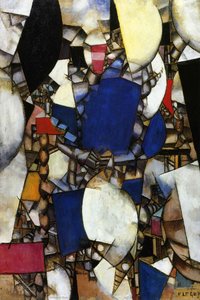
The four cyclists
 Oil On Canvas
- WallArt
- Cubism
 Modern
 129.0 x 161.0 cm
 Ver más
Adquiera una imagen digital de alta resolución y optimizada, muy superior a la vista previa en línea.
Cada archivo es preparado meticulosamente por nuestros especialistas internos mediante el uso de herramientas avanzadas y un experto retoque manual. Nos aseguramos de que cada imagen posea una claridad excepcional, una precisión cromática impecable y un detalle minucioso.
El archivo final se entrega por correo electrónico en un plazo de 72 horas, optimizado para su uso inmediato en entornos profesionales, editoriales y de impresión. Esta es la misma calidad en la que confían los estudios de diseño, las editoriales y las galerías de primer nivel.
Imagen Digital
Descarga un archivo de alta resolución para exhibición personal, impresión y proyectos creativos. ( Cambiar a impresiones Comprar pintura hecha a mano)
Incluido en cada pedido de imágenes digitales
Entrega digital experta, garantizada.
Al elegir WikiOO.org, no solo está adquiriendo una imagen; está recibiendo una obra de arte digital mejorada profesionalmente, elaborada con precisión y respaldada por una garantía de satisfacción. Esto es todo lo que incluye su pedido, automáticamente:

Entrega rápida por email
Recibirá su archivo de imagen digital en alta resolución por correo electrónico en un plazo de 72 horas tras realizar su pedido, listo para su uso inmediato.

Archivo digital optimizado por IA
Su obra de arte se optimiza profesionalmente mediante herramientas avanzadas de IA y edición manual, garantizando el máximo detalle, claridad y precisión cromática.

Reenvío gratuito de por vida
¿Has borrado o perdido tu archivo por error? No te preocupes: te lo volveremos a enviar en cualquier momento, sin coste adicional.

Sin gastos de importación, siempre
Disfrute de su obra de arte al instante sin aduanas, aranceles ni gastos de envío; las descargas digitales siempre están libres de impuestos.

Garantía de fidelidad de color
Garantizamos que su imagen digital refleje los colores originales con la mayor fidelidad posible, mediante el uso de herramientas profesionales y gestión del color.

Garantía de satisfacción de 100 días
Si no está satisfecho con su imagen digital, la revisaremos o le reembolsaremos el 100% en un plazo de 100 días, sin preguntas.

100% Garantía de devolución de dinero
¿No está satisfecho? Obtenga un reembolso completo dentro de los 100 días posteriores a la recepción de su archivo digital, sin necesidad de explicaciones.

Descuentos por pedidos grandes
Compra 3 imágenes, ahorra 10% - Compra 5, ahorra 15% - Compra 10+, ahorra 20%. Ideal para proyectos creativos, galerías y agencias.
A Symphony of Form and Movement
In the vibrant landscape of early twentieth-century modernism, few works capture the rhythmic pulse of a changing world as arrestingly as Fernand Léger’s "The Four Cyclists." Completed around 1924, this masterpiece serves as a profound visual manifesto, where the grace of the human figure meets the unapologetic precision of the machine age. At first glance, the painting presents a seemingly simple scene: four women poised upon their bicycles, momentarily paused in a shared moment of leisure. Yet, beneath this surface lies a complex architectural feat of color and geometry. Léger does not merely depict a subject; he engineers an experience, transforming the mundane act of cycling into a dynamic ballet of intersecting planes and energetic light.
The composition is a masterclass in Cubist innovation, specifically reflecting the artist's unique ability to blend fragmentation with a sense of structural solidity. Rather than retreating into pure abstraction, Léger utilizes the tenets of Cubism to deconstruct reality, shattering visual space into angular shards that mirror the fractured perception of a world accelerating toward modernity. The bicycle frames themselves are dissected into a constellation of geometric forms, creating a sense of depth that defies traditional Euclidean geometry. As the viewer's eye wanders across the canvas, the overlapping planes and intersecting lines create a sensation of perpetual motion, as if the very air around the cyclists is vibrating with the mechanical energy of the era.
The Pulse of the Machine Age
To understand "The Four Cyclists" is to understand the heartbeat of the industrial revolution. Léger’s palette is famously bold, dominated by a striking triad of vibrant reds, yellows, and blues—hues that evoke the heat of a furnace and the optimistic glow of technological progress. These colors are not applied with soft, blended transitions; instead, they are presented in distinct, powerful strokes that emphasize the materiality of the paint and the strength of the forms. This technique, often associated with his "tubism" period, lends a muscularity to the figures, making the women appear as integral parts of the mechanical landscape they inhabit.
The symbolism within the work transcends the literal depiction of the subjects. The bicycles, with their metallic sheen and rigid structures, act as metaphors for the burgeoning dynamism of the twentieth century. There is a palpable tension between the stillness of the seated women and the implied velocity of their machines. For the collector or the interior designer, this painting offers more than just aesthetic beauty; it provides a sophisticated dialogue between tradition and progress. It is a piece that commands attention in any space, offering an intellectual depth that invites long periods of contemplation. Whether placed in a contemporary gallery setting or a curated residential collection, "The Four Cyclists" remains a timeless celebration of life, movement, and the enduring beauty of the modern spirit.
Preguntas y respuestas
¿En qué espacio se recomienda colocar "The four cyclists" de Fernand Léger?
Una reproducción de "The four cyclists" queda muy bien en un Living Room.
¿Con qué otros nombres se conoce a Fernand Léger?
Otros nombres registrados para Fernand Léger, creador de "The four cyclists", incluyen Joseph Fernand Henri Léger.
¿Es "The four cyclists" de Fernand Léger de dominio público?
Información sobre los derechos de autor de "The four cyclists" de Fernand Léger: la obra es en el dominio público: sus derechos de autor han expirado. Esto determina si las reproducciones de la imagen pueden realizarse libremente.
Obras relacionadas



Biografía del artista
vida temprana y formación
fernand léger, un pintor, escultor y cineasta francés, nació el 4 de febrero de 1881 en Argentán, Orne, Baja Normandía. Su padre criaba ganado, y Léger inicialmente se formó como arquitecto de 1897 a 1899. Luego se mudó a París en 1900, ganándose la vida como dibujante arquitectónico.desarrollo artístico
El trabajo temprano de Léger estuvo influenciado por el impresionismo, como se ve en le jardin de ma mère (mi madre's garden) (1905). Después de asistir a la escuela de artes decorativas y la academia Julian, comenzó a trabajar seriamente como pintor a los 25 años. Su estilo evolucionó hacia una forma personal del cubismo, que los críticos denominaron "tubismo" por su énfasis en las formas cilíndricas.cubismo y el grupo puteaux
En 1910, Léger expuso en el salón de otoño junto a jean metzinger y henri le fauconnier. Se unió al grupo puteaux, también conocido como la sección dorada (la sección de oro), junto con otros artistas como francis picabia y marcel duchamp.guerra y su influencia en el trabajo de léger
Las experiencias de Léger en la Primera Guerra Mundial impactaron significativamente su obra. Durante su tiempo en el frente, produjo dibujos de piezas de artillería, aviones y soldados compañeros. Su pintura soldier with a pipe (1916) refleja este período.obra posterior y legado
La obra posterior de Léger, caracterizada por formas mecánicas y elegantes, lo vinculó a la tradición de la pintura figurativa francesa. Sus paisajes animados de 1921 mostraron figuras y animales en formas armoniosas y aerodinámicas.- ver obras de fernand léger en WikiOO
- más sobre fernand léger en wikipedia
- descubra el musée national fernand léger (francia) con WikiOO
- la mujer sentada (100 x 81 cm, tubismo)
- elemento de máquina (cubismo)

Fernand Léger
1881 - 1955 , Francia
Breves datos
- Artistas Influenciados Por: ['Pop Art']
- Artistas Que Influyeron:
- Cézanne
- Impresionismo
- Fecha De Nacimiento: 4 de febrero de 1881
- Lugar De Nacimiento: Argentan, Francia
- Movimiento Artístico:
- Cubismo
- Tubismo
- Nacionalidad: Francés
- Nombre Completo: Fernand Léger
- Obras Notables:
- La Mujer Sentada
- Elemento de Máquina
- El Gran Desfile
- Paisajes Animados
