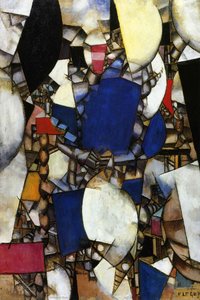
- 28.0 x 26.0 cm


 Eelvaade
 Saada
Saada Jaga
Jaga
 Teave teose kohta
 Juhend

 Laadi alla
 Sarnased teosed
 Röntgenuuring
 Slaidietendus
 Q&A
Q&A Statistika
Look closer
Every detail, painted by hand
Explore 'Composition at pitcher' (1918) by Fernand Léger – a striking example of Purism featuring bold forms and vibrant colors, showcasing the artist’s unique ‘Tubism’ style.
i.
The heart of the scene.
ii.
Light and background.
iii.
The brushwork.
The painting
A Stillness Within the Machine Age
Fernand Léger’s *Composition at pitcher*, painted in 1918, is more than just a still life; it's a quiet declaration of an emerging aesthetic—one that embraced the beauty of the industrial world while retaining a deeply human sensibility. The painting presents a deceptively simple arrangement: a blue vase, gleaming as if metallic, takes center stage before a backdrop suggesting trees. A cup, bottle, and bowl complete the composition, yet within this seemingly ordinary scene lies a profound exploration of form, color, and the changing landscape of early 20th-century life. The work’s modest size—28 x 26 cm—invites an intimate viewing experience, drawing the observer into Léger's carefully constructed world.
The Birth of 'Tubism' and a Rejection of Tradition
Léger’s artistic journey was one of constant evolution. Initially influenced by Impressionism, he quickly moved beyond its fleeting depictions of light to embrace the more structured approach of Paul Cézanne. However, it was his engagement with Cubism that truly defined his style. Yet, Léger wasn't content to simply replicate Picasso or Braque’s fractured perspectives. He developed what became known as “Tubism,” a distinctive variation characterized by simplified cylindrical forms and bold, primary colors. *Composition at pitcher* exemplifies this approach; the objects aren’t broken down into countless facets but are rendered with a robust solidity, their shapes clearly defined and almost monumental. This emphasis on form reflects Léger's fascination with machinery and the industrial world—a world he saw not as cold or alienating, but as possessing its own inherent beauty and dynamism. He sought to create an art that was accessible, reflecting the energy of modern life rather than retreating into academic tradition.
Symbolism in Simplicity: A Post-War Reflection
Created during the final year of World War I, *Composition at pitcher* carries a subtle weight of historical context. While not overtly depicting the horrors of war, the painting can be interpreted as a search for order and stability amidst chaos. The solid forms and carefully balanced composition suggest a desire to rebuild and find beauty in a world shattered by conflict. The objects themselves—the vase, cup, bottle—represent everyday life, a yearning for normalcy after years of upheaval. Some scholars also point to the potential symbolism within the arrangement; the pitcher, as a vessel containing sustenance, could represent hope or renewal. The trees in the background, though stylized, offer a connection to nature and enduring growth. Léger’s choice to depict these commonplace objects with such deliberate attention elevates them beyond mere still life subjects, transforming them into symbols of resilience and the enduring human spirit.
A Lasting Legacy: Léger's Influence on Modern Art
Fernand Léger’s impact on 20th-century art is undeniable. His bold aesthetic paved the way for Pop Art, influencing artists like Andy Warhol and Roy Lichtenstein with his embrace of popular culture and machine aesthetics. *Composition at pitcher*, though a relatively small work, encapsulates the core principles that defined Léger's artistic vision: a celebration of modernity, a rejection of traditional representation, and a profound belief in the power of art to reflect and shape the world around us. A reproduction of this painting offers not only a beautiful addition to any collection but also a tangible connection to a pivotal moment in art history—a moment when artists began to redefine what it meant to create and experience beauty in an increasingly mechanized age.
Korduvad küsimused
Kui palju valgust tundub teose "Composition at pitcher" värvid peegeldavat?
Teose „Composition at pitcher“, autor Fernand Léger luminants on Gentle Luminance. Luminants kirjeldab, kui palju valgust värvid peegeldavad.
Kas ma saan näha teost „Composition at pitcher“, autor Fernand Léger erinevates valgustingimustes?
Teost "Composition at pitcher" saab uurida kiht kihti teose Röntgenuuring lehel, mis on restauraatori valgelaudast inspireeritud interaktiivne vaatur, pakkudes kujundist üksteist optilist lugemist.
Kas teos "Composition at pitcher" on tüüpiline sellele, mida Fernand Léger tavaliselt lõi?
Fernand Léger dokumenteeritud teemade — cézanne’s geometric forms, cubism & industrialization, post-wwi disillusionment, machine aesthetic influence, purist ideals of clarity, shift to figurative style, exploration of modern life, key work in 'tubism' phase — seas paneb teos "Composition at pitcher" erilist tähelepanu teemadel still life, cubism, purism, vase, geometric, modern art, composition, industrial.

Fernand Léger
1881 - 1955, Prantsusmaa
The painter
Fernand Léger (1881–1955) – prantsuse kunstnik, kes lõi ainulaadse kubismi variatsiooni ja kujutas julgelt kaasaegset elu ning masinaid. Tema "tubism" ja Pop-kunsti eelkäija looming on täna maailmas tuntud!
Kunstniku elulugu
Fernand Légeri Elu ja Pärand: Masinaaja Vaimustuses
Joseph Fernand Henri Léger, sündinud 1881. aastal Argentanis Normandias, oli prantsuse kunstnik, keda peetakse üheks olulisimaks kujuks modernismi arendamisel. Tema teekond maalijana algas lihtsatest juurtest – talupidaja poja kasvatuses –, kuid viis ta Pariisi avantgardisti ringkondadesse, kus ta lõi ainulaadset visuaalset keelt, mis peegeldas masinaaja vaimu ja muutis kunstimaailma. Léger ei põgenenud abstraktsiooni varjupaika nagu paljud tema kaasaajalased; pigem püüdis ta integreerida modernsuse – selle dünaamilisust, mehaanilisi vorme ja olemust – oma loomingusse, luues nii võimsalt abstraktsed kui ka sügavalt vaadeldavale maailmale juurdunud teosed. Tema varajane elu, mis oli läbi imbunud põllumajandusliku töö reaalsusest, pakkis tugeva kontrasti tööstuslikule tulevikule, millele ta nii kirglikult pühendus."Tubismi" Sünd ja Kulla Sektsiooni Liikumine
Légeri kunstiline tee pöördeliseks hetkeks kujunes Paul Cézanne'i retrospektiiv 1907. aastal. See sündmus vabastas Légeri konventsionaalsest esindamisest ning suunas ta poole rohkem geomeetrilise ja struktuuralise lähenemise suunda. Ta hakkas vorme dekonstrueerima, analüüsima nende põhivorme ja ümber ehitama lõuendile uut rõõmu asetades tahkusele ja mahule. See uurimine viis ta kiiresti kubismi orbiidile, kuid Léger ei soovinud lihtsalt Picasso või Braque'i stiili jäljendada. Ta arendas omaenda eripära – isikliku kubismi vormi, mida kriitikud mänguliselt hüüdisid "tubismiks". Tüüpiliseks tunnuseks olid silindrilised vormid, lamedad tasandid ja julged värvikontrastid, mis tähistasid masina esteetikat ammu enne kui see sai laialdasemaks kunstiliseks tegevuseks. See oli kunst, mis sündis kasvava tööstusmaailma vaatlemisest, tunnustades ilu selle funktsionaalsetes vormides ja mehaanilistes rütmides. Aastatel 1909–1914 osales Léger aktiivselt avantgardisti tegevuses, liitudes Jean Metzingeri, Henri Laurensi, Jacques Lipchitzi, Chaïm Soutine'i, Robert Delaunay ja teiste kunstnikega.Sõda, Mehhaniseerimine ja Uus Esteetika
Esimene maailmasõda mõjutas sügavalt Légeri elu ja tööd. Frontis teenistuses aastatel 1914–1916 tutvus ta kaasaegse sõja brutaalse reaalsusega – suurtükipommardamistest, õhulahingutest ja mehaanika dehumaniseerivatest mõjudest. See kogemus ei viinud pettumusse ega modernsuse hüljatesse; pigem tuletas see veelgi rohkem rõhutama tema masinatele pühendumist ja nende võimu. Tema teenistusaegadel tehtud joonistused dokumenteerisid sõjalise tehnoloogia karmi ilu, muutes hävitusvahendid kunstilise kaalutluse objektideks. Naasmisel tsiviil-ellu läks Légeri esteetika veelgi edasi arendades. Tema maalidel hakkasid kajastuma lihtsustatud mehaanilised tunded, tähistades tööstusmaailma dünaamilisust ja tõhusust. *Sõdur suitsega* (1916) näitab seda muutust, kujutades lihtsaid vorme ja julgeid värve, mis kutsuvad esile mehaanilise täpsuse tunde. See ei olnud pelgalt esteetiline valik; see oli filosoofiline avaldus – kinnitus modernsuse potentsiaalile edeneda ja uueneda isegi hävitava konflikti järel.Pärand ja Püsiv Mõjutus
Sõjajärgsetel aastatel jätkas Léger tööstusmaailma ristumiskoha uurimist, lootes teoseid, mis tähistasid modernset elu ainulaadse värvimuhingu abil abstraktsiooni ja kujutuse vahel. Tema *Paysages animés* (Animeritud Maastikud) sarjast 1921. aastal näitasid figuuride ja loomade sujuvat integreerimist lihtsustatud kompositsioonidesse, hägustades piire orgaanilise ja anorgaanilise vahel. Ta eksperimenteeris ka skulptuuriga ja filmitegemisega, laiendades oma kunstipraktikat traditsiooniliste maalide piirde väljast. Légeri mõju järgmisele kunstnike põlvkondadele on eitamatud. Tema vormi julge lihtsus, tööstusliku kujutise omaksvõtmine ja populaarkultuuri tähistamine eelnenud Pop Art tekkimist aastakümneid hiljem. Sellised kunstnikud nagu Roy Lichtenstein ja Andy Warhol on selgelt võlgnud Légeri pioniiri tööd. Ta sillutas vahet abstraktsiooni ja kujutava esituse vahel, näitudes, et on võimalik luua teoseid, mis on nii intellektuaalselt ranged kui ka visuaalselt kaasahaaravad. Tänapäeval leidub Fernand Légeri maalide koosseisus suuremates muuseumides üle maailma, sealhulgas Prantsuse Musée d'Art et d'Histoire ja Biot's asuvas Musée National Fernand Légeris, mis on pühendatud ainult tema tööle. Ta jääb 20. sajandi kunsti hiiglasseks – visionäär, kes julges leida ilu masinaaja seest ja tõlkida selle lõuendile võrratu julgusega ja originaalsusega. Tema pärand on mitte ainult maalijana, vaid ka modernsuse prohvetina. Tõeline pioneer, kelle töö kõlab täna publikus endiselt.Quick facts about Fernand Léger
- Artistic Movement Or Style: Kubism, Tubism
- Artists Or Movements Influenced By This Artist: ['Pop Art']
- Artists Who Influenced This Artist: ['Paul Cézanne']
- Date Of Birth: 4. veebruar 1881
- Date Of Death: 17. august 1955
- Full Name: Fernand Léger
- Nationality: Prantsuse
- Notable Artworks:
- The Sitted Woman
- Machine Element
- The Great Parade
- The City
- Place Of Birth: Argentan, Prantsusmaa


Käsitsi valmistatud õlimaalireproduktsioon
Have it painted for you
Käsitsi valmistatud õlimaalireproduktsioon
Meie kunstnike poolt tellimusel valmistatud käsitsi maalitud õli-kainaste teos teie soovitud suuruses ja raamis. ( Lülita trükkitoodetele Lülita digitaalse pildi juurde)

Your commission

Composition at pitcher
Reproduktsiooni tehnika
Reproduktsiooni suurus
-

Eelistatud tippkunstnik
Rohkem detaile, peenust ja lisatootmisaega
-

Reproduktsiooni raamivalikud
-
-
Kunstiteoste või reproduktsioonide puhul, mille üks külg on üle 105 cm (umbikmolt 41 tolli), saadetakse raam kirjal asendis, la Dismantlitud komplektina. See meetod tagab ohutuse kohaletoimetamisel ja väldib transpordil tekkivaid kahjustusi.
Vajalik professionaalne kokkupanek – see ei ole isetegevusega valmistamiseks mõeldud toode.
Komplekt tuleb kokku panna ja lõvet pingutada kogemusega professionaalse raamija, kasutades puiduliim (ei kuulu komplekti), lõvetpingi ja klempe, et hoida raami kande mustad õigena liimi kuivamisaja jooksul. Vale kokkupanek või ebaühtlane lõvetping võib kunstiteost püsivalt kahjustada ning seda
 Kunstiteoste või reproduktsioonide puhul, mille üks külg on üle 105 cm (umbikmolt 41 tolli), saadetakse raam kirjal asendis, la Dismantlitud komplektina. See meetod tagab ohutuse kohaletoimetamisel ja väldib transpordil tekkivaid kahjustusi.
Kaasatud on kõik tahked puidust liistud, täpselt lõigatud vastavaks suuruseks.
Kokku panemiseks kasutatakse lisatud kruvisid ning nurkade liimamiseks vajalikku puuliima, mida ei ole komplektis ja mida peab raamivalmistaja ise hankima.
Vajalik on kasutada professionaalseid tööriistu, mis ei kuulu komplekti: lõvetelapide pingist (pingutaja) ja klambreid, et hoida raami puidu nurgas õigena liimi kuivamisaja jooksul.
Oluline:
Nurgaliimamiseks on vaja puiduliim, liimimine peab toimuma klempide all kuni liim on täielikult kuivanud ning kokku monteeritud raami kanga pingutamiseks on vajalik kanga pingutustang. Kumbki neist ei kuulu komplekti. Palun veenduge enne selle suuruse tellimist, et teil on saadaval kogenud professionaalne raamistaja.

Nimesildikiri
-
-

Kaitsevärnitsus
Läikiv lakk (muudab värvid elavamaks ning kaitseb valgust ja niiskust eest)
-

Kohanda oma teost
Näiteid muudatuste kohta: Asenda nägu kliendi fotoga; Lisa lemmikloom (nt asenda kass koeraga); Lisa taustale peidetud sõnum; Muuda tausta maastikku või elemente.
-

Kiire tarne
Ülemaailmne tarne riiki 3–4 nädalaga tavalise 5 nädala asemel. (31 oktoober). Kvaliteedis kompromisse ei tehta.
-
Kiirsaatmine
Ülemaailmne tarne () 5 nädala jooksul. (7 november).
Sisse kuuluv
Koguhind
€ 236
Klaasivalik on saadaval ainult kuni 110 cm suuruses teostes
i.
Scale
The original measures 28.0 x 26.0 cm. Slide to your wall: every size keeps its proportions.
Vali meie eelmääratud suurused, mis vastavad teose algupärastele proportsioonidele.

Sisestage vajalik laius ja kõrgus, et teos sobiks teie raamile või seinale. Kuna tegu on käsipainatud teosega, siis erineva kujuga suuruse korral võib kunstnik jätta pildi ümber veidi rohkem marginaali või lõigata osa ära — valik on teie. Enne maali alustamist saadame teile kinnitamiseks digitaalse näidisprojektsiooni. Sellel lehel näidatud pilt ei kajasta tegelikku tulemust — seda näitab ainult näidisprojektsioon.
 Loe lähemalt
ii.
Frame
The frame is drawn on the painting at its true width.
Raamitud

White €1

Blurside €1

Extended €1

P118B €10

P118H €10

P118W €10

P438Z €10

P508JH €12

P508YH €12

P805H €10

P805Z €10

P919BZ €10

P919G €10

P919XJ €10

P959ZH €10

P968JZ €12

W106C €8

W218G €10

W218JH €8

W218Y €10

W307PJ €10

W316G €10

W316PJ €8

W316Y €10

W398PJ €8

W4111J €10

W500HY €15

W500JH €15

W692G €12

W849H €8

W940BG €15

W953PJ €8

H24-GOLD €30

H24-SILVER €30

H36-GOLD €45

H36-SILVER €45
iii.
Make it yours
A painting made by hand can be made for one person.
After order, WikiOO.org team will email client for instructions and provide a mockup preview
iv.
Finishing
Nameplate, varnish and delivery.
Nimesildikiri
Graveeritud pronksplaadi üksikasjad
This elegant plaque features the artist's name and the title of the artwork, finely engraved for a timeless presentation.
It is made from bronze with a refined, elegant finish. The text is precisely laser-engraved for a sharp and permanent result. Measuring 9x2 cm, the plaque is compact yet easy to read. It's built to be durable and scratch-resistant, offering a professional, museum-quality look. Mounting is simple thanks to the included adhesive backing.
Läbipaistva akrüülplaadi üksikasjad
The plaque includes essential engraved details such as the artist's name, the title of the artwork, the date it was created, the type of media used-like oil on canvas or watercolor-a brief description of the piece, and a QR code that links to the complete artwork information.
It is crafted from clear acrylic, offering a sleek, modern appearance. The text is UV-engraved in black to ensure strong visual contrast. With a size of 10x15 cm, it ensures optimal readability. It comes equipped with two metal hooks for secure wall mounting. The plaque is designed to be weather-resistant, making it suitable for various environments, and it includes interactive features that work seamlessly with smartphone scanning.
Musta akrüülplaadiรายละเอียด (Note: The user provided "Musta akrüülplaadi detailid" as the current translation and asked for an improved version. Since "Musta akrüülplaadi
This elegant plaque includes engraved information such as the artist's name, the title of the artwork, the date it was created, the type of media used (like oil on canvas or watercolor), a short description of the artwork, and a QR code for quick access to more information.
The plaque itself is made from refined black acrylic with a premium finish. The text is laser-engraved in white for high contrast and readability. Its size is 10x15 cm, designed to be easy to read. It comes with two metal hooks for professional mounting. The design is sleek and fits any interior style. It is also weather-resistant and durable, with built-in digital integration for mobile compatibility.
Kaitsevärnitsus
Kiire tellimus
Maailmline tarne 3–4 nädala jooksul tavalise 5 nädala asemel. (31 oktoober). Kvaliteedis kompromisse ei tehta.
- Tasuta ekspresssaatmine üle maailma
- Kõrgekvaliteediline lina-kangas
- Täielik transpordikindlustus
- Tollimaksude tagastamise garantii
- Värvitoime täpsuse garantii
- 100 päeva tagastusõigus (ainult valmistusdefektide korral)
- 100% raha tagasi garantii
- Hulgusoodustus


Quick facts and art quiz
Sarnased artiklid

Georges Braque: 25 meistriteost, mis muutsid kunsti – WikiOO.org
Avastage Georges Braque 25 ikoonilist teost! Sukeldu kubismi maailma, modernse kunsti geomeetrilistesse vormidesse ja värvikates maalidess. Leia inspiratsiooni interjööri kujunduseks WikiOO.org-is. Kunstikollektsioonid ja kvaliteetsed reproduktsioonid.

Industrial Revolution on Canvas: 10 Artworks That Define a Modern Aesthetic
Explore 10 iconic artworks capturing the Industrial Revolution’s grit & beauty. From Monet to Manet, discover realism, impressionism & powerful scenes of urban life. Find museum-quality reproductions for your home at WikiOO.org.

Modern Geometry & Machine Age Beauty: A Collector's Guide to the Cubist Vision of Fernand Léger
Explore the profound geometric mastery of Fernand Léger. Discover how his 'Tubism' and Machine Age aesthetics redefined modern art, offering timeless inspiration for discerning collectors seeking to integrate Cubist dynamism into sophisticated contemporary interiors.

Deconstructing Reality: A Comprehensive Exploration of Cubist Still Life
Explore the revolutionary world of Cubist Still Life with WikiOO. Discover Picasso & Braque's groundbreaking techniques, its philosophical roots, and lasting impact on modern art. Expert insights for collectors.
Sarnased teosed