

- 9.0 x 10.0 cm


 Aperçu en situation
 Envoyer
 Partager
 Détails de l'œuvre
 Guide
Guide

 Télécharger l'image
 Articles similaires
 Radiographie
 Diaporama
 Questions et réponses
 Statistiques
Regardez de plus près
Chaque détail, peint à la main
Trois détails de la peinture, agrandis. Nos artistes les reproduisent chacun à la main, à la taille de votre choix.
i.
Le cœur de la scène.
ii.
Lumière et arrière-plan.
iii.
La touche du pinceau.
Le tableau
Description de la pièce
A striking black and yellow self-portrait drawing by Arnold Schoenberg, a pivotal figure of the early 20th century's musical avant-garde, captures the artist’s intense gaze with a distinctive mustache. Discover this unique piece and add it to your collection.
 Lire la suite
Biographie de l'artiste
Explore Arnold Schoenberg's révolutionnaire musique – atonality, douze-tone technique et influence sur la musique classique du XXe siècle. Découvrez son héritage au Zentrum für Musikforschung Wien.
A Study in Yellow and Green: Arnold Schoenberg's Self-Portrait (1922)
This intimate drawing, measuring just 9 x 10 cm, offers an arresting glimpse into the mind of one of the 20th century’s most revolutionary composers – Arnold Schoenberg. Executed in 1922, a pivotal year in his artistic development, the work transcends a simple portrait; it's a concentrated distillation of intellectual intensity and perhaps, a subtle self-examination rendered with remarkable precision. The stark palette of yellow and green immediately draws the viewer in, colors that would become increasingly significant within Schoenberg’s musical explorations of atonality and dissonance.
- Subject & Composition: The central focus is undeniably the artist himself – a man with a neatly trimmed mustache, his gaze direct and unwavering. The simplified rendering emphasizes key features: the piercing green eyes, a hallmark of Schoenberg’s artistic vision, and the strong jawline hinting at an unyielding intellect.
- Technique & Materials: Crafted in black and yellow tones, the drawing utilizes a technique that suggests both meticulous observation and a deliberate departure from representational realism. The use of shading creates depth and volume, while the limited color palette contributes to a sense of austerity and focused contemplation.
The Second Viennese School & Atonality
To fully appreciate this self-portrait, it’s crucial to understand Schoenberg's place within the artistic landscape of early 20th-century Vienna. He was at the heart of the “Second Viennese School,” a group of composers – including Alban Berg and Anton Webern – who radically challenged traditional harmonic structures. Schoenberg pioneered atonality, rejecting the established rules of key signatures and chord progressions, believing that music should be free from conventional constraints. This drawing can be seen as a visual manifestation of this intellectual shift; the deliberate use of color and simplified form reflects a desire to break away from established artistic conventions.
The year 1922 was particularly significant for Schoenberg, marking a period of intense experimentation with serialism – a compositional technique based on mathematical series that further explored the possibilities of atonality. This self-portrait isn’t merely a likeness; it's a visual echo of his groundbreaking musical ideas.
Symbolic Resonance & Emotional Impact
While seemingly straightforward, the drawing possesses a subtle emotional depth. The intense gaze suggests introspection and perhaps a sense of isolation – feelings that likely accompanied Schoenberg as he navigated the turbulent waters of artistic innovation. The yellow and green hues, often associated with envy and growth respectively, could symbolize his ambition and relentless pursuit of new musical frontiers. The starkness of the image evokes a feeling of quiet contemplation, inviting the viewer to engage in their own thoughts about creativity, genius, and the challenges of pushing boundaries.
A Collector’s Piece – Reproduction & Legacy
This hand-painted reproduction captures not only the visual details of Schoenberg's self-portrait but also the spirit of a revolutionary artist. Each reproduction is meticulously crafted by skilled artisans, ensuring an authentic representation of this significant work. Perfect for interior design projects seeking a touch of intellectual sophistication or as a unique addition to any art collection, this piece offers a tangible connection to one of music’s most influential figures. Its small size makes it ideal for display in intimate settings, while its powerful imagery ensures that it will remain a captivating subject of contemplation for years to come.
Questions et réponses
Est-il possible de télécharger l'image de « Self-Portrait » ?
«Self-Portrait» de Arnold Schoenberg peut être téléchargé depuis la page Téléchargement de l'œuvre, en tant que téléchargement d'une image numérique haute résolution.
Quelle technique a été utilisée pour «Self-Portrait» de Arnold Schoenberg ?
Arnold Schoenberg a utilisé la technique du Acrylic On Canvas pour « Self-Portrait ». Cette technique définit la nature matérielle de l'œuvre originale.
Quelle tonalité émotionnelle accompagne le style Atonal Expressionism de « Self-Portrait » ?
«Self-Portrait» dégage une tonalité émotionnelle Reflective au sein du mouvement Atonal Expressionism.

Arnold Schoenberg
1874 - 1951, Autriche
Le peintre
Biographie de l'artiste
Early Life and Musical Beginnings
Arnold Schoenberg, Austrian-American composer who created new methods of musical composition involving atonality, namely serialism and the twelve-tone row. He was also one of the most influential teachers of the 20th century; among his most significant pupils were Alban Berg and Anton Webern. He was born on September 13, 1874, in Vienna, Austria. His early life was marked by a humble beginning, with his father being a shoe-shopkeeper. Despite this, Schoenberg’s innate passion for music led him to largely self-educate himself in the field. Schoenberg's early works showcased a Brahmsian–Wagnerian synthesis. As he progressed, he became the central figure of the second Viennese School, alongside Anton Webern and Alban Berg. His compositions, including String Quartet No. 2 (1907–1908), Erwartung (1909), and Pierrot Lunaire (1912), exemplified his innovative approach to atonality.Notable Works
Schoenberg’s oeuvre is remarkably diverse, encompassing orchestral music, chamber ensembles, vocal works, piano pieces, and film scores. However, he is undeniably best known for his groundbreaking explorations of atonality and serialism—methods that fundamentally reshaped the landscape of musical composition. Among his most celebrated achievements are: Suite No. 2 (1930), which showcases a masterful blend of tonal and dissonant elements; Music Typewriter (1928), an experimental piece utilizing a typewriter as a musical instrument; String Quartet No. 2 (1907–1908), considered a cornerstone of Viennese Expressionism; Erwartung (1909), a dramatic opera exploring themes of anxiety and anticipation; Pierrot Lunaire (1912), a song cycle that utilizes Sprechstimme—a vocal technique combining speech and singing—to convey profound emotional depth. Furthermore, Schoenberg’s film music includes scores for films such as “The Seven Deadly Sins” and “Moses and Aaron,” demonstrating his versatility as a composer across various genres.Influence and Legacy
Schoenberg's musical innovations exerted an indelible influence on subsequent generations of composers. His pioneering use of serialism—a compositional technique based on mathematical sequences—established a new paradigm for tonal music, prompting composers like Alban Berg and Anton Webern to develop their own distinctive styles rooted in Schoenberg’s principles. Beyond the realm of composition, Schoenberg's aesthetic and music-historical views profoundly impacted musicologists Theodor W. Adorno and Carl Dahlhaus, shaping debates about musical interpretation and artistic expression. His uncompromising stance against prevailing musical conventions solidified his reputation as a visionary artist who challenged accepted norms and paved the way for radical experimentation in music.Later Life and Recognition
Following the rise of Nazism in Germany, Schoenberg reluctantly abandoned Austria and emigrated to the United States in 1933, where he taught at Yale University until 1944. During World War II, he continued his musical pursuits while grappling with the horrors of the Holocaust—a profound experience that inspired him to create Survivor from Warsaw (1947), a poignant memorial to victims of Nazi persecution. In 1951, Schoenberg received honorary citizenship in Vienna and was elected president of the Israel Conservatory and Academy of Music, cementing his enduring legacy as one of the most influential figures in twentieth-century music history.Informations clés sur Arnold Schoenberg
- Artistic Movement Or Style: Technique à douze tons; Expressionnisme
- Artists Or Movements Influenced By This Artist:
- Anton Webern
- Alban Berg
- Artists Who Influenced This Artist:
- Johannes Brahms
- Richard Wagner
- Date Of Birth: Septembre 13, 1874
- Full Name: Arnold Schoenberg
- Nationality: Autrichien-Américain
- Notable Artworks:
- Suite, op. 29
- Music Typewriter
- Staffliner
- Place Of Birth: Vienne, Autriche


Reproduction à l'huile faite à la main
Faites-le peindre pour vous
Reproduction à l'huile faite à la main
Huile sur toile peinte à la main, avec cadre et dimensions personnalisés, réalisée sur commande par nos artistes. ( Passer au format impression Passer au format numérique)

Votre commande

Self-Portrait
Technique de reproduction
Format de la reproduction
-

Artiste de prestige
Plus de détails, de finesse et un temps de production accru
-

Cadre de reproduction
-
-
Pour les œuvres ou reproductions dont un côté mesure plus de 105 cm (environ 41 pouces), le cadre sera expédié sous forme de kit démonté. Cette méthode garantit une livraison sécurisée et prévient tout dommage pendant le transport.
Assemblage professionnel requis - ce produit n'est pas destiné au bricolage (DIY).
Le kit doit être assemblé et la toile tendue par un encadreur professionnel expérimenté, en utilisant de la colle à bois (non fournie), une pince à tendre la toile et des serre-joints pour maintenir les traverses d'équerre pendant le séchage de la colle. Un assemblage incorrect ou une tension inégale de la toile peut endommager l'œuvre de manière irréversible et n'est pas couvert par notre garantie.
 Pour les œuvres ou reproductions dont un côté mesure plus de 105 cm (environ 41 pouces), le cadre sera expédié sous forme de kit démonté. Cette méthode garantit une livraison sécurisée et prévient tout dommage pendant le transport.
Toutes les baguettes en bois massif sont incluses, découpées avec précision à la taille requise.
À assembler avec les vis fournies, ainsi qu'avec de la colle à bois pour les assemblages d'angles (non fournie), à prévoir par votre encadreur.
L'utilisation d'outils professionnels est requise et non incluse : une pince à tendre la toile (tendeur) et des serre-joints pour maintenir les baguettes bien d'équerre pendant le séchage de la colle.
Important :
L'assemblage des angles nécessite de la colle à bois, les barres doivent être maintenues avec des serre-joints jusqu'au séchage complet de la colle, et le tendage de la toile sur le châssis assemblé nécessite une pince à tendre la toile. Aucun de ces éléments n'est inclus dans le kit. Veuillez consulter un encadreur professionnel expérimenté avant de commander ce format.

Cartel
-
-

Vernis de protection
Vernis brillant (intensifie les couleurs, protège de la lumière et de l'humidité)
-

Personnaliser mon œuvre
Exemples de personnalisation : remplacer le visage par une photo du client ; ajouter un animal de compagnie (par exemple, remplacer un chat par un chien) ; inclure un message caché en arrière-plan ; modifier le paysage ou les éléments d'arrière-plan.
-

Livraison urgente
Livraison dans le monde entier () en 3 à 4 semaines au lieu des 5 semaines habituelles. (10 novembre). Aucune concession sur la qualité.
-
Livraison express
Livraison dans le monde entier () sous 5 semaines. (17 novembre).
Inclus
Prix total
€ 237
L'option verre n'est disponible que pour les dimensions inférieures à 110 cm.
i.
Échelle
L'original mesure 9.0 x 10.0 cm. Adaptez-le à votre mur : chaque taille conserve ses proportions.
Choisissez parmi nos formats prédéfinis qui respectent les proportions originales de l’œuvre.

Saisissez la largeur et la hauteur souhaitées, pour s'adapter à votre cadre ou à votre mur. Cette œuvre est peinte à la main ; ainsi, pour un format de forme différente, l'artiste peut peindre un peu plus autour du tableau ou réduire légèrement les bords — c'est vous qui choisissez. Nous vous envoyons une maquette numérique pour approbation avant que la peinture ne commence. L'image présentée sur cette page ne reflète pas le résultat réel — seule la maquette le fait.
ii.
Cadre
Le cadre est tracé sur la peinture à sa largeur réelle.
Sous cadre

Bords blancs €1

Bords estompés €1

Bords imprimés €1

P118B €10

P118H €10

P118W €10

P438Z €10

P508JH €12

P508YH €12

P805H €10

P805Z €10

P919BZ €10

P919G €10

P919XJ €10

P959ZH €10

P968JZ €12

W106C €8

W218G €10

W218JH €8

W218Y €10

W307PJ €10

W316G €10

W316PJ €8

W316Y €10

W398PJ €8

W4111J €10

W500HY €15

W500JH €15

W692G €12

W849H €8

W940BG €15

W953PJ €8

H24-GOLD €30

H24-SILVER €30

H36-GOLD €45

H36-SILVER €45
iii.
Faites-en votre œuvre
Une peinture réalisée à la main peut être créée pour une seule personne.
Après la commande, l'équipe de WikiOO.org contactera le client par e-mail pour obtenir ses instructions et lui fournir un aperçu de la maquette
iv.
Finition
Plaque nominative, vernis et livraison.
Cartel
Détails de la plaque en bronze gravée
This elegant plaque features the artist's name and the title of the artwork, finely engraved for a timeless presentation.
It is made from bronze with a refined, elegant finish. The text is precisely laser-engraved for a sharp and permanent result. Measuring 9x2 cm, the plaque is compact yet easy to read. It's built to be durable and scratch-resistant, offering a professional, museum-quality look. Mounting is simple thanks to the included adhesive backing.
Détails de la plaque en acrylique transparent
The plaque includes essential engraved details such as the artist's name, the title of the artwork, the date it was created, the type of media used-like oil on canvas or watercolor-a brief description of the piece, and a QR code that links to the complete artwork information.
It is crafted from clear acrylic, offering a sleek, modern appearance. The text is UV-engraved in black to ensure strong visual contrast. With a size of 10x15 cm, it ensures optimal readability. It comes equipped with two metal hooks for secure wall mounting. The plaque is designed to be weather-resistant, making it suitable for various environments, and it includes interactive features that work seamlessly with smartphone scanning.
Détails de la plaque en acrylique noir
This elegant plaque includes engraved information such as the artist's name, the title of the artwork, the date it was created, the type of media used (like oil on canvas or watercolor), a short description of the artwork, and a QR code for quick access to more information.
The plaque itself is made from refined black acrylic with a premium finish. The text is laser-engraved in white for high contrast and readability. Its size is 10x15 cm, designed to be easy to read. It comes with two metal hooks for professional mounting. The design is sleek and fits any interior style. It is also weather-resistant and durable, with built-in digital integration for mobile compatibility.
Vernis de protection
Production urgente
Livraison dans le monde entier () en 3 à 4 semaines au lieu des 5 semaines habituelles. (10 novembre). Aucun compromis sur la qualité.
- Livraison express gratuite dans le monde entier
- Toile de lin de qualité supérieure
- Assurance transport complète
- Garantie de remboursement des droits de douane
- Garantie de fidélité des couleurs
- Politique de retour de 100 jours (uniquement en cas de défaut)
- Garantie de remboursement à 100%
- Offre de tarifs dégressifs


Faits marquants et quiz artistique
Articles connexes
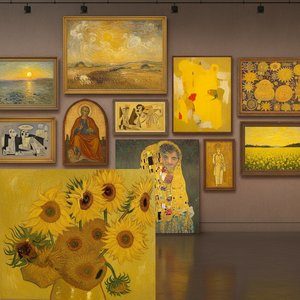
Top 10 des Tableaux Célèbres Dominés par le Jaune Chrome : Art & Décor
Plongez dans le monde vibrant du jaune chrome à travers 10 tableaux célèbres ! Découvrez l'histoire de Van Gogh, Monet et d'autres maîtres impressionnistes. Trouvez l'inspiration déco et achetez des reproductions d'art de qualité muséale sur WikiOO.org.

L'Excellence de l'Impression Giclée : Guide Technique pour des Reproductions d'Art de Qualité Musée
Maîtrisez la technique giclée et les encres pigmentaires pour vos collections. Découvrez les secrets d'une impression de qualité musée.

Echoes of Time: Exploring the Enduring Appeal & Historical Context of Vintage Art Prints
Explore the captivating world of vintage art prints! Discover their history, collecting tips & enduring appeal. Expert insights on chromolithography and building a legacy collection with WikiOO.

The Enduring Legacy of Fine Art Prints: Technique, History & Aesthetic Impact
Explore the rich history & techniques of fine art prints. Discover investment potential, assess authenticity, and learn how to preserve your collection with expert guidance. Trusted insights for discerning collectors.
Œuvres similaires


