

 Aperçu en situation
 Envoyer
 Partager
 Détails de l'œuvre
 Guide
Guide

 Télécharger l'image
 Articles similaires
 Radiographie
 Diaporama
 Q&A
Q&A Statistiques
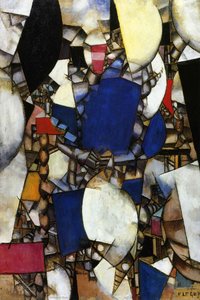
Contrast of forms
 Acrylique sur toile
- Décoration murale
- Cubism
 1914
1914 80.0 x 65.0 cm
 Lire la suite
Giclées et impressions d'art
Impressions giclées ou sur toile de qualité musée, avec une production rapide et des finitions au choix. ( Commander la reproduction peinte à la main Passer au format numérique)




P118B €10

P118H €10

P118W €10

P438Z €10

P508JH €12

P508YH €12

P805H €10

P805Z €10

P919BZ €10

P919G €10

P919XJ €10

P959ZH €10

P968JZ €12

W106C €8

W218G €10

W218JH €8

W218Y €10

W307PJ €10

W316G €10

W316PJ €8

W316Y €10

W398PJ €8

W4111J €10

W500HY €15

W500JH €15

W692G €12

W849H €8

W940BG €15

W953PJ €8




Choisissez parmi nos formats prédéfinis qui respectent les proportions originales de l’œuvre.

Saisissez la largeur et la hauteur souhaitées pour qu'elles s'adaptent à votre cadre ou à votre mur. Une impression peut être recadrée, mais jamais agrandie au-delà de l'image originale ; ainsi, un format de forme différente entraînera la perte d'une partie de l'image. Nous vous envoyons une maquette numérique pour approbation avant toute impression. L'image présentée sur cette page ne montre pas le recadrage réel — seule la maquette le permet.
Livraison dans le monde entier () en 2 semaines au lieu des 4/5 semaines habituelles. (29 octobre)

Livraison express gratuite dans le monde entier

Toile de lin de qualité supérieure

Assurance transport complète

Garantie de remboursement des droits de douane

Garantie de fidélité des couleurs

Politique de retour de 100 jours (uniquement en cas de défaut)

Garantie de remboursement à 100%

Offre de tarifs dégressifs
 L'option verre n'est disponible que pour les dimensions inférieures à 110 cm.

Contrast of forms
Giclées et impressions d'art
Format de la reproduction
-


Prix total
€ 54
Fernand Léger’s “Composition VIII”: A Symphony of Steel and Soul
Fernand Léger’s “Composition VIII,” completed in 1914, stands as an emblem of the burgeoning Expressionist movement and a profound reflection on the transformative influence of industrialization upon artistic sensibilities. Painted during a period marked by unprecedented technological advancements – the rise of automobiles, factories churning out goods at breathtaking speed – Léger sought to distill the frenetic energy of this new era into a visual vocabulary that transcended mere imitation.
- Subject Matter: The canvas explodes with geometric forms—circles, squares, triangles—arranged in a dynamic interplay of overlapping planes. These shapes aren’t merely decorative; they represent abstracted representations of machinery – pistons, gears, wheels – capturing the rhythm and repetition inherent in industrial production.
- Style: Léger’s style is undeniably Expressionist, prioritizing emotional impact over meticulous realism. He abandons traditional perspective, opting instead for a flattened surface that emphasizes the materiality of pigment and creates a sense of immediacy and unrestrained energy.
- Technique: Léger employed a bold palette dominated by yellows, oranges, reds, and blacks—colors deliberately chosen to convey heat, movement, and dissonance. His technique involved applying paint thickly onto canvas, layering colors and textures to build up sculptural surfaces that resist conventional notions of flatness.
Historical Context: Léger’s artistic endeavors coincided with the burgeoning anxieties surrounding the rapid pace of industrial progress. Artists like Picasso and Matisse were grappling with similar questions about how to depict the modern world, rejecting academic conventions in favor of subjective expression. “Composition VIII” embodies this spirit of rebellion against established norms.
- Symbolism: The geometric shapes themselves carry symbolic weight, representing not only machines but also fundamental principles of order and chaos—the forces shaping human civilization. Léger’s deliberate use of contrasting colors underscores the tension between beauty and ugliness, harmony and discord – mirroring the complexities of life in the industrialized age.
Emotional Impact: Viewing “Composition VIII” evokes a visceral response—a feeling of disorientation mingled with exhilaration. Léger’s masterful manipulation of color and texture compels the viewer to confront the unsettling grandeur of the machine age, prompting contemplation on its transformative effects on human experience. It's a painting that refuses easy categorization, demanding engagement and rewarding repeated observation.
Interior Designer Considerations: “Composition VIII” lends itself beautifully to interior spaces seeking a bold statement piece. Its vibrant hues and sculptural surfaces can inject energy into minimalist interiors or serve as a counterpoint to ornate baroque styles—creating an unforgettable visual dialogue.
Questions et réponses
Quelles sont les dimensions réelles de «Contrast of forms» de Fernand Léger ?
L'œuvre originale «Contrast of forms» de Fernand Léger mesure 80 x 65 cm.
Quelle est la couleur dominante de «Contrast of forms» de Fernand Léger ?
La couleur qui prédomine dans « Contrast of forms » est le Grège (#dee0d4). La couleur dominante est un atout précieux pour harmoniser une œuvre d'art avec un intérieur.
Pourquoi le statut du droit d'auteur de « Contrast of forms » est-il tel qu'il est ?
«Contrast of forms» de Fernand Léger est dans le dans le domaine public - ses droits d'auteur sont tombés dans le domaine public. Les droits d'auteur sont calculés à partir de l'année du décès de l'artiste, et Fernand Léger est décédé en 1955.
Œuvres similaires




Biographie de l'artiste
jeune vie et formation
fernand léger, peintre, sculpteur et cinéaste français, est né le 4 février 1881 à Argentan, Orne, en Normandie inférieure. Son père élevait du bétail, et léger a initialement été formé à l'architecture de 1897 à 1899. Il s’est ensuite installé à Paris en 1900, se débrouillant comme dessinateur architectural.développement artistique
Le travail précoce de léger a été influencé par l'impressionnisme, comme le montrent le jardin de ma mère (mon jardin) (1905). Après avoir fréquenté l'école des beaux-arts et l’académie Julian, il a commencé à travailler sérieusement comme peintre à 25 ans. Son style s'est développé en une forme personnelle de cubisme, que les critiques ont qualifié de "tubisme" pour son accent sur les formes cylindriques.cubisme et le groupe des Puteaux
En 1910, léger a exposé au Salon d’automne aux côtés de jean metzinger et henri le fauconnier. Il a rejoint le groupe des Puteaux, également connu sous le nom de section d’or (la section dorée), avec d'autres artistes tels que francis picabia et marcel duchamp.guerre et son influence sur le travail de léger
Les expériences de léger à la Première Guerre mondiale ont eu un impact significatif sur son œuvre. Pendant son séjour au front, il a produit des croquis d'artillerie, d'avions et de soldats. Sa peinture soldier avec un tuyau (1916) reflète cette période.œuvre ultérieure et héritage
L'œuvre post-guerre de léger, caractérisée par des formes machine-like élégantes, le lia à la tradition de la peinture figurative française. Ses paysages animés de 1921 ont présenté des figures et des animaux dans des formes harmonieuses et rationalisées.- voir les œuvres de fernand léger sur WikiOO
- en savoir plus sur fernand léger sur wikipedia
- découvrez le musée national fernand léger (france) avec WikiOO
- la femme assise (100 x 81 cm, tubisme)
- élément de machine (cubisme)

Fernand Léger
1881 - 1955 , France
L'essentiel de l'artiste
- Artistes Influents:
- Cézanne
- Impressionnisme
- Date De Décès: 1955
- Date De Naissance: 4 février 1881
- Influences Artistiques: ['Pop Art']
- Lieu De Naissance: Argentan, France
- Mouvement Artistique: Cubisme, Tubisme
- Nationalité: Française
- Nom Complet: Fernand Léger
- Oeuvres Notables:
- La Grande Parade
- Machine Élément
- Femme assise
- Paysages animés
Articles connexes

Neo-Abstract Art: The High-Impact Evolution of Modern Visual Energy and Geometric Sophistication
Discover the power of Neo-Abstract art. Explore how bold geometric forms and high-impact visual energy are redefining modern design. Learn to curate sophisticated, high-energy spaces with the latest trends in contemporary abstraction and structural color.

Expressionnisme Abstrait : Les 10 Chefs-d'Œuvre Incontournables pour Décorer avec Art et Histoire
Plongez au cœur de l'Expressionnisme Abstrait avec ! Découvrez les 10 œuvres majeures de Pollock, Rothko et De Kooning. Histoire, techniques & inspiration déco. Explorez la collection complète en ligne.

Kandinsky : Les 25 Œuvres Maîtresses d'un Pionnier de l'Art Abstrait | WikiOO
Plongez dans l'univers vibrant de Kandinsky ! Découvrez les 25 œuvres majeures du pionnier de l'art abstrait. Explorez son expressionnisme, ses couleurs audacieuses et l'histoire fascinante derrière chaque tableau. Reproductions d'exception sur WikiOO.org.

Fernand Léger : Les 25 Œuvres Maîtresses d'un Pionnier du Modernisme | WikiOO
Plongez dans l'univers vibrant de Fernand Léger ! Découvrez les 25 œuvres majeures du cubisme et du tubisme, explorant formes géométriques et couleurs audacieuses. Retrouvez des reproductions d'art exceptionnelles sur WikiOO.org.

Abstraction Géométrique : Les 10 Chefs-d'œuvre qui ont Marqué l'Histoire de l'Art
Plongez au cœur de l'abstraction géométrique avec WikiOO.org ! Découvrez les 10 œuvres majeures de Mondrian, Malevitch et Kandinsky qui ont révolutionné l'art moderne. Inspirez votre décoration intérieure avec des reproductions de tableaux exceptionnelles. Explorez la collection en ligne !


