

 Aperçu en situation
 Envoyer
 Partager
 Détails de l'œuvre
 Guide
Guide

 Télécharger l'image
 Articles similaires
 Radiographie
 Diaporama
 Statistiques
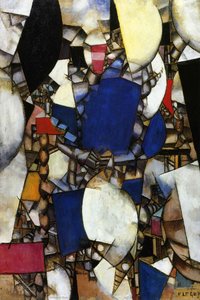
The four cyclists
 Oil On Canvas
- WallArt
- Cubism
 Modern
 129.0 x 161.0 cm
 Lire la suite
Giclées et impressions d'art
Impressions giclées ou sur toile de qualité musée, avec une production rapide et des finitions au choix. ( Commander la reproduction peinte à la main Passer au format numérique)




P118B €10

P118H €10

P118W €10

P438Z €10

P508JH €12

P508YH €12

P805H €10

P805Z €10

P919BZ €10

P919G €10

P919XJ €10

P959ZH €10

P968JZ €12

W106C €8

W218G €10

W218JH €8

W218Y €10

W307PJ €10

W316G €10

W316PJ €8

W316Y €10

W398PJ €8

W4111J €10

W500HY €15

W500JH €15

W692G €12

W849H €8

W940BG €15

W953PJ €8




Choisissez parmi nos formats prédéfinis qui respectent les proportions originales de l’œuvre.

Saisissez la largeur et la hauteur souhaitées pour qu'elles s'adaptent à votre cadre ou à votre mur. Une impression peut être recadrée, mais jamais agrandie au-delà de l'image originale ; ainsi, un format de forme différente entraînera la perte d'une partie de l'image. Nous vous envoyons une maquette numérique pour approbation avant toute impression. L'image présentée sur cette page ne montre pas le recadrage réel — seule la maquette le permet.
Livraison dans le monde entier () en 2 semaines au lieu des 4/5 semaines habituelles. (26 octobre)

Livraison express gratuite dans le monde entier

Toile de lin de qualité supérieure

Assurance transport complète

Garantie de remboursement des droits de douane

Garantie de fidélité des couleurs

Politique de retour de 100 jours (uniquement en cas de défaut)

Garantie de remboursement à 100%

Offre de tarifs dégressifs
 L'option verre n'est disponible que pour les dimensions inférieures à 110 cm.

The four cyclists
Giclées et impressions d'art
Format de la reproduction
-


Prix total
€ 54
A Symphony of Form and Movement
In the vibrant landscape of early twentieth-century modernism, few works capture the rhythmic pulse of a changing world as arrestingly as Fernand Léger’s "The Four Cyclists." Completed around 1924, this masterpiece serves as a profound visual manifesto, where the grace of the human figure meets the unapologetic precision of the machine age. At first glance, the painting presents a seemingly simple scene: four women poised upon their bicycles, momentarily paused in a shared moment of leisure. Yet, beneath this surface lies a complex architectural feat of color and geometry. Léger does not merely depict a subject; he engineers an experience, transforming the mundane act of cycling into a dynamic ballet of intersecting planes and energetic light.
The composition is a masterclass in Cubist innovation, specifically reflecting the artist's unique ability to blend fragmentation with a sense of structural solidity. Rather than retreating into pure abstraction, Léger utilizes the tenets of Cubism to deconstruct reality, shattering visual space into angular shards that mirror the fractured perception of a world accelerating toward modernity. The bicycle frames themselves are dissected into a constellation of geometric forms, creating a sense of depth that defies traditional Euclidean geometry. As the viewer's eye wanders across the canvas, the overlapping planes and intersecting lines create a sensation of perpetual motion, as if the very air around the cyclists is vibrating with the mechanical energy of the era.
The Pulse of the Machine Age
To understand "The Four Cyclists" is to understand the heartbeat of the industrial revolution. Léger’s palette is famously bold, dominated by a striking triad of vibrant reds, yellows, and blues—hues that evoke the heat of a furnace and the optimistic glow of technological progress. These colors are not applied with soft, blended transitions; instead, they are presented in distinct, powerful strokes that emphasize the materiality of the paint and the strength of the forms. This technique, often associated with his "tubism" period, lends a muscularity to the figures, making the women appear as integral parts of the mechanical landscape they inhabit.
The symbolism within the work transcends the literal depiction of the subjects. The bicycles, with their metallic sheen and rigid structures, act as metaphors for the burgeoning dynamism of the twentieth century. There is a palpable tension between the stillness of the seated women and the implied velocity of their machines. For the collector or the interior designer, this painting offers more than just aesthetic beauty; it provides a sophisticated dialogue between tradition and progress. It is a piece that commands attention in any space, offering an intellectual depth that invites long periods of contemplation. Whether placed in a contemporary gallery setting or a curated residential collection, "The Four Cyclists" remains a timeless celebration of life, movement, and the enduring beauty of the modern spirit.
Questions et réponses
Dans quelle pièce recommanderiez-vous d'exposer «The four cyclists» de Fernand Léger ?
Une reproduction de « The four cyclists » s'intègre parfaitement dans une Living Room.
Sous quels autres noms Fernand Léger est-il/elle connu(e) ?
L'artiste Fernand Léger, créateur de « The four cyclists », est également connu sous d'autres noms, notamment Joseph Fernand Henri Lé, Ger.
L'œuvre «The four cyclists» de Fernand Léger est-elle dans le domaine public ?
Statut des droits d'auteur pour «The four cyclists» de Fernand Léger : l'œuvre est dans le dans le domaine public - ses droits d'auteur sont tombés dans le domaine public. Cela détermine si les reproductions de l'image peuvent être réalisées librement.
Œuvres similaires



Biographie de l'artiste
jeune vie et formation
fernand léger, peintre, sculpteur et cinéaste français, est né le 4 février 1881 à Argentan, Orne, en Normandie inférieure. Son père élevait du bétail, et léger a initialement été formé à l'architecture de 1897 à 1899. Il s’est ensuite installé à Paris en 1900, se débrouillant comme dessinateur architectural.développement artistique
Le travail précoce de léger a été influencé par l'impressionnisme, comme le montrent le jardin de ma mère (mon jardin) (1905). Après avoir fréquenté l'école des beaux-arts et l’académie Julian, il a commencé à travailler sérieusement comme peintre à 25 ans. Son style s'est développé en une forme personnelle de cubisme, que les critiques ont qualifié de "tubisme" pour son accent sur les formes cylindriques.cubisme et le groupe des Puteaux
En 1910, léger a exposé au Salon d’automne aux côtés de jean metzinger et henri le fauconnier. Il a rejoint le groupe des Puteaux, également connu sous le nom de section d’or (la section dorée), avec d'autres artistes tels que francis picabia et marcel duchamp.guerre et son influence sur le travail de léger
Les expériences de léger à la Première Guerre mondiale ont eu un impact significatif sur son œuvre. Pendant son séjour au front, il a produit des croquis d'artillerie, d'avions et de soldats. Sa peinture soldier avec un tuyau (1916) reflète cette période.œuvre ultérieure et héritage
L'œuvre post-guerre de léger, caractérisée par des formes machine-like élégantes, le lia à la tradition de la peinture figurative française. Ses paysages animés de 1921 ont présenté des figures et des animaux dans des formes harmonieuses et rationalisées.- voir les œuvres de fernand léger sur WikiOO
- en savoir plus sur fernand léger sur wikipedia
- découvrez le musée national fernand léger (france) avec WikiOO
- la femme assise (100 x 81 cm, tubisme)
- élément de machine (cubisme)

Fernand Léger
1881 - 1955 , France
L'essentiel de l'artiste
- Artistes Influents:
- Cézanne
- Impressionnisme
- Date De Décès: 1955
- Date De Naissance: 4 février 1881
- Influences Artistiques: ['Pop Art']
- Lieu De Naissance: Argentan, France
- Mouvement Artistique: Cubisme, Tubisme
- Nationalité: Française
- Nom Complet: Fernand Léger
- Oeuvres Notables:
- La Grande Parade
- Machine Élément
- Femme assise
- Paysages animés
Articles connexes

Modern Geometry & Machine Age Beauty: A Collector's Guide to the Cubist Vision of Fernand Léger
Explore the vibrant world of Fernand Léger. Discover how his 'Tubism' and Machine Age aesthetics redefined modern art, offering profound inspiration for discerning collectors seeking geometric beauty and industrial dynamism.

L'Âme Industrielle : 10 Chefs-d'œuvre Révélant la Beauté du Monde Moderne | WikiOO
Plongez dans l'âme industrielle de 10 chefs-d'œuvre emblématiques ! Découvrez les histoires fascinantes de Van Gogh, Monet et d'autres artistes ayant capturé la beauté brute du monde moderne. Reproductions de qualité musée sur WikiOO.org – Explorez la collection en ligne.

Fernand Léger : Les 25 Œuvres Maîtresses d'un Pionnier du Modernisme | WikiOO
Plongez dans l'univers vibrant de Fernand Léger ! Découvrez les 25 œuvres majeures du cubisme et du tubisme, explorant formes géométriques et couleurs audacieuses. Retrouvez des reproductions d'art exceptionnelles sur WikiOO.org.

Cubism Unveiled: How Picasso and Braque Redefined Modern Art through Geometric Revolution
Explore the revolutionary world of Cubism. Discover how Pablo Picasso and Georges Braque dismantled perspective to redefine modern art through geometric innovation and analytical mastery. An essential guide for art students, collectors, and history enthusiasts.

Modern Geometry & Machine Age Beauty: A Collector's Guide to the Cubist Vision of Fernand Léger
Explore the profound geometric mastery of Fernand Léger. Discover how his 'Tubism' and Machine Age aesthetics redefined modern art, offering timeless inspiration for discerning collectors seeking to integrate Cubist dynamism into sophisticated contemporary interiors.


