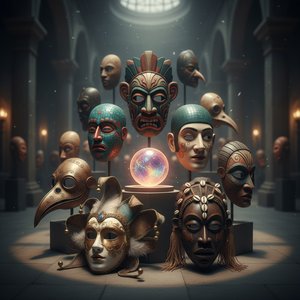
The Soul of the Niger: The Artistic Legacy of the Bambara People
In the heart of West Africa, where the rhythmic pulse of the Niger River valley meets the vast expanse of the Sahel, lies the profound cultural landscape of the Bambara people. Known locally as the Bamana, this resilient ethnic group has long served as the guardians of a spiritual and artistic tradition that transcends mere decoration. Their history is one of movement and identity; while they trace their ancestral roots to the great Mandinka migrations and the era of the Ghana Empire, the Bambara carved out a distinct existence following the 13th-century shifts in power along the riverbanks. This sense of a unique, self-contained identity is etched into every curve of their woodcarvings and every pigment applied to their ceremonial masks, reflecting a worldview where the boundary between the physical and the spirit realms is perpetually thin.
The artistry of the Bambara is not merely an aesthetic pursuit but a vital component of their social and religious fabric. Their cosmology, centered on the supreme creator Faro or Ngala, finds expression through a complex system of rituals designed to maintain harmony between humanity, nature, and the ancestors. Within this framework, art serves as a bridge. The clan system, organized into age-based groups known as tons, ensures that the technical mastery required for their intricate carvings is passed down through generations, preserving a lineage of craftsmanship that remains unbroken by the tides of modernization. To witness Bambara art is to witness a living prayer, a continuous dialogue with the forces that govern fertility, rain, and the harvest.
Masters of Form: The Symbolism of the Ciwara
Perhaps the most globally recognized achievement of the Bambara artisans is the creation of the Ciwara crest mask. These breathtaking sculptures are far more than static objects; they are the embodiments of an entire agricultural philosophy. Representing the mythical antelope spirit, these masks are meticulously carved from dense hardwoods and often adorned with vibrant, earthy pigments that evoke the very soil they celebrate. The design typically features a stylized, elongated neck and sweeping horns, capturing the grace of the animal while symbolizing the vital connection between the sun's energy and the earth's fertility.
The performance of these masks is a choreographed spectacle of communal importance:
- Ritualized Agriculture: The Ciwara masks preside over ceremonies that encourage farmers in their labor, turning the grueling work of the fields into a sacred dance.
- Gendered Synergy: While the Ciwara society is traditionally male-dominated, the ritual dances often feature pairs of male and female antelope masks, symbolizing the essential union of masculine and feminine energies required for life to flourish.
- Social Competition: The use of these masks fuels a healthy competition among farmers, driving the community toward greater productivity and shared prosperity.
A Timeless Influence on Global Art
The historical significance of Bambara art extends far beyond the borders of Mali. The profound abstraction and rhythmic geometry found in their sculptures have long captivated the international art community, offering a masterclass in how form can communicate complex metaphysical truths. From the Sulaw masks to the iconic crests, each piece is a testament to a culture that has successfully navigated the challenges of the modern era without sacrificing its ancestral essence. The Bambara people continue to stand as masters of their craft, ensuring that their artistic language—a language of earth, spirit, and survival—continues to inspire awe and reverence in the hearts of viewers worldwide.
Pitanja i odgovori
Gdje se djela umjetnika Bambara People mogu pronaći grupirana prema ključnim riječima?
Kako biste pronašli djela umjetnika Bambara People na određenu temu, koristite njegovu stranicu Pretraživanje po ključnim riječima, koja grupirira umjetnička djela prema ključnim riječima.
U kojim je umjetničkim pravcima Bambara People stvarala/o?
Umjetnički pokreti u kojima je Bambara People stvarao možete vidjeti na stranici Svi umjetnički pravci, koja grupirira djela prema umjetničkom pokretu.
Mogu li pregledavati djela umjetnika Bambara People prema paleti boja?
Djela umjetnika Bambara People možete pregledavati prema paleti boja na njegovoj stranici Prema paletama boja.