Cerca

Theodor Engel

1820 - 1895

Brevi note biografiche

  • Nationality: Germania
  • Top-ranked work: A moment
  • Copyright status: Public domain
  • Lifespan: 75 years
  • Died: 1895
  • Espandi dettagli…
  • Top 3 works: A moment
  • Born: 1820, Barmen, Germania
  • Works on APS: 1
  • Museums on APS:
    • Museo ebraico di Sydney
    • Museo ebraico di Sydney
    • Museo ebraico di Sydney
    • Museo ebraico di Sydney
    • Museo ebraico di Sydney
  • Art period: XIX Secolo

Quiz d'arte

Per ogni domanda è presente una sola risposta corretta.

Domanda 1:
Qual è stata la principale professione di Theodor Engel oltre alla scrittura?
Domanda 2:
Engel collaborò strettamente con chi sull'opera influente “La Famiglia Santa” e successivamente sui testi fondamentali dell“Ideologia Tedesca”?
Domanda 3:
In quale museo puoi trovare una collezione significativa di opere d’arte che includono i lavori di Engel insieme ad artisti come Jan van de Cappelle e Franz Marc?
Domanda 4:
L'interesse di Engel per temi spirituali si allinea con le esplorazioni artistiche di quale artista prominente?
Domanda 5:
Qual è ciò che Theodor Engel ricorda di aver contribuito allo sviluppo?

Theodor Engel: Collaborator, Occultist, and Echoes of Marxist Ideals

Theodor Engel (1820-1895) remains a figure shrouded in both intellectual fascination and scholarly debate—a testament to his profound impact on the trajectory of 19th-century thought. Born in Barmen, Germany, Engel’s life unfolded against the backdrop of burgeoning industrialization and the turbulent currents of European politics, shaping him into an artist whose creative output was inextricably linked with his engagement in radical social critique. While not widely recognized for visual artistry alone, Engel's contribution to philosophical discourse—particularly his partnership with Karl Marx—solidifies his place as a pivotal voice within the genesis of Marxism and consequently, a significant influence on subsequent artistic movements.

Early Life and Intellectual Formation

Engel’s upbringing in a wealthy textile family instilled in him an early appreciation for economic realities – a perspective that would prove crucial to his intellectual development. He pursued studies at Bonn University, immersing himself in classical philology and German Romanticism, absorbing the spirit of Weimar’s artistic milieu. However, it was his encounter with Karl Marx in 1844 that irrevocably altered his path. This serendipitous meeting sparked a collaborative relationship that would yield groundbreaking results: *The Holy Family*, arguably Marx's most influential work on family dynamics and social reproduction, and subsequently, the foundational texts of *German Ideology* and *The Communist Manifesto*. Engel’s meticulous research into Hegelian philosophy provided Marx with intellectual ammunition for dismantling traditional conceptions of history and advocating for proletarian revolution. His understanding of Hegel’s dialectical method—the assertion that reality is constantly evolving through conflict—became a cornerstone of Marxist thought, informing his critique of capitalism and his vision for a socialist future.

Collaborative Artistic Vision: Marxism Illuminated Through Symbolism

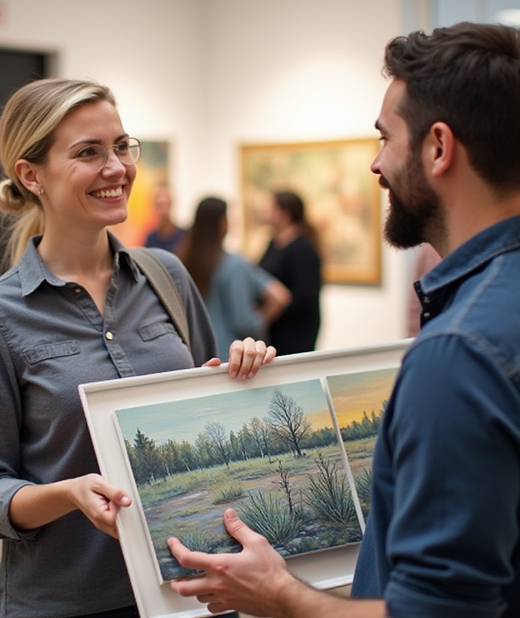
Engel's artistic endeavors weren't merely a personal indulgence; they served as conduits for conveying Marxist ideas. He explored symbolism—particularly Jungian archetypes—to illuminate the psychological dimensions of social struggle. His paintings often depict landscapes imbued with spiritual resonance, reflecting his belief that art could serve as a vehicle for communicating ethical and philosophical truths beyond mere representation. Notably, Engel’s interest in esoteric traditions – including alchemy and Kabbalah – informed his artistic sensibilities and contributed to a distinctive visual vocabulary characterized by intricate patterns and evocative color palettes. This stylistic approach aligns with broader trends within Symbolist painting—a movement that sought to express inner states of mind through symbolic imagery and heightened emotional intensity. He believed that art could transcend the limitations of rational thought, tapping into deeper layers of human consciousness and conveying universal myths and symbols as sources of inspiration.

Engel’s Artistic Legacy: Museums and Collections

Engel's artwork gained recognition in prominent museums across Europe, showcasing his ability to synthesize intellectual rigor with artistic expression. The Suermondt-Ludwig Museum in Aachen houses a substantial collection featuring Engel’s paintings alongside masterpieces by Jan van de Cappelle, Adam Elsheimer, and Franz Marc—artists who similarly wrestled with questions of spirituality and social responsibility. These collaborations underscore Engel's engagement with the broader artistic landscape of his time and demonstrate how he navigated the intersection between philosophical idealism and visual aesthetics. Furthermore, Engel’s influence extends beyond individual artworks; it resonates within the conceptual framework underpinning Symbolist art itself. His meticulous attention to detail—particularly in capturing atmospheric effects—demonstrates a mastery of technique that elevates his paintings beyond mere decorative ornamentation.

Beyond Marx: Exploring Wider Artistic Influences

Engel’s fascination with Jungian psychology—a field he actively pursued alongside Marx—directly impacted his artistic vision. He sought to tap into collective unconsciousness and explore universal myths and symbols as sources of inspiration. This preoccupation aligns with the broader intellectual currents of the era, characterized by a renewed interest in mythology and folklore. Engel's exploration of these themes anticipates developments in Surrealist art decades later, where artists deliberately employed dreamlike imagery and subconscious associations to challenge conventional perceptions of reality. His artistic output reflects not only his Marxist convictions but also a profound engagement with the spiritual dimension of human experience—a legacy that continues to inspire artists and scholars alike.


WikiOO.org © WikiOO.org - Tutti i diritti riservati