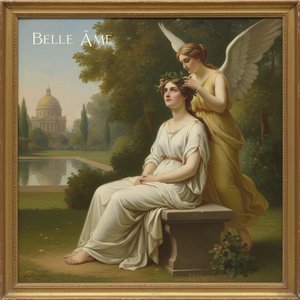
The Lineage of a Master Draughtsman
Born in the historic city of Nantes, France, Jules-Élie Delaunay emerged as a profound figure within the realm of French academic painting. His artistic journey began under the guidance of influential mentors, studying under Flandrin and later refining his craft at the prestigious École des Beaux- Arts in Paris under the tutelage of Lamothe. From his earliest training, Delaunay exhibited a remarkable command over line and form, developing a technical prowess that would eventually lead many to regard him as a draughtsman standing second only to the great Ingres.
His early stylistic inclinations were deeply rooted in the classicist manner of Ingres, characterized by a pursuit of ideal beauty and precise execution. However, a pivotal shift occurred following his victory of the Prix de Rome. This prestigious achievement granted him passage to Italy in 1856, an experience that fundamentally altered his artistic vision. Moving away from the lofty ideals of Raphaelesque perfection, Delaunay found himself captivated by the raw sincerity and austere severity of the quattrocentists. This transition marked a maturation of his style, as he traded idealized grace for a more grounded, impactful realism.
Grand Commissions and Decorative Splendor
Upon his return from Rome, Delaunay’s reputation preceded him, leading to a series of monumental commissions that allowed him to leave an indelible mark on the architectural landscape of France. He was entrusted with significant decorative projects that demanded both scale and narrative depth. His hand can be found in the sacred spaces of the church of St Nicholas at Nantes, where his frescoes breathe life into the religious setting. Furthermore, his artistry graced the Paris Opera-house through the creation of three evocative panels depicting Apollo, Orpheus, and Amphion.
The breadth of his talent extended to the civic heart of France as well; he executed twelve significant paintings for the great hall of the council of state in the Palais Royal. Even as he worked on ambitious historical cycles, such as his Scenes from the Life of St Genevieve intended for the Panthéon, his dedication to the narrative power of painting remained steadfast. While some of these grander visions remained unfinished at the time of his passing, they stand as testaments to his immense creative ambition and his ability to marry historical gravity with aesthetic elegance.
A Legacy of Portraiture and Precision
In the final decade of his life, Delaunay achieved a new level of widespread popularity by turning his focused gaze toward portraiture. This period saw him transition from the grand scale of frescoes and historical epics to the intimate psychological depth required by the portraitist's craft. His ability to capture the essence of his subjects through a firm and pure hand ensured his continued relevance in the shifting landscape of nineteenth-century art.
Today, the significance of Jules-Élie Delaunay is preserved within the halls of esteemed institutions worldwide. His works serve as vital links to the academic traditions of his era, showcasing a unique synthesis of classical discipline and the rugged honesty of the Italian masters. His contributions can be observed through various facets of his output:
- Academic Mastery: His role as a premier French academic painter and pastellist.
- Historical Significance: His contribution to major French landmarks including the Paris Opera and the Palais Royal.
- Artistic Evolution: The transition from Ingres-inspired classicism to the severe beauty of the Quattrocento style.
- Enduring Presence: The preservation of his works in collections such as the National Gallery of Art and the Nantes Museum.
Q&A
ジュール=エリー・ドロネは、どの芸術運動に属していましたか?
ジュール=エリー・ドロネが活動した各ムーブメント(芸術運動)は、作品をムーブメント別に分類しているアーティストのすべてのムーブメントページでご覧いただけます。
ジュール=エリー・ドロネの作品を色別に探すには、どこへ行けばよいですか?
色彩インデックスでは、ジュール=エリー・ドロネの作品を色別に分類してご紹介しています。
ジュール=エリー・ドロネは、どの時代に活動していましたか?
ジュール=エリー・ドロネは19世紀に活動していました。この時代背景は、その画家の活動を歴史の中に位置づけるものです。