Mazačas portretas

Mazačas: Catalogue of the 97 Most Famous Paintings

Atnaujinta spalis 2026 · pagal mūsų populiarumumo koeficientą (paieškos, lankytojai ir užsakymai kiekvienam kūriniui) · 97 Mazačas darbai mūsų kataloge

Santrauka

The Trinity (1428) is recorded as the most famous painting of Mazačas. The Tribute Money (1425) and The Expulsion from the Garden of Eden (1426) occupy the second and third entries. Of the 97 works by Mazačas recorded in the catalogue, the 97 best known are listed below, each entry with its date, the holding museum and a note on the work.

1401 – 1428, San Džovani Vardarnas Ankstyvasis renesansas Daugiausia darbų: Santa Maria del Carmine

Entries 1 to 10: the most famous Mazačas paintings

1
The Trinity (1428) aut. Mazačas

The Trinity

1428 · Fresco

The Trinity by Masaccio is a fresco painting that marked the beginning of the Renaissance in Italy. Created in 1425, it is considered one of the most important works of the early Renaissance period. The painting is housed in the Santa Maria Novella church in Florence, Italy. Artistic Innovations The Trinity by Masaccio was a groundbreaking work that introduced several artistic innovations. It is one of the first monumental Renaissance…

2
The Tribute Money (1425) aut. Mazačas

The Tribute Money

1425 · Fresco

The scene unfolds within the Brancacci Chapel of the basilica of Santa Maria del Carmine in Florence. Here, the fresco titled The Tribute Money by Masaccio brings a biblical narrative to life upon the chapel walls. Commissioned by Felice Brancacci, this work forms a significant part of a larger cycle dedicated to the life of Saint Peter. The air in the chapel seems to hold the weight of this sacred…

3
The Expulsion from the Garden of Eden (1426) aut. Mazačas

The Expulsion from the Garden of Eden

1426 · Fresco

The heavy silence of the Brancacci Chapel in the church of Santa Maria del Carmine in Florence, Italy, holds the weight of a profound tragedy. Here, the walls breathe with the story of The Expulsion from the Garden of Eden, a fresco painted by Masaccio around 1425. The air seems to thicken around the figures as they face their sudden, irreversible departure from paradise. This scene marks the beginning of…

4
Atminties Detalis: Mokesčių Rėtelis aut. Mazačas

Atminties Detalis: Mokesčių Rėtelis

Freska

„Tribute Money“ – tai ne tik freskas, o viso reiškinio pradžia. Masacio kūrinys, sukurtas apie 1426 metus Brancacci kapelio šventėje Florencijoje, iškart pakeitė meno suvokimą. Tai buvo pirmasis darbas, kuriame pasirodė tikroviškumo idėjų, kurios vėliau tapo pagrindu visai Renesanso estetikai. Štai trumpas įvertinimas, kodėl šis fragmentas iš Biblijos istorijos yra toks svarbus.

5
Predella panel from the Pisa Altar (1426) aut. Mazačas

Predella panel from the Pisa Altar

1426 · Oil On Panel · Staatliche Museen zu Berlin, Berlinas

To stand before this Predella panel from the Pisa Altar is to encounter a moment frozen in time, yet vibrating with raw, undeniable human drama. Dating to 1426, this work captures Masaccio at the zenith of his revolutionary power. It is not merely a depiction of the Crucifixion; it is a profound meditation on sacrifice, community, and the weight of divine narrative rendered with startling immediacy. The composition draws the…

6
The Madonna of Humility (1424) aut. Mazačas

The Madonna of Humility

1424 · Tempera On Panel

In the quiet, profound stillness of Masaccio’s The Madonna of Humility, we encounter one of the most moving snapshots of the Early Italian Renaissance. Created around 1424, this masterpiece transcends mere religious iconography to offer a window into a moment of raw, maternal intimacy. The scene is set not upon a celestial throne, but on the earth itself, where the Virgin Mary sits upon a blue patterned cushion. This choice…

7
Trinity (detail) (1425) aut. Mazačas

Trinity (detail)

1425 · Fresco · Santa Maria Novella, Florencija

The image presents a detail from a fresco painting created in 1425 by Masaccio. Within this specific view, a figure is depicted that appears to be Mary Magdalene, identified by the traditional iconography of her long hair and a head covering. She possesses a contemplative expression, directing her gaze slightly downwards toward an object held in her right hand, which may be interpreted as a symbol of faith or devotion.

8
Two panels from the Pisa Altarpiece (1426) aut. Mazačas

Two panels from the Pisa Altarpiece

1426 · Tempera On Panel · Staatliche Museen zu Berlin, Berlinas

In the quiet, hallowed halls of art history, few works capture the dawn of a new era as poignantly as Masaccio’s Two Panels from the Pisa Altarpiece. Completed in 1426, these panels are far more than mere fragments of a lost polyptych; they are windows into a transformative moment when the rigid conventions of the Gothic period began to dissolve, giving way to the profound humanism of the Early Italian…

9
Trinity (1425) aut. Mazačas

Trinity

1425 · Fresco · Santa Maria Novella, Florencija

To step before Masaccio’s Holy Trinity is to witness the exact moment when the flattened, symbolic world of the Middle Ages dissolved into the profound, breathing reality of the Renaissance. Painted between 1425 and 1427 within the hallowed walls of Santa Maria Novella in Florence, this fresco does not merely depict a religious scene; it carves a hole in the very wall of the chapel, inviting the viewer to step…

10
Trinity (detail) (1425) aut. Mazačas

Trinity (detail)

1425 · Acrylic On Canvas · Santa Maria Novella, Florencija

Masaccio’s “Trinity (detail),” housed within the magnificent Santa Maria Novella in Florence, isn't merely a fresco; it’s a pivotal moment in art history – a visual manifesto declaring the arrival of the High Renaissance. Painted between 1425 and 1427, this intimate section captures the essence of Masaccio’s revolutionary approach to depicting reality, a departure from the stylized elegance of the preceding Gothic era and a profound influence on generations of…

Mazačas, further entries: 11 to 97

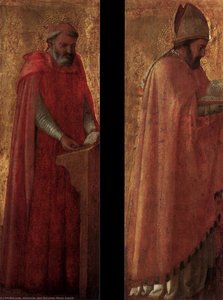
11View of the Cappella Brancacci (before restoration) (1426) aut. MazačasView of the Cappella Brancacci (before restoration)1426 · Santa Maria del Carmine 12Trinity (scheme of the perspective) (1425) aut. MazačasTrinity (scheme of the perspective)1425 · Santa Maria Novella 13Raising of the Son of Theophilus and St Peter Enthroned (detail) (1426) aut. MazačasRaising of the Son of Theophilus and St Peter Enthroned (detail)1426 14St Peter Healing the Sick with his Shadow (detail) (1426) aut. MazačasSt Peter Healing the Sick with his Shadow (detail)1426 15Frescoes in the Cappella Brancacci (right view) (1426) aut. MazačasFrescoes in the Cappella Brancacci (right view)1426 · Santa Maria del Carmine 16Madonna Casini (1426) aut. MazačasMadonna Casini1426 17Adam and Eve banished from Paradise (1427) aut. MazačasAdam and Eve banished from Paradise1427 18The Distribution of Alms and the Death of Ananias (detail) (1426) aut. MazačasThe Distribution of Alms and the Death of Ananias (detail)1426 19Frescoes in the Cappella Brancacci (left view) (1426) aut. MazačasFrescoes in the Cappella Brancacci (left view)1426 · Santa Maria del Carmine 20Baptism of the Neophytes (1427) aut. MazačasBaptism of the Neophytes1427 21Christ in the Garden of Gethsemane (detail) (1424) aut. MazačasChrist in the Garden of Gethsemane (detail)1424 · Lindenau-Museum 22Crucifixion (1426) aut. MazačasCrucifixion1426 · Museo di Capodimonte 23Tribute Money (detail) (1426) aut. MazačasTribute Money (detail)1426 24The Agony in the Garden (1426) aut. MazačasThe Agony in the Garden1426 25St Peter Healing the Sick with his Shadow (detail) (1426) aut. MazačasSt Peter Healing the Sick with his Shadow (detail)1426 26St. Juvenal Triptych (1422) aut. MazačasSt. Juvenal Triptych1422 27Maria and Child (1426) aut. MazačasMaria and Child1426 28Tribute Money (detail) (1426) aut. MazačasTribute Money (detail)1426 29The Expulsion from the Garden of Eden (detail) (1426) aut. MazačasThe Expulsion from the Garden of Eden (detail)1426 30Birth tray (1428) aut. MazačasBirth tray1428 31The Baptism of the Neophytes (1426) aut. MazačasThe Baptism of the Neophytes1426 32Raising of the Son of Theophilus and St Peter Enthroned (1426) aut. MazačasRaising of the Son of Theophilus and St Peter Enthroned1426 33The Distribution of Alms and the Death of Ananias (detail) (1426) aut. MazačasThe Distribution of Alms and the Death of Ananias (detail)1426 34Adoration of the Knigs (1428) aut. MazačasAdoration of the Knigs1428 35Tribute Money (detail) (1426) aut. MazačasTribute Money (detail)1426 36Tribute Money (1426) aut. MazačasTribute Money1426 37The Expulsion from the Garden of Eden (1426) aut. MazačasThe Expulsion from the Garden of Eden1426 38Tribute Money (detail) (1426) aut. MazačasTribute Money (detail)1426 39Raising of the Son of Theophilus and St Peter Enthroned (detail) (9) (1426) aut. MazačasRaising of the Son of Theophilus and St Peter Enthroned (detail) (9)1426 40San Giovenale Triptych. Right panel. (1422) aut. MazačasSan Giovenale Triptych. Right panel.1422 41Crucifixion (1426) aut. MazačasCrucifixion1426 42Raising of the Son of Theophilus and St Peter Enthroned (detail) (1426) aut. MazačasRaising of the Son of Theophilus and St Peter Enthroned (detail)1426 43Raising of the Son of Theophilus and St Peter Enthroned (detail) (1426) aut. MazačasRaising of the Son of Theophilus and St Peter Enthroned (detail)1426 44The Raising of the Son of Theophilus and St Peter Enthroned (detail) (1426) aut. MazačasThe Raising of the Son of Theophilus and St Peter Enthroned (detail)1426 45Raising of the Son of Theophilus and St Peter Enthroned (detail) (1426) aut. MazačasRaising of the Son of Theophilus and St Peter Enthroned (detail)1426 46Christ in the Garden of Gethsemane (detail) (1424) aut. MazačasChrist in the Garden of Gethsemane (detail)1424 · Lindenau-Museum 47San Giovenale Triptych. Central panel (1423) aut. MazačasSan Giovenale Triptych. Central panel1423 48Distribution of Alms and Death of Ananias (1425) aut. MazačasDistribution of Alms and Death of Ananias1425 49Profile Portrait of a Young Man aut. MazačasProfile Portrait of a Young Man 50Profile Portrait of a Young Man (1425) aut. MazačasProfile Portrait of a Young Man1425 · National Gallery of Art 51Rendering of the Tribute Money aut. MazačasRendering of the Tribute Money 52Distribution of the Goods of the Community and the Death of Ananias (detail) aut. MazačasDistribution of the Goods of the Community and the Death of Ananias (detail) 53St. Giovenale Triptych aut. MazačasSt. Giovenale Triptych 54The Expulsion from Paradise aut. MazačasThe Expulsion from Paradise 55The Adoration of the Magi aut. MazačasThe Adoration of the Magi 56St. Peter Baptizing the Neophytes aut. MazačasSt. Peter Baptizing the Neophytes 57Birth Salver aut. MazačasBirth Salver 58Medallion aut. MazačasMedallion 59Madonna and Child aut. MazačasMadonna and Child 60Madonna Enthroned aut. MazačasMadonna Enthroned 61St Jerome and St John the Baptist aut. MazačasSt Jerome and St John the Baptist 62Christ in the Garden of Gethsemane (1424) aut. MazačasChrist in the Garden of Gethsemane1424 · Lindenau-Museum 63San Giovenale Triptych. Left panel (1422) aut. MazačasSan Giovenale Triptych. Left panel1422 64Portrait of a Young Woman (1425) aut. MazačasPortrait of a Young Woman1425 65Distribution of the Goods of the Community and the Death of Ananias aut. MazačasDistribution of the Goods of the Community and the Death of Ananias 66The Holy Trinity with the Virgin, St. John and Two Donors aut. MazačasThe Holy Trinity with the Virgin, St. John and Two Donors 67The Cricifixion of St. Peter. The Beheading of St. John the Baptist aut. MazačasThe Cricifixion of St. Peter. The Beheading of St. John the Baptist 68La Consagración aut. MazačasLa Consagración 69Crucifixion aut. MazačasCrucifixion 70St Jerome and St John the Baptist 1 aut. MazačasSt Jerome and St John the Baptist 1 71The Madonna and Child with Saint Anne aut. MazačasThe Madonna and Child with Saint Anne 72Two panels from the Pisa Altarpiece aut. MazačasTwo panels from the Pisa Altarpiece 73Portrait of a young man aut. MazačasPortrait of a young manIsabella Stewart Gardner Museum 74View of the Cappella Brancacci (after restoration) aut. MazačasView of the Cappella Brancacci (after restoration) 75Putto and a Small Dog (back side of the Berlin Tondo) aut. MazačasPutto and a Small Dog (back side of the Berlin Tondo) 76The Madonna and Child with st.Anna. (1424) aut. MazačasThe Madonna and Child with st.Anna.1424 77Plate of Nativity (Berlin Tondo) (1427) aut. MazačasPlate of Nativity (Berlin Tondo)1427 · Staatliche Museen zu Berlin 78Madonna with Child and Angels (1426) aut. MazačasMadonna with Child and Angels1426 · National Gallery 79The Distribution of Alms and the Death of Ananias (1426) aut. MazačasThe Distribution of Alms and the Death of Ananias1426 · Santa Maria del Carmine 80St Peter Healing the Sick with his Shadow (1426) aut. MazačasSt Peter Healing the Sick with his Shadow1426 · Santa Maria del Carmine 81San Giovenale Triptych (1422) aut. MazačasSan Giovenale Triptych1422 82Raising of the Son of Teophilus and St.Peter Enthroned (1427) aut. MazačasRaising of the Son of Teophilus and St.Peter Enthroned1427 · Santa Maria del Carmine 83St Paul (1426) aut. MazačasSt Paul1426 · Museo Nazionale di San Matteo 84Carnesecchi Triptych (1423) aut. MazačasCarnesecchi Triptych1423 85Adoration of the Magi (1426) aut. MazačasAdoration of the Magi1426 · Staatliche Museen zu Berlin 86Martyrdom of San Giovanni Battista (1426) aut. MazačasMartyrdom of San Giovanni Battista1426 · Gemäldegalerie 87Predella panel from the Pisa Altar (1426) aut. MazačasPredella panel from the Pisa Altar1426 · Staatliche Museen zu Berlin 88A Bearded Carmelite Saint (1426) aut. MazačasA Bearded Carmelite Saint1426 · Gemäldegalerie 89Madonna Casini (1426) aut. MazačasMadonna Casini1426 90Madonna of Humility (1420) aut. MazačasMadonna of Humility1420 · National Gallery of Art 91Repentance of Saint Peter (1425) aut. MazačasRepentance of Saint Peter1425 · Santa Maria del Carmine 92San Agustín aut. MazačasSan AgustínGemäldegalerie 93St. Andrew (1426) aut. MazačasSt. Andrew1426 · J. Paul Getty muziejus 94Carmelita aut. MazačasCarmelitaGemäldegalerie 95St. Jerome aut. MazačasSt. JeromeGemäldegalerie 96St.Girolamo end Giovanni Battista (1428) aut. MazačasSt.Girolamo end Giovanni Battista1428 · National Gallery 97Crucifixion of St Peter (1426) aut. MazačasCrucifixion of St Peter1426 · Staatliche Museen zu Berlin

Mazačas: works by period

Principal subjects in the work of Mazačas

The four subjects most frequently represented among these works, each with its best-known example.

Mazačas: holding museums

8 muziejai, kuriuose saugoma daugiausia šioje pusėje esamų paveikslų.

Muzejaus Miestas Mazačas darbai Šiojo sąrašo paveikslai
Santa Maria del Carmine, FirenaSanta Maria del Carmine Firena 7 View of the Cappella Brancacci (before restoration), Frescoes in the Cappella Brancacci (right view), Frescoes in the Cappella Brancacci (left view)
Staatliche Museen zu Berlin, BerlinasStaatliche Museen zu Berlin Berlinas 6 Predella panel from the Pisa Altar, Two panels from the Pisa Altarpiece, Plate of Nativity (Berlin Tondo)
Gemäldegalerie, BerlynasGemäldegalerie Berlynas 5 Martyrdom of San Giovanni Battista, A Bearded Carmelite Saint, San Agustín
Santa Maria Novella, FlorencijaSanta Maria Novella Florencija 4 Trinity (detail), Trinity, Trinity (detail)
Lindenau-Museum, AltengauLindenau-Museum Altengau 3 Christ in the Garden of Gethsemane (detail), Christ in the Garden of Gethsemane (detail), Christ in the Garden of Gethsemane
National Gallery of Art, VašingtonasNational Gallery of Art Vašingtonas 2 Profile Portrait of a Young Man, Madonna of Humility
National Gallery, LondonasNational Gallery Londonas 2 Madonna with Child and Angels, St.Girolamo end Giovanni Battista
Museo di Capodimonte, NeapolisMuseo di Capodimonte Neapolis 1 Crucifixion

Year index: the principal Mazačas paintings

From 1420 to 1428, 9 years, the dated works of Mazačas are indexed below year by year with their principal paintings.

Darbai pagal metus

Select a year to display its principal paintings.

Questions frequently consulted on Mazačas's paintings

What is the best-known work of Mazačas?Display the answer

The Trinity (1428). The following entries are The Tribute Money (1425) and The Expulsion from the Garden of Eden (1426).

How old was Mazačas in the year of The Trinity?Display the answer

27 years: Mazačas was born in 1401 and The Trinity is dated 1428.

What are the ten best-known works by Mazačas?Display the answer

The Trinity, The Tribute Money, The Expulsion from the Garden of Eden, Atminties Detalis: Mokesčių Rėtelis, Predella panel from the Pisa Altar, The Madonna of Humility, Trinity (detail), Two panels from the Pisa Altarpiece, Trinity ir Trinity (detail). The list above records the date and holding museum of each.

How many works by Mazačas does the catalogue record?Display the answer

The catalogue records 97 works by Mazačas, dated between 1420 and 1428.

Where are the principal works of Mazačas held?Display the answer

Principally in Santa Maria del Carmine (Firena), Staatliche Museen zu Berlin (Berlinas) ir Gemäldegalerie (Berlynas). The museum table above gives the full distribution.

During which period did Mazačas produce the best-known works?Display the answer

In 1426: 41 of the 97 works listed on this page are dated to that period, including The Expulsion from the Garden of Eden.

What are the earliest and latest best-known works by Mazačas?Display the answer

The earliest dated work listed here is Madonna of Humility (1420); the latest is The Trinity (1428).

What subjects did Mazačas treat most often?Display the answer

Saints (32), Religious (25) ir Renaissance (14), out of the 97 works listed on this page.

What medium did Mazačas employ most often?Display the answer

Acrylic On Canvas, in 9 of the 97 works listed on this page.

To which art movement is Mazačas attributed?Display the answer

Ankstyvasis renesansas, as documented by the works on this page.

Which paintings by Mazačas does the Santa Maria del Carmine hold?Display the answer

View of the Cappella Brancacci (before restoration), Frescoes in the Cappella Brancacci (right view) ir Frescoes in the Cappella Brancacci (left view) are among the 7 works on this page in the collection of the Santa Maria del Carmine, Firena.

Can reproductions of Mazačas's works be ordered?Display the answer

Yes. Each work listed on this page can be ordered from its own entry as a hand-painted oil reproduction or a fine art print, in a size of your choice.

Biography of Mazačas

Masaccio (1401–1428): Renesanso Atgimimo Aušra

Tommaso di Ser Giovanni di Simone, geriau žinomas kaip Masaccio (reiškiantis „neklavus Tomas“), buvo svarbiausia figūra Ankstyvajame Italijos Renesanse. Gimęs 1401 metų gruodžio 21 dieną San Džovanio Valdarno mieste, Italijoje, ir tragiškai jaunai miręs 1428 metais, jo trumpa karjera padarė revoliuciją tapyboje dėl naujoviško realizmo, perspektyvos ir kiaroskuoro (šviesos ir tamsos ryškių kontrastų naudojimo). Nepaisant savo trumpo gyvenimo, Masaccio poveikis vėlesnės kartos menininkams buvo didžiulis, nustatydamas naują natūralizmo standartą ir paveikdamas Vakarų meno eigą.

Ankstyvas Gyvenimas Ir Mokymasis

  • Kilmė: Gimęs Džovanio di Simone Cassai, notaro, ir Jakopos di Martinozzo sūnui. Jo šeimos pavardė, Cassai, kilo iš tėvo senelio prekybos – spintelių gamybos.
  • Ankstyvieji Metai: Likęs našaitis penkerių metų amžiaus mirus tėvui, jis turėjo brolį Džovanį (Lo Scheggia), kuris taip pat tapo dailininku.
  • Mokymasis: Masaccio meninio mokymo detalės išlieka didžiąja dalimi nežinomos, o tai yra neįprasta Renesanso menininkams. Manoma, kad jis galėjo pradėti mokytis apie 12 metų amžiaus, tačiau jokio konkretaus meistro nebuvo identifikuota. Ši dokumentuotų duomenų stoka didina paslaptį, susijusią su jo greitu tobulėjimu ir naujoviškomis technikomis.
  • Gildijos Narystė: 1422 metų sausio 7 dieną jis įstojo į dailininkų gildiją (Arte de’ Medici e Speziali) Florencijoje, signalizuodamas apie jo pasirodymą kaip nepriklausomo meistro.

Meno Kūrinių Raida Ir Pagrindiniai Darbai

  • Ankstyvieji Poveikiai: Pradžioje buvo paveiktas Džoto di Bondone, pirmtako, žinomo dėl savo natūralizmo, Masaccio greitai jį pralenkė supratimu apie perspektyvą ir anatomiją. Jis taip pat semė įkvėpimo iš Filippo Brunelleschi architektūrinių naujovių, ypač Brunelleschi atradus linijinę perspektyvą.
  • Pagrindinės Naujovės: Masaccio pradėjo keletą novatoriškų technikų:
    • Linijinė Perspektyva: Naudojo dingimo taškus ir matematinį tikslumą, kad sukurtų įtikinamą gylio iliuziją ant dvimačio paviršiaus.
    • Kiaroskuras: Meistriškai naudojo šviesą ir šešėlį formoms modeliuoti, sukurdamas anksčiau tapyboje nematytą apimties ir realizmo jausmą.
    • Natūralizmas: Vaizdavo figūras su anatomišku tikslumu ir emociniu išraiškingumu, atsisakydamas ankstesnių laikotarpių stilizuotų vaizdavimų.
  • Svarbūs Darbai:
    • San Džovenalės Triptikas (apie 1422 m.): Ankstyvas darbas, demonstruojantis jo tobulėjantį įgūdį perspektyvoje ir natūralistiškame vaizdavime.
    • Madona su Vaiku ir Šv. Ona (apie 1423–1425 m.): Bendradarbiavimas su Masolino, demonstruojantis Masaccio atsirandantį realizmą kartu su Masolino tradiciniu stiliumi.
    • Brancacci Kapelos Freskos (apie 1425–1428 m.): Jo garsiausi ir įtakingiausi darbai, esantys Šv. Marijos Karmelės bažnyčioje Florencijoje. Šios freskos, įskaitant „Duoklę“, „Išvarymą iš Rojaus“ ir „Šv. Petras krikštijantis naujakonvertitus“, laikomos Ankstyvojo Renesanso meno šedevrais.

Istorinė Reikšmė Ir Palikimas

Masaccio poveikis Vakarų meno eigai yra nepamatuojamas, nepaisant jo tragiškai trumpo gyvenimo. Jo naujovės perspektyvoje, kiaroskuore ir natūralizme fundamentaliai pakeitė tai, kaip menininkai vaizdavo pasaulį. Jis sėkmingai užpildė spragą tarp viduramžių meno konvencijų ir besiformuojančių Renesanso idealų.

  • Poveikis Vėlesniems Menininkams: Masaccio darbai giliai paveikė vėlesnes kartas dailininkų, įskaitant Donatello, Leonardą da Vinči ir Mikelandželą. Jie atidžiai studijavo jo freskas, pritaikydami ir adaptuodami jo technikas savo stiliumi.
  • Pamatas Aukštajam Renesansui: Jo pabrėžimas realizmui ir žmogaus emocijoms padėjo pamatus Aukštojo Renesanso meno pasiekimams.
  • Vasario Paskaitos: Biografas Džordžas Vasaris pripažino Masaccio genijų, giriamas kaip „geriausias savo kartos dailininkas“ ir pabrėždamas jo gebėjimą imituoti gamtą nepalyginamu įgūdžiu.
  • Tragiška Netektis: Jo mirtis 26 metų amžiaus buvo apraudama bendraamžių, tokių kaip Filippo Brunelleschi, kuris apgailestavo dėl tokio išskirtinio talento praradimo.

Išvada

Masaccio palikimas išlieka vienas svarbiausių ir įtakingiausių menininkų istorijoje. Jis stovi kaip esminė figūra pereinant nuo viduramžių meno prie Renesanso meno, amžinai keičiant būdą, kuriuo suvokiame ir atstovaujame pasauliui per tapybą. Jo trumpa, bet puiki karjera yra įrodymas inovacijų galiai ir nuolatinis meninio genijaus poveikis.

Visi 97 Mazačas darbai →