

- 61.0 x 46.0cm


 Visualizar na parede

 Compartilhar
 Compartilhar
 Detalhes
 Guia


 Baixar imagem
 Semelhantes
 Raio X
 Ver diaporama
 Perguntas e Respostas
 Estatísticas
Observe de perto
Cada detalhe, faithfully printed
Three spots of the painting, enlarged. Our giclée printing keeps each of them, at the size you choose.
i.
O coração da cena.
ii.
Luz e fundo.
iii.
A pincelada.
A pintura
Descrição do Item
This 1886 oil painting by William Brymner captures a girl sewing in a warm, intimate scene. Discover this beautiful piece of Canadian art today.
 Ler mais
Biografia do Artista
Explore "O Pintor e o Cão" de William Hogarth! Uma obra-prima satírica que retrata a vida londrina do século XVIII com humor e crítica social. Descubra a genialidade de um mestre da arte inglesa.
A Quietude in Thread and Light
There is a profound stillness in this 1886 oil on canvas, a moment captured in the soft, filtered light of a domestic interior. A young girl, identified as the artist's own sister, sits nestled within the deep folds of a large, upholstered armchair. She is absorbed in the rhythmic, solitary task of sewing, her white gown catching the gentle illumination that spills from a window on the left. The scene feels intimate, almost private, as if we have stumbled upon a quiet afternoon in a Montreal home. The composition relies on a stable, triangular arrangement of her form, grounding the viewer in a sense of calm and permanence.
The atmosphere is one of focused solitude. Around her, the floor is scattered with the remnants of her labor—small, colorful scraps of fabric that break the earthy tones of the room. The light performs a delicate dance across the textures of the scene, casting soft shadows that give the armchair and the girl's features a palpable sense of volume. It is a study of light and shadow, where the chiaroscuro effect lends a quiet dignity to a simple, everyday act.
The Language of Texture and Tone
The artist employs a painterly approach, using controlled brushwork to distinguish between the various surfaces within the room. One can almost feel the weight of the heavy upholstery and the softness of the cotton dress through the visual cues provided by the paint. The palette is restrained, favoring warm ochres, deep reds, and browns, which creates a sense of warmth and comfort. This careful selection of color ensures that the small pops of color in the patchwork itself remain significant without disrupting the overall harmony.
- The interplay of natural light from the side window against the shadowed recesses of the armchair.
- The tactile contrast between the smooth skin of the subject and the rougher textures of the fabric remnants.
- The use of a shallow depth of field to direct the eye from the foreground scraps toward the central figure.
- The organic, soft lines that define the girl's silhouette and the folds of her clothing.
A Bridge Between Traditions
Painted during a period of significant transition, this work reflects the artist's deep immersion in the academic traditions of Paris while beginning to embrace a more sensitive, atmospheric approach to subject matter. Having studied at the Académie Julian, the artist brings a rigorous technical foundation to this piece, yet the focus remains on the honesty of the domestic sphere rather than grand historical narratives. This piece was significant enough to be selected for the Colonial and Indian Exhibition in London in 1886, marking its recognition beyond Canadian borders.
The painting captures a specific sensibility of the late 19th century, where the beauty of light and the arrangement of color were found in the most unassuming corners of life. It is a work that values the quiet observation of nature and the human form, bridging the gap between formal academic training and a more modern, empathetic way of seeing the world. Through this single, focused moment, we see the emergence of a distinct artistic identity rooted in both European technique and the intimate realities of Canadian life.
Perguntas e Respostas
Qual é a intensidade das cores de "Crazy Patchwork", de William Brymner?
A intensidade de cor de "Crazy Patchwork" é Monochromatic. A intensidade descreve o quão vibrantes as cores parecem ser.
Qual é a luminosidade de "Crazy Patchwork", de William Brymner?
As cores de "Crazy Patchwork" apresentam uma luminância Soft Shadow.
Qual paleta de cores é utilizada em "Crazy Patchwork", de William Brymner?
As cores de "Crazy Patchwork" compõem uma paleta Earthy. Esta classificação descreve as famílias de cores predominantes.

William Brymner
1855 - 1925, Reino Unido
O pintor
Biografia do Artista
A Pioneer Forging a Canadian Vision
William Brymner, born in Greenock, Scotland in 1855, stands as a pivotal figure in the development of Canadian art—a bridge between the established traditions of academic painting and the burgeoning currents of modernism. His life’s journey, marked by both rigorous training and an adventurous spirit, ultimately shaped a uniquely Canadian artistic identity. The Brymner family's emigration to Melbourne, Lower Canada (present-day Quebec) in 1857, and their subsequent move to Montreal in 1864, planted the seeds of his connection to the land that would become central to his artistic vision. Initially drawn to architecture, a practical pursuit reflecting his father’s stable career as Dominion Archivist, Brymner soon discovered his true calling lay within the realm of painting. This pivotal shift led him to Paris in 1878, where he enrolled at the prestigious Académie Julian, immersing himself in the world of fine art under the tutelage of William-Adolphe Bouguereau and Tony Robert-Fleury. These masters, renowned for their ‘grand manner’ naturalism, instilled in Brymner a foundation of technical skill and compositional understanding that would remain with him throughout his career.Parisian Influences and Artistic Development
The Parisian art scene proved transformative for the young artist. While mastering academic techniques—particularly Bouguereau's meticulous realism—Brymner simultaneously absorbed the influence of Jean-Louis Ernest Meissonier, whose detailed depictions of historical scenes captivated him. He deliberately rejected grand narratives and mythological subjects, opting instead for intimate domestic scenes and evocative landscapes—a conscious decision to portray the world around him with honesty and sensitivity. This period witnessed Brymner skillfully balancing academic rigor with the emerging Impressionistic tendencies dominating the artistic landscape. His style began to evolve, demonstrating a growing awareness of light’s subtle nuances and its ability to shape perception. Pieces like “Two Girls Reading” (1898) exemplify this early mastery, showcasing his capacity to capture fleeting moments and imbue them with quiet emotion. He wasn't merely replicating what he saw; he was interpreting it through a lens informed by both tradition and innovation—a hallmark of his distinctive artistic approach.Returning to Canada: Teacher and Innovator
In 1886, Brymner returned to Montreal after nearly seven years of intermittent residence in Paris, establishing himself as a prominent art teacher and significantly impacting the next generation of Canadian artists. He became Director of the Art Association of Montreal school from 1886 to 1921, fostering an environment that encouraged experimentation and challenged conventional norms. His landscapes frequently depicted scenes around Quebec and the Maritimes, capturing the natural beauty of Canada with a growing Impressionistic flair. Works like “In the Orchard (Spring)” (1892) and his paintings of Ile aux Coudres demonstrate this evolving aesthetic—a loosening of brushwork, heightened color palettes, and an emphasis on conveying atmosphere rather than simply representing physical form. Brymner’s influence extended beyond his individual canvases; he was shaping a movement—one that would propel Canadian art into the modern era.Major Works & Continued Influence
Brymner's oeuvre encompasses a diverse range of subjects, reflecting both his academic training and his embrace of Impressionistic ideals. Notable paintings include “Frontenac Receiving Sir William Philip’s Envoy,” which skillfully blends historical accuracy with atmospheric perspective; “Summer Landscape,” capturing the serene beauty of Quebec’s countryside; and “The Weaver,” portraying everyday life with remarkable detail and emotional resonance. His dedication to teaching and his willingness to champion new artistic ideas cemented his legacy as a catalyst for Canadian modernism. He mentored numerous artists who would become instrumental in shaping the visual culture of Canada—most notably Emily Coonan, whose work embodies Brymner’s Impressionistic vision. Furthermore, he served as Vice-President of the Royal Canadian Academy of Arts (RCA) from 1907 to 1916 and was awarded the Companion of the Order of St Michael and St George in recognition of his contributions to the arts—a testament to his enduring influence on Canadian artistic history. Brymner’s impact transcends mere stylistic innovation; he instilled a belief in artistic freedom and encouraged his students to explore their own creative impulses. His paintings continue to be exhibited and celebrated as exemplary representations of late 19th-century Canadian art, reminding us of his unwavering commitment to preserving and advancing the nation's cultural heritage. He remains a cornerstone of Canadian artistic identity—a visionary who bridged tradition and modernity, leaving behind an indelible mark on the landscape of Canadian painting.Informações rápidas sobre William Brymner
- Artistic Movement Or Style: Impressionismo & Naturalismo
- Artists Or Movements Influenced By This Artist: ['Grupo Beaver Hall']
- Artists Who Influenced This Artist:
- Bouguereau
- Robert-Fleury
- Meissonier
- Date Of Birth: 1855
- Full Name: William Brymner
- Nationality: Canadá
- Notable Artworks:
- Frontenac Recebendo o Embaixador Sir William Philip
- O Tecelão
- Paisagem de Verão
- Place Of Birth: Greenock, Reino Unido
Giclée / Impressão de Arte
Have it printed para você
Giclée / Impressão de Arte
Impressão giclée ou em tela de qualidade de museu, com produção rápida e opções flexíveis de acabamento. ( Comprar pintura feita à mão Alternar para Imagem Digital)

Sua comissão

Crazy Patchwork
Técnica de Reprodução
Tamanho da Reprodução
-

Moldura para Reprodução
-
-
Para obras de arte ou reproduções com mais de 105 cm (aproximadamente 41 polegadas) em qualquer um dos lados, a moldura será enviada como um kit desmontado. Este método garante uma entrega segura e evita danos durante o transporte.
Montagem profissional necessária — este não é um produto DIY (faça você mesmo).
O kit deve ser montado e a tela esticada por um profissional de molduraria experiente, utilizando cola de madeira (não inclusa), um alicate de esticar tela e grampos para manter as travessas alinhadas enquanto a cola seca. A montagem incorreta ou a tensão desigual da tela podem danificar permanentemente a obra de arte e não estão cobertas pela nossa garantia.
 Para obras de arte ou reproduções com mais de 105 cm (aproximadamente 41 polegadas) em qualquer um dos lados, a moldura será enviada como um kit desmontado. Este método garante uma entrega segura e evita danos durante o transporte.
Todas as barras de madeira maciça estão incluídas, precisamente cortadas ao tamanho certo.
Montado com os parafusos fornecidos, além de cola para madeira para as junções dos cantos, que não está inclusa e deve ser providenciada pelo seu moldurista.
São necessárias ferramentas profissionais não incluídas: um alicate de estiramento de tela (esticador) e grampos para manter as ripas alinhadas enquanto a cola seca.
Importante:
As junções dos cantos requerem cola para madeira, as ripas devem ser mantidas com grampos até que a cola esteja completamente seca, e o estiramento da tela na moldura montada requer um alicate de esticar tela. Nenhum destes itens está incluído no kit. Por favor, certifique-se de contar com um profissional de molduraria experiente antes de encomendar este tamanho.

Etiqueta de identificação
-
-

Verniz de Proteção
Verniz brilhante (realça as cores e protege contra a luz e a umidade)
-

Urgente
Entrega mundial () em 2 semanas, em vez do prazo padrão de 4/5 semanas. (22 Novembro)
-
Envio Expresso
Entrega mundial () em 4 a 5 semanas. (29 Novembro).
Com envio incluído
Preço Total
€ 55
A opção de vidro está disponível apenas para tamanhos inferiores a 110 cm
i.
Escala
A medida original é 61.0 x 46.0cm. Deslize para a sua parede: cada tamanho mantém as suas proporções.
Escolha entre os nossos tamanhos pré-definidos que respeitam as proporções originais da obra de arte.

Insira a largura e a altura desejadas para se ajustarem à sua moldura ou parede. Uma impressão pode ser apenas cortada, nunca ampliada além da imagem original; portanto, um tamanho com proporções diferentes resultará na perda de parte da imagem. Enviamos uma maquete digital para sua aprovação antes de realizarmos a impressão. A imagem exibida nesta página não mostra o corte real — apenas a maquete o faz.
ii.
Moldura
A moldura é desenhada sobre a pintura em sua largura real.
Com moldura

Branco €1

Bordas esfumaçadas €1

Bordas estendidas €1

P118B €10

P118H €10

P118W €10

P438Z €10

P508JH €12

P508YH €12

P805H €10

P805Z €10

P919BZ €10

P919G €10

P919XJ €10

P959ZH €10

P968JZ €12

W106C €8

W218G €10

W218JH €8

W218Y €10

W307PJ €10

W316G €10

W316PJ €8

W316Y €10

W398PJ €8

W4111J €10

W500HY €15

W500JH €15

W692G €12

W849H €8

W940BG €15

W953PJ €8
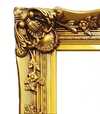
H24-GOLD €30
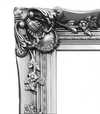
H24-SILVER €30
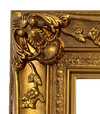
H36-GOLD €45
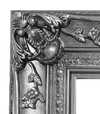
H36-SILVER €45
iii.
Técnica e Material
Canvas is printed with giclée inks and can be stretched or framed like a painting; paper comes flat, or framed behind glass.
A opção de vidro está disponível apenas para tamanhos inferiores a 110 cm
iv.
Acabamento
Placa de identificação, verniz e entrega.
Etiqueta de identificação
Detalhes da Placa de Bronze Gravada
This elegant plaque features the artist's name and the title of the artwork, finely engraved for a timeless presentation.
It is made from bronze with a refined, elegant finish. The text is precisely laser-engraved for a sharp and permanent result. Measuring 9x2 cm, the plaque is compact yet easy to read. It's built to be durable and scratch-resistant, offering a professional, museum-quality look. Mounting is simple thanks to the included adhesive backing.
Detalhes da Placa de Acrílico Transparente
The plaque includes essential engraved details such as the artist's name, the title of the artwork, the date it was created, the type of media used-like oil on canvas or watercolor-a brief description of the piece, and a QR code that links to the complete artwork information.
It is crafted from clear acrylic, offering a sleek, modern appearance. The text is UV-engraved in black to ensure strong visual contrast. With a size of 10x15 cm, it ensures optimal readability. It comes equipped with two metal hooks for secure wall mounting. The plaque is designed to be weather-resistant, making it suitable for various environments, and it includes interactive features that work seamlessly with smartphone scanning.
Detalhes da Placa de Acrílico Preto
This elegant plaque includes engraved information such as the artist's name, the title of the artwork, the date it was created, the type of media used (like oil on canvas or watercolor), a short description of the artwork, and a QR code for quick access to more information.
The plaque itself is made from refined black acrylic with a premium finish. The text is laser-engraved in white for high contrast and readability. Its size is 10x15 cm, designed to be easy to read. It comes with two metal hooks for professional mounting. The design is sleek and fits any interior style. It is also weather-resistant and durable, with built-in digital integration for mobile compatibility.
Verniz de Proteção
Produção Urgente
Entrega mundial () em 2 semanas, em vez das 4/5 semanas padrão. (22 Novembro)
- Envio expresso gratuito para todo o mundo
- Tela de Linho de Alta Qualidade
- Seguro de transporte completo
- Garantia de Reembolso de Impostos Alfandegários
- Garantia de Fidelidade Cromática
- Política de Devolução em 100 Dias (Apenas para Defeitos)
- Garantia de reembolso de 100%
- Oferta de desconto por quantidade


Curiosidades e quiz de arte
Artigos Relacionados

25 Must-See Masterpieces at the National Gallery of Canada
Explore 25 iconic masterpieces from the National Gallery of Canada. Discover timeless art and curated decor at WikiOO.org.
Obras Relacionadas


