
 Vezi în context
 Trimite
 Distribuie
 Detalii
 Ghidul

 Descarcă
 Produse similare
 Radiografie
 Diaporama
 Statistici
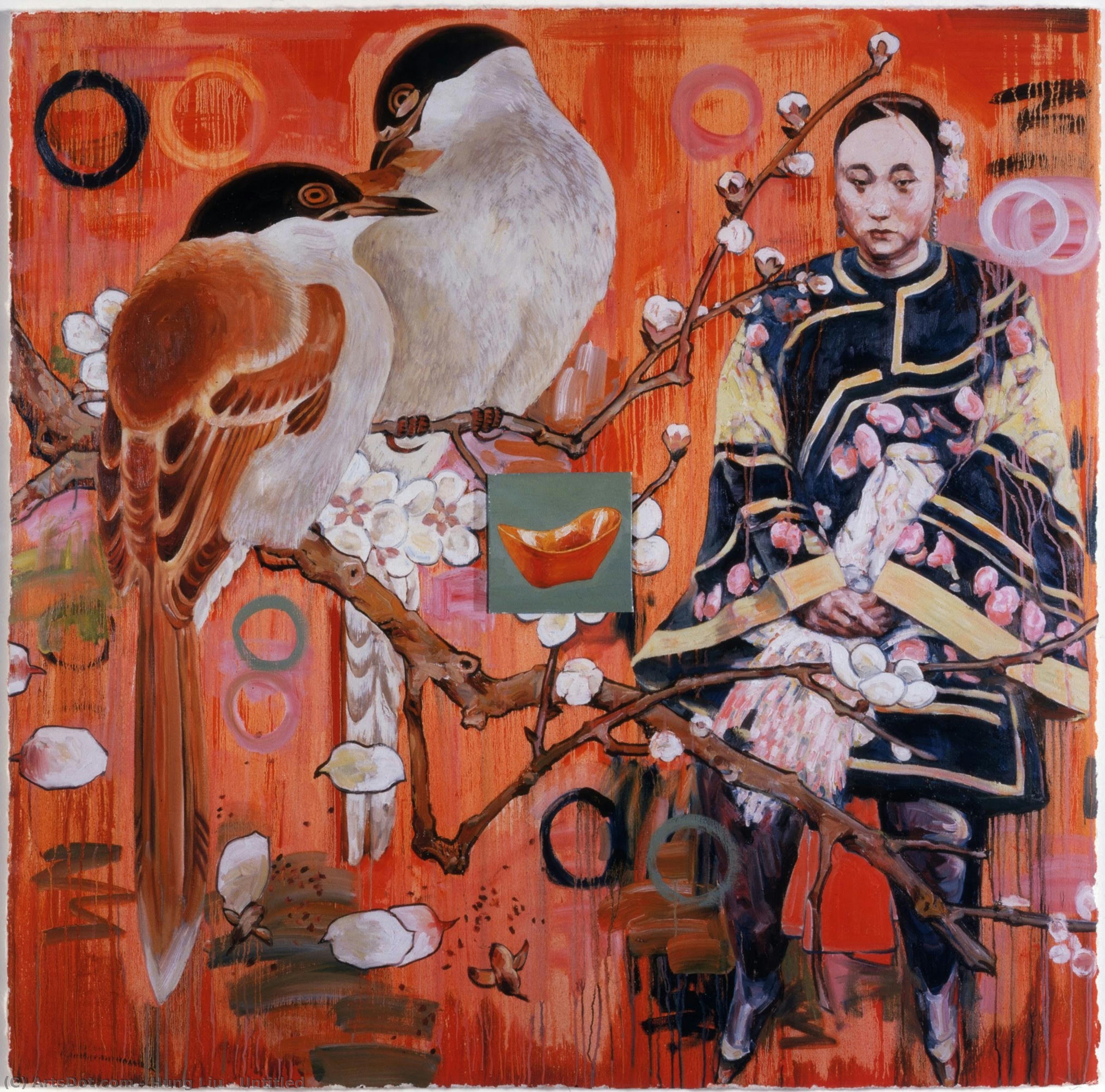
Untitled


 Citește mai mult
Lucrarea de artă afișată pe această pagină este protejată de legile privind drepturile de autor, ceea ce înseamnă că nu putem crea sau vinde în mod legal o reproducere identică. Această protecție este garantată prin acorduri internaționale, precum Convenția de la Berna și de legile naționale, inclusiv cele prevăzute de Legea dreptului de autor din S.U.A. – Titlul 17. Toate drepturile rezervate. Orice reproducere neautorizată este interzisă.
Această metodă respectă pe deplin reglementările privind drepturile de autor, deoarece nu implică copierea sau duplicarea operei protejate. În schimb, este o reinterpretare creativă – o pictură nouă, influențată de original, dar care nu este identică cu acesta.
Giclée / Imprimare artistică
Printuri giclée sau pe canvas de calitate muzeală, cu proces de producție rapid și opțiuni flexibile de finisare. ( Comandă pictură realizată manual Treci la imagine digitală)




P118B lei10

P118H lei10

P118W lei10

P438Z lei10

P508JH lei12

P508YH lei12

P805H lei10

P805Z lei10

P919BZ lei10

P919G lei10

P919XJ lei10

P959ZH lei10

P968JZ lei12

W106C lei8

W218G lei10

W218JH lei8

W218Y lei10

W307PJ lei10

W316G lei10

W316PJ lei8

W316Y lei10

W398PJ lei8

W4111J lei10

W500HY lei15

W500JH lei15

W692G lei12

W849H lei8

W940BG lei15

W953PJ lei8




Alegeți dintre dimensiunile noastre prestabilite, care respectă proporțiile originale ale operei de artă.

Introduceți lățimea și înălțimea de care aveți nevoie, pentru a se potrivi ramei sau peretelui dumneavoastră. O printare poate fi doar tăiată, niciodată extinsă dincolo de dimensiunea imaginii originale, astfel încât o dimensiune cu o formă diferită va pierde o parte din imagine. Vă trimitem o simulare digitală pentru aprobare înainte de a imprima orice. Imaginea afișată pe această pagină nu prezintă tăierea reală — doar simularea arată acest lucru.
Livrare în întreaga lume () în 2 săptămâni, în loc de cele 4/5 săptămâni standard. (23 Octombrie)

Livrare expres gratuită la nivel mondial

Pânză de in premium

Asigurare completă pentru transport

Garanție de rambursare a taxelor vamale

Garanția fidelității culorilor

Politica de retur în 100 de zile (doar pentru defecte)

Garanție de rambursare 100%

Reducere pentru comenzi multiple
 Opțiunea cu sticlă este disponibilă doar pentru dimensiuni de sub 110 cm

Untitled
Giclée / Imprimare artistică
Dimensiune reproducere
-


Preț total
lei 283
A Symphony of Resilience: Unveiling Hung Liu’s "Untitled"
In the quietude of Hung Liu’s 2004 masterpiece, "Untitled," one finds a profound dialogue between the delicate beauty of nature and the heavy echoes of human history. At first glance, the viewer is greeted by a vibrant, almost dreamlike tableau: two birds perched gracefully upon blossoming branches, set against a backdrop that feels both ethereal and grounded. The composition breathes with an Impressionistic vitality, where loose, sweeping brushstrokes allow colors to bleed into one another, creating a sense of movement as if a gentle breeze might stir the petals at any moment. Liu employs a masterful palette of ochre, crimson, and emerald green, utilizing oil paints to build layers of depth that capture the fleeting essence of a natural moment while simultaneously hinting at a much deeper, more melancholic narrative.
Beyond the surface level of botanical beauty, the painting serves as a poignant meditation on memory and displacement. To understand the emotional weight of this work, one must look to the artist’s own journey. Born in Changchun amidst the political tremors of 20th-century China, Liu’s life was shaped by the shadows of the Cultural Revolution and the personal trauma of her father’s imprisonment. This history of upheaval informs every stroke; there is a deliberate tension between the tranquil subject matter and an underlying sense of vulnerability. The birds, often utilized in Chinese iconography as symbols of hope and perseverance, stand as sentinels of strength amidst the blossoms of renewal. They represent the ability to find stability and growth even when the landscape of one's life has been irrevocably altered by revolution.
A Masterpiece for the Discerning Collector
For the art enthusiast or interior designer, "Untitled" offers a rare opportunity to possess a piece that transcends mere decoration. It is an artwork that demands contemplation, inviting the observer to look past the vibrant flora and engage with the themes of rebirth and endurance. The painting’s ability to harmonize bright, energetic tones with a subtle, soulful sadness makes it a versatile centerpiece for any sophisticated space. Whether placed in a sunlit gallery or a quiet study, the work radiates a quiet dignity that can anchor a room's aesthetic while providing a constant source of intellectual and emotional inspiration.
Investing in a high-quality reproduction of this work allows one to bring the legacy of Hung Liu into the home—a legacy defined by the courage to transform personal struggle into universal beauty. The interplay of light and texture within the piece ensures that it remains captivating from every angle, offering a window into a world where even the most turbulent histories can find expression through the timeless language of art. It is not merely a painting of birds and flowers; it is a testament to the enduring spirit of life itself.
Întrebări și răspunsuri
În ce etapă a evoluției lui Hung Liu se încadrează „Untitled”?
„Untitled” aparține perioadei Mature Period din cariera lui Hung Liu. Această clasificare corelează opera cu evoluția artistului.
Unde și în ce scop este recomandată piesa „Untitled”?
"Untitled" de Hung Liu este recomandată pentru Accent, ideal într-un Living Room. Utilizarea și spațiul împreună oferă îndrumări despre unde se potrivesc o reproducere.
Cum pot vizualiza "Untitled" de Hung Liu sub formă de diaporama?
Diaporama pentru "Untitled" poate fi vizualizată pe pagina Diapozitive a operei de artă.


Biografie artist
A Life Forged in Revolution: The Early Years and Artistic Awakening of Hung Liu
Hung Liu’s story is inextricably linked to the tumultuous history of 20th-century China. Born in Changchun in 1948, her childhood unfolded under the shadow of a newly established communist regime and the subsequent political upheavals that would define an era. The imprisonment of her father for his past affiliations with the Kuomintang cast a long shadow, instilling within young Hung a sensitivity to injustice and the fragility of truth – themes that would resonate profoundly throughout her artistic career. Her move to Beijing at age ten, attending the prestigious Experimental High School Attached to Beijing Normal University, offered access to education but also immersion in an environment increasingly controlled by Maoist ideology. This period culminated in the Cultural Revolution, a decade of social and political chaos during which Liu was sent, like millions of other young people, for “re-education” through labor. From 1968 to 1972, she lived and worked among villagers in Huairou, experiencing firsthand the hardships and resilience of rural life. This experience wasn’t merely a period of enforced hardship; it was a formative encounter with humanity at its most vulnerable, an encounter that would later fuel her artistic vision. It was during these years, despite restrictions, that she secretly began to sketch and photograph those around her, acts of quiet rebellion and nascent artistic expression. These early experiences instilled in Liu a deep empathy for the marginalized and a critical perspective on official narratives – qualities that became hallmarks of her work.Early Influences and Artistic Training
Initially, Hung Liu’s artistic training was firmly rooted in Socialist Realism—a highly controlled and academic approach to art prevalent during the Maoist era. This style emphasized idealized depictions of workers, peasants, and military personnel, serving as a tool for propaganda and promoting communist ideology. However, Liu quickly recognized the limitations of this rigid framework, finding it stifled her creative impulses and prevented her from exploring the complexities she observed in the world around her. She sought to break free from these constraints while still honoring the traditions of Chinese painting—a discipline she deeply admired. Her studies at the Central Academy of Fine Arts in Beijing provided a foundation in traditional techniques, including brushwork, composition, and color theory, but it was during this time that she began experimenting with new approaches, particularly the use of linseed oil to create translucent washes and layered effects. This technique would become a defining characteristic of her distinctive style, lending an ethereal quality to her paintings and allowing for a subtle blurring of forms—a visual metaphor for the passage of time and the elusive nature of memory.Weeping Realism: A Unique Artistic Language
Liu’s artistic style is instantly recognizable, a captivating blend of technical skill and emotional depth. Her work is often described as “weeping realism,” a term coined by her partner, Jeff Kelley, to capture the poignant beauty and melancholy that permeates her paintings. This style isn't about photographic accuracy; rather, it’s an attempt to evoke feeling through the careful manipulation of color, texture, and form. Liu began incorporating found photographs—primarily 19th and early 20th-century images of Chinese individuals—into her paintings in the mid-1980s. These weren't simply reproductions; they were starting points for a process of reimagining and recontextualization. She often focused on marginalized figures – prostitutes, laborers, refugees – those whose stories had been overlooked or silenced by official histories. Liu believed she was “giving a spirit” to these forgotten individuals, imbuing them with dignity and agency through her art. Her technique involved layering the photographic images beneath washes of linseed oil, creating a sense of depth and translucency that seemed to dissolve the boundaries between past and present. The drips and blurring effects weren’t accidental; they were deliberate choices intended to convey the erosion of memory and the inherent instability of historical narratives.Migration, Memory, and American Subjects
Hung Liu’s artistic journey took a significant turn when she immigrated to the United States in 1984 to attend the University of California, San Diego. This move marked a profound shift in her perspective and subject matter. Initially, she continued to work with Chinese historical photographs, but gradually began to explore themes related to displacement, migration, and the immigrant experience. Her series *American Exodus*, inspired by Dorothea Lange’s iconic photographs of the Dust Bowl era, demonstrates her ability to translate her concerns about hardship and social injustice to an American context. She was particularly drawn to images of displaced families—farmers, laborers, and migrants—whose stories resonated with her own experiences as a refugee from China. In recent years, Liu shifted her focus even further, turning her attention to the subjects of the American Dust Bowl, finding a landscape of overarching struggle and underlying humanity that for her was familiar terrain, having been raised in China during an era of epic revolution, tumult, and displacement. These paintings departed from her known fluid style in which drips and washes of linseed oil dissolve the photo-based images the way time erodes memory, she has have developed a kind of topographic realism in which the paint congeals around a webbing of colored lines, together enmeshed in a rich surface that belies the poverty of her subjects.Legacy and Recognition
Hung Liu’s work has been exhibited extensively throughout the United States and internationally, earning her critical acclaim and recognition as one of the most important contemporary artists working today. She received a National Endowment for the Arts Fellowship in painting, a Lifetime Achievement Award in Printmaking from the Southern Graphics Council International, and her retrospective *Summoning Ghosts: The Art of Hung Liu* at the Oakland Museum of California was a major success. Her paintings are held in numerous prestigious collections, including those of the San Francisco Museum of Modern Art, the Whitney Museum of American Art, and the Metropolitan Museum of Art. Liu’s legacy extends beyond her individual artworks; she challenged conventional notions of history painting, expanded the possibilities of photographic appropriation, and created a powerful visual language for exploring themes of memory, migration, and social justice. Her art continues to resonate with audiences today, offering a poignant reminder of the importance of remembering the past and honoring the stories of those who have been marginalized or forgotten.
Hung Liu
1948 - 2021 , China
Informații rapide
- Artistic Movement Or Style: Realism plângător
- Artists Or Movements Influenced By This Artist: ['Dorothea Lange']
- Artists Who Influenced This Artist: ['Socialist Realism']
- Date Of Birth: 1948-02-17
- Date Of Death: 2021-08-07
- Full Name: Hung Liu
- Nationality: Chineză-Americană
- Notable Artworks:
- Women Working
- Resident Alien
- Strange Fruit
- Place Of Birth: Changchun, China
Articole conexe

The Enduring Legacy of Oil on Canvas: Technique, History & Aesthetic Impact
Explore the rich history & techniques of oil painting – from Renaissance masters to Impressionism. Discover pigments, layering methods, and why this timeless medium endures. Expert insights for artists & art enthusiasts.

The Soul of Impressionism: Why Oil on Canvas Captures Eternal Light and Timeless Emotion
Discover the enchanting alchemy of Impressionism. Explore how the mastery of oil on canvas, through glazing and impasto, captures eternal light and emotion. Perfect for lovers of Monet and Van Gogh seeking the profound depth of hand-painted fine art.

Impresionism vs. Post-Impresionism: Revoluția Luminii și a Emoției în Arta de Clasă
Descoperiți distincția dintre Impresionism și Post-Impresionism. Explorați revoluția luminii și a emoției prin ochii maestrilor și transformați spațiile de lux cu reproducții de ulei pictate manual, autentice, oferite de experții WikiOO.org.

Paul Cézanne: Cele Mai Reprezentative 25 De Capodopere – Artă, Istorie și Decorațiuni Interioare
Descoperă cele mai frumoase 25 de capodopere Paul Cézanne! Explorează istoria, tehnicile și semnificația picturilor impresioniste iconice. Reproduceri artă de calitate muzeală & inspirație decor interioară pe WikiOO.org.

Oil on Canvas: A Historical & Technical Exploration of a Timeless Artistic Medium
Explore the rich history & enduring techniques of oil painting on canvas. Discover the science behind its longevity, conservation practices, and contemporary relevance. Expert insights for art enthusiasts.

