
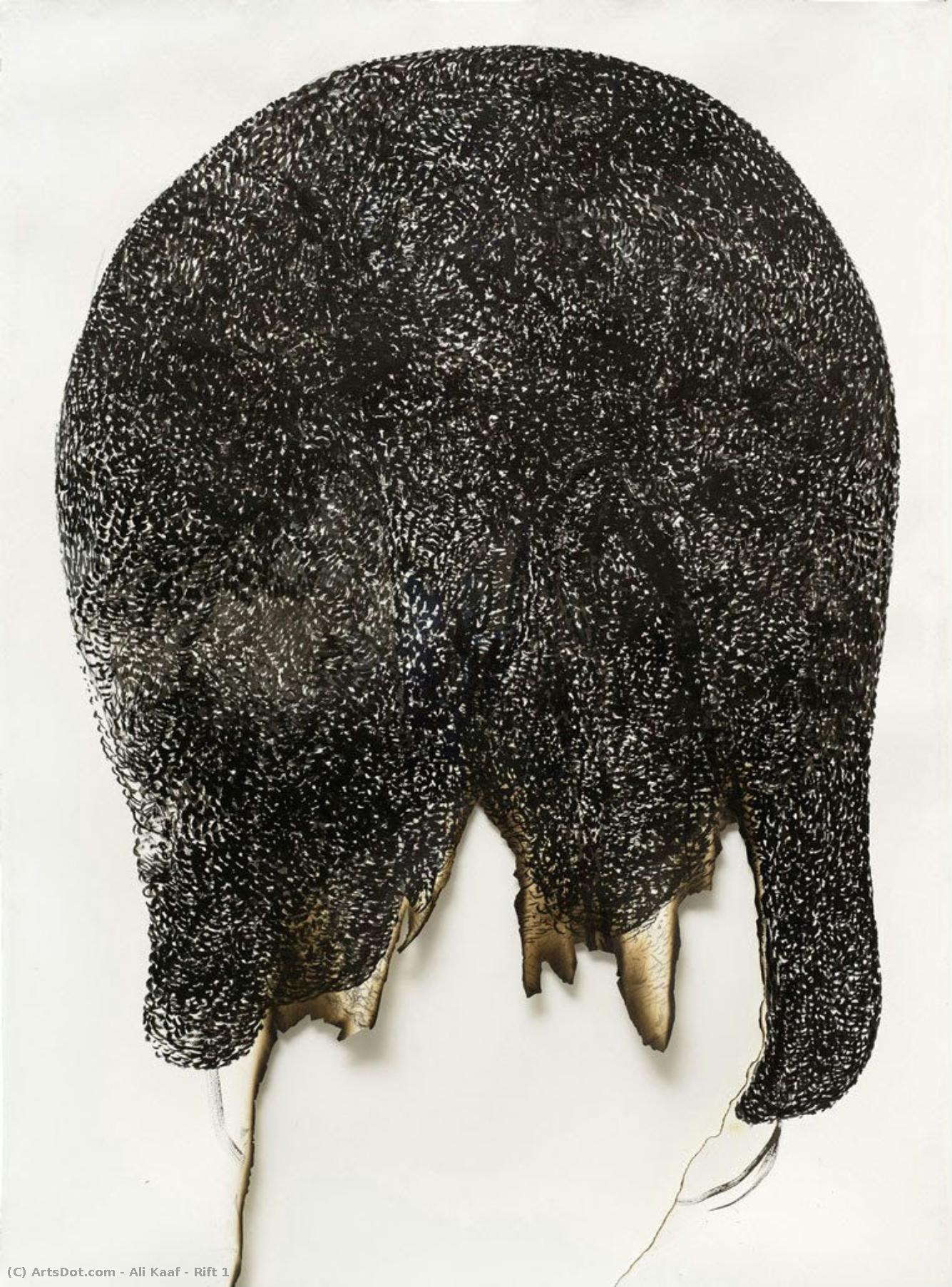
 效果预览
效果预览
 购买手绘画作
 分享
分享 分享
分享
 详情
详情

 下载
下载
 相似作品
相似作品 X射线
X射线 幻灯片播放
幻灯片播放Rift 1


 展开详情
展开详情




P118B $10

P118H $10

P118W $10

P438Z $10

P508JH $12

P508YH $12

P805H $10

P805Z $10

P919BZ $10

P919G $10

P919XJ $10

P959ZH $10

P968JZ $12

W106C $8

W218G $10

W218JH $8

W218Y $10

W307PJ $10

W316G $10

W316PJ $8

W316Y $10

W398PJ $8

W4111J $10

W500HY $15

W500JH $15

W692G $12

W849H $8

W940BG $15

W953PJ $8




从与原作比例一致的预设尺寸中进行选择。

您可以输入自定义尺寸,以适配特定的画框或空间。如果您选择的尺寸与原图比例不符,我们将对作品进行裁剪,或通过镜像填充/纯色填充边缘的方式来扩展图像。在开始制作之前,我们会向您发送一份数字效果图供您确认。
请注意,屏幕上的预览并不能反映实际的裁剪或扩展效果。只有效果图才能准确展示最终的构图。
虽然我们提供定制尺寸,但为了保持原图比例,我们建议您从预设列表中选择尺寸。


 玻璃选项仅适用于110厘米以下的尺寸。

Rift 1
艺术微喷/版画
复制品尺寸
-


最终总价
$ 61
相似艺术品


![Abstract Composition [triptych] — Vaclav Vytlacil, Abstract Expressionism](/media/artworks/images/thumbnails/e5/3d/e53db42ea02644b9a8e722f9d4dd3742.jpg)


艺术家简介
The Cartography of Absence: The Artistic Journey of Ali Kaaf
Born in 1977 amidst the vibrant, sun-drenched landscape of Oran, Algeria, Ali Kaaf has cultivated a creative identity that exists in the fertile spaces between borders. His life and work serve as a profound bridge connecting the cultural legacies of Beirut, Berlin, and Damascus. This nomadic intellectual journey began with his formative studies at the Institut des Beaux-Arts in Beirut, where he first began to absorb the rich, layered artistic traditions of Lebanon. However, it was his subsequent move to Europe that would fundamentally expand his aesthetic horizon. Studying at the Universität der Künste Berlin (UdK) under the mentorship of luminaries such as Rebecca Horn and Marwan Kassab-Bachi, Kaaf began to synthesize a unique visual language—one that marries the deep-seated philosophical inquiries of the East with the rigorous conceptual experimentation of the Western avant-garde.
Kaaf’s practice is far more than a mere exercise in aesthetics; it is an epistemological investigation into the very nature of presence and disappearance. Drawing inspiration from the raw materiality of Arte Povera and the spatial interventions of Lucio Fontana, his work avoids the trap of simple illustration. Instead, he utilizes a deliberate pictorial language to explore complex themes of architecture, migration, and identity. Through the use of paper, ink, and various textures, he creates surfaces that function as historical traces. In his hands, a void is never truly empty; rather, it is a space filled with the echoes of invisible violence, geopolitical shifts, and the profound weight of existential displacement. His work often mirrors the scars of history, using fragmentation and subtle color shifts to evoke the fragile state of being caught between worlds.
A Synthesis of Spirit and Materiality
At the heart of Kaaf’s oeuvre lies a deep-seated fascination with the intersection of Sufi mysticism and Islamic philosophy. This spiritual dimension provides a contemplative anchor to his more experimental, multidisciplinary endeavors. He seeks a delicate balance between the frantic pace of daily life and the stillness required for true meditation, a theme that resonates through his recurring motifs of emptiness and structural decay. His artistic process is deeply rooted in materiality; he prioritizes the physical properties of his mediums—the grain of paper, the fluidity of ink, the weight of glass—to convey ideas that words often fail to capture. This commitment to the tactile allows him to transform abstract forms into profound meditations on the human condition.
The versatility of Kaaf’s talent is perhaps most evident in his ability to traverse diverse artistic disciplines. He does not confine himself to a single medium, instead moving fluidly between:
- Drawing and Ink Work: Where the precision of line meets the unpredictability of fluid motion.
- Photography and Video Art: Utilizing time-based media to explore themes of memory and movement.
- Glass Sculpture and Sound Installations: Creating immersive, multi-sensory environments that engage the viewer's entire being.
Legacy and Global Recognition
The significance of Ali Kaaf’s contribution to contemporary art is increasingly recognized on the global stage, marked by prestigious exhibitions and academic contributions. One of his most profound achievements was the 2022 installation, I Am a Stranger: Twofold a Stranger, presented at the Museum of Islamic Art within Berlin's Pergamon Museum. This work, an evocative interpretation of the 8th-century Mshatta Façade, demonstrated his ability to engage in a contemporary dialogue with ancient Islamic heritage, making history palpable for a modern audience. His recognition by Germany’s Foreign Ministry through their Artist in Residence Program further underscores his role as a cultural diplomat, using art to navigate the complexities of modern identity.
Beyond the gallery walls, Kaaf has shared his insights through lectures and symposia at institutions ranging from the British Museum in London to Montana State University. His career is a testament to the power of the artist to act as a witness to change. By weaving together the threads of Algerian birth, Lebanese education, and German residency, Ali Kaaf has created a body of work that does not merely represent a person or a place, but rather captures the very essence of the contemporary, displaced soul seeking harmony within the fragments of a broken world.

Ali Kaaf
1977 - , Algeria
艺术家简介
- Artistic Movement Or Style: Abstract art
- Artists Or Movements Influenced By This Artist:
- Lucio Fontana
- Alberto Burri
- Artists Who Influenced This Artist:
- Marwan Kassab-Bachi
- Rebecca Horn
- Date Of Birth: 1977
- Full Name: Ali Kaaf
- Nationality: Syrian-German
- Notable Artworks:
- Rift 2
- Rift 1
- Place Of Birth: Oran, Algeria
相关文章

White on Canvas: 10 Masterpieces & Timeless Elegance for Your Home Decor
Explore 10 iconic white paintings by Monet, Whistler & Rothko! Discover the stories behind these serene masterpieces and their impact on art history. Find museum-quality reproductions for your home decor at .

几何抽象艺术十大杰作:定义现代家居装饰的经典之作
探索几何抽象艺术的十大杰作!康定斯基、蒙德里安等大师作品,色彩构成与非具象之美。WikiOO.org提供博物馆级艺术复制品,为您的家居带来现代艺术灵感。立即在线探索完整系列!

Kandinsky's Masterpieces: 25 Paintings That Define Abstract Art | WikiOO
Journey through Wassily Kandinsky's 25 most iconic abstract paintings. Explore his revolutionary use of color, form & spiritual expressionism. Find museum-quality Kandinsky reproductions and elevate your home decor with WikiOO.org. Discover all masterpieces on WikiOO.org!

卡济米尔·马列维奇:25幅颠覆艺术认知的杰作 | WikiOO
探索卡济米尔·马列维奇25幅至上主义杰作!深入了解抽象艺术的起源、黑色正方形背后的故事,以及如何用现代艺术提升您的家居装饰。WikiOO.org提供博物馆级艺术复制品,点亮您的空间。立即在线探索完整系列!

The Beauty of Less: A Sophisticated Guide to the Soul of Minimalist Art and Geometric Harmony
Discover the profound elegance of minimalist art. Explore how geometric abstraction and the beauty of reduction create serene, sophisticated spaces through our expert guide to finding soul and harmony in every line and shape.


