

- 89.0 x 69.0 cm


 实景预览

 分享
 分享
 详情
 指南


 下载作品
 相似作品
 X射线
 幻灯片播放
 问答
 统计数据
细致赏析
每一处细节, 手工绘制
画作局部放大图。我们的艺术家会根据您选择的尺寸,为您手工复刻每一处细节。
i.
场景的核心。
ii.
光影与背景
iii.
笔触细节
名画精品
藏品详情
Experience the melancholy decadence of Witold Wojtkiewicz's Dolls, a fin de siècle masterpiece evoking Symbolist mystery; discover this haunting vision today.
 展开全文
艺术家简介
Discover Witold Wojtkiewicz: Polish painter (1879-1909) blending Expressionism & Surrealism. Explore his dark, evocative works – a key figure in Polish art history.
The Melancholy Echoes of Witold Wojtkiewicz's Dolls
To stand before Dolls is to step into a meticulously constructed dreamscape steeped in the exquisite sorrow of the fin de siècle. This work by Witold Wojtkiewicz is not merely a depiction of a social gathering; it is an immersion into a fragile, decadent atmosphere, one where the veneer of polite society barely conceals profound emotional disquiet. The scene unfolds within what appears to be a bourgeois sitting room, rich with the muted tones and heavy drapery characteristic of that era’s upper-class interiors. Yet, beneath the surface calm—the resting black cat, the poised tea kettle—lies an undercurrent of palpable melancholy, reminiscent of the hazy, introspective spaces favored by French Symbolists.
A Study in Artificiality: The Doll Motif
What immediately arrests the viewer's gaze is the nature of the figures themselves. They seem less like flesh-and-blood individuals and more like exquisitely crafted figurines or dolls. This artificial quality is central to the painting’s narrative weight. Wojtkiewicz masterfully juxtaposes these seemingly inanimate, yet strangely present, forms against the backdrop of supposed human interaction. The titular dolls in the lower register are particularly potent symbols; they appear artificially animated, feigning a mirth that rings hollow. They suggest a profound commentary on emotional performance—the masks we wear for society.
Symbolism and the Weight of Memory
The painting pulses with layers of allusion, inviting deep contemplation from the viewer. The description hints at connections to the vibrant cultural currents of Young Poland, perhaps even echoing the presence of the Pareński family, whose friendship so deeply marked the artist’s life. These figures, whether muses or mere dolls, become vessels for unexpressed emotion—the joys and traumas that defined Wojtkiewicz's own volatile spirit. The composition is thus a poignant meditation on idealized relationships, lost affections, and the gap between outward appearance and inner turmoil.
Technique and Emotional Resonance
Executed in oil on canvas, this piece showcases a technical brilliance matched only by its emotional depth. Wojtkiewicz’s ability to create an atmosphere—a palpable sense of decadence and wistful boredom—is breathtaking. The division between the upper scene of languid women and the lower tableau of dolls creates a visual dialogue: is the artificiality in the dolls merely reflecting the emotional distance among the seated ladies? For collectors and admirers of decorative art, this piece offers more than mere ornamentation; it provides an intellectual anchor to a period of intense artistic introspection. Owning a reproduction allows one to bring home not just a painting, but a carefully curated echo of fin de siècle yearning.
常见问题与解答
Witold Wojtkiewicz 的《Dolls》 创作于哪个历史时期?
“Dolls”创作于19th Century时期。
Witold Wojtkiewicz 的《Dolls》 的构图以什么颜色为主导?
在“Dolls”中,最引人注目的颜色是Espresso (#5a4b3b)。了解作品的主色调有助于将其与室内装饰进行搭配。
"Dolls" 的作者是谁?属于哪种艺术流派?
Witold Wojtkiewicz 在 Symbolism 运动时期创作了《Dolls》。

Witold Wojtkiewicz
1879 - 1909, Poland
艺术家
艺术家简介
The Melancholy Vision of Witold Wojtkiewicz
In the twilight of the nineteenth century, amidst the vibrant yet turbulent atmosphere of Warsaw, a singular artistic voice emerged that would forever haunt the corridors of Polish art history. Witold Wojtkiewicz, born in 1879, was an artist whose brief life—spanning only thirty years—served as a profound bridge between the fading echoes of Symbolism and the burgeoning, fractured realities of Expressionism and Surrealism. Coming from a large family of eleven children, Witold’s path was not one of easy comfort; his father, a bank cashier, initially stood in opposition to his son's artistic ambitions. Yet, driven by an innate, restless creativity, Wojtkiewicz pursued his calling through the Warsaw school of drawing and later the prestigious Kraków Academy of Fine Arts, where he studied under masters like Leon Wyczółkowski.
His early years were marked by a sharp, satirical wit, often finding expression through his work as an illustrator for various periodicals. Under the pseudonym "Count Voitek," he contributed to the satirical magazine Liberum Veto and engaged deeply with the bohemian spirit of the Zielony Balonik cabaret. This period of his life was characterized by a certain playful, almost burlesque energy, reminiscent of the graphic prowess of Toulouse-Lautrec. However, beneath this surface of caricature and social commentary lay a much deeper, more unsettling preoccupation with the human condition. As he matured, his work began to shed its purely illustrative skin, evolving into something far more introspective and psychologically complex.
A World of Dolls, Masks, and Metaphysics
To step into a painting by Wojtkiewicz is to enter a dreamscape where the boundaries between childhood innocence and adult decay are perilously thin. He possessed a rare, almost supernatural ability to portray an imaginary world as tangibly real, often utilizing motifs that felt both whimsical and deeply unsettling. His canvases frequently featured children, yet these were not the idealized figures of classical tradition; instead, they appeared as small, solemn actors in a cosmic drama, often accompanied by masks, puppets, and jesters. These symbols served as vessels for his exploration of the ephemeral nature of existence and the masks we wear to navigate the complexities of reality.
As his health declined due to an incurable heart defect, a profound shift occurred in his aesthetic language. The lightheartedness of his early illustrations gave way to a much darker, more somber palette. His later works began to grapple with what scholars often call the "metaphysics of sex" and the existential weight of human suffering. There is a haunting, spectral quality to his compositions, where figures seem suspended in a state of eternal waiting or quiet mourning. This transition toward a more profound, symbolic depth solidified his reputation as a precursor to Surrealism, as he moved away from depicting external events—such as his sketches of the 1905 Warsaw Uprising—toward capturing the internal, often fractured, landscape of the subconscious.
Legacy and the Echo of a Shortened Life
Though Witold Wojtkiewicz passed away in 1909, leaving behind a legacy that was only fully recognized through major retrospectives decades later, his influence remains indelible. He was an artist who refused to be tethered to a single movement, instead creating a private mythology that resonated with the anxieties of the fin de siècle era. His ability to blend the grotesque with the lyrical, and the satirical with the tragic, allowed him to touch upon universal truths about the fragility of life and the persistence of memory.
The historical significance of his work lies in its prophetic nature. By exploring themes of alienation, identity, and the uncanny, he anticipated the psychological depth that would define much of twentieth-century modernism. Today, when we look upon his works—whether they be his delicate watercolors or his heavy, emotive oils—we see more than just the products of a talented painter; we see the diary of a soul that sought to find meaning in the shadows. His life, though tragically short, remains a testament to the power of art to transform personal suffering into a timeless, universal vision.
关于 Witold Wojtkiewicz 的简介
- Full Name: Paul Klee
- Nationality: Swiss-German
- Date Of Birth: 1879
- Date Of Death: 1909
- Place Of Birth: Warsaw, Poland
- Notable Artworks:
- Angelus Novus
- Senecio
- Twittering Machine
- Artistic Movement Or Style: Expressionism, Surrealism
- Artists Who Influenced This Artist:
- Leonardo da Vinci
- Wassily Kandinsky
- Artists Or Movements Influenced By This Artist:
- Bauhaus
- Surrealism
手工油画复制品
定制绘画 为您定制
手工油画复制品
由我们的艺术家按需定制,为您提供您所选尺寸及画框的布面手工油画。 ( 切换至版画销售渠道 切换至数字图像销售渠道)

您的佣金

Dolls
复制品材质
复刻品尺寸
-

精选资深艺术家
更丰富的细节、更精湛的工艺以及更充裕的制作时间
-

复制画装裱选项
-
-
对于任何边长超过 105 厘米(约 41 英寸)的艺术品或复制品,画框将以拆解后的组件形式发货。此方法可确保安全送达并防止运输过程中的损坏。
需由专业人员组装 —— 本产品不适用于 DIY 操作。
该组件必须由经验丰富的专业装裱师进行组装及画布绷装,过程中需使用木工胶(不随附)、画布绷边钳以及夹具,以确保在胶水干燥期间保持内框方正。组装不当或画布张力不均可能会对艺术品造成永久性损坏,且此类情况不在我们的保修范围之内。
 对于任何边长超过 105 厘米(约 41 英寸)的艺术品或复制品,画框将以拆解后的组件形式发货。此方法可确保安全送达并防止运输过程中的损坏。
包含所有实木条,尺寸精确,便于组装。
使用随附的螺丝进行组装,另需准备用于角部连接的木工胶(本品不含木工胶),请由您的装裱师自行准备。
需另备专业工具(本套件不含):画布绷紧钳以及用于在胶水干燥过程中保持木条方正的夹具。
重要提示:
角部连接处需要使用木工胶,边框条必须使用夹具固定直至胶水完全干透,且在组装好的框架上绷紧画布需要用到画布拉伸钳。以上工具均不包含在套装内。请在订购此尺寸前,预先联系经验丰富的专业装裱师。

展品铭牌
-
-

保护性清漆
光泽清漆(提亮色彩,防光防潮)
-

定制我的艺术品
定制化示例:替换面部为客户照片;添加宠物(例如,将猫替换为狗);在背景中加入隐藏信息;更改背景风景或元素。
-

加急
全球配送()仅需 3-4 周即可送达,无需等待标准时效的 5 周。(20 November)。品质始终如一,绝不妥协。
-
极速达
全球配送(),预计 5 周送达。(27 November)。
已包含
最终结算价
¥ 1773
玻璃选项仅适用于110厘米以下的尺寸。
i.
尺寸
原尺寸为 89.0 x 69.0 cm。随心适配您的墙面:所有尺寸均保持其原有比例。
您可以从与原作比例一致的预设尺寸中进行选择。

请输入您需要的宽度和高度,以适配您的画框或墙面。由于作品为手工绘制,若选择不同比例的尺寸,艺术家可能会在画面边缘多画一些或稍作裁剪 —— 由您决定。在开始绘画之前,我们会为您发送一份数字效果图供您确认。本页面上展示的图片并非最终实物 —— 只有效果图才能反映真实结果。
ii.
画框
画框的绘制比例与原作宽度完全一致。
带框

白色边缘 ¥1

边缘晕染效果 ¥1

延展式 ¥1

P118B ¥10

P118H ¥10

P118W ¥10

P438Z ¥10

P508JH ¥12

P508YH ¥12

P805H ¥10

P805Z ¥10

P919BZ ¥10

P919G ¥10

P919XJ ¥10

P959ZH ¥10

P968JZ ¥12

W106C ¥8

W218G ¥10

W218JH ¥8

W218Y ¥10

W307PJ ¥10

W316G ¥10

W316PJ ¥8

W316Y ¥10

W398PJ ¥8

W4111J ¥10

W500HY ¥15

W500JH ¥15

W692G ¥12

W849H ¥8

W940BG ¥15

W953PJ ¥8
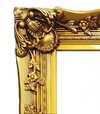
H24-GOLD ¥30
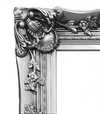
H24-SILVER ¥30
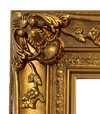
H36-GOLD ¥45

H36-SILVER ¥45
iii.
将其收入囊中
每一幅手绘作品均可为您量身定制。
iv.
完成状态
铭牌、光油与物流。
展品铭牌
青铜铭牌雕刻详情
This elegant plaque features the artist's name and the title of the artwork, finely engraved for a timeless presentation.
It is made from bronze with a refined, elegant finish. The text is precisely laser-engraved for a sharp and permanent result. Measuring 9x2 cm, the plaque is compact yet easy to read. It's built to be durable and scratch-resistant, offering a professional, museum-quality look. Mounting is simple thanks to the included adhesive backing.
透明亚克力铭牌详情
The plaque includes essential engraved details such as the artist's name, the title of the artwork, the date it was created, the type of media used-like oil on canvas or watercolor-a brief description of the piece, and a QR code that links to the complete artwork information.
It is crafted from clear acrylic, offering a sleek, modern appearance. The text is UV-engraved in black to ensure strong visual contrast. With a size of 10x15 cm, it ensures optimal readability. It comes equipped with two metal hooks for secure wall mounting. The plaque is designed to be weather-resistant, making it suitable for various environments, and it includes interactive features that work seamlessly with smartphone scanning.
黑色亚克力铭牌详情
This elegant plaque includes engraved information such as the artist's name, the title of the artwork, the date it was created, the type of media used (like oil on canvas or watercolor), a short description of the artwork, and a QR code for quick access to more information.
The plaque itself is made from refined black acrylic with a premium finish. The text is laser-engraved in white for high contrast and readability. Its size is 10x15 cm, designed to be easy to read. It comes with two metal hooks for professional mounting. The design is sleek and fits any interior style. It is also weather-resistant and durable, with built-in digital integration for mobile compatibility.
保护性清漆
加急制作服务
全球配送()仅需 3-4 周即可送达,无需等待标准时效的 5 周。(20 November)。品质绝不妥协。
- 全球免运费特快专递服务
- 优质亚麻画布
- 全程运输保险
- 关税退款保证
- 色彩精准还原保证
- 100天退货保障(仅限制造缺陷)
- 100% 退款保证
- 多件购买优惠


速览与艺术小测验
相关文章

Drama vs. Delight: Distinguishing Baroque and Rococo Art
Master the differences between Baroque drama and Rococo grace with our expert art guide. Discover the evolution of European aesthetics now.
相似作品


