The Dogon People: Masters of Wood Sculpture and Ancestral Beliefs
The Dogon people, hailing from the central plateau region of Mali in West Africa, stand apart as a cultural enigma celebrated for their distinctive artistic traditions—primarily intricate wood sculptures and mesmerizing masks—rooted deeply within complex cosmological beliefs. Their language, Dogon, is considered an independent branch of the Niger-Congo family, signifying its divergence from other African languages and fostering a unique linguistic identity. Beyond mere aesthetics, Dogon art serves as a conduit for conveying profound spiritual narratives and preserving ancestral knowledge passed down through generations.- Origins & Geography: The Dogon inhabit a mountainous landscape characterized by dramatic canyons and fertile valleys, shaping their worldview and artistic expression. Their traditional villages are meticulously organized around sacred groves—the “petri”—which serve as focal points for communal rituals and symbolize the connection between humans and the cosmos.
- Religious Beliefs & Cosmology: Dogon religion centers on a hierarchical cosmology depicting nine celestial spheres inhabited by spirits, each influencing earthly affairs. These beliefs permeate every aspect of Dogon life, informing their artistic representations—particularly masks—which embody ancestral figures and depict mythological narratives.
- Sculpture Technique: Dogon sculpture is renowned for its remarkable precision and stylistic conventions. Artists employ a technique known as “petri-carving,” utilizing tools crafted from obsidian to sculpt stylized figures from acacia wood. These sculptures are characterized by geometric abstraction, reflecting the Dogon’s understanding of spatial relationships and mirroring the celestial spheres.
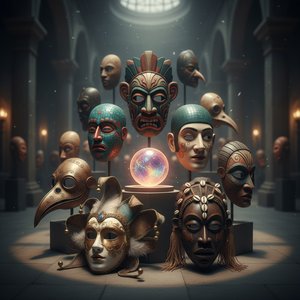
- Mask Dances: Mask dances constitute a cornerstone of Dogon ritual life. Masks depict ancestral spirits and embody symbolic representations of cosmic forces—a testament to the Dogon's ability to translate abstract concepts into tangible forms. The dances themselves are elaborate performances that aim to invoke the spirits’ presence and reaffirm social cohesion.
- Contemporary Significance: While facing challenges from modernization, Dogon culture continues to thrive thanks to tourism and scholarly interest. Museums worldwide showcase Dogon art, fostering appreciation for its artistic merit and promoting understanding of its spiritual heritage. The Dogon people's contribution to African art history is undeniable, securing their place as visionary artists who have captivated audiences globally.
Notable Achievements & Artistic Influences
The Dogon’s artistic legacy extends beyond individual sculptures and masks; it embodies a holistic worldview that informs every creative endeavor. Their geometric abstraction—evident in both sculpture and textile designs—anticipates modernist tendencies while simultaneously reflecting the Dogon's profound engagement with celestial observation. The Gomintogo mask, considered one of the most iconic representations of Dogon spirituality, exemplifies the meticulous craftsmanship and symbolic depth characteristic of Dogon art. Its intricate carvings convey narratives about creation myths and ancestral lineages, demonstrating the power of visual imagery to communicate complex ideas.- The Gomintogo Mask: This mask embodies a central Dogon belief—the concept of “Tigil,” representing the cyclical nature of time and existence.
- Influence on Modern Art: Dogon art has inspired artists globally, notably Yves Saint Laurent who incorporated Dogon textile patterns into his haute couture collections.
Exploring Dogon Art Further
For a deeper understanding of Dogon culture and artistic traditions, consider visiting the Visionary Artists / Dogon Style exhibition at the National Museum of African Art in Washington D.C., or delving into Smarthistory’s analysis of “Dogon Couple.” These resources offer valuable insights into Dogon cosmology, sculpture technique, and the enduring significance of ancestral beliefs. Furthermore, exploring museums like the Museum of the Galician People and Peoples History Museum provides comparative perspectives on artistic expression within diverse cultural contexts.问答详情
我可以在虚拟博物馆中参观Dogon people的作品吗?
Dogon people 的 3D 艺术展厅 可以在虚拟三维展厅中欣赏到艺术家的作品。
在哪里可以浏览 Dogon people 的全部作品?
您可以在 Dogon people 的 全部作品 页面上浏览其在 本站 上的所有作品。
在哪里可以按时间顺序欣赏 Dogon people 的作品?
Dogon people 的作品时间轴现已上线:在艺术家的 作品时间轴 页面中,所有作品均按创作日期排序。