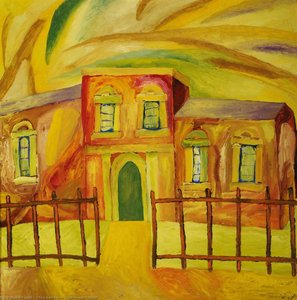
Mike Lawson: A World of Subverted Realities
Michael Lawson, born in 1944, isn’t merely a painter; he's an architect of dreams, a conjurer of unsettling beauty. His work, often described as allegorical and deeply rooted in the traditions of portraiture, transcends simple representation to deliver potent social commentary and psychological explorations. From his formative years studying at Liverpool College of Art and the Royal College of Art, Lawson’s artistic trajectory was shaped by a desire to move beyond conventional modes of expression, seeking instead to create images that resonated with both familiarity and profound strangeness. His early influences were diverse – from the meticulous detail of Renaissance portraiture to the surrealist explorations of artists like Dalí and Magritte – all coalescing into a uniquely personal visual language.Early Life and Artistic Foundations
Lawson’s childhood was marked by a deep appreciation for art, nurtured through study of magazines and books dedicated to musical instruments and equipment. This early fascination with the mechanics and aesthetics of creation would later inform his own artistic practice, imbuing his paintings with a meticulous attention to detail and a subtle understanding of the tools of representation. He worked diligently during his youth, earning money through odd jobs – a testament to his determination and grounding in reality. This experience, coupled with his formal art training, provided him with a unique perspective, one that he would later utilize to challenge conventional notions of portraiture and social commentary. His time at the University of Washington further broadened his artistic horizons, exposing him to American influences and solidifying his commitment to pushing the boundaries of traditional painting.The Charles Laughton & High Table Portraits
Lawson’s most recognizable body of work centers around his series of portraits depicting iconic figures from British history and culture – a deliberate homage to the grandeur and formality of the “High Table” gatherings that defined aristocratic society. These aren't straightforward likenesses; rather, they are meticulously constructed tableaux vivant, populated by characters both familiar and obscure. The most celebrated examples include his arresting depictions of Charles Laughton as Falstaff and a group portrait of British politicians – a pointed commentary on power, authority, and the often-absurd nature of political theatre. Lawson’s technique is characterized by an almost photographic realism combined with deliberately unsettling details: distorted features, exaggerated poses, and symbolic props that hint at deeper meanings. The portraits are not simply representations; they're carefully staged performances, inviting viewers to question their assumptions about identity, history, and the very nature of representation.Allegorical Visions and Symbolic Landscapes
Beyond his portraiture series, Lawson’s oeuvre encompasses a rich tapestry of allegorical scenes and evocative landscapes. Works like “Birds in a Forest” and "Circus" demonstrate his ability to infuse seemingly simple subjects with layers of symbolic meaning. His allegories frequently draw upon classical mythology and literary tradition, employing visual metaphors to explore themes of mortality, desire, and the human condition. Lawson’s use of color is particularly striking – often employing bold, saturated hues juxtaposed against muted tones to create a sense of tension and unease. His landscapes are equally compelling, rendered with a meticulous attention to detail that captures both the beauty and the inherent strangeness of the natural world.Legacy and Influence
Mike Lawson’s work has garnered significant critical acclaim and is held in collections worldwide, including at the Victoria Gallery & Museum in Liverpool. His influence extends beyond the realm of fine art, with his subversive approach to portraiture inspiring a new generation of artists who are challenging traditional notions of representation and exploring the complexities of contemporary identity. His exploration of themes such as power, authority, and social commentary continues to resonate today, reminding us that art can be both a mirror reflecting society’s flaws and a window offering glimpses into alternative realities. The Mingering Mike project, which examined his work through a lens of subversive portraiture and contemporary identity, further cemented his place as a significant figure in the British art scene. Lawson's legacy lies not just in his stunning visual creations but also in his willingness to question, provoke, and ultimately, transform our understanding of what it means to see.问答详情
在哪里可以参观Mike Lawson作品的3D虚拟展厅?
Mike Lawson 的 3D 艺术展厅 可以在虚拟三维展厅中欣赏到艺术家的作品。
是否有Mike Lawson作品的时间线?
Mike Lawson 的作品时间轴现已上线:在艺术家的 作品时间轴 页面中,所有作品均按创作日期排序。
如何按特定色调查找 Mike Lawson 的作品?
按色调浏览 页面按色调将 Mike Lawson 的艺术作品进行了分类。