
Modica, Sicily (Edward Lear)


Giclée-Reproduktion: 27 x 38 cm für €39
Handgemalte Ölversion, Größen ab €219
- Kostenloser weltweiter Versand in 3 bis 4 Wochen
- Gerollte Drucke mit einer Lieferzeit von 3 bis 4 Wochen
- 100 Tage Rückgaberecht, Geld-zurück-Garantie
- Bewertet mit 4.9/5 Sternen von 241 Kunden auf ArtShopReviews.com
 Vorschau anzeigen

 Versenden
 Teilen
 Details anzeigen
 Datenblatt


 Herunterladen
 Ähnliche Objekte
 Röntgenaufnahme
 Diashow
 Fragen & Antworten

 Statistiken
Genauer hinsehen
Jedes Detail, getreu reproduziert
Drei vergrößerte Details des Gemäldes. Unser Giclée-Druck bewahrt jedes dieser Details in der von Ihnen gewählten Größe.
i.
Das Herzstück der Szene.
ii.
Licht und Hintergrund
iii.
Die Pinselführung.
Das Gemälde
Modica, Sicily (Edward Lear): Beschreibung
A watercolor sketch of a sunlit plaza and bridge in Sicily, rendered with loose, sketchy lines and muted earthy tones on textured paper.
 Vollständiger Artikel zu Modica, Sicily
Edward Lear: Biografie
Viktorianischer Künstler und Dichter skurriler Nonsens-Verse und zarter Aquarelllandschaften.
Identification of Modica, Sicily by Edward Lear
In this watercolor sketch, Edward Lear turns his attention to the specific topography of Modica, Sicily. The work is a landscape depiction that seeks to capture the essence of the town's architecture and its unique setting. Rather than a formal study, it presents a loose, observational view of the clustered buildings and the central plaza that defines the settlement.
The subject matter focuses on the intersection of human habitation and the natural landscape. Lear has rendered the townscape with a sense of quiet observation, focusing on how the structures sit within the Sicilian terrain. It is a direct record of a specific place, capturing the way the buildings gather around the waterway and the bridge that spans it.
Composition and Visual Elements
The arrangement of this scene is centered upon the town's plaza, creating a focal point for the viewer's eye. Buildings cluster around this central space, their forms acting as a frame that contains the view and directs attention inward. A bridge spans a waterway, providing a steady horizontal element that anchors the middle ground and guides the eye across the composition.
In the background, a large rock formation rises to dominate the skyline, lending a sense of scale to the architecture below. Throughout the plaza, small figures are scattered, their presence providing a subtle sense of activity within the townscape. These figures suggest the quiet rhythm of everyday life without overwhelming the structural elements of the landscape.
Technique and Artistic Materials
In this work, Lear employs watercolor on paper to capture the specific atmosphere of the Sicilian landscape. He relies heavily on a wet-on-wet technique, a method that allows the pigments to bleed and blend into one another directly on the surface. This approach creates a soft, fluid quality where the sky and the water seem to merge through natural diffusion. It is a delicate process that requires a certain level of spontaneity to manage how the colors interact before they dry.
The artist's hand is visible through loose brushwork and sketching that define the architecture and the rugged terrain. Rather than seeking rigid precision, the lines suggest form and texture, providing a sense of immediacy to the scene. He utilizes watercolor paints alongside ink to achieve this layered effect. The ink likely assists in the more structural aspects of the sketch, while the washes of color provide the necessary depth and atmospheric softness.
Style and Visual Impression
This watercolor sketch captures the essence of Modica, Sicily, through a style characteristic of Edward Lear's travel sketches. It moves between the precision of a topographical record and a more whimsical, slightly naive approach to the landscape. There is a certain lightness here, a sense of the artist capturing a moment of observation rather than attempting a heavy, dramatic composition. The work sits comfortably within the realm of Romantic landscape painting, yet it avoids the grandiosity often associated with the movement, opting instead for a quiet, observational intimacy.
The impression is one of tranquility and nostalgia. By employing a loose, sketchy line to define the buildings and the central plaza, the artist suggests form and texture without the need for rigid, exacting detail. This approach allows the viewer to feel the atmosphere of the Sicilian townscape rather than just seeing its geometry. The figures scattered throughout the plaza add a subtle layer of everyday life, grounding the scene in a sense of lived experience. It is a quiet study of a specific place, rendered with a gentle, contemplative touch.
Color, Light, and Texture
The palette here is quiet, leaning into muted and earthy tones that reflect the natural stone of the Sicilian landscape. Browns, tans, and grays dominate the scene, grounding the architecture and the rugged rock formations in a sense of permanence. These colors are applied in soft washes, which allow the pigment to bleed and blend, creating an atmospheric effect that suggests the hazy quality of the Mediterranean air.
Light enters the composition as a diffused daylight, avoiding harsh shadows or sharp contrasts. This gentle illumination settles over the plaza and the buildings, highlighting the forms without overwhelming them. It is a subtle light, the kind that feels captured in a moment of stillness. The watercolor technique leaves a tactile quality on the surface, where visible brushstrokes and the natural grain of the paper provide a subtle, organic texture to the buildings and the sky.
Perspective and Depth
In this watercolor, Lear achieves a sense of spatial recession through a careful application of atmospheric perspective. As the eye moves toward the background, the distant rock formations and the upper reaches of the townscape appear paler and lose their fine detail. This softening of the landscape allows the viewer to perceive the vast scale of the Sicilian terrain without the need for rigid, mathematical precision. It is a subtle, observational method that mirrors the way the eye naturally perceives light and air over a distance.
The structural depth of the plaza is established through the use of linear perspective, found in the receding lines of the clustered buildings and the streets that lead toward the center. This is further reinforced by the way forms overlap one another, creating distinct layers of space from the figures in the foreground to the architecture in the midground. By varying the intensity of his color washes, Lear ensures that the closer elements maintain a greater presence, while the more distant structures recede into a soft, muted haze.
Related Works by Edward Lear
To understand the landscape sensibilities present in this Sicilian scene, one might look toward Lear's other explorations of the Mediterranean. His 1847 watercolor, Quarries of Syracuse, captures a similar sense of rugged grandeur along the Sicilian coastline. During that same period, his interest in the island's topography led him to produce oil sketches of Mount Etna, which emphasize the scale of the volcano through bold brushwork and the characteristic haze of the region.
His travels often moved between the natural world and the structured presence of civilization. This is evident in his landscape painting, View Of Reggio And The Straits Of Messina, which captures a panoramic vista of a coastal city. Similarly, A View of the Roman Campagna, a Villa and Aqueduct in the Distance, reflects his ability to document the specific light and ancient terrain of the Italian countryside. These works demonstrate a consistent interest in how architecture and topography interact within the Mediterranean light.
Fragen & Antworten
Ist diese Reproduktion von Modica, Sicily handgemalt oder ein Druck?
Druck: Modica, Sicily wird als Giclée-Druck auf Baumwollkanvas oder auf Epson Archiv-Leinwandpapier reproduziert.
Welche Größe sollte ich für Modica, Sicily wählen?
Die Größen reichen von 26.5 x 37.8 cm (€39) bis 170.9 x 243.6 cm (€323); die Tabelle auf dieser Seite listet die wichtigsten Formate und deren Preise auf.
Wie lange dauert die Lieferung?
Ein gerollter Druck wird kostenlos per Standardpost versendet und trifft in 3 bis 4 Wochen bei Ihnen ein; ein auf Keilrahmen gespannter oder gerahmter Druck benötigt 4 bis 5 Wochen. Ein Versand per Expresskurier ist nur mit der auf dieser Seite angebotenen kostenpflichtigen Express-Versandoption möglich. Sie können den Artikel innerhalb von 100 Tagen ohne Angabe von Gründen gegen eine vollständige Rückerstattung zurückgeben.
Welches Medium hat Edward Lear für Modica, Sicily verwendet?
Watercolor

Edward Lear
1812 - 1888, Vereinigtes Königreich
Der Maler
Über Edward Lear: Leben und Werke
Kurzinfos zu Edward Lear
- Bemerkenswerte Werke:
- The Owl and the Pussycat
- The Dong with the Luminous Nose
- Illustrationen der Papageienfamilie
- Geburtsdatum: 12. Mai 1812
- Geburtsort: London, Vereinigtes Königreich
- Künstlerische Richtung: Viktorianische Kunst, Nonsense-Literatur
- Nationalität: Britisch
- Sterbedatum: 1888
- Vollständiger Name: Edward Lear


Giclée-Reproduktion
Als Giclée-Reproduktion anfertigen lassen für Sie
Giclée-Reproduktion
Giclée- oder Leinwanddruck in Museumsqualität mit schneller Produktion und flexiblen Veredelungsoptionen. ( Ölgemälde-Version Digitale Ansicht
)

Ihr Auftrag

Modica, Sicily
Art der Reproduktion
Format der Reproduktion
-

Rahmen für Reproduktionen
-
-
Bei Kunstwerken oder Reproduktionen, die an einer Seite größer als 105 cm (ca. 41 Zoll) sind, wird der Rahmen zerlegt als Bausatz geliefert. Diese Methode gewährleistet eine sichere Zustellung und verhindert Schäden während des Transports.
Professionelle Montage erforderlich – dies ist kein DIY-Produkt.
Der Bausatz muss von einem erfahrenen professionellen Rahmenmacher zusammengebaut und die Leinwand gespannt werden. Hierfür werden Holzleim (nicht im Lieferumfang enthalten), eine Leinwandspannzange sowie Klemmen benötigt, um die Keilleisten während des Trocknungsvorgangs rechtwinklig zu halten. Eine unsachgemäße Montage oder eine ungleichmäßige Spannung der Leinwand kann das Kunstwerk dauerhaft beschädigen und ist nicht durch unsere Garantie abgedeckt.
 Bei Kunstwerken oder Reproduktionen, die an einer Seite größer als 105 cm (ca. 41 Zoll) sind, wird der Rahmen zerlegt als Bausatz geliefert. Diese Methode gewährleistet eine sichere Zustellung und verhindert Schäden während des Transports.
Alle Vollholzkomponenten sind enthalten, präzise auf Maß zugeschnitten.
Der Zusammenbau erfolgt mit den mitgelieferten Schrauben sowie Holzkleber für die Eckverbindungen, der nicht im Lieferumfang enthalten ist und vom Rahmenbauer selbst beschafft werden muss.
Professionelles Werkzeug ist erforderlich und nicht im Lieferumfang enthalten: eine Keilrahmenzange (Spannwerkzeug) sowie Klammern, um die Leisten während der Trocknungszeit des Klebers rechtwinklig zu fixieren.
Wichtiger Hinweis:
Für die Eckverbindungen wird Holzleim benötigt, die Leisten müssen mit Zwingen fixiert werden, bis der Leim vollständig getrocknet ist, und das Spannen der Leinwand auf dem fertigen Rahmen erfordert eine Keilrahmen-Zange. Keines dieser Utensilien ist im Set enthalten. Bitte stellen Sie sicher, dass ein erfahrener Rahmenmacher zur Verfügung steht, bevor Sie diese Größe bestellen.

Beschriftung
-
-

Schutzlackierung
Glanzlack (verstärkt die Farben, schützt vor Licht und Feuchtigkeit)
-

Eilt sehr
Weltweiter Versand () innerhalb von 2 Wochen statt der üblichen 4/5 Wochen. (16 Dezember)
-
Expressversand
Weltweiter Versand nach innerhalb von 4–5 Wochen. (23 Dezember).
Inklusive Versand

Kostenloser Postversand
Weltweiter Versand () per Standardpost in 3 bis 4 Wochen. (16 Dezember)
Inklusive Versand
Endpreis
€ 61
Die Glasoption ist nur für Größen unter 110 cm verfügbar.
i.
Maßstab
An Ihre Wand gleitend: Jede Größe bewahrt die Proportionen des Originals.
Wählen Sie aus unseren vordefinierten Formaten, die den ursprünglichen Proportionen des Kunstwerks entsprechen.

Geben Sie die benötigte Breite und Höhe an, damit der Druck perfekt in Ihren Rahmen oder an Ihre Wand passt. Ein Druck kann nur beschnitten, aber niemals größer als das Originalbild angefertigt werden; daher verliert ein Format mit anderen Proportionen einen Teil des Bildes. Wir senden Ihnen ein digitales Mockup zur Freigabe, bevor wir den Druck ausführen. Das auf dieser Seite gezeigte Bild zeigt nicht den tatsächlichen Beschnitt – dies ist nur im Mockup ersichtlich.
ii.
Rahmen
Der Rahmen ist in der tatsächlichen Breite auf dem Gemälde eingezeichnet.
Gerahmt

Weißer Rand €1

verlaufende Kanten €1

Umrandung €1

P118B €10

P118H €10

P118W €10

P438Z €10

P508JH €12

P508YH €12

P805H €10

P805Z €10

P919BZ €10

P919G €10

P919XJ €10

P959ZH €10

P968JZ €12

W106C €8

W218G €10

W218JH €8

W218Y €10

W307PJ €10

W316G €10

W316PJ €8

W316Y €10

W398PJ €8

W4111J €10

W500HY €15

W500JH €15

W692G €12

W849H €8

W940BG €15

W953PJ €8
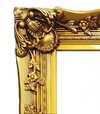
H24-GOLD €30
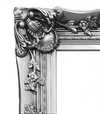
H24-SILVER €30
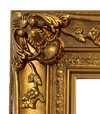
H36-GOLD €70

H36-SILVER €70
iii.
Medium
Leinwände werden mit Giclée-Tinten bedruckt und können wie Gemälde auf Keilrahmen gespannt oder gerahmt werden; Papier wird flach oder gerahmt hinter Glas geliefert.
Unser Budget-Druck: dasselbe Motiv auf einer 260 g/m² Polyester-Leinwand statt auf Baumwolle, geliefert als Rolle im Rohr per Standardpost in 3 bis 4 Wochen. Nur als Rolle (ohne Keilrahmen, ohne Rahmung) und ohne Eilproduktion, für Formate mit mindestens einer Seite von 80 cm oder weniger. Etwa 30% günstiger als der Baumwoll-Leinwanddruck.
Für diese Größe nicht verfügbar: Mindestens eine Seite muss 80 cm oder weniger lang sein.
Nur als Rolle erhältlich: Wählen Sie die Variante „Leinwand in der Röhre“, um diesen Druck zu wählen.
Verfügbar für Formate mit einer Seitenlänge von maximal 110 cm. Bei größeren Formaten wird der Druck auf mattem Baumwollleinwand erstellt.
Matt archival canvas ist für diese Größe nicht verfügbar: Beide Seiten müssen 110 cm oder weniger lang sein. Ihr Druck wird stattdessen auf mattem Baumwollcanvas erstellt.
Die Glasoption ist nur für Größen unter 110 cm verfügbar.
iv.
Veredelung
Namensschild, Firnis und Lieferung.
Beschriftung
Details der gravierten Bronzetafel
Diese elegante Plakette zeigt den Namen des Künstlers sowie den Titel des Kunstwerks, fein graviert für eine zeitlose Präsentation.
Sie ist aus Bronze gefertigt und verfügt über ein edles, elegantes Finish. Der Text wird präzise lasergraviert, um ein scharfes und dauerhaftes Ergebnis zu erzielen. Mit den Maßen 9x2 cm ist die Plakette kompakt und dennoch gut lesbar. Sie ist langlebig sowie kratzfest und bietet eine professionelle Optik in Museumsqualität. Die Montage ist dank der mitgelieferten Klebefläche kinderleicht.
Details zur Acrylglas-Plakette (transparent)
Die Plakette enthält wichtige gravierte Details wie den Namen des Künstlers, den Titel des Kunstwerks, das Entstehungsdatum, die verwendete Technik – wie etwa Öl auf Leinwand oder Aquarell –, eine kurze Beschreibung des Werks sowie einen QR-Code, der zu den vollständigen Informationen über das Kunstwerk führt.
Sie ist aus klarem Acryl gefertigt und bietet eine elegante, moderne Optik. Der Text ist schwarz UV-graviert, um einen starken visuellen Kontrast zu gewährleisten. Mit einer Größe von 10x15 cm ist eine optimale Lesbarkeit sichergestellt. Sie wird mit zwei Metallhaken für eine sichere Wandmontage geliefert. Die Plakette ist wetterfest und somit für verschiedene Umgebungen geeignet; zudem verfügt sie über interaktive Funktionen, die sich nahtlos per Smartphone-Scan bedienen lassen.
Details zur schwarzen Acryltafel
Diese elegante Plakette enthält gravierte Informationen wie den Namen des Künstlers, den Titel des Kunstwerks, das Entstehungsdatum, die verwendete Technik (z. B. Öl auf Leinwand oder Aquarell), eine kurze Beschreibung des Werks sowie einen QR-Code für den schnellen Zugriff auf weitere Informationen.
Die Plakette selbst besteht aus hochwertigem, veredeltem schwarzem Acryl mit einem Premium-Finish. Der Text ist weiß lasergraviert, um einen hohen Kontrast und optimale Lesbarkeit zu gewährleisten. Mit einer Größe von 10x15 cm ist sie auf einfache Lesbarkeit ausgelegt. Sie wird mit zwei Metallhaken für eine professionelle Montage geliefert. Das Design ist schlicht gehalten und passt zu jedem Einrichtungsstil. Zudem ist sie wetterfest sowie langlebig und verfügt über eine integrierte digitale Anbindung für mobile Kompatibilität.
Schutzlackierung
Eilproduktion
Weltweiter Versand () innerhalb von 2 Wochen statt der üblichen 4/5 Wochen. (16 Dezember)
Eilproduktion und Expressversand sind beim Economy-Polycanvas-Druck nicht verfügbar, da dieser per Standardpost versendet wird.
- Kostenloser weltweiter Versand in 3 bis 4 Wochen
- Hochwertige Leinenleinwand
- Umfassender Versicherungsschutz beim Versand
- Zollgebühren-Rückerstattungsgarantie
- Garantie für exakte Farbtreue
- 100 Tage Rückgaberecht, Geld-zurück-Garantie
- 100% Geld-zurück-Garantie
- Mengenrabatt verfügbar


Kurzinfos und Kunst-Quiz
Ähnliche Artikel

25 bedeutende Werke von Sebastiano del Piombo: Ein visueller Leitfaden
Entdecken Sie 25 Top-Werke von Sebastiano del Piombo. Erfahren Sie alles über seine Kunst der Hochrenaissance. Jetzt die Kollektion auf WikiOO.org!

25 bedeutende Werke von Gentile da Fabriano: Ein visueller Leitfaden
Entdecken Sie 25 Ikonen von Gentile da Fabriano und die Pracht der Internationalen Gotik. Jetzt die gesamte Kollektion auf WikiOO.org erkunden!
Ähnliche Kunstwerke


