

 Vorschau anzeigen
 Versenden
 Teilen
 Details anzeigen
 Leitfaden

 Herunterladen
 Ähnliche Objekte
 Röntgenaufnahme
 Diashow
 Statistiken
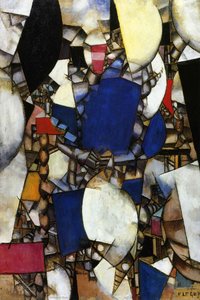
The four cyclists
 Oil On Canvas
- WallArt
- Cubism
 Modern
 129.0 x 161.0 cm
 Weiterlesen
Giclée / Kunstdruck
Giclée- oder Leinwanddruck in Museumsqualität mit schneller Produktion und flexiblen Veredelungsoptionen. ( Handgemalte Reproduktion bestellen Zum digitalen Bild wechseln)




P118B €10

P118H €10

P118W €10

P438Z €10

P508JH €12

P508YH €12

P805H €10

P805Z €10

P919BZ €10

P919G €10

P919XJ €10

P959ZH €10

P968JZ €12

W106C €8

W218G €10

W218JH €8

W218Y €10

W307PJ €10

W316G €10

W316PJ €8

W316Y €10

W398PJ €8

W4111J €10

W500HY €15

W500JH €15

W692G €12

W849H €8

W940BG €15

W953PJ €8




Wählen Sie aus unseren vordefinierten Formaten, die den ursprünglichen Proportionen des Kunstwerks entsprechen.

Geben Sie die benötigte Breite und Höhe an, damit der Druck perfekt in Ihren Rahmen oder an Ihre Wand passt. Ein Druck kann nur beschnitten, aber niemals größer als das Originalbild angefertigt werden; daher verliert ein Format mit anderen Proportionen einen Teil des Bildes. Wir senden Ihnen ein digitales Mockup zur Freigabe, bevor wir den Druck ausführen. Das auf dieser Seite gezeigte Bild zeigt nicht den tatsächlichen Beschnitt – dies ist nur im Mockup ersichtlich.
Weltweiter Versand () innerhalb von 2 Wochen statt der üblichen 4/5 Wochen. (26 Oktober)

Kostenloser weltweiter Expressversand

Hochwertige Leinenleinwand

Umfassender Versicherungsschutz beim Versand

Zollgebühren-Rückerstattungsgarantie

Garantie für exakte Farbtreue

100 Tage Rückgaberecht (nur bei Mängeln)

100% Geld-zurück-Garantie

Mengenrabatt verfügbar
 Die Glasoption ist nur für Größen unter 110 cm verfügbar.

The four cyclists
Giclée / Kunstdruck
Format der Reproduktion
-


Endpreis
€ 54
A Symphony of Form and Movement
In the vibrant landscape of early twentieth-century modernism, few works capture the rhythmic pulse of a changing world as arrestingly as Fernand Léger’s "The Four Cyclists." Completed around 1924, this masterpiece serves as a profound visual manifesto, where the grace of the human figure meets the unapologetic precision of the machine age. At first glance, the painting presents a seemingly simple scene: four women poised upon their bicycles, momentarily paused in a shared moment of leisure. Yet, beneath this surface lies a complex architectural feat of color and geometry. Léger does not merely depict a subject; he engineers an experience, transforming the mundane act of cycling into a dynamic ballet of intersecting planes and energetic light.
The composition is a masterclass in Cubist innovation, specifically reflecting the artist's unique ability to blend fragmentation with a sense of structural solidity. Rather than retreating into pure abstraction, Léger utilizes the tenets of Cubism to deconstruct reality, shattering visual space into angular shards that mirror the fractured perception of a world accelerating toward modernity. The bicycle frames themselves are dissected into a constellation of geometric forms, creating a sense of depth that defies traditional Euclidean geometry. As the viewer's eye wanders across the canvas, the overlapping planes and intersecting lines create a sensation of perpetual motion, as if the very air around the cyclists is vibrating with the mechanical energy of the era.
The Pulse of the Machine Age
To understand "The Four Cyclists" is to understand the heartbeat of the industrial revolution. Léger’s palette is famously bold, dominated by a striking triad of vibrant reds, yellows, and blues—hues that evoke the heat of a furnace and the optimistic glow of technological progress. These colors are not applied with soft, blended transitions; instead, they are presented in distinct, powerful strokes that emphasize the materiality of the paint and the strength of the forms. This technique, often associated with his "tubism" period, lends a muscularity to the figures, making the women appear as integral parts of the mechanical landscape they inhabit.
The symbolism within the work transcends the literal depiction of the subjects. The bicycles, with their metallic sheen and rigid structures, act as metaphors for the burgeoning dynamism of the twentieth century. There is a palpable tension between the stillness of the seated women and the implied velocity of their machines. For the collector or the interior designer, this painting offers more than just aesthetic beauty; it provides a sophisticated dialogue between tradition and progress. It is a piece that commands attention in any space, offering an intellectual depth that invites long periods of contemplation. Whether placed in a contemporary gallery setting or a curated residential collection, "The Four Cyclists" remains a timeless celebration of life, movement, and the enduring beauty of the modern spirit.
Fragen & Antworten
Für welchen Raum wird "The four cyclists" von Fernand Léger empfohlen?
Eine Reproduktion von „The four cyclists“ passt hervorragend in ein Living Room.
Unter welchen anderen Namen ist Fernand Léger bekannt?
Weitere unter denen Fernand Léger, Schöpfer von „The four cyclists“, bekannt ist, umfassen Joseph Fernand Henri Lé, Ger.
Ist "The four cyclists" von Fernand Léger gemeinfrei?
Die urheberrechtliche Situation für "The four cyclists" von Fernand Léger: Das Werk ist gemeinfrei – das Urheberrecht ist abgelaufen. Dies bestimmt, ob Reproduktionen des Bildes frei erstellt werden dürfen.
Ähnliche Kunstwerke



Künstlerbiografie
frühes Leben und Ausbildung
Fernand Légér, ein französischer Maler, Bildhauer und Filmemacher, wurde am 4. Februar 1881 in Argentan, Orne, Niedergermanien geboren. Sein Vater züchtete Rinder, und Légér erhielt zunächst eine Ausbildung als Architekt von 1897 bis 1899. Er zog dann im Jahr 1900 nach Paris und unterstützte sich dort als Architektenzeichner.Künstlerische Entwicklung
Légers frühe Werke wurden vom Impressionismus beeinflusst, wie in Le Jardin de ma Mère (Mein Muttergarten) (1905) zu sehen ist. Nach dem Besuch der Schule für dekorative Künste und der Académie Julian begann er ab seinem 25. Lebensjahr ernsthaft als Maler zu arbeiten. Sein Stil entwickelte sich zu einer persönlichen Form des Kubismus, der von Kritikern als "Tubism" bezeichnet wurde, da er sich auf zylindrische Formen konzentrierte.Kubismus und die Puteaux-Gruppe
Im Jahr 1910 stellte Légér im Salon d’Automne zusammen mit Jean Metzinger und Henri Le Fauconnier aus. Er schloss sich der Puteaux-Gruppe an, auch bekannt als die Section d’Or (die Goldene Proportion), zusammen mit anderen Künstlern wie Francis Picabia und Marcel Duchamp.Krieg und seine Auswirkungen auf Légers Werk
Légers Erfahrungen im Ersten Weltkrieg hatten einen erheblichen Einfluss auf sein Werk. Während seiner Zeit an der Front produzierte er Skizzen von Artilleriegeschützen, Flugzeugen und Soldaten. Sein Gemälde Soldat mit Pfeife (1916) spiegelt diese Zeit wider.Spätere Werke und Vermächtnis
Légers Nachkriegszeitliche Arbeiten, die von glatten, maschinellen Formen geprägt waren, verknüpften ihn mit der Tradition der französischen figurativen Malerei. Seine "animierten Landschaften" von 1921 zeigten Figuren und Tiere in harmonischen, stromlinienförmigen Formen.- Fernand Légers Werke auf WikiOO
- Mehr über Fernand Légér auf Wikipedia
- Entdecken Sie das Musée National Fernand Légér (Frankreich) mit WikiOO
- Die Sitzende Frau (100 x 81 cm, Tubism)
- Maschinenelement (Kubismus)

Fernand Léger
1881 - 1955 , Frankreich
Kurzinfos
- Beeinflusste Kunstrichtungen: ['Pop Art']
- Beeinflusste Künstler: ['Paul Cézanne']
- Bemerkenswerte Werke:
- Die Sitzende Frau
- Maschinenelement
- Der Große Umzug
- Die Stadt
- Geburtsdatum: 04. Februar 1881
- Geburtsort: Argentan, Frankreich
- Künstlerische Richtung: Kubismus, Tubismus
- Nationalität: Französisch
- Sterbedatum: 1955
- Vollständiger Name: Fernand Léger
- Von Kunstbewegungen Beeinflusst: ['Cézannismus']
- Von Künstlern Beeinflusst: ['Impressionismus']
Ähnliche Artikel

Modern Geometry & Machine Age Beauty: A Collector's Guide to the Cubist Vision of Fernand Léger
Explore the vibrant world of Fernand Léger. Discover how his 'Tubism' and Machine Age aesthetics redefined modern art, offering profound inspiration for discerning collectors seeking geometric beauty and industrial dynamism.

Industrielle Ästhetik: 10 Meisterwerke für Ihr Zuhause | WikiOO
Entdecken Sie 10 Meisterwerke der Industriekunst! Von Expressionismus bis Kubismus – erleben Sie die Ästhetik von Fabriken, Arbeitern & urbanen Landschaften. Hochwertige Reproduktionen auf WikiOO.org.

Fernand Léger: Die 25 Meisterwerke des Kubismus für Ihr Zuhause | WikiOO
Entdecken Sie die 25 Meisterwerke von Fernand Léger! Tauchen Sie ein in die Welt des Kubismus, Tubismus & der Avantgarde. Hochwertige Kunstreproduktionen für Ihr Zuhause – jetzt auf WikiOO.org!

Cubism Unveiled: How Picasso and Braque Redefined Modern Art through Geometric Revolution
Explore the revolutionary world of Cubism. Discover how Pablo Picasso and Georges Braque dismantled perspective to redefine modern art through geometric innovation and analytical mastery. An essential guide for art students, collectors, and history enthusiasts.

Modern Geometry & Machine Age Beauty: A Collector's Guide to the Cubist Vision of Fernand Léger
Explore the profound geometric mastery of Fernand Léger. Discover how his 'Tubism' and Machine Age aesthetics redefined modern art, offering timeless inspiration for discerning collectors seeking to integrate Cubist dynamism into sophisticated contemporary interiors.


