

 Vorschau anzeigen
 Versenden
 Teilen
 Details anzeigen
 Leitfaden

 Herunterladen
 Ähnliche Objekte
 Röntgenaufnahme
 Diashow
 Q&A
Q&A Statistiken
Interior
 Oil On Canvas
- WallArt
- Realism
 1888
1888- 19th Century
 92.0 x 73.0 cm
 Weiterlesen
Giclée / Kunstdruck
Giclée- oder Leinwanddruck in Museumsqualität mit schneller Produktion und flexiblen Veredelungsoptionen. ( Handgemalte Reproduktion bestellen Zum digitalen Bild wechseln)




P118B €10

P118H €10

P118W €10

P438Z €10

P508JH €12

P508YH €12

P805H €10

P805Z €10

P919BZ €10

P919G €10

P919XJ €10

P959ZH €10

P968JZ €12

W106C €8

W218G €10

W218JH €8

W218Y €10

W307PJ €10

W316G €10

W316PJ €8

W316Y €10

W398PJ €8

W4111J €10

W500HY €15

W500JH €15

W692G €12

W849H €8

W940BG €15

W953PJ €8




Wählen Sie aus unseren vordefinierten Formaten, die den ursprünglichen Proportionen des Kunstwerks entsprechen.

Geben Sie die benötigte Breite und Höhe an, damit der Druck perfekt in Ihren Rahmen oder an Ihre Wand passt. Ein Druck kann nur beschnitten, aber niemals größer als das Originalbild angefertigt werden; daher verliert ein Format mit anderen Proportionen einen Teil des Bildes. Wir senden Ihnen ein digitales Mockup zur Freigabe, bevor wir den Druck ausführen. Das auf dieser Seite gezeigte Bild zeigt nicht den tatsächlichen Beschnitt – dies ist nur im Mockup ersichtlich.
Weltweiter Versand () innerhalb von 2 Wochen statt der üblichen 4/5 Wochen. (30 Oktober)

Kostenloser weltweiter Expressversand

Hochwertige Leinenleinwand

Umfassender Versicherungsschutz beim Versand

Zollgebühren-Rückerstattungsgarantie

Garantie für exakte Farbtreue

100 Tage Rückgaberecht (nur bei Mängeln)

100% Geld-zurück-Garantie

Mengenrabatt verfügbar
 Die Glasoption ist nur für Größen unter 110 cm verfügbar.

Interior
Giclée / Kunstdruck
Format der Reproduktion
-


Endpreis
€ 54
A Quiet Moment in Time: The Soul of Serusier's Interior
In the quiet corners of art history, certain works possess the unique ability to freeze a moment of profound simplicity, turning the mundane into something eternal. Paul Sérusier’s 1888 masterpiece, Interior, is precisely such a work. This oil on canvas, measuring 92 x 73 cm, invites the viewer into a rustic, domestic sanctuary that feels both intimately personal and universally relatable. At first glance, we encounter a scene of humble labor: a man standing in contemplation, his figure anchored by a white shirt and dark trousers, while a woman sits upon the stone floor, her hands lost in the rhythmic, meditative task of working with yarn or thread. There is no grand drama here, only the soft, heavy pulse of everyday life, captured with a precision that honors the dignity of the working class.
The atmosphere of the painting is thick with a sense of warmth and seclusion. Sérusier utilizes a palette dominated by earthy tones—deep browns, muted ochres, and soft shadows—which wrap the figures in a protective, domestic embrace. The lighting is masterfully subdued, suggesting the gentle, filtered glow of natural light entering a simple rural home. This careful manipulation of light does more than just illuminate the room; it creates a psychological depth, casting soft shadows that lend weight to the wooden walls and the textured stone floor. For the collector or interior designer, this piece offers a grounding presence, providing a sense of stability and historical weight to any curated space.
The Intersection of Realism and the Nabis Movement
While Interior is deeply rooted in the Realist tradition—a movement dedicated to the honest depiction of contemporary life—it also serves as a fascinating precursor to the avant-garde shifts that would soon redefine modern art. Sérusier, a pivotal figure in the Les Nabis group, was a painter who sought to bridge the gap between the tangible world and the symbolic essence of subject matter. In this work, we see the seeds of his later, more experimental styles, such as Cloisonnism and Synthetism. Although the figures are rendered with naturalistic detail, there is an emerging sense of flattened form and a deliberate arrangement of shapes that hints at the artist's growing interest in abstraction.
The composition is a masterclass in balance and harmony. The placement of the man on the left and the woman on the right creates a visual equilibrium that guides the eye through the domestic landscape, from the texture of the wooden walls to the delicate movement of the thread. This structural integrity ensures that the painting remains visually captivating even upon repeated viewings. For those seeking to adorn a home with art that inspires contemplation, this piece acts as a window into a bygone era, offering a sophisticated blend of historical significance and aesthetic grace. It is not merely a depiction of a room; it is an invitation to slow down, to breathe, and to find beauty in the quietest rhythms of existence.
Fragen & Antworten
Welche Farbe dominiert in "Interior" von Paul Sérusier?
Die Farbe, die in „Interior“ am stärksten hervorsticht, ist Phthalo Green (#16101b). Die dominante Farbe ist hilfreich, um ein Kunstwerk auf eine Inneneinrichtung abzustimmen.
Aus welcher Schaffensperiode von Paul Sérusier stammt "Interior"?
„Interior“ entstammt der Early Period von Paul Sérusier. Diese Einordnung setzt das Werk in Bezug zur künstlerischen Entwicklung des Künstlers.
In welcher Ausrichtung liegt "Interior" von Paul Sérusier vor?
Das Format von „Interior“ ist Portrait. Dies ist hilfreich bei der Planung, wo eine Reproduktion platziert werden soll.
Ähnliche Kunstwerke


Künstlerbiografie
Frühes Leben und Ausbildung
Paul Sérusier, geboren als Louis-Paul-Henri Sérusier, erblickte am 9. November 1864 in Paris das Licht der Welt. Er studierte an der Académie Julian, wo er sich in den mittleren 1880er Jahren eine Stelle als Aufseher sicherte. Dies markierte den Beginn seiner künstlerischen Reise, die ihn schließlich dazu führte, abstrakte Kunst zu begründen und die avantgardistische Nabi-Bewegung, Synthetismus und Cloisonnismus zu inspirieren.Künstlerische Karriere
Im Sommer 1888 reiste Sérusier nach Pont-Aven, wo er einer kleinen Künstlergruppe beigetreten ist, die sich um Paul Gauguin sammelte. Unter Gauguins enger Anleitung malte Sérusier "Der Talisman", eine extreme Übung im Cloisonnismus, die der reinen Abstraktion nahe kam. Dieses Werk demonstrierte seinen innovativen Stil und seine Bereitschaft, mit neuen Techniken zu experimentieren. Als postimpressionistischer Maler war Sérusier Teil der Gruppe Les Nabis, zusammen mit Pierre Bonnard, Édouard Vuillard und Maurice Denis. Obwohl er nicht so bekannt ist wie einige seiner Kollegen, sind Sérusiers Beiträge zur Entwicklung abstrakter Kunst unbestreitbar.Wichtige Werke und Vermächtnis
Zu Sérusiers bemerkenswertesten Werken gehören:- L'Averse (1893), Musée d’Orsay, Paris
- Porträt von Paul Ranson (1890), Musée d’Orsay, Paris
- Melancholie (1890)
- Die Schlangenfresser (1894), Muzeum Narodowe, Warschau
Künstlerische Bewegung und Einfluss
Sérusiers Werk wurde von Cloisonnismus beeinflusst, einem Stil, der durch kühne und flache Formen gekennzeichnet ist, die durch dunkle Konturen getrennt sind. Diese Bewegung, die im späten 19. Jahrhundert entstand, spielte eine bedeutende Rolle bei der Gestaltung der Entwicklung moderner Kunst.- Erfahre mehr über Cloisonnismus: Die Cloisonnism-Kunstbewegung
- Entdecke Sérusiers Werk: Paul Sérusier | WikiOO.org
- Erfahre mehr über die Nabi-Bewegung: Die Nabi-Kunstbewegung
- Paul Sérusier war ein französischer Maler, der abstrakte Kunst begründete und die Nabi-Bewegung inspirierte.
- Er studierte an der Académie Julian und unterrichtete später an der Académie Ranson.
- Sérusiers Werk wurde von Cloisonnismus beeinflusst, einem Stil, der durch kühne und flache Formen gekennzeichnet ist.

Paul Sérusier
1864 - 1927 , Frankreich
Kurzinfos
- Beeinflusste Künstler:
- Paul Gauguin
- Maurice Denis
- Pierre Bonnard
- Édouard Vuillard
- Bekannte Werke:
- L'Averse (1893)
- Portrait von Paul Ranson
- Melancholie (1890)
- Die Schlangenfresser (1894)
- Geburtsdatum: 9. November 1864
- Geburtsort: Paris, Frankreich
- Künstlerische Bewegung: Postimpressionismus, Nabis
- Nationalität: Französisch
- Todatum: 7. Oktober 1927
- Vollständiger Name: Paul Sérusier
- Von Künstlern Beeinflusst: ['Cloisonnismus']
Ähnliche Artikel

Die 25 besten Gemälde von Paul Cézanne: Meisterwerke der Form
Entdecken Sie die 25 Meisterwerke von Paul Cézanne und den Postimpressionismus. Alle Klassiker auf WikiOO.org online erleben.
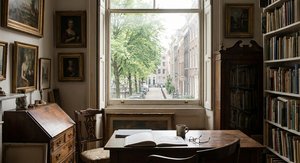
The Interior Gaze: Exploring Representations of Domestic Space in Art History
Explore the fascinating history of domestic interiors in art! From Dutch Masters to Impressionism, discover how artists captured home life & social meaning. Expert analysis and insights at WikiOO.

10 Meisterwerke des Romantischen Realismus: Wenn Emotion auf Wahrheit trifft
Entdecken Sie 10 Meisterwerke des Romantischen Realismus. Erleben Sie die emotionale Tiefe von Künstlern wie Constable und Friedrich – perfekt als Inspiration für Ihre Kunstsammlung oder Wandgestaltung. Finden Sie museale Reproduktionen auf WikiOO.org.

Intimate Interiors: Domestic Life & Artistic Representation from Renaissance to Impressionism
Explore the evolution of domestic life in Western art from the Renaissance to Impressionism. Discover symbolism, realism & artistic techniques shaping intimate interior scenes. Learn more with WikiOO.

Meister der Abstraktion: Die 25 wichtigsten Kunstwerke von Paul Klee
Entdecken Sie die 25 Meisterwerke von Paul Klee und die Magie des Bauhaus. Erleben Sie Klee-Reproduktionen auf WikiOO.org.


