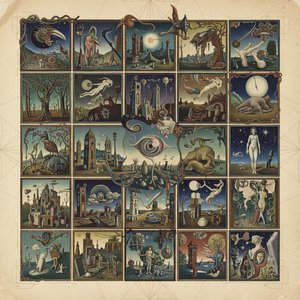
The Poignant Visions of Ernst Neuschul: A Life Immersed in Expression
Ernst Neuschul, a name resonating within the circles of German Expressionism, occupies a unique space – not as a flamboyant pioneer but as a deeply sensitive observer of human condition and rural life. Born in Germany (the exact year remains somewhat elusive, contributing to his enigmatic persona), Neuschul’s artistic journey unfolded against a backdrop of societal upheaval and burgeoning modern thought. While biographical details are sparse, the power of his work speaks volumes, revealing an artist profoundly affected by the anxieties and realities of his time. He is not a figure celebrated with grand museum retrospectives, yet his paintings possess a quiet intensity that continues to captivate those who encounter them. His enduring legacy lies in his ability to distill complex emotions into starkly beautiful and often melancholic imagery.Early Influences & The Embrace of Expressionism
The artistic climate of early 20th-century Germany undoubtedly shaped Neuschul’s aesthetic. While concrete documentation of specific mentors is lacking, the influence of artists like Käthe Kollwitz and Emil Nolde is palpable in his work. Like Kollwitz, Neuschul demonstrated a deep empathy for the working class and marginalized individuals. He shared Nolde's bold use of color – though often muted in comparison – to convey emotional weight. The Expressionist movement, with its rejection of academic realism in favor of subjective experience, provided Neuschul with a crucial framework. He wasn’t interested in merely *representing* the world; he sought to express his inner response to it, translating feelings of isolation, hardship, and resilience onto canvas. This commitment is particularly evident in his depictions of agricultural laborers, often rendered with a raw honesty that borders on vulnerability.Themes & Techniques: The Cockle Pickers and Beyond
Neuschul’s most recognizable works center around the lives of “Cockle Pickers” – women toiling in harsh conditions along the North Sea coast, gathering shellfish for sustenance. These paintings are not romanticized depictions of rural life; they are unflinching portrayals of backbreaking labor and quiet desperation. The figures are often hunched over, their faces obscured or etched with weariness. He masterfully employed a limited palette – predominantly earth tones, grays, and blues – to create an atmosphere of somber realism. His brushwork is typically loose and expressive, contributing to the emotional intensity of the scenes. Beyond the Cockle Pickers, Neuschul explored other themes related to human suffering and social injustice. His painting “Black Mother” stands as a particularly poignant example, showcasing his ability to convey profound grief and maternal strength through simplified forms and evocative color choices. He often focused on the dignity within hardship, elevating the everyday struggles of ordinary people to a level of artistic significance.Recognition & Historical Significance
Despite not achieving widespread fame during his lifetime, Neuschul’s work has garnered increasing attention in recent decades. His paintings are held in several private collections and notably featured at the Kirchner Museum Davos, Switzerland, which recognizes him as a significant figure within the broader Expressionist landscape. His art serves as a powerful reminder of the social realities that fueled the movement – the exploitation of labor, the plight of the poor, and the anxieties of a rapidly changing world. Neuschul’s historical significance lies not in groundbreaking innovation but in his unwavering commitment to portraying the human experience with honesty and empathy. He offers a counterpoint to more bombastic expressions of Expressionism, demonstrating that profound emotional impact can be achieved through quiet observation and skillful execution. His work is a testament to the power of art to bear witness, to give voice to the voiceless, and to remind us of our shared humanity. The enduring appeal of his paintings lies in their ability to resonate with viewers on a deeply personal level, prompting reflection on themes of labor, loss, and resilience.Continuing Legacy
While much remains unknown about Ernst Neuschul’s life, his artistic legacy continues to grow. His work is increasingly sought after by collectors interested in authentic representations of the Expressionist period.- He represents a vital, though often overlooked, strand within German Expressionism.
- His paintings offer valuable insights into the social and economic conditions of early 20th-century Germany.
- The emotional power of his work transcends cultural boundaries, resonating with audiences worldwide.
Fragen & Antworten
Gibt es eine virtuelle 3D-Tour durch die Werke von Ernst Neuschul?
Ein virtueller Besuch ist möglich: Die Seite Virtuelle 3D-Galerie von Ernst Neuschul präsentiert die Werke des Künstlers in einer dreidimensionalen Galerie.
Wo lassen sich die Kunstwerke von Ernst Neuschul nach Farben sortiert entdecken?
Die Werke von Ernst Neuschul können auf der Farbindex-Seite des Künstlers nach Farben sortiert erkundet werden.
Kann ich die Werke von Ernst Neuschul nach Medium durchsuchen?
Auf der Seite Nach Medien sortiert werden die Kunstwerke von Ernst Neuschul nach Technik gruppiert.