Preview
 Send
Send Share
Share
 Details
 Guide
Guide

 Download
 Similars
 X-Ray
X-Ray Diaporama
 Q&A
Q&A Stats
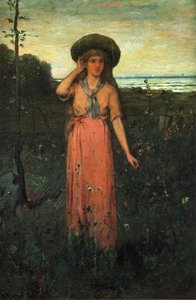
StatsEastern Point, Gloucester


 Read More
Giclée / Art Print
Museum-quality giclée or canvas print with fast production and flexible finish options. ( Buy Hand Made Painting Switch to Digital Image)




P118B $10

P118H $10

P118W $10

P438Z $10

P508JH $12

P508YH $12

P805H $10

P805Z $10

P919BZ $10

P919G $10

P919XJ $10

P959ZH $10

P968JZ $12

W106C $8

W218G $10

W218JH $8

W218Y $10

W307PJ $10

W316G $10

W316PJ $8

W316Y $10

W398PJ $8

W4111J $10

W500HY $15

W500JH $15

W692G $12

W849H $8

W940BG $15

W953PJ $8




Pick from our preset sizes that match the artwork's original proportions.

Type the width and the height you need, to fit your frame or your wall. A print can only be cut, never made bigger than the picture, so a size with a different shape loses a part of the image. We send you a digital mockup to approve before we print anything. The picture shown on this page does not show the real cut — only the mockup does.
Worldwide Delivery () in 2 weeks instead of standard 4/5 weeks. (30 October)

Free Worldwide Express Shipping

High-Quality Linen Canvas

Full Shipping Insurance

Customs Tax Refund Guarantee

True Color Matching Guarantee

100-Day Return Policy (Defects Only)

100% Money-Back Guarantee

Bulk Discount Offer
 Glass option is only available in size under 110 CM

Eastern Point, Gloucester
Giclée / Art Print
Reproduction Size
-


Total Price
$ 62
Abbott Fuller Graves’s “Coastal Serenity”: A Window into Early American Impressionism
The painting before us, "Coastal Serenity," attributed to Abbott Fuller Graves, offers a captivating glimpse into the burgeoning world of American Impressionism in the early 20th century. Executed around 1913, this work transcends a simple depiction of a coastal landscape; it’s a carefully constructed meditation on light, color, and the profound connection between humanity and nature – a hallmark of Graves's distinctive style. Born in Weymouth, Massachusetts, Graves honed his artistic skills through rigorous training in Europe, absorbing the revolutionary techniques championed by artists like Claude Monet and Pierre-Auguste Renoir, yet ultimately forging a uniquely American interpretation.
- Subject Matter: The scene portrays a quintessential New England coastline – a rugged shoreline punctuated by a majestic lighthouse, its beam cutting through the hazy atmosphere. A modest dwelling nestled amongst the rocks suggests a life intimately tied to the sea and its rhythms.
- Style & Technique: Graves’s approach aligns squarely with Impressionism's core tenets. He employs loose, visible brushstrokes – a deliberate rejection of academic precision – to capture the fleeting effects of light upon the water and land. Thick impasto layers build texture, particularly in the rocky foreground, while softer glazing techniques create atmospheric depth in the distance.
The Science of Light: Graves’s Color Theory
Graves's masterful use of color is central to the painting’s impact. He wasn’t simply observing; he was actively engaged in understanding and manipulating light, a key principle championed by scientists like Michel Eugène Chevreul. The dominant blues and greens of the sea shift and shimmer depending on the angle of observation – a direct reflection of Graves's meticulous study of color theory. Note the subtle variations in hue within the lighthouse’s structure, achieved through careful layering and blending, creating an illusion of volume and reflecting light realistically.
This deliberate approach to color reflects the broader scientific interest in optics and perception that fueled the Impressionist movement.Symbolism and Narrative
Beyond its purely aesthetic qualities, “Coastal Serenity” carries a subtle narrative weight. The lighthouse, a traditional symbol of guidance and hope, anchors the composition and suggests themes of resilience and navigation – both literal and metaphorical. The solitary dwelling hints at themes of isolation and self-sufficiency, yet also evokes a sense of belonging within this wild landscape. The artist’s choice to depict a working fisherman's home adds a layer of social commentary, celebrating the lives of those who depended on the sea for their livelihood.
A Legacy of American Impressionism
Abbott Fuller Graves remains a significant figure in American art history, recognized for his evocative depictions of New England’s coastal landscapes. “Coastal Serenity” exemplifies his ability to translate scientific understanding into emotionally resonant imagery. Reproductions of this piece offer an accessible entry point into the world of Impressionism, allowing viewers to appreciate the beauty and intellectual rigor that defined this pivotal movement – a movement that profoundly shaped the course of modern art.
Questions & Answers
Where can I download "Eastern Point, Gloucester" by Abbott Fuller Graves?
The image of "Eastern Point, Gloucester" by Abbott Fuller Graves can be downloaded from the artwork's Download page: a high-resolution digital image download.
What level of contrast does "Eastern Point, Gloucester" by Abbott Fuller Graves show?
The contrast level of "Eastern Point, Gloucester" by Abbott Fuller Graves is bold.
What does "Eastern Point, Gloucester" by Abbott Fuller Graves bring to an interior?
The serene atmosphere of "Eastern Point, Gloucester" by Abbott Fuller Graves matches its recommended space: a living room.
Related Artworks


Artist Biography
A Life Captured in Light and Bloom
Abbott Fuller Graves was an American painter and illustrator whose brush captured the delicate intersection of nature and light. Born in Weymouth, Massachusetts, his early aspirations leaned toward the structured world of architecture, leading him to attend the Massachusetts Institute of Technology. However, a profound calling toward the ephemeral beauty of the natural world eventually redirected his path. This journey took him far beyond the borders of New England, as he traveled to Paris and Italy to refine his skills. In the vibrant art centers of Europe, Graves immersed himself in the study of floral painting and figure work, absorbing the revolutionary techniques that would later define his signature style.
During his formative years in Paris, Graves studied at the Académie Julian, learning under masters such as Fernand Cormon, Jean- Paul Laurens, and Paul Gervais. This rigorous academic training provided him with a foundation in realism, yet it was the burgeoning influence of European Impressionism that truly ignited his creative spirit. His time in Europe also allowed him to room with Edmund C. Tarbell, fostering connections within a circle of artists who were reshaping American art. Upon returning to Boston, Graves became a teacher at the Cowles Art School, working alongside notable figures like Childe Hassam, a relationship that undoubtedly enriched their mutual artistic development.
The Impressionistic Spirit of New England
As his career matured, Graves found a permanent sanctuary in the coastal town of Kennebunkport, Maine. It was here that his work truly blossomed, as he began to specialize in decorative open-air garden paintings and floral still-lifes. His mastery lay in the ability to blend Impressionistic light with Realistic observation. He did not merely seek to replicate the appearance of a garden; he sought to capture how sunlight filtered through foliage, casting dappled shadows and illuminating blossoms with an ethereal glow. His use of thick brushstrokes and vibrant colors allowed him to translate the textures of roses, lilies, and lush landscapes onto the canvas, creating scenes that felt both alive and deeply serene.
His subject matter often celebrated the rhythms of local life and the splendor of the natural world. While many of his works focused on the intricate beauty of exotic gardens—sometimes reaching as far as Spain and South America—he remained deeply rooted in the American landscape. His paintings frequently featured genre scenes of Kennebunkport, portraying fishermen, farmers, and sea captains, often rendered with a charming, nostalgic quality that led to his work being widely reproduced on postcards and calendars. This ability to elevate everyday coastal life into a symphony of color and light remains his most enduring legacy.
Artistic Legacy and Architectural Vision
Beyond the canvas, Graves possessed a unique vision for the integration of art and living space. In 1905, he applied his architectural sensibilities to design the Abbott Graves House in Kennebunkport. This structure, notable as one of the rare examples of the Prairie School of architecture in Maine, stands as a testament to his multifaceted talent. The house reflects the same harmony between form and nature that characterized his paintings, showcasing a sophisticated understanding of design and space.
In his later years, Graves moved between the creative energy of New York City and the tranquility of the coast. His membership in prestigious organizations such as the National Academy of Design, the Salmagundi Club, and the Allied Artists of America solidified his standing within the American art community. Through his dedication to capturing the fleeting beauty of a petal or the shifting light on a coastal shoreline, Abbott Fuller Graves left behind a body of work that continues to resonate with those who find poetry in the natural world.

Abbott Fuller Graves
1859 - 1936 , United States of America
Quick Facts
- Artistic Movement Or Style: Realism and Impressionism
- Artists Who Influenced This Artist:
- Claude Monet
- Pierre-Auguste Renoir
- Childe Hassam
- Full Name: Abbott Fuller Graves
- Nationality: American
- Notable Artworks:
- Nearing Home
- Eastern Point, Gloucester
- Near Kennebunkport
- Place Of Birth: Weymouth, United States of America
- Date Of Birth: 1859
- Date Of Death: 1936
Related Articles

Evocations of Place: A Historical Journey Through Landscape Art
Explore the rich history of landscape art with WikiOO. Discover renowned artists, movements like Impressionism & tonalism, and expert guidance for collecting timeless pieces. Find your perfect serene escape today!

Impressionistic Landscapes: 10 Masterpieces That Changed Art & Decor
Journey into the heart of Impressionism! Explore 10 masterpieces by Monet, Renoir & Degas that revolutionized landscape art. Discover their stories, techniques & find museum-quality reproductions to elevate your home decor on WikiOO.org.

Evocations of Place: A Historical Journey Through Landscape Art
Explore the rich history of landscape art with WikiOO. Discover renowned artists, movements like Impressionism & Romanticism, and expert guidance for collecting timeless pieces. Find your perfect serene escape today!

Mastering Form: The 25 Greatest Paintings by Paul Cézanne
Explore 25 iconic Paul Cézanne masterpieces and his Post-Impressionist legacy. Discover the full collection online at WikiOO.org.

Whistler's Masterpieces: Explore 25 Iconic Paintings & Aesthetic Art for Your Home
Journey through 25 iconic James Abbott McNeill Whistler paintings! Explore his masterpieces of Aestheticism, from 'Nocturne in Black and Gold' to captivating portraits. Find museum-quality art reproductions & elevate your home decor with WikiOO.org. Discover the full collection online.