Preview
 Send
Send Share
Share
 Details
 Guide
Guide

 Download
 Similars
 X-Ray
X-Ray Diaporama
 Q&A
Q&A Stats
StatsUntitled


 Read More
The artwork displayed on this page is protected by copyright law, which means we cannot legally create or sell an identical reproduction. This protection is enforced under international agreements such as the Berne Convention and by national laws, including those outlined by the U.S. Copyright Law - Title 17.
This method fully complies with copyright regulations because it does not involve copying or duplicating the protected artwork. Instead, it is a creative reinterpretation - a new painting that is influenced by the original but not identical to it.
Giclée / Art Print
Museum-quality giclée or canvas print with fast production and flexible finish options. ( Buy Hand Made Painting Switch to Digital Image)




P118B $10

P118H $10

P118W $10

P438Z $10

P508JH $12

P508YH $12

P805H $10

P805Z $10

P919BZ $10

P919G $10

P919XJ $10

P959ZH $10

P968JZ $12

W106C $8

W218G $10

W218JH $8

W218Y $10

W307PJ $10

W316G $10

W316PJ $8

W316Y $10

W398PJ $8

W4111J $10

W500HY $15

W500JH $15

W692G $12

W849H $8

W940BG $15

W953PJ $8




Pick from our preset sizes that match the artwork's original proportions.

Type the width and the height you need, to fit your frame or your wall. A print can only be cut, never made bigger than the picture, so a size with a different shape loses a part of the image. We send you a digital mockup to approve before we print anything. The picture shown on this page does not show the real cut — only the mockup does.
Worldwide Delivery () in 2 weeks instead of standard 4/5 weeks. (6 November)

Free Worldwide Express Shipping

High-Quality Linen Canvas

Full Shipping Insurance

Customs Tax Refund Guarantee

True Color Matching Guarantee

100-Day Return Policy (Defects Only)

100% Money-Back Guarantee

Bulk Discount Offer
 Glass option is only available in size under 110 CM

Untitled
Giclée / Art Print
Reproduction Size
-


Total Price
$ 62
The Silent Power of Geometry: Reimagining Ad Reinhardt’s Vision
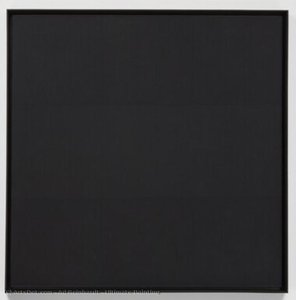
In the quiet realm of minimalist mastery, few works command the room with such profound, understated authority as Ad Reinhardt’s "Untitled." At first glance, one might perceive only a dark, enigmatic field of blue, yet to linger before this canvas is to enter a meditative dialogue with the very essence of painting. This piece, a cornerstone of mid-century abstraction, transcends the mere application of pigment; it serves as a radical manifesto against the noise of the modern world. For the discerning collector or interior designer, this reproduction offers more than just a visual accent—it provides a focal point of intellectual depth and serene stability, inviting a sense of contemplative stillness into any sophisticated space.
The brilliance of Reinhardt’s technique lies in what he chose to omit. Eschewing the dramatic brushwork and emotional turbulence common in much of Abstract Expressionism, Reinhardt embraced a disciplined, almost architectural approach to form. Through the meticulous layering of paint, he achieved a tonal complexity that defies its monochromatic appearance. The dark blue field is not a flat void but a breathing landscape of subtle gradations, where light seems to emerge from within the depths of the canvas itself. This technique creates a captivating illusion of depth, as if the geometric squares arranged in a precise grid are floating within an infinite, nocturnal sky. Such structural precision makes this artwork an ideal choice for contemporary interiors that value clean lines, balance, and a sense of architectural harmony.
A Legacy of Pure Expression
To understand the emotional resonance of this work, one must look to its historical soul. Created during an era of immense global transition, Reinhardt’s "Untitled" was a deliberate rebellion against representation and narrative. He sought to strip away all extraneous associations—no figures, no landscapes, no stories—leaving only the pure relationship between color, shape, and light. This pursuit of art as art creates a timeless quality; because the work does not rely on recognizable symbols, its impact remains fresh and relevant across generations. It is an exploration of the irreducible, a confrontation with the sublime that demands the viewer’s full presence.
For those seeking to curate an environment of prestige and thought, this reproduction captures the meticulous craftsmanship of the original. The subtle textures of the canvas and the delicate interplay of shadows within the dark palette evoke the tactile luxury of a museum-grade masterpiece. Whether placed in a minimalist gallery-style living room or as a sophisticated anchor in a professional study, this piece acts as a window into the profound. It is an invitation to look past the surface, to find beauty in the shadows, and to appreciate the monumental power found in the simplest of forms.
Questions & Answers
Where can I find artworks similar to "Untitled" by Ad Reinhardt?
The Similars page of "Untitled" by Ad Reinhardt presents related artworks.
How is the color composition of "Untitled" by Ad Reinhardt built?
In "Untitled", a serene contrast is paired with a unified palette harmony.
Where can I download "Untitled" by Ad Reinhardt?
A download is available for "Untitled": the artwork's Download page offers a high-resolution digital image download.
Related Artworks


Artist Biography
A Life Dedicated to the Essence of Art
Ad Reinhardt, born Adolph Friedrich Reinhardt in Buffalo, New York, on December 24, 1913, was a figure who dedicated his life not merely to creating art, but to defining what art *could* be. His early years were marked by a familial mobility—his father’s work led the family to New York City—and a close bond with his cousin Otto. Even as a child, Reinhardt displayed an exceptional talent for drawing and painting, winning accolades in school that hinted at the rigorous artistic journey ahead. He wasn't simply interested in *making* images; he was driven by a need to understand the very foundations of visual expression. This intellectual curiosity led him to Columbia University where he studied art history under the influential Meyer Schapiro, an experience that profoundly shaped his thinking about aesthetics and the role of the artist. Further training at Columbia’s Teachers College, the American Artists School with Carl Holty and Francis Criss, and portraiture studies at the National Academy of Design under Karl Anderson solidified his technical skills—skills he would later deliberately attempt to transcend. Reinhardt believed he had mastered traditional techniques early on, freeing him to pursue a more conceptual path.From Geometric Beginnings to the “Ultimate” Black
Reinhardt’s artistic evolution was far from linear. He began with works rooted in geometric abstraction, exploring form and color with a precision that demonstrated his technical mastery. However, this early work served as a stepping stone toward something more radical. His involvement with the WPA Federal Art Project during the 1930s provided him with crucial support and exposure, allowing him to hone his craft while contributing to public art initiatives. The 1940s saw Reinhardt become an active member of American Abstract Artists (AAA), a group he considered pivotal to his development. He found kinship with fellow artists who shared a commitment to non-representational art, exhibiting regularly alongside them and engaging in lively debates about the future of painting. His association with Betty Parsons Gallery further cemented his place within the burgeoning New York art scene. Throughout the 1950s, Reinhardt embarked on a series of paintings exploring subtle variations within single hues—all red, all blue, all white—a deliberate reduction that foreshadowed his most iconic works. It was in the 1960s, however, that he achieved what many consider his defining achievement: the “black” paintings. These weren’t simply black canvases; they were meticulously crafted explorations of near-black shades, subtle gradations and textures designed to challenge perception and push the boundaries of painting itself. He referred to them as his "ultimate" paintings, suggesting a culmination of artistic endeavor—a point beyond which further progress was impossible.Art-as-Art: A Philosophy of Pure Aestheticism
Central to understanding Reinhardt’s work is his philosophy of *Art-as-Art*. He vehemently believed in the autonomy of art, rejecting any notion that it should serve political, social, or narrative purposes. For Reinhardt, the value of a painting lay solely in its aesthetic qualities—its form, color, composition, and the way it engaged with the viewer on a purely visual level. This conviction led him to critique what he saw as problematic tendencies within the art world, particularly artists who prioritized messaging over aesthetics. He expressed these critiques through satirical cartoons and writings, often challenging prevailing artistic norms with wit and intellectual rigor. His friendships with Robert Lax and Thomas Merton, both of whom explored themes of simplicity in their respective fields, further informed his aesthetic principles. Reinhardt’s work resonated with a growing interest in minimalism and conceptual art, influencing artists who sought to strip away extraneous elements and focus on the essential qualities of their medium. He wasn't merely creating paintings; he was articulating a theoretical position about the nature of art itself.A Lasting Legacy: Minimalism, Conceptualism, and Beyond
Ad Reinhardt’s influence extends far beyond his own body of work. His “black” paintings are now recognized as seminal contributions to minimalist and monochrome painting, challenging conventional notions of representation and pushing the boundaries of visual perception. His writings on *Art-as-Art* continue to be studied by artists and critics alike, sparking debate about the role of art in society and the relationship between form and content. Though he was a key figure within Abstract Expressionism through his association with AAA and Betty Parsons Gallery, Reinhardt ultimately transcended categorization, paving the way for subsequent generations of conceptual and minimalist artists. He taught at numerous institutions—Brooklyn College, California School of Fine Arts, University of Wyoming, Yale University, and Hunter College—imparting his rigorous intellectual approach to aspiring artists. Even his involvement in protests – against MoMA in the 1940s, with “The Irascibles” against the Metropolitan Museum of Art in the 1950s, and through a lithograph for Artists and Writers Protest Against the Vietnam War in 1967—demonstrated a commitment to artistic freedom and social responsibility. Ad Reinhardt died on August 30, 1967, in New York City, leaving behind a legacy that continues to inspire and provoke. His work remains a powerful testament to the enduring power of abstract art and the importance of questioning fundamental assumptions about the nature of creativity itself. The Ad Reinhardt Estate is currently represented by David Zwirner Gallery, ensuring his continued presence within the contemporary art world.
Ad Reinhardt
1913 - 1967 , United States of America
Quick Facts
- Full Name: Adolph Friedrich Reinhardt
- Nationality: American
- Date Of Birth: 1913
- Date Of Death: 1967
- Place Of Birth: Buffalo, United States of America
- Notable Artworks:
- Untitled
- Red and Gray
- Number - (107)
- Artistic Movement Or Style: Abstract Expressionism, Minimalism
- Artists Who Influenced This Artist:
- Meyer Schapiro
- Robert Lax
- Thomas Merton
- Artists Or Movements Influenced By This Artist:
- Conceptual Art
- Minimalism
- Monochrome Painting
Related Articles

Mastering Abstraction: The 25 Most Iconic Works by Wassily Kandinsky
Explore 25 iconic Kandinsky masterpieces and the birth of abstraction. Discover the full collection online at WikiOO.org.

Serene Blue Backgrounds: Discover Soulful Art to Transform Your Space with Timeless Elegance
Transform your home with soulful blue art. From serene Monet impressions to modern textured sculptures, discover curated masterpieces designed to inspire calm. Explore expert art consultations and bespoke hand-painted reproductions to create your personal sanctuary.

Abstract Expressionism's 10 Defining Masterpieces |
Explore 10 defining Abstract Expressionism masterpieces by Pollock, Rothko & de Kooning. Discover the stories behind these iconic paintings and find museum-quality art reproductions to elevate your home decor on .

Slate Blue Masterpieces: 10 Iconic Paintings & Timeless Home Decor Ideas
Immerse yourself in the captivating world of slate blue! Explore 10 iconic paintings by Monet, Van Gogh & Renoir. Discover their stories, techniques & find museum-quality art reproductions for your home at .

Geometric Abstraction's 10 Defining Masterpieces | Art for Your Home - WikiOO
Explore 10 defining masterpieces of Geometric Abstraction! Discover Kandinsky, Mondrian & Malevich’s iconic works. Find museum-quality art reproductions and curated decor ideas to elevate your home at WikiOO.org.