
 Preview

 Send
 Share
 Details
 Guide


 Download
 Similars
 X-Ray
 Diaporama
 Q&A
 Stats
Composition study

- 76.0 x 33.0 cm


 Read More
Giclée / Art Print
Museum-quality giclée or canvas print with fast production and flexible finish options. ( Buy Hand Made Painting Switch to Digital Image)




P118B $10

P118H $10

P118W $10

P438Z $10

P508JH $12

P508YH $12

P805H $10

P805Z $10

P919BZ $10

P919G $10

P919XJ $10

P959ZH $10

P968JZ $12

W106C $8

W218G $10

W218JH $8

W218Y $10

W307PJ $10

W316G $10

W316PJ $8

W316Y $10

W398PJ $8

W4111J $10

W500HY $15

W500JH $15

W692G $12

W849H $8

W940BG $15

W953PJ $8
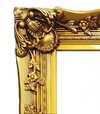
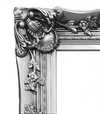
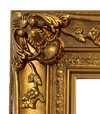

Pick from our preset sizes that match the artwork's original proportions.

Type the width and the height you need, to fit your frame or your wall. A print can only be cut, never made bigger than the picture, so a size with a different shape loses a part of the image. We send you a digital mockup to approve before we print anything. The picture shown on this page does not show the real cut — only the mockup does.
Worldwide Delivery () in 2 weeks instead of standard 4/5 weeks. (17 November)

Free Worldwide Express Shipping

High-Quality Linen Canvas

Full Shipping Insurance

Customs Tax Refund Guarantee

True Color Matching Guarantee

100-Day Return Policy (Defects Only)

100% Money-Back Guarantee

Bulk Discount Offer
 Glass option is only available in size under 110 CM

Composition study
Giclée / Art Print
Reproduction Size
-


Total Price
$ 62
Composition Study: A Meditation on Movement and Mortality
Ferdinand Hodler’s “Composition Study,” executed in 1908, transcends mere visual representation; it embodies a profound exploration of human experience framed within the framework of Symbolism. Measuring 76 x 33 cm, this pencil sketch captures a moment frozen in time—a dynamic tableau featuring three horsemen engaged in strenuous exertion against a backdrop of figures observing their activity. The artwork’s genesis lies in Hodler's fascination with the human form and its relationship to the natural world, themes that would dominate his artistic output throughout his career.- Subject Matter: The central focus is undeniably athletic—three horsemen pushing themselves to their physical limits. However, Hodler doesn’t merely depict muscle and movement; he imbues it with a deeper significance.
- Style & Technique: Hodler's signature style is characterized by flattened planes of color and simplified forms, reflecting the influence of Cézanne and Japanese prints. The pencil strokes are deliberate and expressive, conveying both strength and vulnerability simultaneously. Notice how Hodler utilizes hatching to build up tonal values, creating a sense of depth without resorting to traditional perspective.
- Symbolism: The positioning of the figures—one actively engaged in lifting weights, another supporting him—suggests a collaborative effort against adversity. This visual metaphor speaks to the broader Symbolist concern with overcoming obstacles and achieving transcendence.
- Emotional Impact: “Composition Study” evokes a palpable sense of exertion and determination. Yet, beneath the surface lies an underlying melancholy – a subtle acknowledgment of human limitations. Hodler’s masterful use of tonal gradation contributes to this emotional depth, inviting contemplation on themes of struggle and resilience.
Questions & Answers
In which year and which movement was "Composition study" made?
"Composition study" by Ferdinand Hodler is dated 1908 and belongs to Symbolic Expressionism.
How does "Composition study" by Ferdinand Hodler connect Symbolic Expressionism to the artist's home country?
"Composition study" was created by Ferdinand Hodler, born in Switzerland, within the Symbolic Expressionism movement. The artist's origin links the work to Symbolic Expressionism as practiced by artists from Switzerland.
How many people view "Composition study"?
Statistics about "Composition study" by Ferdinand Hodler are on the artwork's Stats page: monthly visits of the artwork, visits of the artist's works, and country and language breakdowns of recent visitors.
Related Artworks


Artist Biography
The Architecture of Mortality
Born in Bern, Switzerland, in 1853, Ferdinand Hodler’s early years were defined by a quiet, persistent grief. Before he reached adolescence, the tuberculosis that claimed his father and two younger brothers left a void in his household. This early encounter with loss became a recurring motif in his work, a shadow that would follow him from the modest beginnings of his apprenticeship to the heights of his professional career. He began his training as a decorative painter, assisting his stepfather with commercial sign-work, a practical education that instilled in him a precise command of line and form. This foundation in craftsmanship provided the technical rigor that would later support his more complex philosophical inquiries.
His move to Geneva in 1871 marked a departure from the commercial demands of his youth. In the city, he sought a more profound engagement with art, attending science lectures and copying the works of masters in the local museum. It was here that he began to move away from the meticulous realism of his early landscapes and portraits. He was no longer content to merely replicate the scenery of the Swiss Alps or the likeness of a sitter; he sought to capture the underlying rhythms of existence. This transition from the objective to the subjective would eventually lead him to develop a visual language entirely his own.
The Logic of Parallelism
Hodler’s most significant contribution to the evolution of modern painting was his theory of parallelism. This was not merely a compositional technique but a way of seeing the world as a series of interconnected, rhythmic patterns. He observed how forms in nature—the slope of a mountain, the curve of a human limb, or the reflection in water—often mirrored one another in a structured, geometric harmony. By arranging figures and landscape elements in these repetitive, rhythmic cadences, he attempted to depict the structural order he believed governed the natural world. This approach allowed him to bridge the gap between the physical reality of a scene and the emotional state of the observer.
His work often occupied the space between Symbolism and a more structured, modern sensibility. In works such as The Night, completed in 1890, he explored themes of repose and mortality through recumbent figures, a subject that challenged the prevailing tastes of the time. His ability to blend classical form with a modern, almost structural intensity is evident in Truth II (1897). He did not rely on the chaotic brushwork of his contemporaries; instead, he used a deliberate, often muted palette of ochres, browns, and greens to create a sense of permanence and weight. His canvases were not mere windows into a scene, but organized environments where the human spirit and the landscape were bound together by a shared geometry.
A Life in Landscapes
The Swiss landscape remained a constant presence in his oeuvre, particularly the grandeur of the Alps. He viewed these mountains not just as topographical features, but as spiritual entities. His depictions of the Eiger, Monch, and Jungfrau, or the views from the Dents du Midi, reflect a desire to translate the scale of the mountains into a language of emotional resonance. He often utilized a layering process, applying thin washes of color over thicker impasto to achieve a specific luminosity, particularly in his later studies of light over Lake Geneva. These works demonstrate a mastery of atmosphere, capturing the hazy, ethereal quality of Alpine light without sacrificing the structural integrity of the terrain.
By the time of his death in Geneva in 1918, Hodler had established himself as a central figure in Swiss art history. His influence can be seen in the development of Expressionism, as his emphasis on subjective emotion and rhythmic form provided a foundation for those who sought to move beyond traditional representation. He remained a painter of profound psychological depth, using the tools of his craft to confront the fundamental questions of life and death. His legacy is found in the way he forced the viewer to look past the surface of the world to find the silent, repeating patterns that hold it together.

Ferdinand Hodler
1853 - 1918 , Switzerland
Quick Facts
- Artistic Movement Or Style: Symbolism, Parallelism, Realism
- Artists Or Movements Influenced By This Artist: ['Expressionism']
- Artists Who Influenced This Artist:
- Alexandre Calame
- Dürer
- Gustave Courbet
- Hans Holbein
- Titian
- Poussin
- Velázquez
- Barthélemy Menn
- Full Name: Ferdinand Hodler
- Nationality: Swiss
- Notable Artworks:
- The Night
- The Day
- Truth II
- Poetry
- Place Of Birth: Bern, Switzerland
- Date Of Birth: 1853
- Date Of Death: 1918
Related Articles

Mastering Parallelism: The 25 Greatest Artworks by Ferdinand Hodler
Immerse yourself in the rhythmic beauty of Ferdinand Hodler. Explore 25 iconic masterpieces of Swiss Symbolism and Parallelism, from emotive landscapes to profound portraits. Find museum-quality art reproductions for your decor. Discover all masterpieces on WikiOO.org.

Mastering Parallelism: The Top 25 Essential Artworks by Ferdinand Hodler
Immerse yourself in the rhythmic beauty of Ferdinand Hodler. Explore 25 iconic masterpieces of Swiss Symbolism and Parallelism. From emotive landscapes to legendary portraits, find inspiration for museum-quality art reproductions and decor. Discover all masterpieces on WikiOO.org.

Mastering Parallelism: The Top 25 Essential Artworks by Ferdinand Hodler
Explore 25 iconic Ferdinand Hodler masterpieces and his unique Parallelism style. Discover the full collection online at WikiOO.org.

Mastering Parallelism: The Top 25 Essential Artworks by Ferdinand Hodler
Explore 25 iconic Ferdinand Hodler masterpieces and his unique Parallelism style. Discover the full collection on WikiOO.org.

Mastering Parallelism: The 25 Most Iconic Artworks by Ferdinand Hodler
Immerse yourself in the rhythmic beauty of Ferdinand Hodler. Explore 25 iconic masterpieces of Swiss Symbolism and Parallelism. From soulful landscapes to profound portraits, find inspiration for your collection with museum-quality reproductions. Discover all masterpieces on WikiOO.org.


