

- 33.0 x 46.0 cm


 Preview

 Send
 Share
 Details
 Guide


 Download
 Similars
 X-Ray
 Diaporama
 Q&A
 Stats
Look closer
Every detail, painted by hand
Three spots of the painting, enlarged. Our artists reproduce each of them by hand, at the size you choose.
i.
The heart of the scene.
ii.
Light and background.
iii.
The brushwork.
The painting
Collectible Description
 Read More
Artist Biography
A Victorian botanical artist known for her vibrant oil paintings at Kew Gardens. Explore her exotic floral masterpieces today.
A Window Into Ancient Majesty: Marianne North’s ‘Boro Bodo, Java’
Marianne North's "Boro Bodo, Java," painted in 1876, is more than simply a depiction of an Indonesian temple; it’s a vibrant testament to Victorian exploration, botanical curiosity, and the burgeoning field of scientific illustration. This oil-on-canvas work offers a remarkably intimate glimpse into Borobodur, a colossal Mahayana Buddhist monument rising from the lush landscape of Java. The painting immediately draws the eye with its serene palette – a harmonious blend of cerulean blues mirroring the expansive sky, punctuated by fluffy white clouds that lend an ethereal quality to the scene. Lush greenery dominates the foreground, meticulously rendered to convey both the density and vitality of the surrounding jungle, framing the monumental temple in a way that emphasizes its scale and integration with nature.
North’s approach was revolutionary for her time. Unlike many artists who relied solely on sketches or brief observations, she embarked on extensive expeditions throughout Southeast Asia, meticulously documenting flora and fauna alongside her artistic pursuits. She traveled extensively, often accompanied by local guides, immersing herself in the cultures and environments she sought to capture. This dedication resulted in a vast portfolio of over 800 watercolors, each reflecting not just visual accuracy but also a deep respect for the natural world. “Boro Bodo, Java” exemplifies this approach; it’s clear that North spent considerable time studying the temple's architecture and the surrounding ecosystem before committing her observations to canvas.
The Architecture of Belief: Symbolism in Borobodur
Borobodur itself is a profound symbol – a testament to Buddhist cosmology and the aspirations of its creator, King Syailendra. Constructed over centuries, beginning in the 8th century, it represents a journey towards enlightenment, ascending through nine tiers representing different levels of existence. The temple’s intricate carvings depict scenes from Hindu epics like the Ramayana and Mahabharata, alongside Buddhist scriptures, illustrating the syncretic religious beliefs prevalent during that era. North's painting subtly captures this layered symbolism; the sheer scale of the structure speaks to its ambition, while the surrounding vegetation hints at the earthly realm from which spiritual ascent is sought.
The temple’s design incorporates astronomical alignments, reflecting a sophisticated understanding of celestial movements. North’s depiction, though rendered in a realistic style, avoids overly literal representation, instead focusing on conveying the overall grandeur and sense of mystery surrounding this ancient monument. The careful placement of trees and the play of light suggest a connection between the earthly and divine – a visual metaphor for the spiritual journey represented by Borobodur itself.
Technique and Vision: A Victorian Masterpiece
North’s technique is characterized by a meticulous attention to detail, achieved through painstaking observation and skillful brushwork. She employed a layered glazing method, building up color gradually to create depth and luminosity. The use of light and shadow is particularly noteworthy, enhancing the three-dimensional effect of the temple's architecture and creating a sense of atmosphere. Her palette, while rooted in naturalistic hues, possesses a subtle vibrancy that elevates the painting beyond mere documentation.
It’s important to note that North was not simply copying what she saw; she was actively interpreting it through her artistic lens. The composition is carefully balanced, drawing the eye upwards towards the temple's central structure while simultaneously grounding it in the surrounding landscape. This skillful arrangement creates a harmonious and visually engaging image—a testament to North’s artistic vision and her ability to capture both the beauty and significance of Borobodur.
Bringing ‘Boro Bodo, Java’ Home: Reproduction Possibilities
WikiOO offers exceptional hand-painted reproductions of Marianne North's “Boro Bodo, Java,” meticulously crafted to faithfully recreate the original painting’s atmosphere and detail. These reproductions are created using archival quality materials and techniques, ensuring their longevity and vibrancy for generations to come. Whether you seek a stunning addition to your home décor or an investment piece for your art collection, our reproduction captures the essence of North's remarkable work – a window into ancient majesty and a celebration of Victorian exploration and artistic dedication.
Questions & Answers
At what size is "'Boro Bodo, Java'" recommended to be printed?
"'Boro Bodo, Java'" is recommended at a medium print size. Other sizes are available with the same proportions.
Is "'Boro Bodo, Java'" by Marianne North in the public domain, and why?
"'Boro Bodo, Java'" by Marianne North is in the public domain - its copyright has expired. Copyright duration runs from the artist's death, which occurred in 1890.
What color palette is used in "'Boro Bodo, Java'" by Marianne North?
The colors of "'Boro Bodo, Java'" form an earthy palette. This classification describes the dominant color families.

Marianne North
1831 - 1890, United Kingdom
The painter
Artist Biography
Early Life, Family and Training
Marianne North was born on 24 October 1830 in Hastings, England. She was the eldest of three children born to Frederick North and Janet Marjoribanks. Her father held significant local influence, serving as a Norfolk deputy lieutenant, a justice of the peace, and the M.P. for Hastings. This social standing provided a specific type of stability that North would eventually trade for a life of movement. Her early interest in botany likely originated from her father's connection to Sir Joseph Dalton Hooker, a relationship that placed the natural sciences within her immediate social orbit.
The trajectory of her artistic development was shaped by personal loss. Following the death of her mother, North turned to flower painting. This was not a mere hobby; it was the beginning of a technical discipline that would define her career. While her early years were marked by the structured expectations of a prosperous family, her training became increasingly specialized. In 1867, she studied oil painting under Valentine Bartholomew, a move that moved her beyond the watercolor traditions typical for women of her class and toward the heavy, opaque medium she would use in the field.
Global Expeditions and Botanical Travels
North’s career was defined by a refusal to remain within the domestic confines expected of a Victorian woman. Between 1871 and 1885, she traveled across six continents, visiting 17 countries to document flora in situ. This was not a series of casual sightseeing trips. She moved through Canada, the United States, and Jamaica in 1871–72, establishing a pattern of direct observation that would define her output. Her independence was a practical necessity for her work; she traveled almost always on her own, funding her own expeditions through her personal fortune.
The scale of her movement was immense. She spent a year in Brazil, working from a hut deep within the forest to capture specimens in their natural habitats. This immersion allowed her to record plants in their specific ecological contexts rather than as isolated specimens. In 1878, she dedicated the entire year to various parts of India. Her ability to maintain this level of activity—visiting 15 countries in 14 years—demonstrates a logistical determination that few of her contemporaries could match. She did not rely on the curated collections of institutions, preferring the reality of the field.
Technique and Artistic Style
North’s approach to botanical illustration broke from the standard watercolor traditions of the Victorian era. While her contemporaries favored light, transparent washes on white backgrounds, she worked with oil paints on cardboard. This choice was practical as much as it was stylistic. Painting in the field required speed and durability, and oils allowed her to capture the saturated colors of tropical flora before the light failed. Her method was direct. She typically sketched her compositions in graphite or ink first, then applied color to the prepared surface. In many instances, she utilized a wet-in-wet technique, mixing colors directly on the substrate to achieve immediate depth. This resulted in a heavy, textured application that prioritized the immediate presence of the plant over the sterile, isolated specimens found in scientific journals.
Her palette was disciplined, a necessity for a woman carrying supplies across six continents. She relied on a restricted selection of pigments, specifically cobalt blue, lead white, and the red dye madder. This economy of materials ensured her work maintained a consistent intensity. She avoided the frequent use of black paint, which often muddies a composition. Instead, she managed color temperature and intensity by using blue, green, or orange to tone down overly strong hues. This technical control allowed her to depict plants within their natural habitats, often including animals, temples, or landscapes to provide environmental context. The result is a record of species that is as much about the atmosphere of a specific location as it is about the anatomy of the plant itself.
Key Works and Notable Paintings
North’s output was massive, consisting of 832 oil studies executed directly from life. She did not rely on the sterile, isolated specimens favored by her contemporaries. Instead, her canvases capture plants within their specific habitats. In Tegoro, Sarawak, she documents the lushness of the Borneo region, while On the Way from Tibet near Nagkunda, North India captures the dramatic scale of Himalayan landscapes. These works function as visual records of environments that have since undergone significant change.
Her ability to integrate flora with specific geographic markers is evident in her Indian subjects. Foliage, Flowers and Fruit of the Cashew, Tanjore, India and Elephant Gate and Neem Tree at Chittore, India demonstrate her focus on the intersection of botanical life and local scenery. She often included animals or architectural elements to ground the plants in a real sense of place. This approach distinguishes her work from the standard botanical illustrations of the 19th century.
The physical presence of her paintings comes from her choice of medium. By using oil on cardboard, she achieved a density of color that watercolor could not provide. This was a practical necessity for her field work, allowing her to work quickly in difficult conditions. The Chumpa or Champak is a clear example of this direct, heavy application of pigment. Her work remains a primary source for understanding the biodiversity of the 19th century.
Legacy and the Kew Gardens Gallery
The Marianne North Gallery at the Royal Botanic Gardens, Kew, remains a singular presence in British art history. It holds the distinction of being the only permanent solo exhibition by a female artist in Britain. This was not a passive donation; North commissioned the space in 1879 and took an active hand in its creation, designing the interior herself. Her influence extends beyond the canvases to the very architecture of the viewing experience. By gifting her collection to Kew in 1882, she ensured her specific vision of global botany would remain intact and accessible.
The collection consists of over 800 paintings that document plant life from across the globe. These works provide a visual record of species that may now be endangered or extinct, making the gallery a site of both artistic and scientific importance. Unlike traditional botanical illustrations of the era that used watercolor on plain backgrounds, North’s oil paintings capture plants within their natural habitats, often including animals, temples, or people. This approach provides a sense of the specific environments she encountered during her travels.
Quick facts about Marianne North
- Artistic Movement Or Style: Victorian naturalism
- Artists Who Influenced This Artist: ['Frederic Edwin Church']
- Full Name: Marianne North
- Nationality: British
- Notable Artworks:
- Tegoro, Sarawak
- On the Way from Tibet near Nagkunda
- Foliage, Flowers and Fruit of the Cashew
- Elephants, Exotic Fish, and Leaf Insect
- Place Of Birth: Hastings, United Kingdom
- Date Of Birth: 1830
- Date Of Death: 1890


Hand Made Oil Reproduction
Have it painted for you
Hand Made Oil Reproduction
Hand-painted oil on canvas in your size and frame, made to order by our artists. ( Switch to Print Switch to Digital Image)

Your commission

'Boro Bodo, Java'
Reproduction Medium
Reproduction Size
-

Elite Senior Artist
More detail, finesse, and extra production time
-

Reproduction Frame
-
-
For artworks or reproductions larger than 105 cm (approximately 41 inches) on any side, the frame will be shipped as a kit, disassembled. This method ensures safe delivery and prevents damage during transport.
Professional assembly required - this is not a DIY product.
The kit must be assembled and the canvas stretched by an experienced professional framer, using wood glue (not supplied), a canvas stretching plier and clamps to hold the bars square while the glue dries. Incorrect assembly or uneven canvas tension can permanently damage the artwork and is not covered by our warranty.
 For artworks or reproductions larger than 105 cm (approximately 41 inches) on any side, the frame will be shipped as a kit, disassembled. This method ensures safe delivery and prevents damage during transport.
All solid wood bars are included, precisely cut to size.
Assembled with the screws provided, plus wood glue for the corner joints, which is not supplied and must be sourced by your framer.
Professional tools are required and not included: a canvas stretching plier (tensioner) and clamps to hold the bars square while the glue dries.
Important:
The corner joints require wood glue, the bars must be held with clamps until the glue is fully dry, and tightening the canvas on the assembled frame requires a canvas stretching plier. None of these are included in the kit. Please arrange an experienced professional framer before ordering this size.

Nameplate
-
-

Protective Varnish
Glossy Varnish (enhances colors, protects against light/moisture)
-

Customize My Artwork
Examples of what can be changed: Replace face with customer photo; Add pet (e.g., replace cat with dog); Include hidden message in background; Change background landscape or elements.
-

Urgent
Worldwide Delivery () in 3/4 weeks instead of standard 5 weeks. (18 November). No compromise on quality.
-
Express Shipping
Worldwide Delivery () in 5 weeks. (25 November).
Included
Total Price
$ 265
Glass option is only available in size under 110 CM
i.
Scale
The original measures 33.0 x 46.0 cm. Slide to your wall: every size keeps its proportions.
Pick from our preset sizes that match the artwork's original proportions.

Type the width and the height you need, to fit your frame or your wall. This is hand-painted, so for a size with a different shape the artist can paint a bit more around the picture, or cut a bit — you choose. We send you a digital mockup to approve before the painting starts. The picture shown on this page does not show the real result — only the mockup does.
ii.
Frame
The frame is drawn on the painting at its true width.
Framed

White $1

Blurside $1

Extended $1

P118B $10

P118H $10

P118W $10

P438Z $10

P508JH $12

P508YH $12

P805H $10

P805Z $10

P919BZ $10

P919G $10

P919XJ $10

P959ZH $10

P968JZ $12

W106C $8

W218G $10

W218JH $8

W218Y $10

W307PJ $10

W316G $10

W316PJ $8

W316Y $10

W398PJ $8

W4111J $10

W500HY $15

W500JH $15

W692G $12

W849H $8

W940BG $15

W953PJ $8
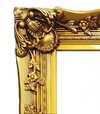
H24-GOLD $30
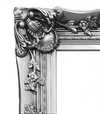
H24-SILVER $30
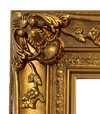
H36-GOLD $45

H36-SILVER $45
iii.
Make it yours
A painting made by hand can be made for one person.
iv.
Finishing
Nameplate, varnish and delivery.
Nameplate
Engraved Bronze Plaque Details
This elegant plaque features the artist's name and the title of the artwork, finely engraved for a timeless presentation.
It is made from bronze with a refined, elegant finish. The text is precisely laser-engraved for a sharp and permanent result. Measuring 9x2 cm, the plaque is compact yet easy to read. It's built to be durable and scratch-resistant, offering a professional, museum-quality look. Mounting is simple thanks to the included adhesive backing.
Transparent Acrylic Plaque Details
The plaque includes essential engraved details such as the artist's name, the title of the artwork, the date it was created, the type of media used-like oil on canvas or watercolor-a brief description of the piece, and a QR code that links to the complete artwork information.
It is crafted from clear acrylic, offering a sleek, modern appearance. The text is UV-engraved in black to ensure strong visual contrast. With a size of 10x15 cm, it ensures optimal readability. It comes equipped with two metal hooks for secure wall mounting. The plaque is designed to be weather-resistant, making it suitable for various environments, and it includes interactive features that work seamlessly with smartphone scanning.
Black Acrylic Plaque Details
This elegant plaque includes engraved information such as the artist's name, the title of the artwork, the date it was created, the type of media used (like oil on canvas or watercolor), a short description of the artwork, and a QR code for quick access to more information.
The plaque itself is made from refined black acrylic with a premium finish. The text is laser-engraved in white for high contrast and readability. Its size is 10x15 cm, designed to be easy to read. It comes with two metal hooks for professional mounting. The design is sleek and fits any interior style. It is also weather-resistant and durable, with built-in digital integration for mobile compatibility.
Protective Varnish
Urgent Production
Worldwide Delivery () in 3/4 weeks instead of standard 5 weeks. (18 November). No compromise on quality.
- Free Worldwide Express Shipping
- High-Quality Linen Canvas
- Full Shipping Insurance
- Customs Tax Refund Guarantee
- True Color Matching Guarantee
- 100-Day Return Policy (Defects Only)
- 100% Money-Back Guarantee
- Bulk Discount Offer


Quick facts and art quiz
Related Articles

Nature Unbound: The Top 25 Masterpieces by Victorian Explorer Marianne North
Embark on a global journey through the vibrant botanical landscapes of Marianne North. Explore 25 iconic Victorian masterpieces, from lush tropical flora to rare scientific illustrations. Find museum-quality art reproductions and decor inspiration. Discover all masterpieces on WikiOO.org.

Nature Unbound: The Top 25 Masterpieces by Victorian Explorer Marianne North
Explore 25 iconic botanical landscapes by Marianne North. Discover these Victorian masterpieces on WikiOO.org.

Nature Unbound: The Top 25 Masterpieces by Victorian Explorer Marianne North
Journey through the vibrant world of Marianne North. Explore 25 iconic botanical masterpieces that blend Victorian adventure with scientific beauty. Find museum-quality art reproductions and decor inspiration for your home. Discover all masterpieces on WikiOO.org.

Nature Unbound: The Top 25 Masterpieces by Victorian Explorer Marianne North
Embark on a global journey through the vibrant botanical world of Marianne North. Explore 25 iconic Victorian landscapes and lush floral masterpieces, perfect for fine art collectors and decor inspiration. Discover all masterpieces on WikiOO.org.
Related Artworks


