

 Preview
 Send
Send Share
Share
 Details
 Guide
Guide

 Download
 Similars
 X-Ray
X-Ray Diaporama
 Q&A
Q&A Stats
StatsLook closer
Every detail, painted by hand
Powerful figurative painting by Max Weber depicting a man’s struggle. Expressive watercolor style, dynamic composition & emotional intensity. Explore this unique work!
i.
The heart of the scene.
ii.
Light and background.
iii.
The brushwork.
The painting
This Artwork Is Under Copyright Protection
The artwork displayed on this page is protected by copyright law, which means we cannot legally create or sell an identical reproduction. This protection is enforced under international agreements such as the Berne Convention and by national laws, including those outlined by the U.S. Copyright Law - Title 17.
As a respectful and legal alternative, we offer custom, hand-painted artworks inspired by the original. Our skilled and professional artists carefully study the original's style, mood, and artistic essence to create a new, unique piece that evokes the same feeling - while remaining an original creation in its own right.
This method fully complies with copyright regulations because it does not involve copying or duplicating the protected artwork. Instead, it is a creative reinterpretation - a new painting that is influenced by the original but not identical to it.
 Read more
Max Weber
1881 - 1961, Poland
The painter
Pioneering American Cubist Max Weber (1881-1961) bridged European Modernism & Jewish heritage. Explore his bold early works & expressive figurative paintings.
Artist Biography
Early Life and the Seeds of Modernism
Max Weber, born in Białystok, Poland in 1881, embarked on a journey that would indelibly mark the landscape of American art. His early life was steeped in the traditions of Orthodox Judaism, a heritage that would later profoundly influence his artistic expression. The family’s emigration to Brooklyn, New York, when Weber was just ten years old, proved pivotal. This relocation thrust him into a vibrant, rapidly changing society—a crucible where Old World roots and New World aspirations collided. It was at the Pratt Institute in Brooklyn that Weber first formally engaged with art, studying under the influential Arthur Wesley Dow. Dow’s emphasis on innovative approaches to artistic creation, coupled with his exposure to Japanese aesthetics and connections to Paul Gauguin, ignited within Weber a nascent modernist sensibility.
The Parisian Awakening and Introduction of Cubism
In 1905, Weber ventured to Europe, specifically Paris, the epicenter of avant-garde thought. His time at the Académie Julian was merely a starting point; it was his immersion in the city’s artistic milieu that truly transformed him. He forged friendships with Henri Rousseau, whose naive yet profound style captivated him, and found himself drawn into the orbits of luminaries like Henri Matisse and Pablo Picasso—artists who were dismantling traditional notions of representation. Weber frequented Gertrude Stein's salon, a legendary gathering place for artists, writers, and intellectuals, and became acquainted with Guillaume Apollinaire, absorbing the latest currents in poetry and art theory. This exposure to the School of Paris fundamentally altered his artistic trajectory.
Upon returning to New York in 1909, Weber assumed the role of a cultural emissary, bravely introducing Cubism to an American audience largely unfamiliar with its radical principles. His early works during this period, such as Chinese Restaurant (1915), stand as compelling evidence of his embrace of Cubist fragmentation and geometric abstraction. However, this pioneering spirit was met not with acclaim but with fierce resistance.
Critical Backlash and a Steadfast Vision
The 1911 exhibition at the 291 Gallery, organized by Alfred Stieglitz, proved to be a watershed moment—and a deeply bruising one for Weber. His work was subjected to what many consider “one of the most merciless critical whippings” ever endured by an American artist. Critics dismissed his paintings as “brutal,” “vulgar,” and utterly devoid of artistic merit. The public struggled to comprehend the radical departure from representational norms, and Weber found himself ostracized by much of the art establishment.
Despite this discouraging reception, Weber’s talent did not go unnoticed by his peers. Artists like Alvin Langdon Coburn, Clarence White, and John Cotton Dana recognized the significance of his work and offered crucial support. Dana's decision to host a one-man exhibition at the Newark Museum in 1913 was particularly groundbreaking—it marked the first modernist exhibition ever held in an American museum, signaling a tentative shift in attitudes towards avant-garde art.
A Return to Figuration and Jewish Heritage
The sustained critical hostility eventually led Weber to reassess his artistic direction. Around 1920, he began to move away from the strictures of Cubism, turning instead toward more figurative themes. This shift was not a rejection of modernism but rather an exploration of new avenues for expression. His later work often depicted scenes from Jewish life—families gathered in intimate settings, rabbis engaged in Talmudic study, and evocative portraits that captured the spiritual depth of his heritage. These paintings were imbued with a profound sense of nostalgia and a renewed connection to his roots.
Legacy and Recognition
While initially overlooked, Weber’s contributions to American art gradually gained recognition in the decades following World War II. By the 1940s and 50s, his expressionist figurative paintings were attracting considerable attention. A major retrospective at the Jewish Museum in 1982 cemented his place in art history, solidifying his reputation as a pivotal figure in the development of American modernism.
Life magazine hailed him as a “pioneer of modern art in America” in 1945, and a Look magazine survey in 1948 ranked him second only to John Marin among the greatest living American artists. Today, Max Weber is celebrated not only for his early role in introducing European Modernism to the United States but also for his unique ability to synthesize diverse influences—Cubist experimentation, Jewish iconography, and a deeply personal vision—into a body of work that continues to resonate with audiences.
- Born: Bialystok, Poland (1881)
- Died: 1961
- Key Movements: Cubism, Modern Art, Expressionism, Jewish Art
Quick facts about Max Weber
- Artistic Movement Or Style: Cubism, Expressionism
- Artists Or Movements Influenced By This Artist: ['American Cubism']
- Artists Who Influenced This Artist:
- Henri Matisse
- Pablo Picasso
- Arthur Wesley Dow
- Date Of Birth: 1881
- Date Of Death: 1961
- Full Name: Max Weber
- Nationality: American
- Notable Artworks:
- Chinese Restaurant
- untitled (8675)
- untitled (7723)
- Place Of Birth: Bialystok, Poland


Hand Made Oil Reproduction
Have it painted for you
Hand Made Oil Reproduction
Hand-painted oil on canvas in your size and frame, made to order by our artists. ( Switch to Print Switch to Digital Image)

Your commission

untitled (833)
Reproduction Medium
Reproduction Size
-

Elite Senior Artist
More detail, finesse, and extra production time
-

Reproduction Frame
-
-
For artworks or reproductions larger than 105 cm (approximately 41 inches) on any side, the frame will be shipped as a kit, disassembled. This method ensures safe delivery and prevents damage during transport.
Professional assembly required - this is not a DIY product.
The kit must be assembled and the canvas stretched by an experienced professional framer, using wood glue (not supplied), a canvas stretching plier and clamps to hold the bars square while the glue dries. Incorrect assembly or uneven canvas tension can permanently damage the artwork and is not covered by our warranty.
 For artworks or reproductions larger than 105 cm (approximately 41 inches) on any side, the frame will be shipped as a kit, disassembled. This method ensures safe delivery and prevents damage during transport.
All solid wood bars are included, precisely cut to size.
Assembled with the screws provided, plus wood glue for the corner joints, which is not supplied and must be sourced by your framer.
Professional tools are required and not included: a canvas stretching plier (tensioner) and clamps to hold the bars square while the glue dries.
Important:
The corner joints require wood glue, the bars must be held with clamps until the glue is fully dry, and tightening the canvas on the assembled frame requires a canvas stretching plier. None of these are included in the kit. Please arrange an experienced professional framer before ordering this size.

Nameplate
-
-

Protective Varnish
Glossy Varnish (enhances colors, protects against light/moisture)
-

Customize My Artwork
Examples of what can be changed: Replace face with customer photo; Add pet (e.g., replace cat with dog); Include hidden message in background; Change background landscape or elements.
-

Urgent
Worldwide Delivery () in 3/4 weeks instead of standard 5 weeks. (29 October). No compromise on quality.
-
Express Shipping
Worldwide Delivery () in 5 weeks. (5 November).
Included
Total Price
$ 265
Glass option is only available in size under 110 CM
i.
Scale
Slide to your wall: every size keeps the proportions of the original.
Pick from our preset sizes that match the artwork's original proportions.

Type the width and the height you need, to fit your frame or your wall. This is hand-painted, so for a size with a different shape the artist can paint a bit more around the picture, or cut a bit — you choose. We send you a digital mockup to approve before the painting starts. The picture shown on this page does not show the real result — only the mockup does.
ii.
Frame
The frame is drawn on the painting at its true width.
Framed

White $1

Blurside $1

Extended $1

P118B $10

P118H $10

P118W $10

P438Z $10

P508JH $12

P508YH $12

P805H $10

P805Z $10

P919BZ $10

P919G $10

P919XJ $10

P959ZH $10

P968JZ $12

W106C $8

W218G $10

W218JH $8

W218Y $10

W307PJ $10

W316G $10

W316PJ $8

W316Y $10

W398PJ $8

W4111J $10

W500HY $15

W500JH $15

W692G $12

W849H $8

W940BG $15

W953PJ $8

H24-GOLD $30

H24-SILVER $30

H36-GOLD $45

H36-SILVER $45
iii.
Make it yours
A painting made by hand can be made for one person.
iv.
Finishing
Nameplate, varnish and delivery.
Nameplate
Engraved Bronze Plaque Details
This elegant plaque features the artist's name and the title of the artwork, finely engraved for a timeless presentation.
It is made from bronze with a refined, elegant finish. The text is precisely laser-engraved for a sharp and permanent result. Measuring 9x2 cm, the plaque is compact yet easy to read. It's built to be durable and scratch-resistant, offering a professional, museum-quality look. Mounting is simple thanks to the included adhesive backing.
Transparent Acrylic Plaque Details
The plaque includes essential engraved details such as the artist's name, the title of the artwork, the date it was created, the type of media used-like oil on canvas or watercolor-a brief description of the piece, and a QR code that links to the complete artwork information.
It is crafted from clear acrylic, offering a sleek, modern appearance. The text is UV-engraved in black to ensure strong visual contrast. With a size of 10x15 cm, it ensures optimal readability. It comes equipped with two metal hooks for secure wall mounting. The plaque is designed to be weather-resistant, making it suitable for various environments, and it includes interactive features that work seamlessly with smartphone scanning.
Black Acrylic Plaque Details
This elegant plaque includes engraved information such as the artist's name, the title of the artwork, the date it was created, the type of media used (like oil on canvas or watercolor), a short description of the artwork, and a QR code for quick access to more information.
The plaque itself is made from refined black acrylic with a premium finish. The text is laser-engraved in white for high contrast and readability. Its size is 10x15 cm, designed to be easy to read. It comes with two metal hooks for professional mounting. The design is sleek and fits any interior style. It is also weather-resistant and durable, with built-in digital integration for mobile compatibility.
Protective Varnish
Urgent Production
Worldwide Delivery () in 3/4 weeks instead of standard 5 weeks. (29 October). No compromise on quality.
- Free Worldwide Express Shipping
- High-Quality Linen Canvas
- Full Shipping Insurance
- Customs Tax Refund Guarantee
- True Color Matching Guarantee
- 100-Day Return Policy (Defects Only)
- 100% Money-Back Guarantee
- Bulk Discount Offer


Quick facts and art quiz
Related Articles

Ephemeral Visions: Exploring the Artistic Legacy & Contemporary Practice of Watercolor Painting
Explore the captivating world of watercolor painting! Discover its rich history, essential techniques, influential artists & collecting tips. A comprehensive guide for art enthusiasts from WikiOO.
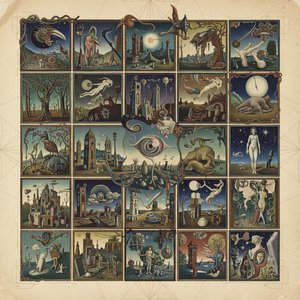
Max Ernst's Masterpieces: 25 Surreal Visions for Art Lovers & Home Decor
Journey into the surreal world of Max Ernst! Explore 25 iconic paintings, from Dada to abstract expressionism. Discover the stories behind his masterpieces & find museum-quality art reproductions for your home decor at WikiOO.org.

Ephemeral Visions: Exploring the History & Emotional Resonance of Watercolor Painting
Explore the captivating history of watercolor painting, from ancient techniques to modern masters like Kandinsky & Blake. Discover essential artists, collecting tips & the emotional power of this luminous medium. Expert insights for art enthusiasts.

Ephemeral Visions: Exploring the Artistic Legacy & Nuances of Watercolor Painting
Explore the captivating world of watercolor painting! Discover its rich history, essential techniques, influential artists & collecting tips from art experts. A comprehensive guide for enthusiasts.
Related Artworks


