

 Preview

 Send
 Share
 Details
 Guide


 Download
 Similars
 X-Ray
 Diaporama
 Q&A
 Stats
Look closer
Every detail, faithfully printed
Three spots of the painting, enlarged. Our giclée printing keeps each of them, at the size you choose.
i.
The heart of the scene.
ii.
Light and background.
iii.
The brushwork.
The painting
Collectible Description
Explore Peter Phillips’ 'Hunter,' a dynamic Pop Art collage blending nature & machinery. A complex, layered artwork featuring bold colors & surreal imagery – perfect for art collectors.
Artist Biography
British Pop Art pioneer known for dynamic montage paintings and vibrant, mechanical collages.
 Read More
This Artwork Is Under Copyright Protection
The artwork displayed on this page is protected by copyright law, which means we cannot legally create or sell an identical reproduction. This protection is enforced under international agreements such as the Berne Convention and by national laws, including those outlined by the U.S. Copyright Law - Title 17.
As a respectful and legal alternative, we offer custom, hand-painted artworks inspired by the original. Our skilled and professional artists carefully study the original's style, mood, and artistic essence to create a new, unique piece that evokes the same feeling - while remaining an original creation in its own right.
This method fully complies with copyright regulations because it does not involve copying or duplicating the protected artwork. Instead, it is a creative reinterpretation - a new painting that is influenced by the original but not identical to it.

Peter Phillips
1939 - 2025, United Kingdom
The painter
Artist Biography
Early Life, Family and Training
Peter Phillips enters the scene in Bournville, Birmingham, England, on 21 May 1939. His formative years are shaped by the industrial landscape of the West Midlands. Between 1953 and 1955, he undergoes his first formal artistic training at the Moseley Road Secondary School of Art. This period provides the technical foundation for what follows. He moves from there to the Birmingham School of Art, where he studies from 1955 to 1959.
The trajectory shifts in 1959 when he enters the Royal College of Art. This is a period of intense creative proximity. He studies alongside a specific cohort of emerging talents, including David Hockney, Allen Jones, and R.B. Kitaj. The atmosphere is one of rapid evolution. By 1962, his time at the Royal College of Art concludes, leaving him prepared to engage with the shifting visual language of the decade.
The Rise of British Pop Art
The early 1960s witness a shift in the British landscape as Phillips emerges as an originator of Pop Art. The movement finds a visual voice through his work, moving away from traditionalism toward the aggressive imagery of consumer culture. In 1962, the movement enters the living rooms of the public when Phillips appears as a subject in the BBC programme "Pop Goes the Easel." This moment marks a transition from the studio to the broader cultural consciousness.
The momentum continues through the academic and exhibition circuits. Between 1962 and 1963, Phillips shifts from student to educator, teaching at both the Coventry College of Art and the Birmingham College of Art. His influence spreads across the continent as his work is included in a major Pop Art exhibition held in 1964, traveling through The Hague, Vienna, and Berlin. The rapid expansion of his reputation reaches a critical hinge in 1964 when he is awarded a Harkness Fellowship, a development that prepares him for the next stage of his career.
The New York and International Era
The momentum of the early 1960s carries Phillips toward the center of the global art scene. In 1963, his work finds a stage at the Paris Biennale. This international exposure precedes a transformative shift in 1964, when a Harkness Fellowship facilitates his move to New York City. He remains in the United States until 1966, living in the heart of the movement he helped define. The city provides a direct encounter with the mechanics of American Pop Art; he exhibits alongside Andy Warhol, Roy Lichtenstein, and James Rosenquist. In 1965, the Kornblee Gallery hosts his first solo exhibition in the United States, marking his established presence in the American market.
The focus shifts back to Europe as the decade closes. Between 1968 and 1969, Phillips moves into academia, serving as a guest teacher at the Hochschule für bildende Künste Hamburg. This period of instruction follows his time in the United States and precedes a decade of further international movement. His presence in the European art circuit remains constant, bridging the gap between the aggressive commercial iconography of New York and the evolving sensibilities of the continent.
Technique and Artistic Style
Phillips moves fluidly between the traditional and the experimental. His practice spans from conventional oils on canvas to complex multi-media compositions and collages. He does not limit himself to the two-dimensional plane, extending his reach into sculpture and architectural interventions. This versatility allows him to manipulate the physical space around an object, treating the environment itself as a site for artistic inquiry.
The core of his visual language lies in the dynamic montage. He assembles fragmented imagery into high-impact compositions, often utilizing bold color palettes to command attention. This approach draws heavily from the influence of Jasper Johns and Robert Rauschenberg, particularly in his embrace of unconventional techniques and the use of everyday imagery. He dissects the visual noise of the modern age, pulling apart the components of commercial iconography and advertising to reassemble them into something new. The result is a tension between the precision of graphic design and the chaos of mass media.
His work often functions as a collision of disparate elements. He layers photographic realism with geometric abstraction, creating a sense of depth through overlapping shapes and thick, expressive lines. This method captures the friction of a consumer-driven society, turning industrial and commercial symbols into complex visual statements.
Key Works and Major Commissions
The early 1960s find Phillips dissecting the mechanics of celebrity and consumerism. In 1961, he produces For Men Only – Starring MM & BB, a two-metre wooden panel collage. It assembles photographic cut-outs of Marilyn Monroe and Brigitte Bardot alongside stars, crosses, and lozenge-style forms. This work marks a sharp departure from traditional painting, using the language of mass media to address fame and erotic imagery. By about 1962, his focus shifts toward the intersection of biology and industry in works like Lions versus Eagles and MULTImotorPLICATION.
As the decade progresses, the imagery becomes more abstract and electrically charged. Spectrocoupling (1972) captures this shift, utilizing energetic, electrical-inspired geometric forms that suggest the pulse of a technological age. The compositions move away from the literal cut-out toward a more structured, rhythmic abstraction.
His influence eventually moved beyond the gallery wall and into the fabric of daily broadcast. In 1995, Phillips designed the Granada Television idents and endboards. These featured the "G-arrow," translating his graphic sensibilities into a functional component of British television identity.
Later Years and Death
The 1970s find Phillips in Zurich, Switzerland. This period follows his marriage to Claude Marion Xylander in 1970. The stability of this decade provides a backdrop to a shifting geographic focus. By 1987, the center of his life moves from Switzerland to Mallorca.
The final decade of his life is spent in Australia. He remains an active force in the art world from this distance. On 23 June 2025, Peter Phillips dies in Sunshine Coast, Queensland.
Legacy and Influence
Phillips remains a central figure in the history of British Pop Art. He functioned as a bridge between two continents, linking the burgeoning movement in the United Kingdom to the epicenter of the scene in the United States. His aesthetic emerged from a unique synthesis, blending American influences with distinctly European sensibilities. This cross-Atlantic connection helped define the movement's reach during a period of rapid cultural transformation.
The permanence of his contribution is visible in major institutional holdings. Over thirty of his prints reside within the Tate Collection, securing his place in the canon of modern British art. His influence extends beyond the gallery walls into the fabric of daily media, evidenced by his design of the Granada Television idents and endboards featuring the “G-arrow” in 1995. He transformed the visual language of commercial iconography into a permanent part of the public consciousness.
Quick facts about Peter Phillips
- Artistic Movement Or Style: Pop Art
- Artists Who Influenced This Artist:
- Jasper Johns
- Robert Rauschenberg
- Full Name: Peter Phillips
- Nationality: English
- Notable Artworks:
- Lions versus Eagles
- MULTImotorPLICATION
- For Men Only – Starring MM & BB
- Spectrocoupling
- Place Of Birth: Birmingham, United Kingdom
- Date Of Birth: 1939
- Date Of Death: 2025


Giclée / Art Print
Have it printed for you
Giclée / Art Print
Museum-quality giclée or canvas print with fast production and flexible finish options. ( Buy Hand Made Painting Switch to Digital Image)

Your commission

Hunter
Reproduction Medium
Reproduction Size
-

Reproduction Frame
-
-
For artworks or reproductions larger than 105 cm (approximately 41 inches) on any side, the frame will be shipped as a kit, disassembled. This method ensures safe delivery and prevents damage during transport.
Professional assembly required - this is not a DIY product.
The kit must be assembled and the canvas stretched by an experienced professional framer, using wood glue (not supplied), a canvas stretching plier and clamps to hold the bars square while the glue dries. Incorrect assembly or uneven canvas tension can permanently damage the artwork and is not covered by our warranty.
 For artworks or reproductions larger than 105 cm (approximately 41 inches) on any side, the frame will be shipped as a kit, disassembled. This method ensures safe delivery and prevents damage during transport.
All solid wood bars are included, precisely cut to size.
Assembled with the screws provided, plus wood glue for the corner joints, which is not supplied and must be sourced by your framer.
Professional tools are required and not included: a canvas stretching plier (tensioner) and clamps to hold the bars square while the glue dries.
Important:
The corner joints require wood glue, the bars must be held with clamps until the glue is fully dry, and tightening the canvas on the assembled frame requires a canvas stretching plier. None of these are included in the kit. Please arrange an experienced professional framer before ordering this size.

Nameplate
-
-

Protective Varnish
Glossy Varnish (enhances colors, protects against light/moisture)
-

Urgent
Worldwide Delivery () in 2 weeks instead of standard 4/5 weeks. (22 November)
-
Express Shipping
Worldwide Delivery () in 4/5 weeks. (29 November).
Included
Total Price
$ 62
Glass option is only available in size under 110 CM
i.
Scale
Slide to your wall: every size keeps the proportions of the original.
Pick from our preset sizes that match the artwork's original proportions.

Type the width and the height you need, to fit your frame or your wall. A print can only be cut, never made bigger than the picture, so a size with a different shape loses a part of the image. We send you a digital mockup to approve before we print anything. The picture shown on this page does not show the real cut — only the mockup does.
ii.
Frame
The frame is drawn on the painting at its true width.
Framed

White $1

Blurside $1

Extended $1

P118B $10

P118H $10

P118W $10

P438Z $10

P508JH $12

P508YH $12

P805H $10

P805Z $10

P919BZ $10

P919G $10

P919XJ $10

P959ZH $10

P968JZ $12

W106C $8

W218G $10

W218JH $8

W218Y $10

W307PJ $10

W316G $10

W316PJ $8

W316Y $10

W398PJ $8

W4111J $10

W500HY $15

W500JH $15

W692G $12

W849H $8

W940BG $15

W953PJ $8
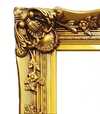
H24-GOLD $30
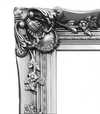
H24-SILVER $30
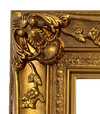
H36-GOLD $45
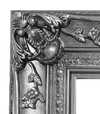
H36-SILVER $45
iii.
Medium
Canvas is printed with giclée inks and can be stretched or framed like a painting; paper comes flat, or framed behind glass.
Glass option is only available in size under 110 CM
iv.
Finishing
Nameplate, varnish and delivery.
Nameplate
Engraved Bronze Plaque Details
This elegant plaque features the artist's name and the title of the artwork, finely engraved for a timeless presentation.
It is made from bronze with a refined, elegant finish. The text is precisely laser-engraved for a sharp and permanent result. Measuring 9x2 cm, the plaque is compact yet easy to read. It's built to be durable and scratch-resistant, offering a professional, museum-quality look. Mounting is simple thanks to the included adhesive backing.
Transparent Acrylic Plaque Details
The plaque includes essential engraved details such as the artist's name, the title of the artwork, the date it was created, the type of media used-like oil on canvas or watercolor-a brief description of the piece, and a QR code that links to the complete artwork information.
It is crafted from clear acrylic, offering a sleek, modern appearance. The text is UV-engraved in black to ensure strong visual contrast. With a size of 10x15 cm, it ensures optimal readability. It comes equipped with two metal hooks for secure wall mounting. The plaque is designed to be weather-resistant, making it suitable for various environments, and it includes interactive features that work seamlessly with smartphone scanning.
Black Acrylic Plaque Details
This elegant plaque includes engraved information such as the artist's name, the title of the artwork, the date it was created, the type of media used (like oil on canvas or watercolor), a short description of the artwork, and a QR code for quick access to more information.
The plaque itself is made from refined black acrylic with a premium finish. The text is laser-engraved in white for high contrast and readability. Its size is 10x15 cm, designed to be easy to read. It comes with two metal hooks for professional mounting. The design is sleek and fits any interior style. It is also weather-resistant and durable, with built-in digital integration for mobile compatibility.
Protective Varnish
Urgent Production
Worldwide Delivery () in 2 weeks instead of standard 4/5 weeks. (22 November)
- Free Worldwide Express Shipping
- High-Quality Linen Canvas
- Full Shipping Insurance
- Customs Tax Refund Guarantee
- True Color Matching Guarantee
- 100-Day Return Policy (Defects Only)
- 100% Money-Back Guarantee
- Bulk Discount Offer


Quick facts and art quiz
Related Articles

Masterpieces of Motion: The Top 25 Artworks by Sir Alfred James Munnings
Experience the vibrant spirit of British equestrian art through the top 25 masterpieces by Sir Alfred James Munnings. From impressionistic landscapes to iconic horse portraits, explore timeless stories and museum-quality reproductions for your decor. Discover all masterpieces on WikiOO.org.

From Warhol to Today's Stars: Recontextualizing Pop Culture Icons Through the Lens of Oil Painting Tradition
Explore the captivating evolution of Pop Art through oil painting! Discover contemporary artists reinterpreting iconic imagery & invest in museum-quality reproductions. Expert art consultation at WikiOO.

Masterpieces of Motion: The Top 25 Greatest Artworks by Peter Paul Rubens
Explore 25 iconic Baroque masterpieces by Peter Paul Rubens. Discover timeless art legends on WikiOO.org.

Humanity Unfiltered: Bold Pop Art Masterpieces That Capture the Raw Human Spirit
Explore the raw power of Pop Art. From Warhol-inspired icons to custom oil portraits, discover bold, hand-painted masterpieces that capture the human spirit. Elevate your space with high-impact, museum-quality art from WikiOO.org.
Related Artworks


