


 Preview
 Send
Send Share
Share
 Details
 Guide
Guide

 Download
 Similars
 X-Ray
X-Ray Diaporama
 Q&A
Q&A Stats
StatsLook closer
Every detail, painted by hand
Three spots of the painting, enlarged. Our artists reproduce each of them by hand, at the size you choose.
i.
The heart of the scene.
ii.
Light and background.
iii.
The brushwork.
The painting
A Surrealist Riddle: Decoding Magritte’s “The Intelligence”
René Magritte’s “The Intelligence,” painted in 1946, isn't merely a depiction of two men contemplating each other; it’s an invitation to delve into the complexities of perception and the elusive nature of reality itself. This iconic Surrealist artwork embodies Magritte’s signature style—characterized by deceptively simple imagery juxtaposed with unsettling contradictions—a technique that continues to fascinate art historians and collectors alike.
- Subject Matter: The painting presents a stark tableau featuring two figures wearing masks, positioned in an ambiguous space dominated by a statue of a woman. This deliberate lack of context amplifies the artwork’s unsettling effect.
- Style & Technique: Magritte employed meticulous oil paint application—a hallmark of Surrealist painters—to achieve a smooth surface finish that enhances the illusionistic quality of the scene. The muted palette contributes to the painting's contemplative mood, furthering its exploration of psychological themes.
The historical context surrounding “The Intelligence” is crucial to understanding its significance within the broader Surrealist movement. Emerging in the wake of World War II and fueled by anxieties about societal upheaval, Surrealism sought to liberate the subconscious mind from rational constraints. Magritte’s work aligns perfectly with this ethos, rejecting conventional representation in favor of dreamlike scenarios that challenge viewers' assumptions about what is seen.
- Symbolism: The masks worn by the men are perhaps the most potent symbols within the painting—representing anonymity and concealing true identity. Similarly, the statue embodies femininity and stillness, contrasting sharply with the active gaze of the figures. Notably, the scattered cakes serve as a visual disruption, hinting at the irrational and destabilizing forces lurking beneath the surface of conscious thought.
- Emotional Impact: “The Intelligence” evokes feelings of unease and contemplation. It compels us to question our own perceptions and consider the possibility that what we perceive isn’t necessarily what is actually present. Magritte's masterful composition invites viewers into a dialogue with their own minds—a testament to his enduring artistic legacy.
This enigmatic masterpiece continues to inspire artists and designers today, demonstrating Magritte’s ability to distill profound philosophical ideas into visually arresting images. A high-quality reproduction captures the subtle nuances of color and texture, allowing admirers to experience the artwork's captivating atmosphere firsthand.
Questions & Answers
What emotional tone accompanies the Surrealist Painting style of "The Intelligence"?
"The Intelligence" carries a mysterious emotional tone within the Surrealist Painting movement.
What is a reproduction of "The Intelligence" by René Magritte recommended for?
The recommended use of a print of "The Intelligence" is accent.
Which artist and which style stand behind "The Intelligence"?
René Magritte created "The Intelligence" within the Surrealist Painting movement.
This Artwork Is Under Copyright Protection
The artwork displayed on this page is protected by copyright law, which means we cannot legally create or sell an identical reproduction. This protection is enforced under international agreements such as the Berne Convention and by national laws, including those outlined by the U.S. Copyright Law - Title 17.
As a respectful and legal alternative, we offer custom, hand-painted artworks inspired by the original. Our skilled and professional artists carefully study the original's style, mood, and artistic essence to create a new, unique piece that evokes the same feeling - while remaining an original creation in its own right.
This method fully complies with copyright regulations because it does not involve copying or duplicating the protected artwork. Instead, it is a creative reinterpretation - a new painting that is influenced by the original but not identical to it.
 Read more
René Magritte
1898 - 1967, Belgium
The painter
René Magritte (1898-1967): Explore the surreal world of this Belgian master! Discover iconic paintings like 'The Lovers,' challenging reality & perception.
Artist Biography
Early Life and the Seeds of Surrealism
René Magritte, born René François Ghislain Magritte on November 21, 1898, in Lessines, Belgium, emerged into a world that would profoundly shape his enigmatic artistic vision. His early years were marked by an unsettling event – the suicide of his mother when he was just thirteen. The image of her body being recovered from the River Sambre, with her dress obscuring her face, became a haunting motif that would subtly permeate his later work, manifesting in veiled figures and a persistent exploration of hidden realities. This early trauma instilled within him a fascination with mystery, loss, and the unsettling power of what remains unseen. While details of his childhood remain somewhat elusive, it’s clear this formative experience laid the groundwork for his lifelong questioning of perception and representation. He began drawing lessons at age ten, revealing an innate inclination towards visual expression, but initially explored Impressionism before embarking on a path that would lead him to become one of the most significant figures in Surrealist art.
Artistic Development and Influences
Magritte’s artistic journey was not immediate or straightforward. He studied at the Académie Royale des Beaux-Arts in Brussels, yet found its traditional methods stifling. His early work experimented with Futurism and Cubism, absorbing elements of these avant-garde movements but ultimately rejecting their purely formal concerns. It wasn't until encountering Giorgio de Chirico’s painting *The Song of Love* in 1922 that Magritte discovered a resonance that would irrevocably alter his artistic course. De Chirico’s dreamlike landscapes and unsettling juxtapositions unlocked within Magritte a new way of seeing – a world where the familiar could be rendered strange, and the ordinary imbued with profound mystery. This encounter sparked his commitment to Surrealism, though he often maintained a unique distance from its more overtly psychological or automatic approaches. He preferred a meticulous, almost clinical precision in his painting, using realistic techniques to depict illogical scenarios.
The Heart of Surrealism: Challenging Reality
By 1926, Magritte had fully embraced the tenets of Surrealism, producing *Le Jockey Perdu (The Lost Jockey)*, widely considered his first truly surrealist work. However, his brand of Surrealism was distinct. He wasn’t interested in exploring the subconscious through free association or dream imagery in the manner of some of his contemporaries. Instead, Magritte sought to challenge viewers' perceptions of reality by presenting ordinary objects in unexpected contexts, forcing them to question their assumptions about the world around them. Iconic works like *The Treachery of Images (This is not a pipe)* (1929) brilliantly deconstructs the relationship between image and object, reminding us that a representation is never the thing itself. *Les Amants (The Lovers)* (1927-1928), with its shrouded figures, echoes the trauma of his mother’s death while simultaneously exploring themes of concealment and intimacy. *Time Transfixed* (1938) presents a locomotive bursting through a brick wall, disrupting our sense of space and time. And *The Human Condition* (1933), a canvas within a canvas, blurs the boundaries between representation and reality, prompting us to consider how we perceive and interpret the world.
Later Life, Recognition, and Enduring Legacy
Despite initial struggles for recognition, Magritte’s work gradually gained prominence, particularly in the United States with exhibitions in 1936 and later retrospective shows at the Museum of Modern Art (1965) and the Metropolitan Museum of Art (1992). He remained politically engaged throughout his life, advocating for artistic autonomy. He continued to refine his signature style, exploring themes of repetition, illusion, and the power of language in paintings that are both intellectually stimulating and visually arresting. Magritte died on August 15, 1967, leaving behind a body of work that continues to captivate and challenge audiences worldwide. His influence extends far beyond the realm of painting, impacting pop art, minimalist art, conceptual art, and even advertising and film. Today, his paintings are held in major museum collections around the globe, including the Musées royaux des beaux-arts de Belgique in Brussels, which houses the Magritte Museum – dedicated entirely to his work and boasting the world’s largest collection of his creations.
- Museum Collections: Musées royaux des beaux-arts de Belgique, Brussels; Magritte Museum.
Magritte's enduring legacy lies in his ability to make us see the familiar anew, to question our assumptions about reality, and to appreciate the power of art to provoke thought and inspire wonder. He wasn’t simply painting images; he was crafting visual paradoxes that continue to resonate with viewers decades after their creation, solidifying his position as a true master of Surrealism and a pivotal figure in 20th-century art.
Quick Facts
- Artistic Movement Or Style: Surrealism
- Artists Or Movements Influenced By This Artist:
- Pop art
- Minimalist art
- Conceptual art
- Artists Who Influenced This Artist:
- Giorgio de Chirico
- Claude Monet
- Vincent van Gogh
- Paul Cézanne
- Full Name: René François Ghislain Magritte
- Nationality: Belgian
- Notable Artworks:
- The Treachery of Images
- The Lovers
- Time Transfixed
- The Human Condition
- Golconda
- Place Of Birth: Lesennes, Belgium
- Date Of Birth: 1898
- Date Of Death: 1967


Hand Made Oil Reproduction
Have it painted for you
Hand Made Oil Reproduction
Hand-painted oil on canvas in your size and frame, made to order by our artists. ( Switch to Print Switch to Digital Image)

Your commission

The Intelligence
Reproduction Medium
Reproduction Size
-

Elite Senior Artist
More detail, finesse, and extra production time
-

Reproduction Frame
-
-
For artworks or reproductions larger than 105 cm (approximately 41 inches) on any side, the frame will be shipped as a kit, disassembled. This method ensures safe delivery and prevents damage during transport.
Professional assembly required - this is not a DIY product.
The kit must be assembled and the canvas stretched by an experienced professional framer, using wood glue (not supplied), a canvas stretching plier and clamps to hold the bars square while the glue dries. Incorrect assembly or uneven canvas tension can permanently damage the artwork and is not covered by our warranty.
 For artworks or reproductions larger than 105 cm (approximately 41 inches) on any side, the frame will be shipped as a kit, disassembled. This method ensures safe delivery and prevents damage during transport.
All solid wood bars are included, precisely cut to size.
Assembled with the screws provided, plus wood glue for the corner joints, which is not supplied and must be sourced by your framer.
Professional tools are required and not included: a canvas stretching plier (tensioner) and clamps to hold the bars square while the glue dries.
Important:
The corner joints require wood glue, the bars must be held with clamps until the glue is fully dry, and tightening the canvas on the assembled frame requires a canvas stretching plier. None of these are included in the kit. Please arrange an experienced professional framer before ordering this size.

Nameplate
-
-

Protective Varnish
Glossy Varnish (enhances colors, protects against light/moisture)
-

Customize My Artwork
Examples of what can be changed: Replace face with customer photo; Add pet (e.g., replace cat with dog); Include hidden message in background; Change background landscape or elements.
-

Urgent
Worldwide Delivery () in 3/4 weeks instead of standard 5 weeks. (29 October). No compromise on quality.
-
Express Shipping
Worldwide Delivery () in 5 weeks. (5 November).
Included
Total Price
$ 265
Glass option is only available in size under 110 CM
i.
Scale
Slide to your wall: every size keeps the proportions of the original.
Pick from our preset sizes that match the artwork's original proportions.

Type the width and the height you need, to fit your frame or your wall. This is hand-painted, so for a size with a different shape the artist can paint a bit more around the picture, or cut a bit — you choose. We send you a digital mockup to approve before the painting starts. The picture shown on this page does not show the real result — only the mockup does.
ii.
Frame
The frame is drawn on the painting at its true width.

White $1

Blurside $1

Extended $1

P118B $10

P118H $10

P118W $10

P438Z $10

P508JH $12

P508YH $12

P805H $10

P805Z $10

P919BZ $10

P919G $10

P919XJ $10

P959ZH $10

P968JZ $12

W106C $8

W218G $10

W218JH $8

W218Y $10

W307PJ $10

W316G $10

W316PJ $8

W316Y $10

W398PJ $8

W4111J $10

W500HY $15

W500JH $15

W692G $12

W849H $8

W940BG $15

W953PJ $8

H24-GOLD $30

H24-SILVER $30

H36-GOLD $45

H36-SILVER $45
Framed
iii.
Make it yours
A painting made by hand can be made for one person.
iv.
Finishing
Nameplate, varnish and delivery.
Nameplate
Engraved Bronze Plaque Details
This elegant plaque features the artist's name and the title of the artwork, finely engraved for a timeless presentation.
It is made from bronze with a refined, elegant finish. The text is precisely laser-engraved for a sharp and permanent result. Measuring 9x2 cm, the plaque is compact yet easy to read. It's built to be durable and scratch-resistant, offering a professional, museum-quality look. Mounting is simple thanks to the included adhesive backing.
Transparent Acrylic Plaque Details
The plaque includes essential engraved details such as the artist's name, the title of the artwork, the date it was created, the type of media used-like oil on canvas or watercolor-a brief description of the piece, and a QR code that links to the complete artwork information.
It is crafted from clear acrylic, offering a sleek, modern appearance. The text is UV-engraved in black to ensure strong visual contrast. With a size of 10x15 cm, it ensures optimal readability. It comes equipped with two metal hooks for secure wall mounting. The plaque is designed to be weather-resistant, making it suitable for various environments, and it includes interactive features that work seamlessly with smartphone scanning.
Black Acrylic Plaque Details
This elegant plaque includes engraved information such as the artist's name, the title of the artwork, the date it was created, the type of media used (like oil on canvas or watercolor), a short description of the artwork, and a QR code for quick access to more information.
The plaque itself is made from refined black acrylic with a premium finish. The text is laser-engraved in white for high contrast and readability. Its size is 10x15 cm, designed to be easy to read. It comes with two metal hooks for professional mounting. The design is sleek and fits any interior style. It is also weather-resistant and durable, with built-in digital integration for mobile compatibility.
Protective Varnish
Urgent Production
Worldwide Delivery () in 3/4 weeks instead of standard 5 weeks. (29 October). No compromise on quality.
- Free Worldwide Express Shipping
- High-Quality Linen Canvas
- Full Shipping Insurance
- Customs Tax Refund Guarantee
- True Color Matching Guarantee
- 100-Day Return Policy (Defects Only)
- 100% Money-Back Guarantee
- Bulk Discount Offer


Quick facts and art quiz
Related Articles

Surrealist Expression: Unlocking the Power of Dreams and the Subconscious through Art History
Explore the profound depths of Surrealism. From Dalí’s dreamscapes to Magritte’s enigmas, master the history of the subconscious mind through our expert art guide and discover museum-quality oil reproductions of the world's most iconic surrealist masterpieces.

The Treachery of Images: Decoding René Magritte’s Surrealist Vision and the Paradox of Representation
Delve into the profound mysteries of René Magritte’s Surrealism. Explore an expert analysis of 'The Treachery of Images,' decoding the philosophical paradoxes and visual subversions that redefined modern art history for collectors and connoisseurs alike.
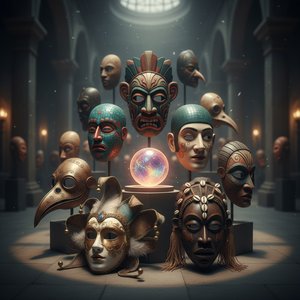
Unveiling the Mystery: A Journey Through the World's Most Iconic Mask Artworks
Embark on a profound journey through the world's most iconic mask artworks. Explore the spiritual depth, intricate craftsmanship, and rich cultural heritage of global traditions, from Chhau to Gomira, in this expert-led exploration of ancestral artistry and symbolic beauty.

The Treachery of Images: Decoding René Magritte’s Surrealist Philosophy and the Paradox of Representation
Explore the profound mystery of René Magritte’s 'The Treachery of Images.' Dive into an expert analysis of his Surrealist philosophy, the paradox of representation, and how he challenged reality through the interplay of language and visual perception.

Surrealism's Greatest Hits: 10 Masterpieces for Your Home |
Journey into the dreamlike world of Surrealism! Explore 10 masterpieces by Dali, Magritte & Miró. Discover the stories behind these iconic paintings and find museum-quality art reproductions for your home at .
Related Artworks


