
 Preview

 Send
 Share
 Details
 Guide


 Download
 Similars
 X-Ray
 Diaporama
 Q&A
 Stats
The May Tree

- 164.0 x 122.0cm


 Read More
Giclée / Art Print
Museum-quality giclée or canvas print with fast production and flexible finish options. ( Buy Hand Made Painting Switch to Digital Image)




P118B $10

P118H $10

P118W $10

P438Z $10

P508JH $12

P508YH $12

P805H $10

P805Z $10

P919BZ $10

P919G $10

P919XJ $10

P959ZH $10

P968JZ $12

W106C $8

W218G $10

W218JH $8

W218Y $10

W307PJ $10

W316G $10

W316PJ $8

W316Y $10

W398PJ $8

W4111J $10

W500HY $15

W500JH $15

W692G $12

W849H $8

W940BG $15

W953PJ $8
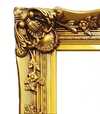
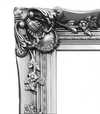
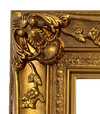
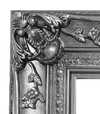
Pick from our preset sizes that match the artwork's original proportions.

Type the width and the height you need, to fit your frame or your wall. A print can only be cut, never made bigger than the picture, so a size with a different shape loses a part of the image. We send you a digital mockup to approve before we print anything. The picture shown on this page does not show the real cut — only the mockup does.
Worldwide Delivery () in 2 weeks instead of standard 4/5 weeks. (17 November)

Free Worldwide Express Shipping

High-Quality Linen Canvas

Full Shipping Insurance

Customs Tax Refund Guarantee

True Color Matching Guarantee

100-Day Return Policy (Defects Only)

100% Money-Back Guarantee

Bulk Discount Offer
 Glass option is only available in size under 110 CM

The May Tree
Giclée / Art Print
Reproduction Size
-


Total Price
$ 62
The Composition of a Spring Celebration
A group of five children occupies the center of this vertical oil painting, gathered around a decorated ceremonial pole or Maypole. In the foreground, a textured stone well provides a heavy, structural anchor to the scene. The figures are dressed in clothing featuring accents of red and white, which contrast against the surrounding greenery. Beyond the central group, the landscape recedes into a soft, hazy background composed of trees and distant buildings. Light filters through a canopy of leaves, casting dappled shadows across the ground and the bodies of the children. The branches of a large tree spread across the upper portion of the canvas in organic, fluid lines.Technique and Materiality
The work utilizes an oil on canvas medium, characterized by visible brushstrokes that create a painterly texture. The color palette relies on naturalistic tones, including various shades of green in the foliage and earthy browns and greys within the architecture. The artist employs a thick application of paint to suggest volume and depth. Edges throughout the landscape are soft, while the vertical lines of the well and the ceremonial staff provide a structured counterpoint to the organic shapes of the trees. This approach emphasizes the physical presence of the subjects and the light filtering through the leaves.Realism and Subject Matter
The painting depicts a rural, sunlit setting, focusing on a folk celebration in a pastoral environment. The subject matter is rooted in the traditions of a spring festival, as indicated by the decorated pole and the gathering of the children. This depiction follows the principles of Realism, prioritizing an unidealized observation of everyday life and local customs. The scene captures a specific moment of communal activity within a countryside landscape, presenting the figures and their environment with a focus on direct, lifelike detail rather than mythological or historical allegory.Questions & Answers
What subjects appear in "The May Tree" by Gustave Brion?
The themes present in "The May Tree" by Gustave Brion include children, tree, maypole, stone well, green foliage, lush grass, sunlight. Together they summarize the artwork's subject matter.
Is a download available for "The May Tree"?
The image of "The May Tree" by Gustave Brion can be downloaded from the artwork's Download page: a high-resolution digital image download.
What are the reproduction rights of "The May Tree" at the Musée Des Beaux Arts?
The original "The May Tree" is at the Musée Des Beaux Arts, and the work is in the public domain - its copyright has expired.
Related Artworks




Artist Biography
The Life and Art of Gustave Brion
Gustave Brion was a French painter and illustrator born in Rothau, France. He studied in Strasbourg under the painter Gabriel-Christophe Guérin and the sculptor Andreas Friedrich. His artistic journey led him to a studio on rue Notre-Dame-des-Champs in Paris, where he resided alongside Realist artists Jules Breton and François Bonvin. Brion is widely recognized for his genre paintings that depict the customs and peasant life of Alsace, though his repertoire also included historical subjects such as The Siege of a Town by Romans, which was commissioned by Napoleon III.
His technical skill earned him significant recognition at the Paris Salon. In 1853, he received a Second-Class Medal for Schlitteurs de la Forêt-Noire and Potato Harvest during an Inundation. His success continued with a First-Class Medal at the Salon of 1863 for Les Fleurs du Pays, an achievement that also brought him the Legion of Honour. He received further honors at the Exposition Universelle of 1867 and the Salon of 1868.
Illustrative Legacy and Notable Works
Beyond his canvas work, Brion was a prolific book illustrator. He contributed over 200 illustrations to the first edition of Victor Hugo's Les Misérables, providing the first published portrayal of Inspector Javert. He also provided illustrations for Hugo's The Hunchback of Notre-Dame, depicting characters such as Quasimodo and Esmeralda.
His principal works include:

Gustave Brion
1824 - 1877 , France
Quick Facts
- Artists Who Influenced This Artist:
- Charles Gleyre
- Gabriel-Christophe Guérin
- Full Name: Gustave Brion
- Nationality: French
- Notable Artworks:
- Les Pèlerins de Sainte-Odile
- Siege of a city by the Romans
- Schlitteurs de la Forêt-Noire
- Potato Harvest during an Inundation
- Les Fleurs du Pays
- Place Of Birth: Rothau, France
- Date Of Birth: 1824
- Date Of Death: 1877
Related Articles

French artworks of the 1880s
French Impressionist masterpieces by Claude Monet, Pierre-Auguste Renoir, and Georges Seurat. Find museum-quality reproductions on WikiOO.org.


