
 Preview

 Send
 Share
 Details
 Guide


 Download
 Similars
 X-Ray
 Diaporama
 Q&A
 Stats
St Luke


 Read More
Giclée / Art Print
Museum-quality giclée or canvas print with fast production and flexible finish options. ( Buy Hand Made Painting Switch to Digital Image)




P118B $10

P118H $10

P118W $10

P438Z $10

P508JH $12

P508YH $12

P805H $10

P805Z $10

P919BZ $10

P919G $10

P919XJ $10

P959ZH $10

P968JZ $12

W106C $8

W218G $10

W218JH $8

W218Y $10

W307PJ $10

W316G $10

W316PJ $8

W316Y $10

W398PJ $8

W4111J $10

W500HY $15

W500JH $15

W692G $12

W849H $8

W940BG $15

W953PJ $8
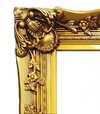
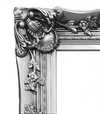
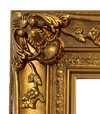

Pick from our preset sizes that match the artwork's original proportions.

Type the width and the height you need, to fit your frame or your wall. A print can only be cut, never made bigger than the picture, so a size with a different shape loses a part of the image. We send you a digital mockup to approve before we print anything. The picture shown on this page does not show the real cut — only the mockup does.
Worldwide Delivery () in 2 weeks instead of standard 4/5 weeks. (18 November)

Free Worldwide Express Shipping

High-Quality Linen Canvas

Full Shipping Insurance

Customs Tax Refund Guarantee

True Color Matching Guarantee

100-Day Return Policy (Defects Only)

100% Money-Back Guarantee

Bulk Discount Offer
 Glass option is only available in size under 110 CM

St Luke
Giclée / Art Print
Reproduction Size
-


Total Price
$ 62
St Luke: A Renaissance Masterpiece by Titian
- Title: St Luke
- Artist: Tiziano Vecellio (Titian)
- Date: Unknown
- Size: Unknown
- Current Location: Santa Maria della Salute, Venice, Italy
Subject and Composition
This captivating painting depicts Saint Luke, one of the four Evangelists in Christian tradition. Titian portrays him not merely as a religious figure but also as an artist and historian, reflecting his own profession. The scene is intimate and contemplative: St. Luke sits before an easel, brush in hand, palette nearby, seemingly lost in thought while creating his work. A serene landscape forms the backdrop, symbolizing harmony between art and nature. Notably, two sheep are included in the foreground, adding a sense of tranquility and perhaps alluding to Luke's association with the Good Shepherd.
Style and Technique
Titian’s “St Luke” exemplifies High Renaissance artistic principles. The painting showcases masterful use of color and light, creating a captivating atmosphere that draws the viewer into the scene. Titian employed oil on panel, allowing for rich layering and subtle gradations of tone. His technique demonstrates a keen understanding of anatomy and perspective, rendering St. Luke with realistic detail while maintaining an idealized beauty. The lines are used to define musculature, folds in clothing, and the contours of faces, creating a sense of volume and realism. The textures appear rough and layered, suggesting multiple applications of paint.
Historical Context and Symbolism
Painted during Titian's prolific career (1490-1576), "St Luke" reflects the artistic climate of 16th-century Venice. Venetian art was known for its vibrant colors, rich textures, and emphasis on human emotion – all hallmarks present in this work. The choice to depict St. Luke as an artist is significant; it elevates the role of the painter to a level of intellectual and spiritual importance. The inclusion of the sheep likely references Luke's association with the Good Shepherd, symbolizing faith and guidance. The landscape background further reinforces themes of harmony and balance, characteristic of Renaissance ideals.
Emotional Impact and Legacy
“St Luke” evokes a profound sense of contemplation and serenity. St. Luke’s expression suggests deep thought and artistic inspiration, inviting viewers to reflect on the creative process and the power of art. The painting's enduring appeal lies in its ability to connect with audiences across centuries, demonstrating Titian’s mastery of capturing human emotion and conveying spiritual themes through visual representation. It remains an important work in the history of art, inspiring artists and enthusiasts alike.
Questions & Answers
What aliases or alternate names does Titian have?
Titian is also known as Titiano da Cadore, Ticijan, Tiçiano, Tizian, Tetiano.
What color leads the composition of "St Luke" by Titian?
The color that stands out most in "St Luke" is black (#040404). The dominant color is useful when matching an artwork to an interior.
What placement suits the format of "St Luke" by Titian?
Format (square) and recommended space (living room) are the two placement facts recorded for "St Luke" by Titian.
Related Artworks


Artist Biography
The Painter of Light and Shadow
In the rugged, mountainous reaches of Pieve di Cadore, a boy named Tiziano Vecellio began a life that would eventually reshape the very language of oil on canvas. Born around 1490, he was the son of Gregorio Vecellio, a man of the military, and a woman named Lucia. The family lived in a region where the dramatic peaks of the Venetian Alps cast long, shifting shadows across the land, a landscape that perhaps whispered the secrets of light to a young mind. Recognizing the spark of talent in her sons, the family looked toward the great city of Venice, arranging for young Tiziano and his brother Francesco to enter the workshops of the masters. This move from the quiet mountains to the bustling, salt-scented canals of Venice changed everything.
His early years were spent absorbing the atmosphere of a city that pulsed with trade and color. He first learned his craft under Sebastiano Zuccato, a mosaicist, before moving into the circles of Gentile Bellini and his own brother, Giovanni. Yet, it was his time spent alongside Giorgione that truly defined his path. Together, they worked on the exterior frescoes for the Fondaco dei Tedeschi, a busy trading post for German merchants. In those early days, his brush sought a certain lyricism, a way to capture the air itself through subtle tones and a gentle, poetic touch.
The Evolution of a Venetian Style
As the years passed, the soft, ethereal qualities of his youth gave way to something much more muscular and dramatic. He moved away from the quietude of his early training to embrace a bolder approach to color. His brushwork became a tool of immense power, shifting from smooth, blended surfaces to loose, expressive marks that seemed to pulse with life. He learned to layer thin glazes of pigment upon underpaintings, a technique that allowed him to achieve a luminosity that few could replicate. This was not merely about depicting a subject, but about capturing the weight of velvet, the glow of skin, and the very atmosphere surrounding a figure.
His subjects were as varied as the people who walked the streets of Venice. He became a master of the portrait, capturing the psychological depth of his sitters, from the physical likeness of a man to the hidden character within. His mythological scenes and religious compositions were imbued with a sensuality and a tension that drew viewers in. In works like Venus of Urbino, he redefined how the human form was presented, using color to create a sense of presence that felt almost tactile. He was a man who understood that light does not just fall upon an object; it interacts with it, creating a drama of shadow and brilliance.
A Life of Grandeur and Influence
The fame of Tiziano Vecellio eventually reached the highest courts of Europe. He became a favorite of powerful men, serving as a painter to Emperor Charles V, King Philip II of Spain, and Pope Paul III. This high-level patronage allowed him to work on a monumental scale, creating massive canvases that filled the halls of palaces and the altars of great churches. He possessed a rare diplomatic finesse, adapting his style to suit the tastes of different royal courts while never losing the distinctive voice that made him a titan of his age.
When he passed away in Venice in 1576, he left behind a legacy that would ripple through the centuries. His influence was felt by those who followed, from the heavy brushwork of Rubens to the dramatic light of Rembrandt and the bold strokes of Delacroix. He acted as a bridge between the High Renaissance and the coming Baroque era, proving that color could be just as expressive as line. His paintings remain in the great collections of the world, from the Prado in Madrid to the National Gallery in London, serving as a permanent record of a man who mastered the art of seeing.

Titian
1490 - 1576 , Italy
Quick Facts
- Artistic Movement Or Style: Venetian Renaissance
- Artists Or Movements Influenced By This Artist:
- Peter Paul Rubens
- Rembrandt
- Eugène Delacroix
- Édouard Manet
- Artists Who Influenced This Artist:
- Sebastiano Zuccato
- Gentile Bellini
- Giovanni Bellini
- Giorgione
- Full Name: Tiziano Vecellio
- Nationality: Italian
- Notable Artworks:
- A Man with a Quilted Sleeve
- The Visitation of Mary and Elizabeth
- Venus of Urbino
- Diana and Actaeon
- Concert Champetre
- Place Of Birth: Pieve di Cadore, Italy
- Date Of Birth: 1490
- Date Of Death: 1576
Related Articles

25 Must-See Masterpieces at Venice's Gallerie dell'Accademia
Embark on a journey through Venice's soul with 25 iconic masterpieces from Gallerie dell'Accademia. From Titian to Tintoretto, explore the light and legacy of the Venetian Renaissance. Find museum-quality art inspiration and reproductions at WikiOO.org. Explore the full collection online.

25 Must-See Masterpieces at the Hermitage Museum, Saint Petersburg
Experience the grandeur of the Hermitage Museum. Explore 25 iconic artworks, from Renaissance classics to Dutch masters, and find timeless inspiration for your home decor through our museum-quality reproductions. Discover all masterpieces on WikiOO.org.

Master of Color: The 25 Greatest Paintings by Titian
Immerse yourself in the vibrant world of Titian. Explore 25 legendary Renaissance masterpieces, from dramatic portraits to soulful landscapes. Find inspiration for museum-quality art reproductions and timeless decor. Discover all masterpieces on WikiOO.org.

Masterpieces of Color: The Top 25 Greatest Artworks by Titian
Explore 25 legendary Titian masterpieces of the Venetian Renaissance. Discover museum-quality art on WikiOO.org.

Masterpieces of Light: The Top 25 Artworks by Duccio di Buoninsegna
Journey through the divine elegance of Duccio di Buoninsegna. Explore 25 iconic Sienese masterpieces, from the Maestà to the Rucellai Madonna. Find inspiration for museum-quality art reproductions and timeless decor. Discover all masterpieces on WikiOO.org.


