

 Peržiūrėti realaus dydžio版
 Pasidalinti
 Dalintis
 Išsamiau
 Vadovas

 Atsisiųsti
 Panašūs eksponatai
 Rentgeno spindulių nuotrauka
 Automatinė diorama
 Statistika
ML, sitting
 Painting
- Neue Wilde
 1993
1993- Contemporary
 188.0 x 227.0 cm
 Albertina Klosterneuburg
 Skaityti daugiau
Šiame puslapyje rodomas meno kūrinys yra saugomas autorių teisių įstatymais, todėl neturime teisės legaliai kurti ar parduoti jo identiškos reprodukcijos. Ši apsauga užtikrinama remiantis tokiais tarptautiniais susitarimais kaip Bernės konvencija ir pagal nacionalines įstatymų nuostatas, įskaitant tas, kurias nurodo JAV autoriškos teisės įstatymas – 17-asis skyrius.
Kaip pagarbią ir teisėtą alternatyvą, mes siūlome pagal užsakymą rankomis dažytus paveikslus, įkvėptus originalo. Mūsų įgudę ir profesionalūs menininkai kruopščiai tiria originalo stilių, nuotaiką ir meninę esmę, kad sukurtų naują, unikalią kūrinį, kuris sukelia tą paties jausmą – išlikdamas tuo tarciau originaliu, savarankišku kūrybiniu darbu.
Šis metodas visiškai atitinka autorių teises, nes jame nėra saugomo kūrinio kopijavimo ar dubliavimo. Tai yra kūrybinė reinterpretacija – naujas paveikslas, kurį įkvėpė originalas, tačiau kuris nėra jo identiškas.
Rankų darbo aliejinės reprodukcijos
Rankiniu būdu tapytas aliejus ant droblio jūsų pageidaujamame dydį ir rėmuose – tai mūsų menininkų pagal užsakymą sukurtas darbas. ( Perjungti į spausdinamus版作品 Perejti prie skaitmeninių vaizdų)




P118B €10

P118H €10

P118W €10

P438Z €10

P508JH €12

P508YH €12

P805H €10

P805Z €10

P919BZ €10

P919G €10

P919XJ €10

P959ZH €10

P968JZ €12

W106C €8

W218G €10

W218JH €8

W218Y €10

W307PJ €10

W316G €10

W316PJ €8

W316Y €10

W398PJ €8

W4111J €10

W500HY €15

W500JH €15

W692G €12

W849H €8

W940BG €15

W953PJ €8




Pasirinkite iš mūsų nustatytų dydžių, atitinkančių originalaus meno kūrinio proporcijas.

Įveskite jums reikiamą plotį ir aukštį, kad paveikslas atitiktų jūsų rėmą ar sieną. Kadangi šis darbas yra rankinio darbo, siekiant išgauti kitokios formos dydį, paveikslas gali būti šiek tiek didesnis (nuo kraštų bus palikta daugiau erdvės) arba mažesnis – pasirinkite jums patogiausią variantą. Prieš pradedant tapyti, atsiųsime jums skaitmeninį maketą patvirtinimui. Šioje puslapio nuotraukoje matomas vaizdas nėra galutinis rezultatas – jį parodys tik sukurtas maketas.
Gavus užsakymą, WikiOO.org komanda susisieks su klientu el. paštu dėl instrukcijų ir pateiks maketo pavyzdį
Pristatymas visame pasaulyje () per 3–4 savaites, o ne įprastai – per 5 savaites. (27 spalis). Kokybė lieka nepakeičiama.

Nemokamas greitasis pristatymas visame pasaulyje

Aukštos kokybės lininis drobė

Pilnas siuntimo draudimas

Muitinės mokesčių grąžinimo garantija

Tikro spalvų atitikimo garantija

100 dienų grąžinimo politika (tik esant įtaigoms)

100% pinigų grąžinimo garantija

Nuolaida dideliems užsakymams
 Stiklo variantas prieinamas tik pasirinkus dydį iki 110 cm

ML, sitting
Reprodukcijos technika
Reprodukcijos matmenys
-


Bendroji kaina
€ 233
An Intimate Encounter with Solitude
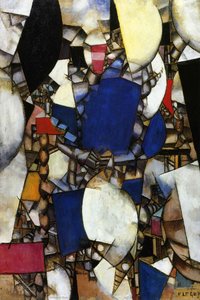
In the evocative masterpiece ML, sitting, created in 1993, the viewer is invited into a profound moment of quiet introspection. The painting presents a portrait of a woman seated upon a chair, her form partially obscured by her own hands as they cover her face. This gesture, central to the composition, immediately establishes a sense of mystery and vulnerability. Clad in a serene blue shirt and a simple skirt, the subject rests against white cushions that offer a stark, clean contrast to the deeper tones of the piece. The background, rendered in lush, verdant greens, does more than merely provide depth; it creates an atmospheric cocoon that isolates the figure, drawing the eye inward toward her silent, internal struggle or perhaps her peaceful retreat from the world.
The work serves as a poignant window into the psyche, where the physical act of hiding one's face becomes a powerful symbol of the universal human experience. It speaks to those moments of grief, shame, or even deep meditation where the external world must be shut out to process the internal landscape. For the collector or interior designer, this piece offers a sophisticated emotional anchor, providing a focal point that encourages contemplation and stillness within a living space.
The Expressive Legacy of the Neue Wilde
To understand the technical brilliance and emotional weight of ML, sitting, one must look to the artistic lineage of its creator, Siegfried Anzinger. As a pivotal figure in the Neue Wilde movement, Anzinger brought a raw, uninhibited energy to the canvas, challenging the sterile academicism of his era with vibrant color and existential urgency. This painting, though possessing a certain stillness, carries the DNA of that movement through its intense engagement with color and form.
Anzinger’s technique is characterized by an almost obsessive layering of emotion and pigment. In this work, the interplay between the cool blues of the subject's attire and the deep, enveloping greens of the background demonstrates a masterful command over color temperature to evoke mood. The brushwork, while contributing to a cohesive scene, retains a palpable sense of life, ensuring that the painting feels less like a static image and more like a captured breath. It is this tension between the stillness of the subject and the vibrant energy of the execution that makes Anzinger’s work so enduringly captivating for modern audiences.
A Timeless Addition to the Curated Home
For those seeking to infuse their interiors with art that possesses both intellectual depth and aesthetic grace, ML, sitting stands as an exemplary choice. The large-scale presence of the work—measuring an impressive 188 x 227 cm—allows it to command a room, acting as a window into a different emotional dimension. Its palette of blues, whites, and greens is versatile enough to complement contemporary minimalist decors or more traditional, classic settings, providing a sophisticated touch of Austrian expressionism.
Owning a high-quality reproduction of such a significant work allows for the appreciation of Anzinger's complex textures and profound themes. It is an investment in atmosphere, bringing into a home a piece that does not merely decorate a wall but narrates a story of human resilience, privacy, and the beautiful complexity of the soul. Whether placed in a quiet study or a grand salon, this painting promises to spark conversation and provide a lasting source of visual and emotional inspiration.
Klausimai ir atsakymai
Kaip galiu peržiūrėti „ML, sitting“ – Siegfried Anzinger kaip vaizdų rodyklę?
„ML, sitting“ diapora prieinama puslapio Slaydšou kūrinio apžvalgos skiltyje.
Kaip „ML, sitting“ spalvos dera vienas su kitu?
„ML, sitting“ – Siegfried Anzinger pasižymi Strong Color Unity spalvų harmonija.
Kokią nuotaiką „ML, sitting“ – Siegfried Anzinger išreiškia Neue Wilde kontekste?
„ML, sitting“ Melancholic emocija akompaniuoja jo Neue Wilde stiliui.
panašūs kūriniai




Autoriaus biografija
Siegfried Anzinger: A Chronicle of Intense Color and Existential Exploration
Siegfried Anzinger, born in Weyer, Austria, on February 25, 1953, is a pivotal figure within the “Neue Wilde” movement – a group that challenged established artistic norms with its raw emotion, vibrant color palettes, and often unsettling subject matter. His work, deeply rooted in Austrian identity yet resonating globally, explores fundamental human experiences: love, pain, sexuality, loneliness, and ultimately, mortality. Anzinger’s career is characterized by an almost obsessive engagement with his chosen medium, a relentless cycle of creation and re-creation that results in paintings layered with complexity and imbued with a palpable sense of urgency.Early Years and Artistic Formation
Anzinger's artistic journey began at the Academy of Fine Arts in Vienna (1971-1977), where he studied under Professor Maximilian Melcher. This formative period laid the groundwork for his distinctive style, though it was a conscious departure from traditional academic training. He sought to dismantle conventional approaches and forge his own path, driven by a desire to push the boundaries of painting itself. Following his time in Vienna, Anzinger relocated to Cologne in 1981, immersing himself within the burgeoning avant-garde scene of West Germany. This move proved crucial, exposing him to new influences and solidifying his position within the “Neue Wilde” collective – a group that prioritized direct emotional expression over meticulous representation.The "Neue Wilde" Aesthetic: Color, Texture, and Raw Emotion
Central to Anzinger’s artistic identity is his association with the “Neue Wilde.” This movement, emerging in the late 1970s and early 1980s, rejected the polished surfaces and intellectualism of previous generations. Instead, it embraced a visceral approach, utilizing bold colors, broad brushstrokes, and often fragmented compositions to convey intense emotional states. Anzinger’s paintings are immediately recognizable for their saturated hues – fiery reds, deep blues, and acidic yellows – applied with a frenetic energy that suggests both urgency and exhaustion. His technique is characterized by a layering process; he repeatedly adds and subtracts paint, building up complex textures and creating an illusion of constant evolution within each work. This “non-finito” quality—a deliberate avoidance of completion—is not simply a stylistic choice but reflects the artist’s engagement with the inherent instability of human experience.Key Exhibitions and Recognition
Anzinger's work has been consistently recognized through numerous solo and group exhibitions both nationally and internationally. A significant milestone occurred in 1988 when he participated in the Austrian Pavilion at the Venice Biennale, a testament to his growing recognition within the art world. His inclusion in documenta 7 (1982) further cemented his position as a leading contemporary artist. Throughout his career, Anzinger has exhibited at prestigious galleries and museums worldwide, including the Gemeentemuseum Den Haag and the Max Weber Gallery. In 2003, he received the Austrian State Prize for Fine Arts, acknowledging his enduring contribution to Austrian art.Themes of Existentialism and Personal Reflection
Beneath the vibrant surface of Anzinger’s paintings lies a profound exploration of existential themes. He frequently tackles subjects such as love, pain, sexuality, loneliness, fear, and death – fundamental aspects of the human condition that he approaches with unflinching honesty. His work is not didactic; it doesn't offer easy answers or resolutions. Instead, it presents these complex emotions in a raw and immediate manner, inviting viewers to confront their own experiences of vulnerability and uncertainty. As one source notes, his paintings “deal with basic existential problems such as love, sexuality, pain, loneliness, fear and death.” His oeuvre is a testament to the enduring power of art to grapple with the most challenging aspects of our shared human experience.- Notable Works: Untitled (1997) – A layered oil painting exploring atmospheric hues and subtle figures.
- Influences: John van ‘t Slot, Bacon
- Current Status: Still actively creating and exhibiting.
For further information, please refer to the resources listed below:

Siegfried Anzinger
1953 - , Austria
Trumpa informacija
- Full Name: Siegfried Anzinger
- Nationality: Austrian
- Date Of Birth: 1953
- Place Of Birth: Weiz, Austria
- Notable Artworks:
- Untitled (1997)
- Various paintings
- Artistic Movement Or Style: Neue Wilde
- Artists Who Influenced This Artist: ['Maximilian Melcher']
- Artists Or Movements Influenced By This Artist:
- Franz Kaiser
- John van ‘t Slot”
Susiję straipsniai

Azure Visions: Exploring Representations of the Blue Dress in Western Art History
Explore the rich history of the blue dress in Western art! Discover its symbolism, from Renaissance masterpieces to modern interpretations by artists like Martin & Schiele. Uncover cultural meanings and artistic techniques.

The Allure of Azure: Exploring the Symbolic & Aesthetic Depths of Blue in Art History
Explore the rich history of blue in art! Discover its symbolism, from ancient pigments to modern masterpieces by Kandinsky & Seurat. Uncover the psychological impact and cultural meanings behind this captivating hue.

Claude Monet šedevrai: 25 paveikslai, įkvepiantys grožiu ir harmonija
Atraskite 25 įspūdingiausius Claude Monet šedevrus! Sužinokite apie impresionizmą, vandens lelijų paveikslus ir spalvų magiją. Meno reprodukcijos aukščiausia kokybe – WikiOO.org. Išsamesnės informacijos rasite internetu.

Slate Blue Masterpieces: 10 Iconic Paintings & Timeless Home Decor Ideas
Immerse yourself in the captivating world of slate blue! Explore 10 iconic paintings by Monet, Van Gogh & Renoir. Discover their stories, techniques & find museum-quality art reproductions for your home at .

Neue Sachlichkeit: Objectivity, Realism & Social Commentary in Interwar German Art
Explore Neue Sachlichkeit – the pivotal German art movement critiquing Weimar society with unflinching realism. Discover key artists like Dix & Grosz, its historical context, and collecting insights for discerning investors.
